
Which Harness Fits DeepSeek V4 Flash Best?
Compare DeepSeek V4 Flash harness options by setup, compatibility, model control, and workflow fit so your team can choose with fewer surprises.
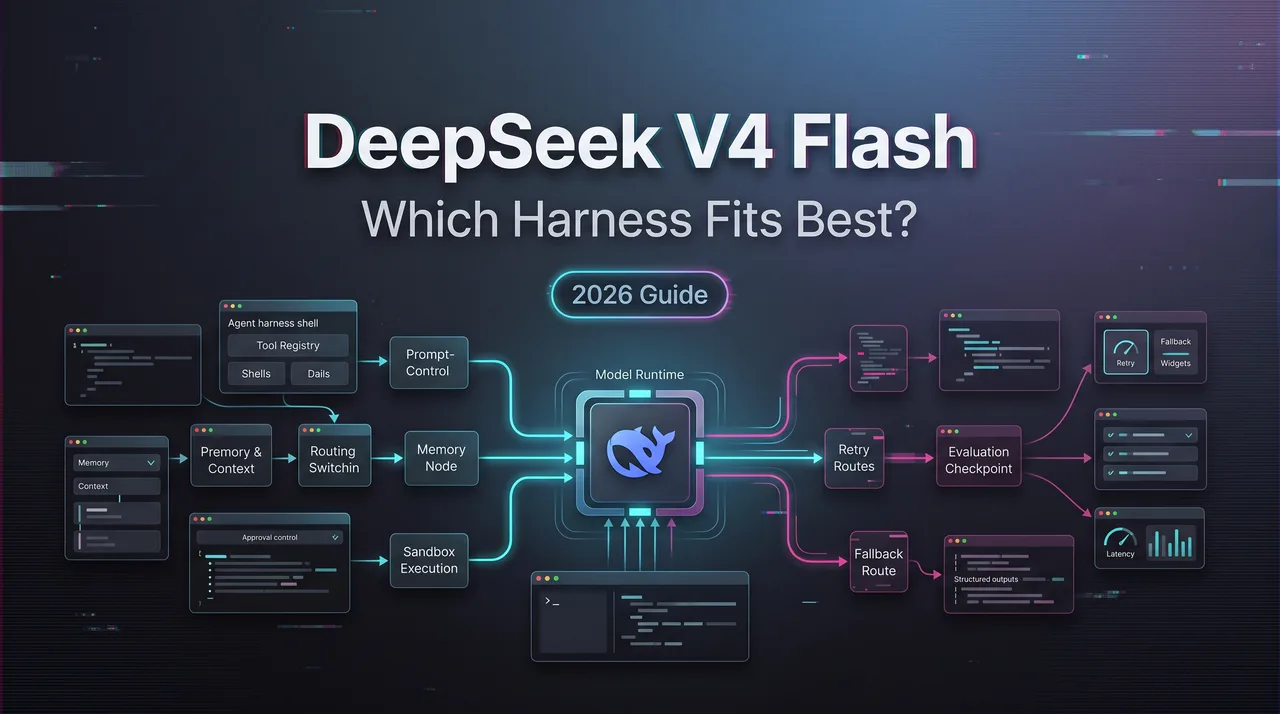
A DeepSeek V4 Flash harness decision should not start with “*which terminal agent is best.*” That question is too broad. The better question is: what kind of coding loop are you actually trying to run?
A solo bug-fix loop, a multi-model terminal workflow, and a long agent session with tool calls do not stress the same parts of a harness. Same model. Different failure points.
As of August 13, 2026, the relevant DeepSeek-documented harnesses for this comparison are Reasonix, Crush, and Oh My Pi. I am treating them as third-party tools documented by DeepSeek, not as DeepSeek-owned products. That distinction matters for support, security, and maintenance.
Define What “Best” Means for Your Workflow
Setup Speed and Maintenance
Setup speed is not only the install command. It is how much config you have to keep alive after the first run works.
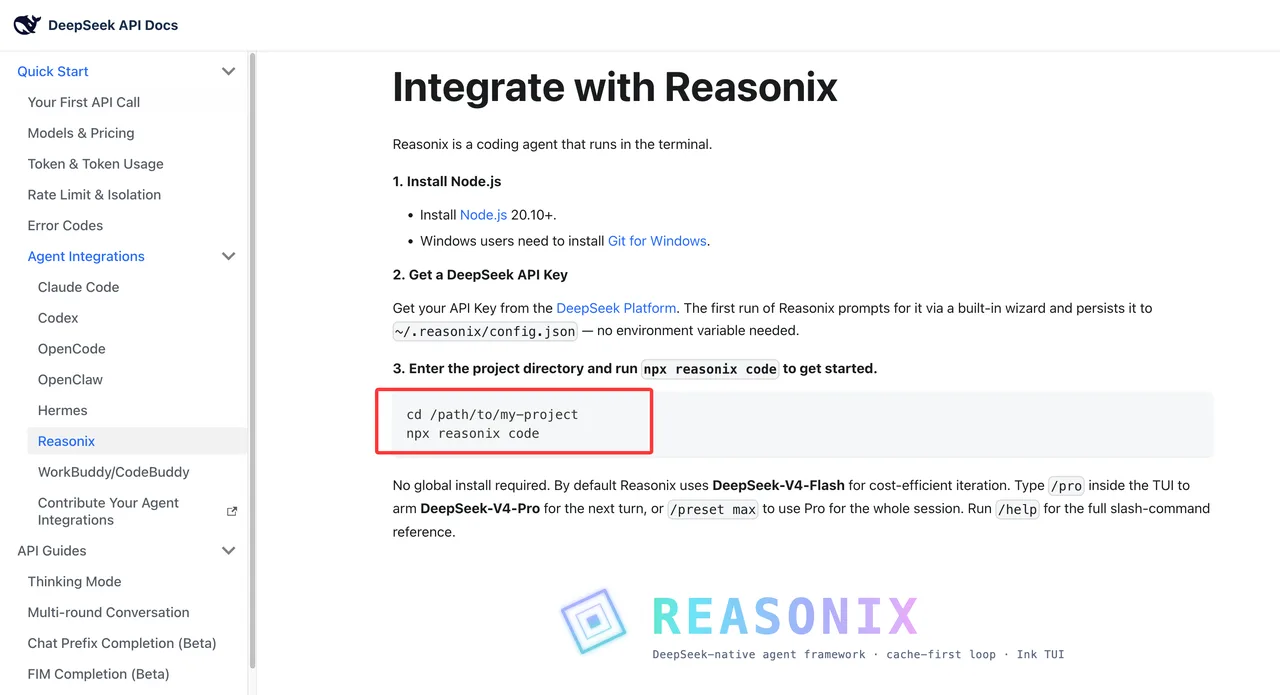
Reasonix is the lowest-friction DeepSeek-first option in the current docs. The DeepSeek Reasonix guide says it can run with npx reasonix code, prompts for a DeepSeek API key on first launch, and stores it in ~/.reasonix/config.json. No global install is required.
Reasonix also defaults to DeepSeek-V4-Flash for normal iteration. The same guide says users can type /pro to arm DeepSeek-V4-Pro for the next turn, or /preset max to use Pro for the whole session.
Crush needs more explicit setup. DeepSeek is added as an OpenAI-compatible provider. That adds config work, but it also gives better provider-switching control.
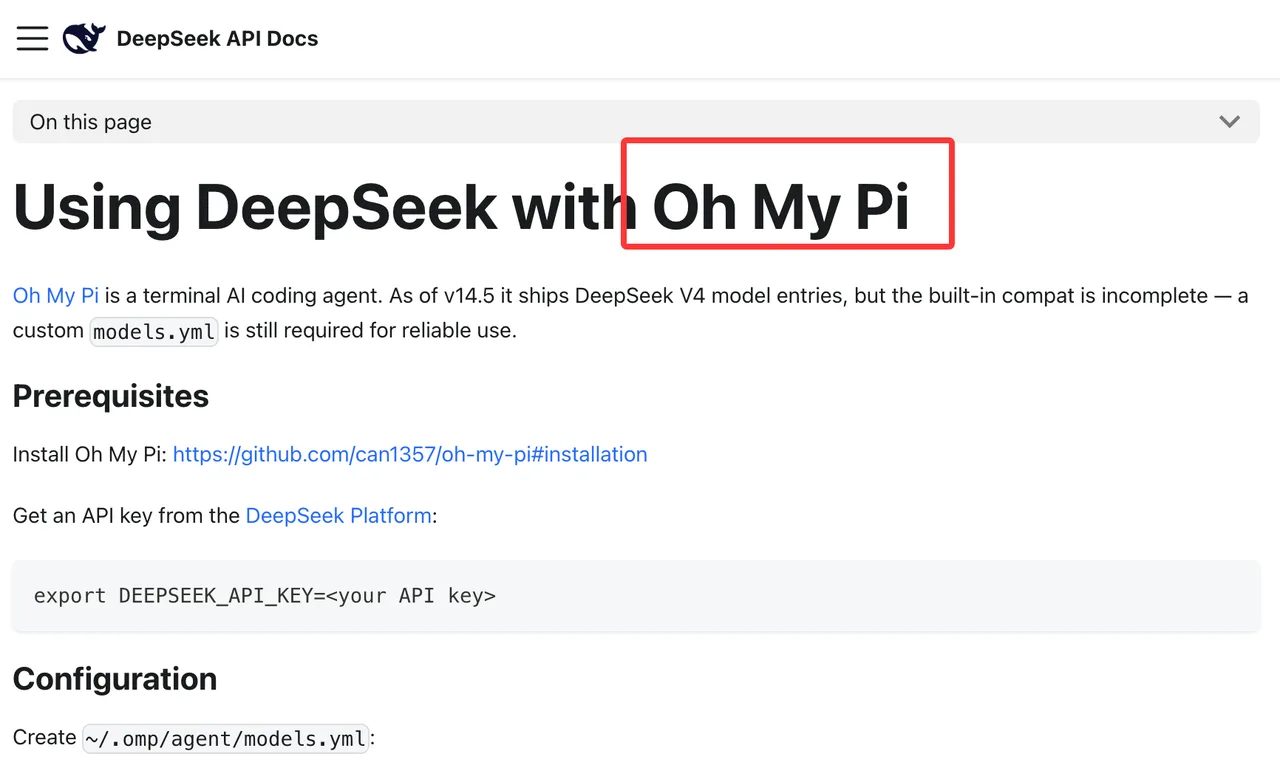
Oh My Pi is more version-sensitive. Older DeepSeek guidance uses a custom models.yml. Newer builds may include the needed DeepSeek V4 compatibility fields. I paused here because this is where blanket advice gets bad fast.
Tool-Call and Reasoning Compatibility
The model can support tool calls while the harness still fails in a long loop.
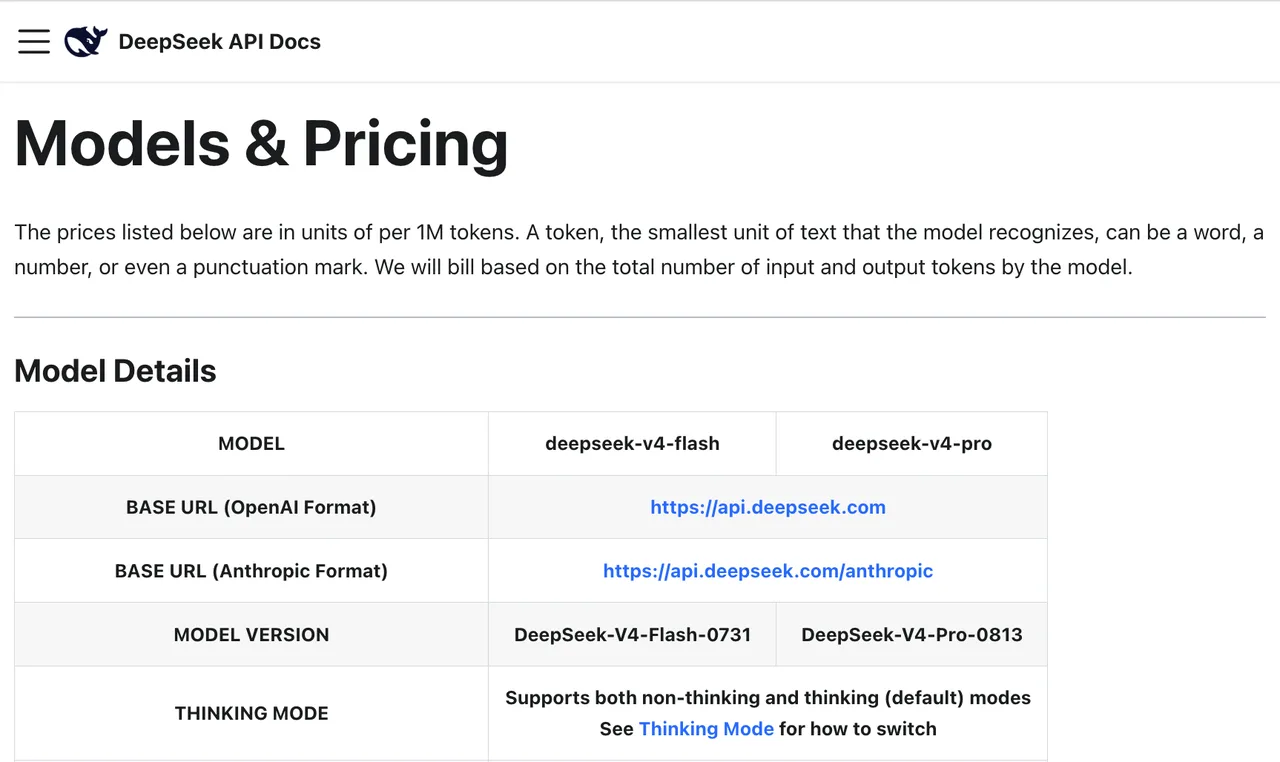
DeepSeek’s Models & Pricing page lists deepseek-v4-flash and deepseek-v4-pro, with thinking mode, JSON output, tool calls, Responses API, and Anthropic API support. It also lists current model versions, pricing, context length, output limits, and concurrency limits.
A harness has to pass those behaviors through correctly. Thinking mode, tool-call history, reasoning_content, max token fields, and rejected parameters all matter. One wrong compatibility field can turn a working first prompt into a 400 error on turn twelve.
Model Switching and Team Control
Model switching is the first real split.
If DeepSeek is the main provider, Reasonix is simpler. If DeepSeek is one model family among several, Crush fits better. If the team needs low-level compatibility controls, Oh My Pi deserves a test.
The best harness is the one that creates the least operational drag for the loop you actually run.
Compare the Main Harness Options
Reasonix for Low-Friction DeepSeek-First Coding
Reasonix fits developers who want a DeepSeek-native terminal coding agent with minimal setup.
Its main advantage is not feature count. It is that the default matches the expected usage pattern: Flash for cost-efficient iteration, Pro when the task needs stronger reasoning. That makes it a good first test for repo Q&A, small bug fixes, test generation, and quick refactors.
Use Reasonix when:
- DeepSeek is the default provider
- setup time matters
- Flash-first behavior is desirable
- Pro is only needed for harder turns
- the team does not want to maintain provider config
The trade-off is team control. A smooth personal setup still needs standardization work: version pinning, secret handling, onboarding notes, and update policy.
Crush for Multi-Model Terminal Workflows
Crush is stronger when provider switching matters.
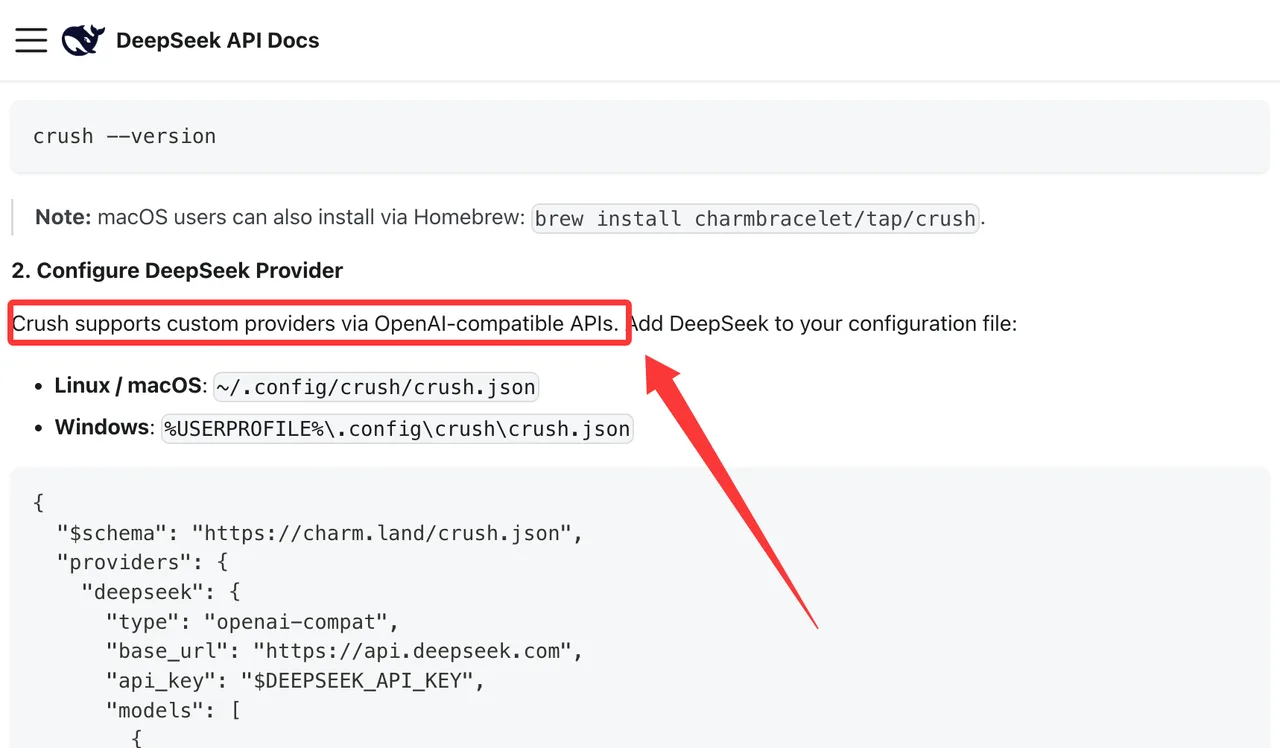
The DeepSeek Crush guide documents DeepSeek as an OpenAI-compatible provider in crush.json. The config includes base_url: https://api.deepseek.com, an API key read from DEEPSEEK_API_KEY, and model entries for both deepseek-v4-pro and deepseek-v4-flash.
Crush also supports model switching through Ctrl+L or /model. That makes it useful when the team wants one terminal coding workflow across multiple providers.
Use Crush when:
- DeepSeek is one option, not the whole stack
- the team compares models often
- OpenAI-compatible provider config is acceptable
- LSP, MCP, and session behavior matter
- shared configuration is part of the workflow
The cost is maintenance. More provider freedom means more config surface. Someone owns that file.
Oh My Pi for Configurable Compatibility
Oh My Pi is the most configurable option here.
The DeepSeek Oh My Pi guide documents a ~/.omp/agent/models.yml setup with DeepSeek-specific compatibility fields, including supportsToolChoice: false, requiresReasoningContentForToolCalls: true, and requiresAssistantContentForToolCalls: true.
That config is useful for older versions, custom providers, internal gateways, and OpenAI-compatible proxies where built-in behavior may not match DeepSeek’s official endpoint.
But I would not say all current Oh My Pi users must always write custom models.yml. A later Oh My Pi compatibility issue says newer versions include the needed DeepSeek V4 compatibility fields in built-in provider entries. Treat that as a version-specific correction, not a universal guarantee.
The practical rule: lock the Oh My Pi version, inspect the built-in provider config, then decide whether custom config is still needed.
Match a Harness to Your Use Case
Solo Prototyping and Quick Iteration
For solo prototyping, start with Reasonix.
The reason is boring: fewer setup steps, DeepSeek V4 Flash by default, and a documented path to Pro. If the workflow is “open repo, inspect code, patch, run tests, repeat,” that is enough.
Test it with five tasks:
- explain a local module
- fix a small bug
- add one test
- update a dependency call
- summarize the diff
If those pass without config work, that counts.
Multi-Model Coding and Provider Switching
For multi-model coding, Crush is the cleaner fit.
A team comparing DeepSeek V4 Flash, DeepSeek V4 Pro, and other providers needs model switching more than first-run simplicity. Crush makes provider entries visible and reviewable. That helps when the setup needs to survive more than one developer.
Having many tools is not the problem. Having to manage your tools is.
Long Agent Loops With Custom Controls
For long agent loops, Oh My Pi is worth testing.
Long loops expose compatibility problems: tool-call replay, reasoning state, assistant content, max token fields, and provider quirks. Oh My Pi gives teams more control over those settings.
That flexibility has a price. Config can drift. Built-in provider behavior can change. Third-party gateways may handle DeepSeek reasoning content differently from api.deepseek.com.
Use it when you have someone willing to own that layer.
Test Before You Standardize
Verify Endpoint and Model Selection
Start by confirming the actual endpoint and model ID.
Use https://api.deepseek.com unless you are intentionally testing a proxy. Confirm the request uses deepseek-v4-flash, not an old alias or display name. Print a redacted request payload in local testing. Keep it with your eval notes.
For each harness, record:
| Item | Why It Matters |
|---|---|
| Harness version | Prevents silent behavior drift |
| Config path | Makes setup reproducible |
| Provider name | Avoids selecting the wrong route |
| Model ID | Confirms Flash versus Pro |
| Endpoint | Separates official API from proxy behavior |
| Thinking setting | Affects tool and reasoning behavior |
| OS and shell | Explains environment-specific failures |
Small table. Saves hours later.
Run Tool-Call and Multi-Turn Checks
Do not standardize from one prompt.
Run a multi-turn task where the agent reads files, calls tools, revises a plan, handles a failing command, and continues after a long output. Include one intentional failure, such as a missing path.
A good terminal coding agent recovers. A brittle one repeats itself or invents state.
Measure Latency, Token Use, and Failure Recovery
Harnesses do not change DeepSeek token pricing. They can change total spend by changing call count, context size, retry behavior, and model switching.
Measure first response time, tool-call count, input tokens, output tokens, retry rate, timeout rate, and whether failure recovery produces useful progress.
That is the real DeepSeek V4 Flash harness test. Not one clean demo.
Limits and Trade-Offs
Configuration Drift and Breaking Changes
Reasonix has the least DeepSeek-first setup surface. Crush exposes provider setup clearly. Oh My Pi exposes more compatibility controls.
Each can break differently. Reasonix may hide too much for team governance. Crush may require config review. Oh My Pi may behave differently across versions.
Pin before standardizing.
Provider Compatibility Versus Official Support
DeepSeek documenting a harness does not make that harness officially supported by DeepSeek. Treat each one as third-party software.
Review security model, license, telemetry, update behavior, plugin execution, and secret storage before team rollout. A terminal coding agent touches source code. That is not a small permission.
When the Harness Matters Less Than the Model Choice
Sometimes the harness is not the bottleneck.
If the task needs stronger reasoning, V4 Pro may matter more than the harness. If the task is simple, Flash may work well in all three. If the workflow depends on external tools, tool design may dominate the result.
Good enough. That is the most honest assessment I can give.
FAQ
Does a Harness Change DeepSeek V4 Flash Token Pricing?
No. Pricing is set by DeepSeek. A harness can still change total cost by sending more calls, carrying more context, retrying more often, or switching to Pro.
Can One DeepSeek API Key Be Used With Multiple Harnesses?
Yes, technically. Reasonix, Crush, and Oh My Pi can all use a DeepSeek key through their own config paths. For teams, use managed keys and rotation instead of one personal key.
Which Operating Systems Do the Documented Harnesses Support?
Reasonix and Crush document cross-platform terminal use. Oh My Pi support should be checked against the current repository or package release before rollout. Do not infer team support from one working laptop.
Does Harness Choice Affect DeepSeek API Rate Limits?
Not directly. Rate limits apply at the DeepSeek account and model level. A harness can affect how quickly you hit them through parallel calls, retries, or subagents.
Do Harness Licenses Permit Commercial Team Use?
Check the current repository or package metadata before approval. Licenses can differ across Reasonix, Crush, and Oh My Pi, and they can change.
Conclusion
The best DeepSeek V4 Flash harness depends on workload.
Reasonix fits low-friction DeepSeek-first coding. Crush fits multi-model terminal workflows. Oh My Pi fits configurable compatibility work, especially long agent loops with custom controls.
Pin versions. Verify endpoint and model ID. Run multi-turn tool checks. Measure latency, token use, retries, and failure recovery. Then pick the harness that creates the least maintenance for your actual coding loop.
Previous posts:
Related Articles
/filters:quality(82)/media/images/1791192288445452271_ToxGQZ8i.webp)
Holo4 27B vs 35B-A3B: Which Fits Your Agent?
/filters:quality(82)/media/images/1791194933461111356_WeoxGPY8.webp)
Holo4 API vs Local Deployment: Which Fits Your Agent?
/filters:quality(82)/media/images/1790934318687045151_6DhqzIS1.webp)
Best AI Video APIs for High-Volume Workflows in 2027
/filters:quality(82)/media/images/1790879706333726948_TmjHVhrF.webp)
Introducing AI Cinema Studio on WaveSpeedAI: Direct Cinematic AI Video Shots
/filters:quality(82)/media/images/1790934887466368319_r2GQZ8hr.webp)
LTX Studio Review 2027: Does the Video Workflow Hold Up?
/filters:quality(82)/media/images/1790935090456133598_u9CLU4dm.webp)