
Qwen 3.7 Plus vs Qwen 3.8: A Builder's Guide
Compare Qwen 3.7 Plus and Qwen 3.8 by verified access, workload quality, deployment, cost, and operational constraints.
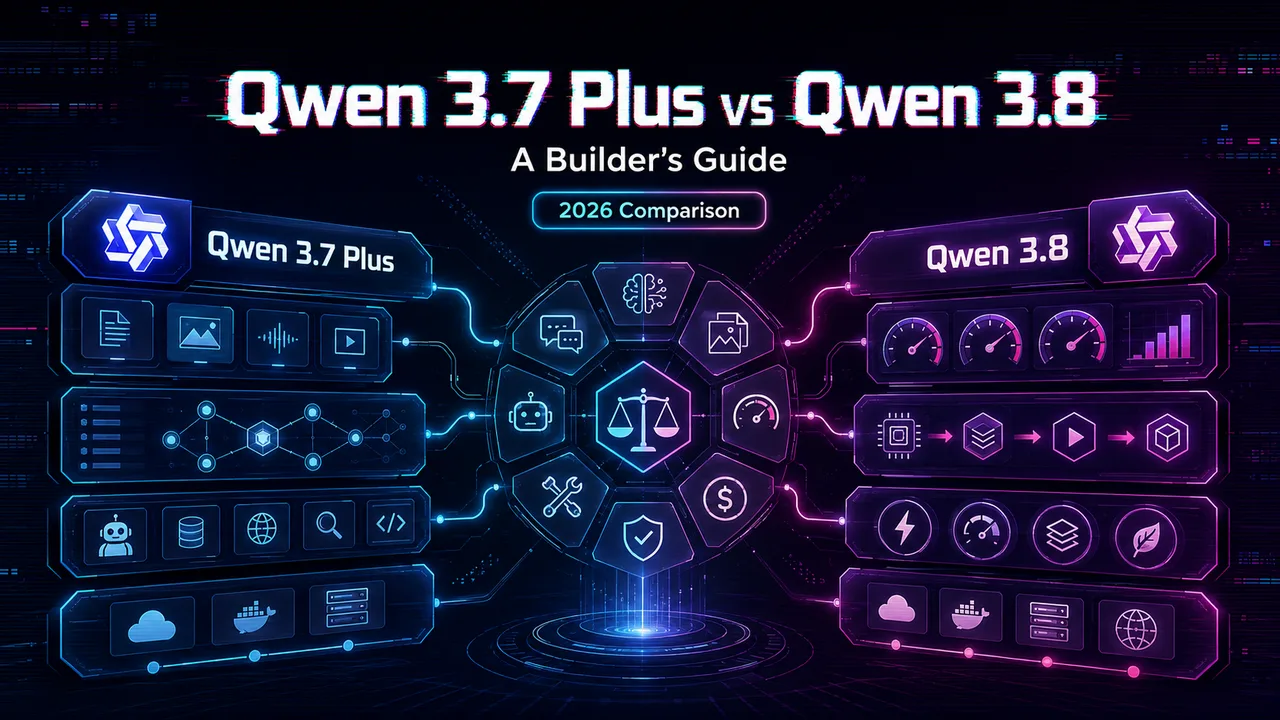
I’m John. I would not start a Qwen 3.7 Plus vs Qwen 3.8 decision by asking which model is “better.” That question is too loose for production. First I want to know which exact model ID is being tested, where it runs, what it costs to operate, and whether the team can roll it back without turning one migration into three separate incidents.
Fetched on August 19, 2026, the comparison I would actually run is this: hosted qwen3.7-plus against a pinned Qwen3.8 target. For local work, that means Qwen/Qwen3.8-27B. For hosted API work, it means qwen3.8-max, not the whole Qwen3.8 family. Do not switch models yet. Look at the workflow first.
Define the Models Being Compared
Exact Model IDs, Revisions, Providers, and Test Dates
The first row in the test sheet should not say “Qwen3.8.” It should say the exact ID.
| Candidate | Exact target | Access path | What I would not assume |
|---|---|---|---|
| Qwen3.7 Plus | qwen3.7-plus, currently tied to qwen3.7-plus-2026-05-26 in Model Studio pricing | Hosted QwenCloud / Alibaba Cloud Model Studio | Not open weights |
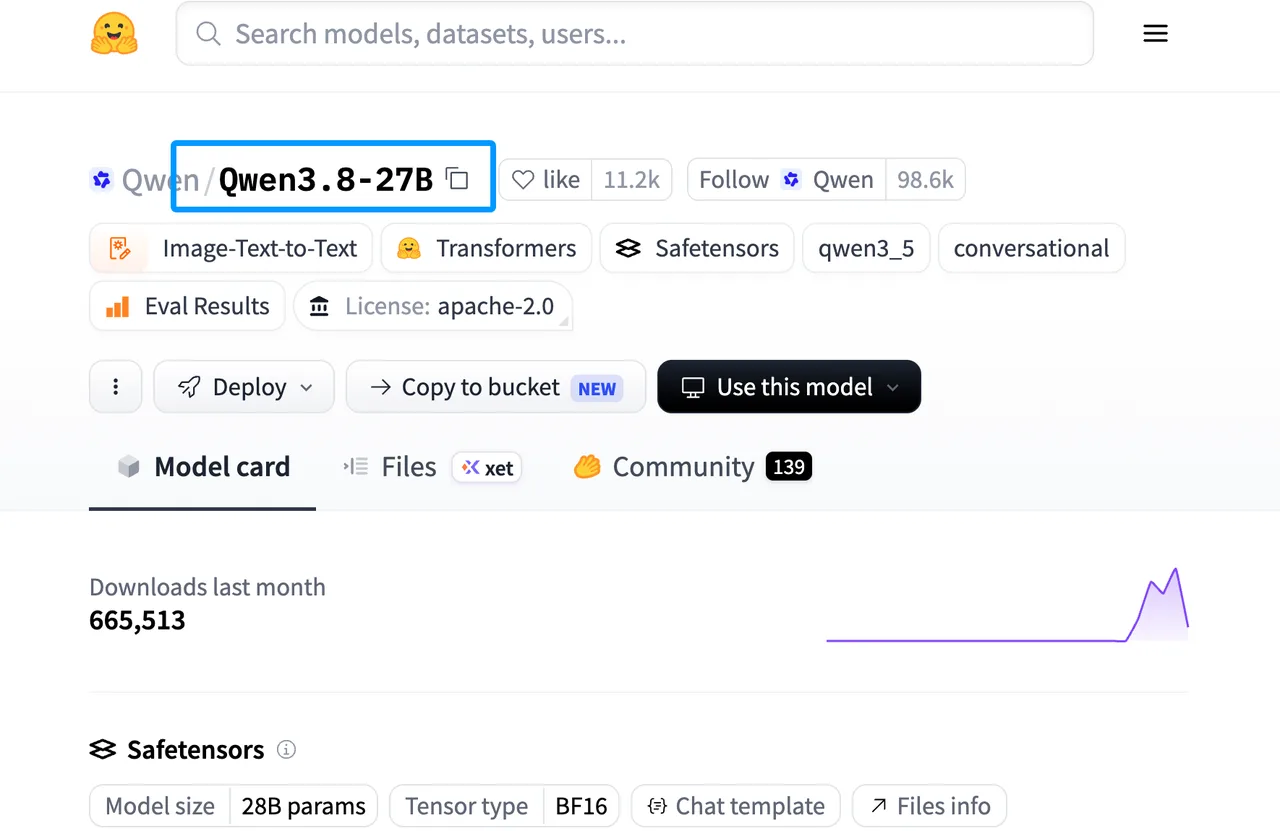
| Qwen3.8 local | Qwen/Qwen3.8-27B | Hugging Face weights, local serving, vLLM, SGLang, or similar | Not the same as Qwen3.8-Max |
| Qwen3.8 hosted | qwen3.8-max, also listed with qwen3.8-2.4t-a95b in QwenCloud docs | Hosted QwenCloud API | Not the same operating profile as the 27B checkpoint |
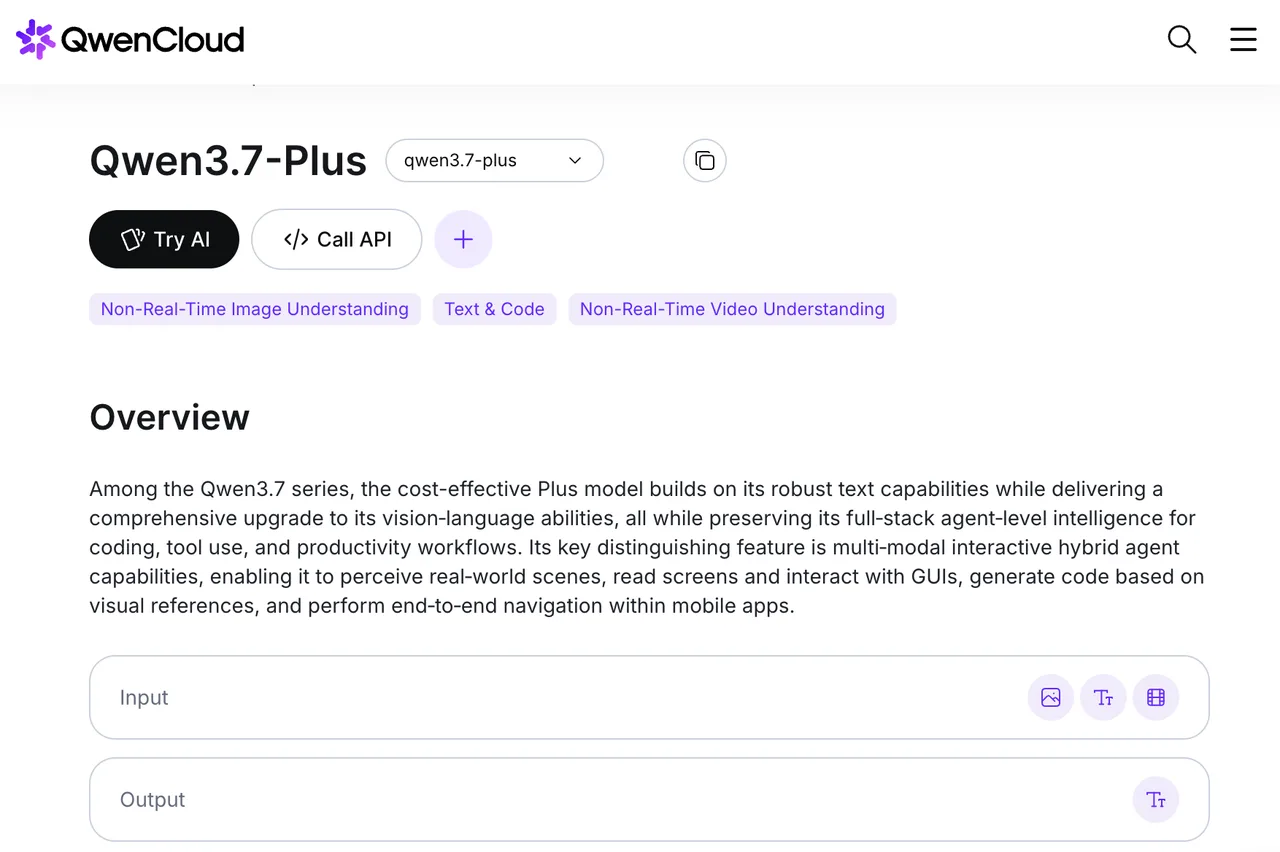
The Qwen3.7-Plus model page lists image, text, and video input with text output, plus function calling, cache, structured outputs, batch support, web search, and fine-tuning surfaces. That makes it a hosted product candidate, not a downloadable checkpoint candidate.
For Qwen3.8, I would pin Qwen/Qwen3.8-27B if the team wants a local or self-managed evaluation. The Qwen3.8-27B model card lists Apache 2.0 licensing, a 27B model, vision-language support, Transformers examples, and serving notes for vLLM and SGLang. That is a different decision from calling qwen3.8-max.
Hosted Qwen 3.7 Plus and Qwen3.8 Deployment Variants
This is where Qwen model selection gets messy. Qwen3.7 Plus is a hosted API model. Qwen3.8 can mean an open 27B checkpoint, a hosted Max endpoint, or a future provider-specific build.
I would split the evaluation into two lanes:
Hosted lane: qwen3.7-plus vs qwen3.8-max, same provider, same API protocol, same region.
Local lane: qwen3.7-plus API vs Qwen/Qwen3.8-27B self-hosted, with API cost and infrastructure cost kept separate.
Mixing those two lanes creates false confidence. A local model that looks cheaper on paper may need GPU capacity, serving maintenance, logging, autoscaling, and someone awake when the process dies. A hosted model hides that work, then charges for tokens and limits.
Compare Capabilities and Access
Modalities, Context, Tools, and Structured Output
For a practical Qwen3.7 Plus comparison, I would test four things before reading any leaderboard: long context, visual input, function calling, and structured output. These are the places where application code breaks.
The QwenCloud text model table lists qwen3.7-plus and qwen3.8-max with 1M context, thinking support, function calling, built-in tools, and structured output. It also lists qwen3.8-max with a larger max output than the 3.7 Plus entries. That does not tell me the winner. It tells me what to test first.
For local Qwen/Qwen3.8-27B, the model card says the checkpoint has a native 262,144-token context and can extend to 1,000,000 tokens. That is not the same as saying every local runtime will handle 1M context with acceptable memory, speed, and stability. The conclusion is valid at this scale only after the serving stack proves it.
API Availability, Open Weights, and Runtime Options
qwen3.7-plus is the safer candidate when the team wants Qwen API models with provider-managed hosting. It has clearer hosted API behavior, region pricing, rate limits, and provider-side tooling.
Qwen/Qwen3.8-27B is the more flexible candidate when the team needs local control, offline tests, private workloads, or runtime customization. It also shifts more work onto the engineering team. One person can remember parameters. A team cannot. Pin the model revision, runtime version, quantization, context length, sampling settings, and prompt template in the same place.
The Qwen3.8 launch post frames the family around stronger coding, professional work, research, and long-horizon tasks. I would treat those claims as a test plan, not a conclusion.
Run the Same Workload Tests
Coding, Reasoning, Agent, and Multimodal Tasks
A fair Qwen3.8 comparison uses the same tasks across both candidates.
My minimum canary set would include one repository edit, one bug-fix task with tests, one structured JSON extraction task, one long-document reasoning prompt, one image or screenshot analysis task, and one agent loop with tool calls. Keep the same tool budget. Keep the same retry rule. Keep the same scoring sheet.
If qwen3.8-max is being tested through API, run it against qwen3.7-plus through the same provider layer. If Qwen/Qwen3.8-27B is local, do not compare its latency directly with hosted Qwen3.7 Plus unless the report clearly separates network time, queue time, decode speed, and hardware cost.
Quality, Failure Rate, and Recovery Behavior
I care less about the best answer than the recovery pattern.
Does the model notice when a tool call failed? Does it repair invalid JSON? Does it keep file paths stable after a long context? Does it ask for missing data, or does it invent a clean-looking answer? A good single output does not mean the production workflow is ready.
For each task, record pass, partial pass, failure type, retry count, manual fix time, and whether the failure would have reached a customer. That last column matters. Some failures are annoying. Some become incidents.
Compare Production Economics
Latency, Throughput, Memory, and Reliability
Hosted Qwen3.7 Plus has a simpler operational profile: token billing, provider limits, API monitoring, and fewer runtime decisions. Local Qwen3.8-27B has more control, but memory and throughput become your problem.
Do not use one laptop run to decide a team migration. Run three passes at the context sizes the product really uses: short prompt, medium retrieval prompt, and long-context prompt. Track model load time, prompt processing, generation speed, peak memory, idle memory, timeout rate, and error recovery.
The Model Studio rate limit page shows why this cannot be judged by feel. Rate limits differ by model, region, and alias. Snapshot IDs can also have different limits from main model aliases.
API Cost, Infrastructure Cost, and Operations Effort
Hosted cost is easier to calculate. Local cost is easier to underestimate.
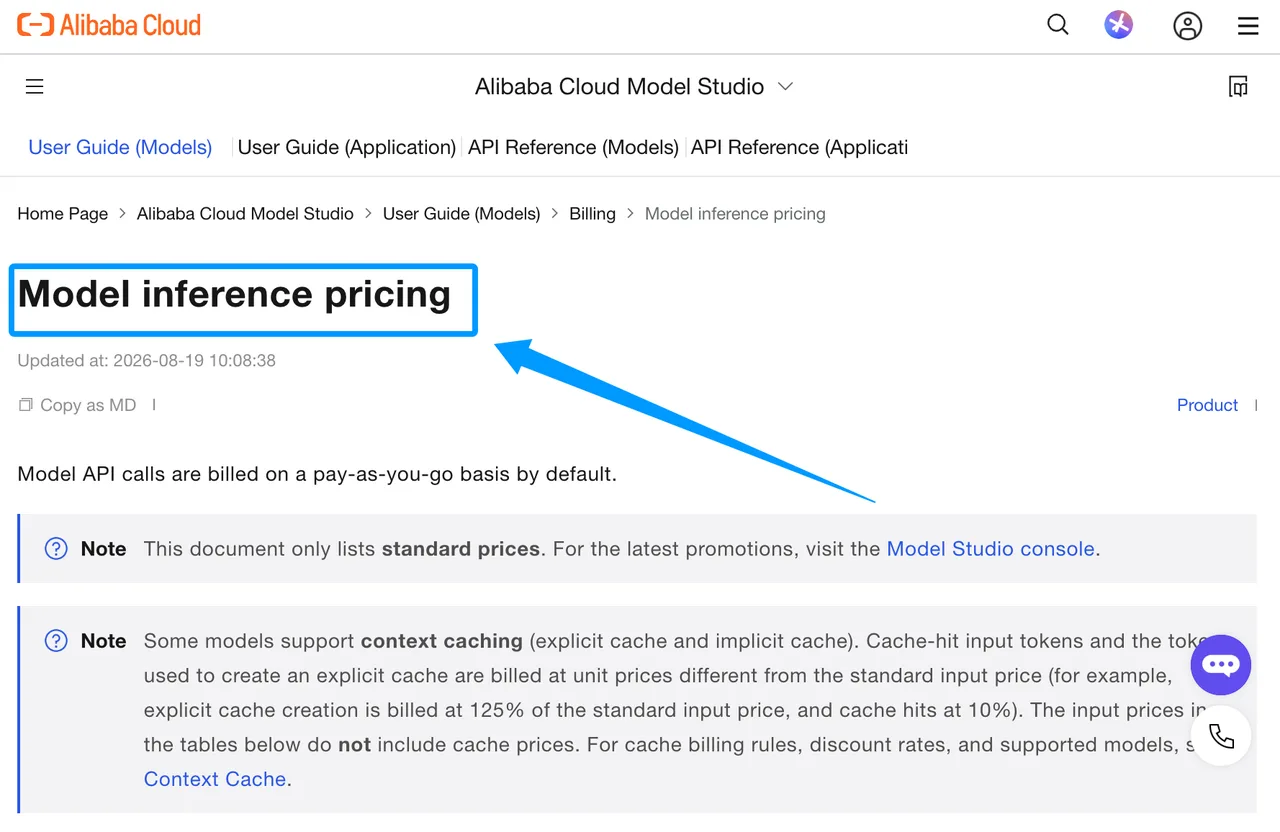
For Qwen3.7 Plus, use the current Model Studio pricing page and keep region, input tier, output tier, discounts, cache behavior, and free quota separate. The same model ID can have different prices by deployment scope.
For Qwen3.8-27B local, calculate GPU hours, storage, network transfer, engineer time, observability, incident handling, and idle capacity. If the model sits mostly unused, the local setup may look elegant and still cost more than the hosted path.
Choose by Deployment Scenario
When Qwen 3.7 Plus Is the Better Evaluation Candidate
I would start with Qwen3.7 Plus when the team needs predictable API access, structured outputs, built-in tools, long context, and a faster path to production controls. It fits products where the main risk is integration stability, not model ownership.
It also fits teams that do not have spare GPU capacity or serving expertise. There is no shame in that. Shipping a reliable feature is not the same job as running an inference cluster.
When Qwen 3.8 Is the Better Evaluation Candidate
I would evaluate Qwen3.8-27B when local control matters: regulated data handling, offline environments, reproducible research, custom serving, or lower dependence on one hosted provider.
I would evaluate qwen3.8-max when the task truly needs a stronger hosted flagship candidate and the budget can support heavier reasoning. That is a hosted-to-hosted comparison, not a Qwen local vs hosted shortcut.
When a Canary Test Is Still Required
A canary is required when the model touches customer-facing answers, code changes, financial workflows, medical content, legal drafts, or long-running agents. Run it on real prompts after removing sensitive data. Keep the old model behind a feature flag.
Demos show the ceiling. Production shows the floor.
Limits and Trade-Offs
Hosted and Local Results Are Not Directly Interchangeable
A hosted API model and an open checkpoint do not fail in the same way. Hosted failures include rate limits, provider outages, account limits, and billing surprises. Local failures include out-of-memory crashes, slow cold loads, kernel/runtime mismatch, queue buildup, and bad quantization choices.
This is the central trap in Qwen 3.7 Plus vs Qwen 3.8 decisions. The model name is not the only variable. The runtime is part of the product.
Model Families Can Change After Publication
Aliases can move. Provider docs can change. Hugging Face revisions can update. Pricing promotions can expire. A working setup today may not describe the same setup next month.
Before launch, pin the exact model ID, provider, region, revision, runtime, quantization, context length, and rollback model. Then store the canary report beside the deployment change. If no one can find the evidence later, the team will repeat the argument from memory.
FAQ
Can one application keep both models behind a feature flag?
Yes. That is the cleanest migration pattern. Put qwen3.7-plus and the Qwen3.8 candidate behind a server-side flag, route a small share of traffic, and log model ID, provider, prompt version, latency, cost, and failure type.
How should teams migrate prompt templates between Qwen generations?
Treat prompt templates as versioned assets. Do not silently reuse a Qwen3.7 Plus prompt with Qwen3.8 and assume equal behavior. Run the same prompt, then a tuned prompt, and record which one wins.
Can cached outputs be reused during a model migration test?
Only for non-customer-facing regression checks. For quality evaluation, cached outputs hide model behavior. For cost testing, cached outputs distort token usage and retry math.
What rollback evidence should be collected before launch?
Keep the old model ID, new model ID, traffic percentage, task scores, failure samples, cost estimate, rate-limit notes, and the exact condition that triggers rollback. The rollback rule should be boring enough to follow during an incident.
Who decides when deployment effort outweighs model quality gains?
The owner should be a joint platform and product decision maker. Platform owns reliability and cost evidence. Product owns user impact. If those two groups disagree, do not launch wider until the canary shows a clear production gain.
Conclusion
The practical answer to Qwen 3.7 Plus vs Qwen 3.8 is not a universal winner. Use qwen3.7-plus when hosted API stability, provider tools, and faster rollout matter most. Use Qwen/Qwen3.8-27B when local control is worth the serving work. Use qwen3.8-max only when the comparison is explicitly hosted flagship against hosted API.
The next action is simple: pick one exact Qwen3.8 target, run the same canary tasks against Qwen3.7 Plus, and decide from the workflow evidence, not the family name.
Previous posts:
/filters:quality(82)/media/images/5f15570a-6a68-432e-a6f1-1dcbf799ba81.webp)
/filters:quality(82)/media/images/b73c2438-6bdd-4b80-a229-8d71d8f819cf.webp)
/filters:quality(82)/media/images/427fd9f2-347d-4f86-a2d5-aee110cda01d.webp)
/filters:quality(82)/media/images/1773962750383987480_n3hqzHRZ.webp)
/filters:quality(82)/media/images/43fa0e7f-a0db-48d7-9bab-921d1225db30.webp)
/filters:quality(82)/media/images/5799ff56-3a73-40ca-a666-e4965d878496.webp)