 tripo3d/
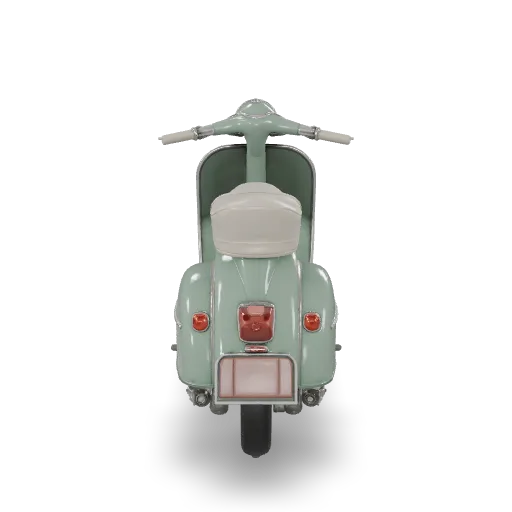
Tripo3D H3.1 Image-to-3D turns a single image into a 3D model with Tripo's high-fidelity H3.1 model (up to 2 million faces) for production assets and 3D printing. Ready-to-use REST inference API, best performance, no coldstarts, affordable pricing.
Siap
$0.36per run·~27 / $10
ContohLihat semua

Model Terkait






README
Tripo3D H3.1 Image-to-3D
Tripo3D H3.1 Image-to-3D generates a 3D model from a single image, with optional textures and PBR materials. Choose geometry detail, mesh settings, or separate-part generation.
Why Choose This?
- Geometry and materials — Generate geometry alone or include textures and PBR materials.
- Texture choices — Choose standard, detailed, extreme, or fast texturing.
- Mesh options — Adjust the face count and choose triangle or quad output.
- Separate parts — Generate untextured, editable parts.
Parameters
| Parameter | Required | Description |
|---|---|---|
| image | Yes | Image of the object (PNG, JPEG or WebP). |
| texture | No | Generate texture maps. Turn off (with pbr) for an untextured model at a lower price. Default: true. |
| pbr | No | Generate PBR materials (base color, metallic, roughness, normal). Turning it on also turns on texture. Default: true. |
| texture_quality | No | Texture quality: standard, detailed, extreme (8k), or fast (same texture size as standard). Options: standard, detailed, extreme, fast. Default: standard. |
| texture_version | No | Texture version. fast quality uses v3.5-20260815. Options: v3.0-20250812, v3.5-20260815. Default: v3.0-20250812. |
| delight | No | Remove the lighting baked into the source before texturing (texture model v3.5-20260815 only). Default: true. |
| geometry_quality | No | Geometry quality: standard or detailed (Ultra, up to 2 million faces). Options: standard, detailed. Default: standard. |
| quad | No | Output a quad mesh (FBX). Without a face_limit it targets 10,000 faces. Default: false. |
| smart_low_poly | No | Generate a low-poly mesh with simplified topology. Default: false. |
| generate_parts | No | Generate the model as separate editable parts. Parts are untextured and triangle-only. Default: false. |
| face_limit | No | Maximum number of faces. Omit for adaptive. Up to 1,500,000 (2,000,000 with detailed geometry, 150,000 with quad; 500 to 20,000 with smart_low_poly). |
| texture_alignment | No | What the texture follows: the source image colors or the generated geometry. Options: original_image, geometry. Default: original_image. |
| orientation | No | align_image rotates the model to the source image viewpoint (textured models only). Options: default, align_image. Default: default. |
| enable_image_autofix | No | Request input-image correction before generation. Default: false. |
| auto_size | No | Scale the model to real-world size in meters. Needs a textured model. Default: false. |
| export_uv | No | Unwrap UVs during generation. Default: true. |
| model_seed | No | Optional seed for geometry generation. |
| texture_seed | No | Optional seed for texture generation. |
How to Use
- Upload an image of the object.
- Choose geometry and texture settings.
- Adjust optional mesh settings.
- Submit the request and download the generated model.
Pricing
Default settings (per run): $0.36
| Texture setting (standard geometry, no other additions) | Price per request |
|---|---|
Geometry only (texture=false and pbr=false) | $0.24 |
Standard textures (texture_quality=standard) | $0.36 |
Fast textures (texture_quality=fast) | $0.36 |
Detailed textures (texture_quality=detailed) | $0.48 |
Extreme (8k) textures (texture_quality=extreme) | $0.60 |
| Optional addition | Extra charge |
|---|---|
Detailed geometry (geometry_quality=detailed compared with geometry_quality=standard) | $0.24 |
Quad output (quad=true compared with quad=false, without separate parts) | $0.06 |
Smart low-poly (smart_low_poly=true compared with smart_low_poly=false) | $0.12 |
| Separate parts | Price per request |
|---|---|
generate_parts=true, standard geometry | $0.48 |
generate_parts=true, detailed geometry (geometry_quality=detailed) | $0.72 |
generate_parts=true with smart low-poly (smart_low_poly=true) | $0.60 |
The total is the price of the chosen texture setting plus the selected additions. Separate-part generation is priced as its own case: texture and quad charges do not apply, and texture quality does not change the price. Other selected additions, such as detailed geometry and smart low-poly, still apply.
For geometry-only output, turn off both texture and pbr. Enabling pbr also enables textures.
Notes
- Turn off both
textureandpbrfor an untextured model. fastuses the same texture size and price asstandardand selects texture versionv3.5-20260815.delightaffects texturing only with texture versionv3.5-20260815; older texture versions ignore it.- Texture quality settings do not add a charge when textures are not generated.
auto_sizeestimates real-world scale and requires textured output.- With
generate_parts=true, output parts are untextured and triangle-only; texture, PBR, and quad options are not applied.
H3.1 Image To 3d API — Quick start
Grab a WaveSpeedAI API key, then call POST https://api.wavespeed.ai/api/v3/tripo3d/h3.1/image-to-3d with your input as JSON. The endpoint returns a prediction id. Start polling the result endpoint around every 2 seconds, increase the interval for long-running tasks, and stop on any terminal status. On completed, read output values from data.outputs. Examples for H3.1 Image To 3d below.
HTTP example
set -euo pipefail

: "${WAVESPEED_API_KEY:?Set WAVESPEED_API_KEY}"

REQUEST_BODY=$(cat <<'JSON'
{
    "image": "https://interactive-examples.mdn.mozilla.net/media/cc0-images/painted-hand-298-332.jpg",
    "texture": true,
    "pbr": true,
    "texture_quality": "standard",
    "texture_version": "v3.0-20250812",
    "delight": true,
    "geometry_quality": "standard",
    "quad": false,
    "smart_low_poly": false,
    "generate_parts": false,
    "texture_alignment": "original_image",
    "orientation": "default",
    "enable_image_autofix": false,
    "auto_size": false,
    "export_uv": true
}
JSON
)

# 1. Submit the prediction.
SUBMIT_RESPONSE=$(curl --silent --show-error --fail-with-body \
  -X POST "https://api.wavespeed.ai/api/v3/tripo3d/h3.1/image-to-3d" \
  -H "Content-Type: application/json" \
  -H "Authorization: Bearer $WAVESPEED_API_KEY" \
  -d "$REQUEST_BODY")

TASK=$(printf '%s' "$SUBMIT_RESPONSE" | jq 'if has("data") then .data else . end')
PREDICTION_ID=$(printf '%s' "$TASK" | jq -r '.id')
if [ -z "$PREDICTION_ID" ] || [ "$PREDICTION_ID" = "null" ]; then
  printf 'Submission response did not contain a prediction id
' >&2
  exit 1
fi
RESULT_URL="https://api.wavespeed.ai/api/v3/predictions/$PREDICTION_ID/result"

# 2. Poll until the prediction finishes.
while true; do
  RESPONSE=$(curl --silent --show-error --fail-with-body "$RESULT_URL" \
    -H "Authorization: Bearer $WAVESPEED_API_KEY")
  RESULT=$(printf '%s' "$RESPONSE" | jq 'if has("data") then .data else . end')
  STATUS=$(printf '%s' "$RESULT" | jq -r '.status')
  case "$STATUS" in
    completed) printf '%s\n' "$RESULT" | jq '.outputs'; break ;;
    failed|cancelled|timeout|deleted) printf '%s\n' "$RESULT" | jq . >&2; exit 1 ;;
    *) sleep 2 ;;
  esac
done
Node.js example
const submitUrl = "https://api.wavespeed.ai/api/v3/tripo3d/h3.1/image-to-3d";
const apiKey = process.env.WAVESPEED_API_KEY;
if (!apiKey) throw new Error('Set WAVESPEED_API_KEY');

async function requestJson(url, options = {}) {
  const response = await fetch(url, options);
  if (!response.ok) throw new Error(await response.text());
  return response.json();
}

// 1. Submit the prediction.
const body = await requestJson(submitUrl, {
  method: "POST",
  headers: {
    "Authorization": `Bearer ${apiKey}`,
    "Content-Type": "application/json",
  },
  body: JSON.stringify({
        "image": "https://interactive-examples.mdn.mozilla.net/media/cc0-images/painted-hand-298-332.jpg",
        "texture": true,
        "pbr": true,
        "texture_quality": "standard",
        "texture_version": "v3.0-20250812",
        "delight": true,
        "geometry_quality": "standard",
        "quad": false,
        "smart_low_poly": false,
        "generate_parts": false,
        "texture_alignment": "original_image",
        "orientation": "default",
        "enable_image_autofix": false,
        "auto_size": false,
        "export_uv": true
}),
});
const task = body.data ?? body;
if (!task.id) throw new Error("Submission response did not contain a prediction id");
const resultUrl = `https://api.wavespeed.ai/api/v3/predictions/${task.id}/result`;

// 2. Poll until the prediction finishes.
while (true) {
  const resultBody = await requestJson(resultUrl, {
    headers: { "Authorization": `Bearer ${apiKey}` },
  });
  const result = resultBody.data ?? resultBody;
  if (result.status === "completed") {
    console.log(result.outputs);
    break;
  }
  if (["failed", "cancelled", "timeout", "deleted"].includes(result.status)) throw new Error(JSON.stringify(result));
  await new Promise(resolve => setTimeout(resolve, 2000));
}
Python example
import json
import os
import time
from urllib.request import Request, urlopen

api_key = os.environ["WAVESPEED_API_KEY"]
headers = {"Authorization": f"Bearer {api_key}", "Content-Type": "application/json"}
payload = {
    "image": "https://interactive-examples.mdn.mozilla.net/media/cc0-images/painted-hand-298-332.jpg",
    "texture": True,
    "pbr": True,
    "texture_quality": "standard",
    "texture_version": "v3.0-20250812",
    "delight": True,
    "geometry_quality": "standard",
    "quad": False,
    "smart_low_poly": False,
    "generate_parts": False,
    "texture_alignment": "original_image",
    "orientation": "default",
    "enable_image_autofix": False,
    "auto_size": False,
    "export_uv": True
}

def request_json(url, data=None):
    request = Request(url, data=data, headers=headers, method="POST" if data else "GET")
    with urlopen(request) as response:
        return json.load(response)

# 1. Submit the prediction.
body = request_json("https://api.wavespeed.ai/api/v3/tripo3d/h3.1/image-to-3d", json.dumps(payload).encode())
task = body.get("data", body)
if not task.get("id"):
    raise RuntimeError("Submission response did not contain a prediction id")
result_url = f"https://api.wavespeed.ai/api/v3/predictions/{task['id']}/result"

# 2. Poll until the prediction finishes.
while True:
    result_body = request_json(result_url)
    result = result_body.get("data", result_body)
    status = result.get("status")
    if status == "completed":
        print(result.get("outputs", []))
        break
    if status in {"failed", "cancelled", "timeout", "deleted"}:
        raise RuntimeError(result)
    time.sleep(2)
H3.1 Image To 3d API — Frequently asked questions
What is the H3.1 Image To 3d API?
H3.1 Image To 3d is a Tripo3D model for 3D asset generation from images, exposed as a REST API on WaveSpeedAI. Tripo3D H3.1 Image-to-3D turns a single image into a 3D model with Tripo's high-fidelity H3.1 model (up to 2 million faces) for production assets and 3D printing. Ready-to-use REST inference API, best performance, no coldstarts, affordable pricing. You can call it programmatically or try it from the playground above.
How do I call the H3.1 Image To 3d API?
POST your input parameters to the model's REST endpoint (shown in the API tab of this playground) with your WaveSpeedAI API key in the Authorization header. Submission returns a prediction ID. Poll the result endpoint starting around every 2 seconds, increase the interval for long-running tasks, and stop on any terminal status. The playground generates Python, JavaScript, and cURL examples for submitting requests and polling results. Full request/response shape is documented at https://wavespeed.ai/docs/docs-api/tripo3d/h3.1/image-to-3d.
How much does H3.1 Image To 3d cost per run or per second?
H3.1 Image To 3d starts at $0.36 per run or per second. That figure is the base price — the final charge scales with the parameters you set in the form (output size, length, count, references, or whatever knobs this model exposes), so a higher-quality or larger output costs more than a minimal one. The exact cost for your current input is shown live next to the Generate button before you submit, and the actual per-call charge is recorded on the prediction afterwards.
What inputs does H3.1 Image To 3d accept?
Key inputs: `image`, `auto_size`, `delight`, `enable_image_autofix`, `export_uv`, `face_limit`. The full JSON schema (types, defaults, allowed values) is rendered above the Generate button and mirrored in the API reference at https://wavespeed.ai/docs/docs-api/tripo3d/h3.1/image-to-3d.
How long does H3.1 Image To 3d take to generate?
Reported generation time on WaveSpeedAI is around 110 seconds per request. This is an estimate, not a latency guarantee; queue time and input settings can change the total wait. live status is visible in the prediction record.
Can I use H3.1 Image To 3d outputs commercially?
Commercial usage rights depend on the model's license, set by its provider (Tripo3D). Check the provider's applicable terms and WaveSpeedAI's Terms of Service before commercial use.
Lainnya dari Tripo3D
Lihat semuaModel Image to 3D lainnya
Lihat semua- meshy/v7.1/image-to-3dImage to 3D
- wavespeed-ai/trellis-2/image-to-3dImage to 3D
- wavespeed-ai/hunyuan3d-v3/image-to-3dImage to 3D
- meshy/v7.1/multi-image-to-3dImage to 3D
- tripo3d/h3.1/multiview-to-3dImage to 3D
- bytedance/seed3d-2.0/image-to-3dImage to 3D
- wavespeed-ai/hunyuan-3d-v3.1/image-to-3d-rapidImage to 3D
- hyper3d/rodin-v2.5/image-to-3dImage to 3D