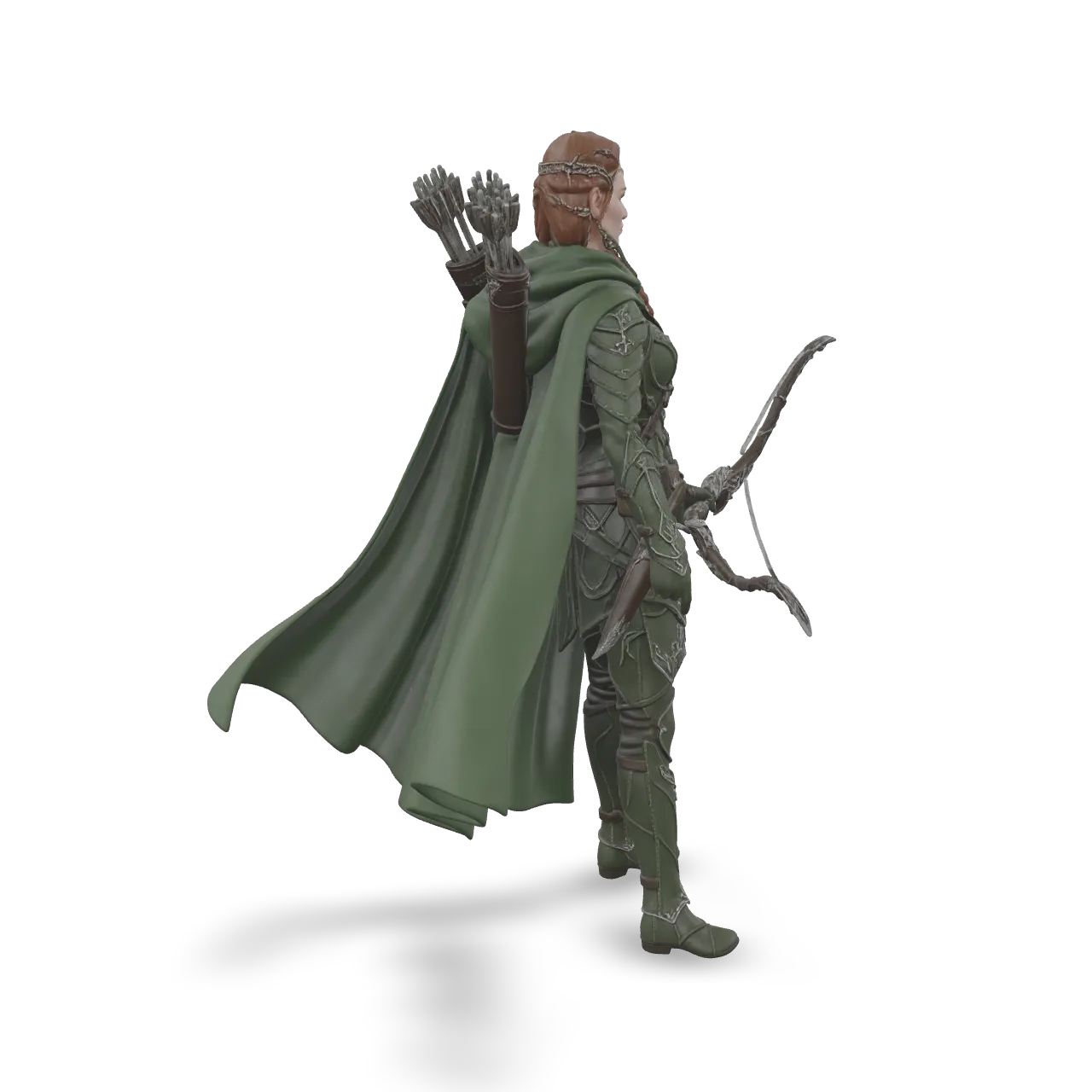
Tripo3D H3.1 Multiview-to-3D generates high-quality 3D models from 2-4 multi-angle images. Supports standard and HD texture quality, PBR materials, detailed geometry, quad mesh topology, texture alignment, and orientation control. Ready-to-use REST inference API, best performance, no coldstarts, affordable pricing.
Idle
$0.24per run·~41 / $10
ExamplesView all
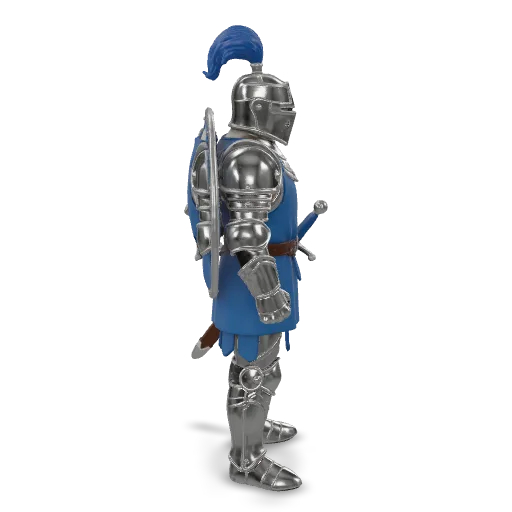
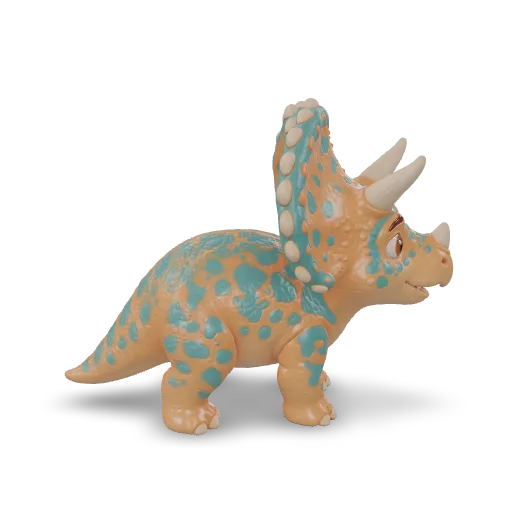
Related Models
/filters:quality(82)/media/images/1789120746143744570_VtCMW5en.webp)
/filters:quality(82)/media/images/1790055357630118327_7rW5fpyH.webp)
/filters:quality(82)/media/images/1790055359461222633_sVA5nxPe.webp)
/filters:quality(82)/media/images/1789118312974471104_PeBKU3ck.webp)
/filters:quality(82)/media/images/1789119184005756217_r4sCMU3d.webp)
/filters:quality(82)/media/images/1789121897153465635_WuENX6fp.webp)
README
Tripo3D H3.1 Multiview-to-3D
Tripo3D H3.1 Multiview-to-3D reconstructs a production-ready 3D model from 2 to 4 reference images of the same object taken from different angles. Upload front, left, back, and right views — the model generates accurate geometry with optional PBR textures, quad mesh topology, and detailed quality tiers for both geometry and texture.
Why Choose This?
-
Multi-view 3D reconstruction Provide 2–4 images from different angles for significantly more accurate geometry than single-image reconstruction.
-
PBR material generation Generate Physically Based Rendering materials alongside the mesh for realistic real-time rendering in game engines and 3D tools.
-
Geometry and texture quality tiers Choose between standard and detailed quality independently for geometry and texture — optimizing for speed, cost, or maximum fidelity.
-
Quad mesh support Generate quad (4-sided) mesh topology instead of triangles for cleaner topology compatible with animation and sculpting workflows.
-
Texture alignment control Align textures to the original input image or to the generated geometry for different use case requirements.
-
Orientation control Use align_image to auto-rotate the model to match the input image orientation.
Parameters
| Parameter | Required | Description |
|---|---|---|
| images | Yes | 2–4 image URLs of the same object from different angles. Order: front, left, back, right. Front is required. |
| texture | No | Whether to generate textures for the model. Default: true. |
| pbr | No | Whether to generate PBR materials. Requires texture to be enabled. Default: true. |
| texture_quality | No | Texture quality: standard (default) or detailed (higher resolution). |
| geometry_quality | No | Geometry quality: standard (default) or detailed. |
| texture_alignment | No | How textures are aligned: original_image (default) or geometry. |
| auto_size | No | Auto-scale the model to real-world dimensions. Default: false. |
| orientation | No | Model orientation: default or align_image (auto-rotates to match input image). |
| quad | No | Generate quad mesh topology instead of triangles. Default: false. |
How to Use
- Upload your images — provide 2 to 4 image URLs of the same object from different angles. Front view is required; order as front, left, back, right.
- Configure texture settings (optional) — enable or disable texture and PBR generation, and choose standard or detailed texture quality.
- Set geometry quality (optional) — choose standard for faster results or detailed for higher geometric fidelity.
- Configure additional options (optional) — set texture alignment, orientation, quad mesh, and auto-size as needed.
- Submit — generate and download your 3D model.
Pricing
| Texture | Texture Quality | Geometry Quality | Quad | Cost |
|---|---|---|---|---|
| No | — | Standard | No | $0.24 |
| No | — | Detailed | No | $0.48 |
| Yes | Standard | Standard | No | $0.36 |
| Yes | Standard | Detailed | No | $0.60 |
| Yes | Detailed | Standard | No | $0.48 |
| Yes | Detailed | Detailed | No | $0.72 |
Add +$0.06 to any combination above when quad is enabled.
Billing Rules
- Base: $0.24 × texture multiplier (no texture: ×1, standard texture: ×1.5, detailed texture: ×2).
- Detailed geometry surcharge: +$0.24.
- Quad surcharge: +$0.06.
- Textures are enabled when either
textureorpbristrue. The no-texture price applies only when both arefalse. - Default configuration (
texture=true,pbr=true, standard texture and geometry quality,quad=false): $0.36 per request.
Best Use Cases
- Game asset production — Reconstruct clean, textured 3D models from product or object photography for use in game engines.
- E-commerce 3D — Generate 3D product models from multi-angle product photos for interactive viewers and AR.
- Animation & VFX — Use quad mesh output for animation-ready topology compatible with rigging and sculpting workflows.
- Digital twins — Accurately reconstruct real-world objects from multiple reference photographs.
- AR/VR content — Generate PBR-textured models for immersive application development.
Pro Tips
- Always include a clear front-facing image — it is required and the most important reference for accurate reconstruction.
- More angles (3–4 images) produce significantly better geometry than using just 2.
- Use detailed geometry quality for objects with fine surface detail like mechanical parts or organic shapes.
- Use quad mesh when the model will be used for animation or further sculpting.
- Enable auto_size when you need the model to match real-world scale.
- Use align_image orientation when the input photo perspective matters for the final model alignment.
Notes
- images is the only required field; all other parameters are optional.
- Images should be ordered as: front, left, back, right. Front view is mandatory.
- Please ensure your content complies with Tripo3D's usage policies.
H3.1 Multiview To 3d API — Quick start
Grab a WaveSpeedAI API key, then call POST https://api.wavespeed.ai/api/v3/tripo3d/h3.1/multiview-to-3d with your input as JSON. The endpoint returns a prediction id. Start polling the result endpoint around every 2 seconds, increase the interval for long-running tasks, and stop on any terminal status. On completed, read output values from data.outputs. Examples for H3.1 Multiview To 3d below.
HTTP example
set -euo pipefail

: "${WAVESPEED_API_KEY:?Set WAVESPEED_API_KEY}"

REQUEST_BODY=$(cat <<'JSON'
{
    "images": [
        "https://interactive-examples.mdn.mozilla.net/media/cc0-images/painted-hand-298-332.jpg",
        "https://interactive-examples.mdn.mozilla.net/media/cc0-images/painted-hand-298-332.jpg"
    ],
    "texture": true,
    "pbr": true,
    "texture_quality": "standard",
    "geometry_quality": "standard",
    "texture_alignment": "original_image",
    "auto_size": false,
    "orientation": "default",
    "quad": false
}
JSON
)

# 1. Submit the prediction.
SUBMIT_RESPONSE=$(curl --silent --show-error --fail-with-body \
  -X POST "https://api.wavespeed.ai/api/v3/tripo3d/h3.1/multiview-to-3d" \
  -H "Content-Type: application/json" \
  -H "Authorization: Bearer $WAVESPEED_API_KEY" \
  -d "$REQUEST_BODY")

TASK=$(printf '%s' "$SUBMIT_RESPONSE" | jq 'if has("data") then .data else . end')
PREDICTION_ID=$(printf '%s' "$TASK" | jq -r '.id')
if [ -z "$PREDICTION_ID" ] || [ "$PREDICTION_ID" = "null" ]; then
  printf 'Submission response did not contain a prediction id
' >&2
  exit 1
fi
RESULT_URL="https://api.wavespeed.ai/api/v3/predictions/$PREDICTION_ID/result"

# 2. Poll until the prediction finishes.
while true; do
  RESPONSE=$(curl --silent --show-error --fail-with-body "$RESULT_URL" \
    -H "Authorization: Bearer $WAVESPEED_API_KEY")
  RESULT=$(printf '%s' "$RESPONSE" | jq 'if has("data") then .data else . end')
  STATUS=$(printf '%s' "$RESULT" | jq -r '.status')
  case "$STATUS" in
    completed) printf '%s\n' "$RESULT" | jq '.outputs'; break ;;
    failed|cancelled|timeout|deleted) printf '%s\n' "$RESULT" | jq . >&2; exit 1 ;;
    *) sleep 2 ;;
  esac
done
Node.js example
const submitUrl = "https://api.wavespeed.ai/api/v3/tripo3d/h3.1/multiview-to-3d";
const apiKey = process.env.WAVESPEED_API_KEY;
if (!apiKey) throw new Error('Set WAVESPEED_API_KEY');

async function requestJson(url, options = {}) {
  const response = await fetch(url, options);
  if (!response.ok) throw new Error(await response.text());
  return response.json();
}

// 1. Submit the prediction.
const body = await requestJson(submitUrl, {
  method: "POST",
  headers: {
    "Authorization": `Bearer ${apiKey}`,
    "Content-Type": "application/json",
  },
  body: JSON.stringify({
        "images": [
                "https://interactive-examples.mdn.mozilla.net/media/cc0-images/painted-hand-298-332.jpg",
                "https://interactive-examples.mdn.mozilla.net/media/cc0-images/painted-hand-298-332.jpg"
        ],
        "texture": true,
        "pbr": true,
        "texture_quality": "standard",
        "geometry_quality": "standard",
        "texture_alignment": "original_image",
        "auto_size": false,
        "orientation": "default",
        "quad": false
}),
});
const task = body.data ?? body;
if (!task.id) throw new Error("Submission response did not contain a prediction id");
const resultUrl = `https://api.wavespeed.ai/api/v3/predictions/${task.id}/result`;

// 2. Poll until the prediction finishes.
while (true) {
  const resultBody = await requestJson(resultUrl, {
    headers: { "Authorization": `Bearer ${apiKey}` },
  });
  const result = resultBody.data ?? resultBody;
  if (result.status === "completed") {
    console.log(result.outputs);
    break;
  }
  if (["failed", "cancelled", "timeout", "deleted"].includes(result.status)) throw new Error(JSON.stringify(result));
  await new Promise(resolve => setTimeout(resolve, 2000));
}
Python example
import json
import os
import time
from urllib.request import Request, urlopen

api_key = os.environ["WAVESPEED_API_KEY"]
headers = {"Authorization": f"Bearer {api_key}", "Content-Type": "application/json"}
payload = {
    "images": [
        "https://interactive-examples.mdn.mozilla.net/media/cc0-images/painted-hand-298-332.jpg",
        "https://interactive-examples.mdn.mozilla.net/media/cc0-images/painted-hand-298-332.jpg"
    ],
    "texture": True,
    "pbr": True,
    "texture_quality": "standard",
    "geometry_quality": "standard",
    "texture_alignment": "original_image",
    "auto_size": False,
    "orientation": "default",
    "quad": False
}

def request_json(url, data=None):
    request = Request(url, data=data, headers=headers, method="POST" if data else "GET")
    with urlopen(request) as response:
        return json.load(response)

# 1. Submit the prediction.
body = request_json("https://api.wavespeed.ai/api/v3/tripo3d/h3.1/multiview-to-3d", json.dumps(payload).encode())
task = body.get("data", body)
if not task.get("id"):
    raise RuntimeError("Submission response did not contain a prediction id")
result_url = f"https://api.wavespeed.ai/api/v3/predictions/{task['id']}/result"

# 2. Poll until the prediction finishes.
while True:
    result_body = request_json(result_url)
    result = result_body.get("data", result_body)
    status = result.get("status")
    if status == "completed":
        print(result.get("outputs", []))
        break
    if status in {"failed", "cancelled", "timeout", "deleted"}:
        raise RuntimeError(result)
    time.sleep(2)
H3.1 Multiview To 3d API — Frequently asked questions
What is the H3.1 Multiview To 3d API?
H3.1 Multiview To 3d is a Tripo3D model for 3D asset generation from images, exposed as a REST API on WaveSpeedAI. Tripo3D H3.1 Multiview-to-3D generates high-quality 3D models from 2-4 multi-angle images. Supports standard and HD texture quality, PBR materials, detailed geometry, quad mesh topology, texture alignment, and orientation control. Ready-to-use REST inference API, best performance, no coldstarts, affordable pricing. You can call it programmatically or try it from the playground above.
How do I call the H3.1 Multiview To 3d API?
POST your input parameters to the model's REST endpoint (shown in the API tab of this playground) with your WaveSpeedAI API key in the Authorization header. Submission returns a prediction ID. Poll the result endpoint starting around every 2 seconds, increase the interval for long-running tasks, and stop on any terminal status. The playground generates Python, JavaScript, and cURL examples for submitting requests and polling results. Full request/response shape is documented at https://wavespeed.ai/docs/docs-api/tripo3d/tripo3d-h3.1-multiview-to-3d.
How much does H3.1 Multiview To 3d cost per run?
H3.1 Multiview To 3d starts at $0.24 per run. That figure is the base price — the final charge scales with the parameters you set in the form (output size, length, count, references, or whatever knobs this model exposes), so a higher-quality or larger output costs more than a minimal one. The exact cost for your current input is shown live next to the Generate button before you submit, and the actual per-call charge is recorded on the prediction afterwards.
What inputs does H3.1 Multiview To 3d accept?
Key inputs: `images`, `auto_size`, `geometry_quality`, `orientation`, `pbr`, `quad`. The full JSON schema (types, defaults, allowed values) is rendered above the Generate button and mirrored in the API reference at https://wavespeed.ai/docs/docs-api/tripo3d/tripo3d-h3.1-multiview-to-3d.
How long does H3.1 Multiview To 3d take to generate?
Reported generation time on WaveSpeedAI is around 254 seconds per request. This is an estimate, not a latency guarantee; queue time and input settings can change the total wait. live status is visible in the prediction record.
Can I use H3.1 Multiview To 3d outputs commercially?
Commercial usage rights depend on the model's license, set by its provider (Tripo3D). Check the provider's applicable terms and WaveSpeedAI's Terms of Service before commercial use.
More from Tripo3D
View allMore Image to 3D models
View all- tripo3d/h3.1/image-to-3dImage to 3D
- bytedance/seed3d-2.0/image-to-3dImage to 3D
- wavespeed-ai/hunyuan-3d-v3.1/image-to-3d-rapidImage to 3D
- wavespeed-ai/hunyuan3d-v3/image-to-3dImage to 3D
- hyper3d/rodin-v2.5/image-to-3dImage to 3D
- meshy/v7/multi-image-to-3dImage to 3D
- meshy/v7/image-to-3dImage to 3D
- tripo3d/triposplat/image-to-3dImage to 3D