
Is MiniMax H3 Free? Open Weights vs API Costs 2026
Is MiniMax H3 free? Compare starter credits, paid API access, open-weight downloads, self-hosting costs, and license limits for developers.
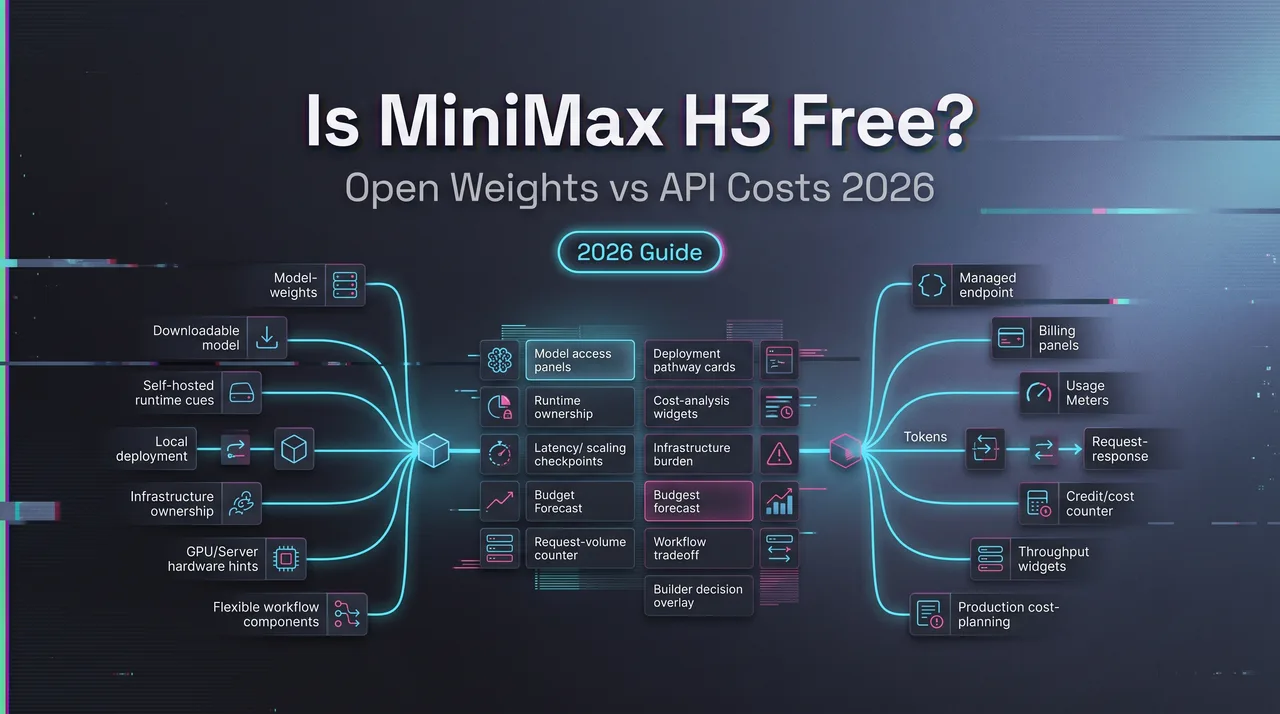
MiniMax H3 is not unlimited free. That is the clean answer to MiniMax H3 free. New accounts may get starter credits. Hosted API access usually moves into usage-based billing. The H3-Base weights can be downloaded, but local inference still means GPU capacity, storage, bandwidth, deployment work, and debugging time.
I paused here because “free” is doing too much work in this question. Free trial, open weights, no-license-fee research use, and production-grade video generation are not the same thing. As checked on August 10, 2026, the useful question is not “can I touch H3 without paying today?” It is “what cost appears once the first test becomes a workflow?”
Is MiniMax H3 Free?
Free Starter Credits Are Limited Trial Access
For quick tests, the lowest-friction route is usually a hosted playground. WaveSpeed’s MiniMax H3 API page states that new accounts come with starter credits and that H3 can be tried through playground and REST access.
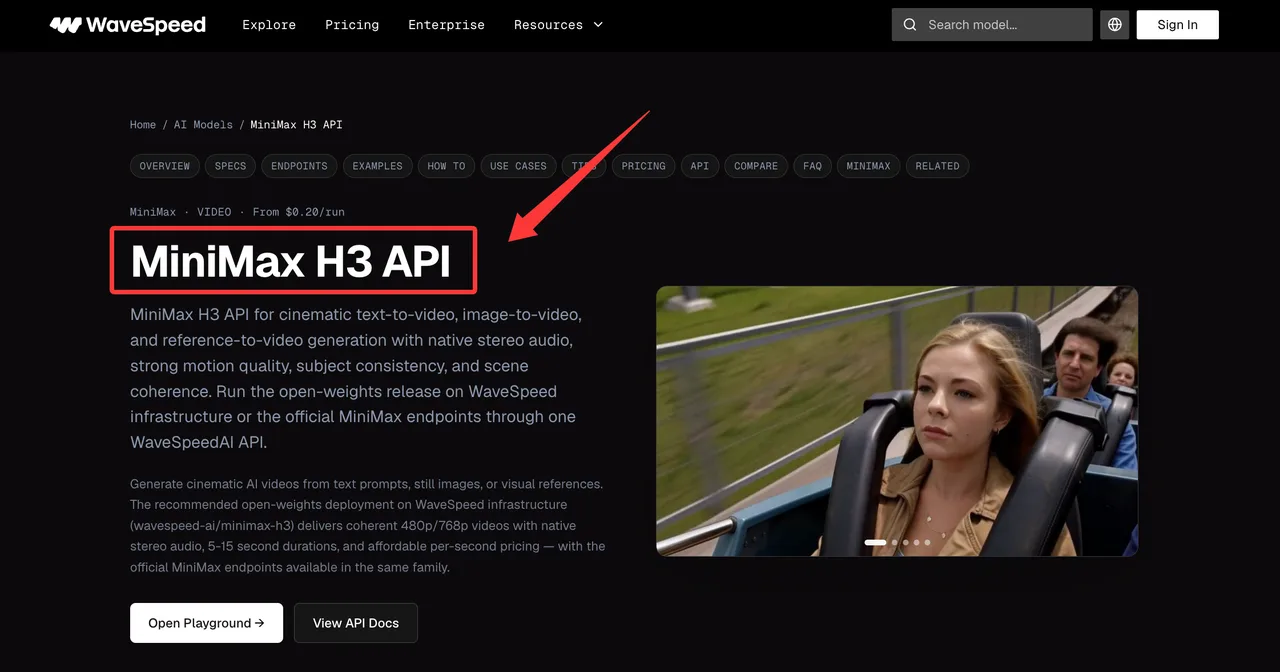
That does not make MiniMax H3 free forever. Starter credits are a trial budget. They can change by account, region, promotion, product policy, or launch period. I would not build a client quote around them. Good enough for exploration. Not good enough for production forecasting.
The clean internal rule is simple: trial credits belong to evaluation, not delivery. Once a customer project depends on repeatable output, the run should sit under paid billing with tracked ownership.
Open Weights Still Carry Generation Costs
MiniMax released H3 as a general omni-modal video generation system and discussed its model design in the official MiniMax H3 launch post. The open-weights route changes who operates the model. It does not remove compute.
H3-Base can run locally, but the cost moves into infrastructure. GPUs are rented or purchased. Model files need storage. Generated videos need storage and transfer. Someone has to set up serving, monitor failures, handle versions, and keep the pipeline alive.
So the answer to MiniMax H3 free is: partly free to access in limited ways, not free to operate at real volume.
Compare the Ways to Access MiniMax H3
WaveSpeed Playground and Hosted API
WaveSpeed is the practical route when the goal is to test H3 quickly, compare variants, or place it beside other generation models under one account. The hosted path removes the first deployment burden. That matters more than it sounds.
The budget line here is usage-based output cost plus whatever retry, review, and failed-brief cost the team creates around it. Hosted API cost is visible. Human correction time is easier to miss.
MiniMax Official API and Video Packages
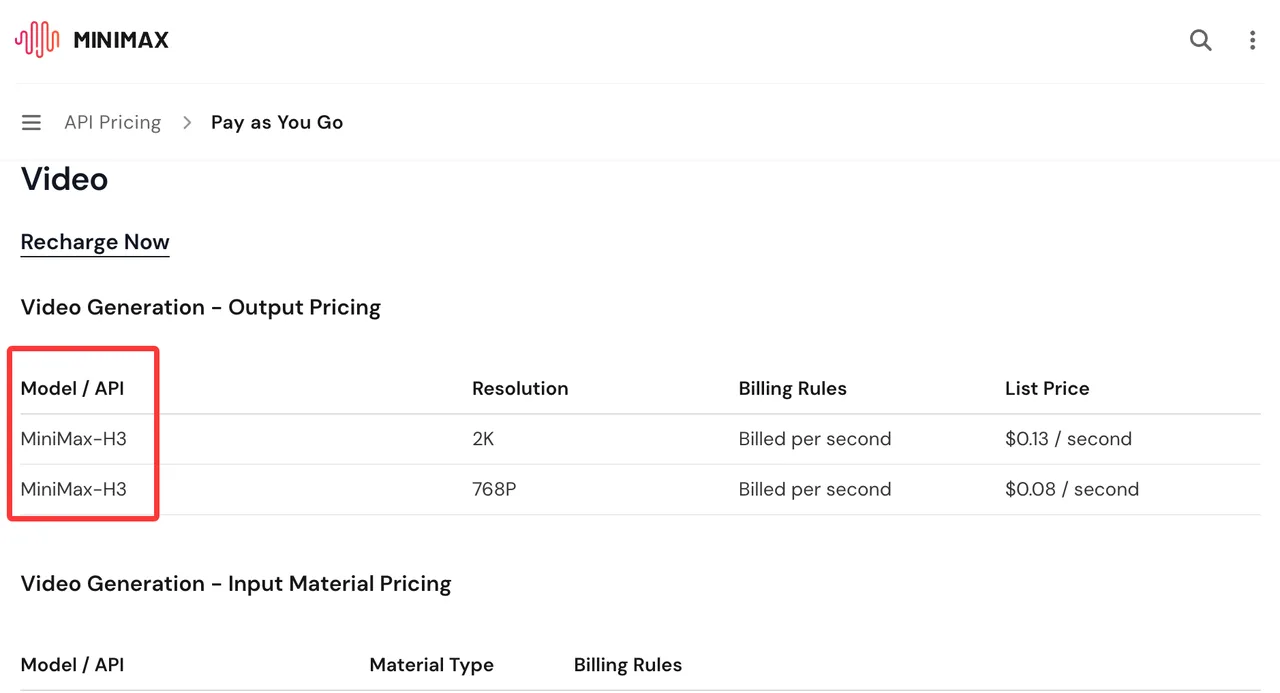
MiniMax’s official pricing docs are the source to check before any budget decision. The pay-as-you-go pricing page lists H3 billing rules directly. The separate video packages page currently says H3 is not included in those video packages.
That distinction matters. A team may see “video package” and assume H3 is covered. As of the verification date above, that assumption would be wrong. Found the pattern on the third try: package eligibility is its own question, separate from whether the model exists in the API.
Local H3-Base Deployment
The local route starts from the MiniMax H3 model card. It describes H3-Base, supported input modes, local deployment paths, and the current split between the open release and hosted modules.
For broader context on when open model deployment makes sense, this connects naturally to open video models. Open weights are useful when a team needs inspection, customization, or control. They are less useful when the team mainly wants predictable delivery by Friday.
Understand What You Still Pay For
Why Prices and Credit Rules Change and Where to Recheck Them
Prices, starter credits, package coverage, and regional availability are moving parts. They can change faster than an internal budget deck.
Before publishing a cost estimate or opening production access, recheck three places on the same day: the WaveSpeed account page, the WaveSpeed live price display for the selected H3 route, and MiniMax’s official pricing docs.
Do not copy numbers into a procurement sheet and let them age quietly. That is how small experiments become messy invoices.
GPU, Storage, Bandwidth, and Engineering Time
Self-hosting cost usually hides in four places.
GPU time is the obvious one. Video generation is not a cheap workload. Storage comes next, especially when teams keep inputs, intermediate files, outputs, rejected drafts, and evaluation samples. Bandwidth appears once customers or reviewers download files repeatedly.
Engineering time is the quiet line item. Someone maintains drivers, serving frameworks, queues, logs, retries, and version changes. If that work takes a week, it belongs in the MiniMax H3 self-hosting cost model.
Why Full 2K Workflows May Still Use Hosted Components
The open release does not mean every H3 component is open in the same way. The Hugging Face model card says H3-Base produces 768p results, while H3-Context-IR and H3-Regenerate-2K are not part of the initial open-source release. Full 2K validation can combine local H3-Base with hosted official components.
That is the boundary. H3-Base weights can be local. A full 2K workflow may still depend on hosted APIs.
Check License and Region Boundaries
Community License Restrictions and Commercial Terms
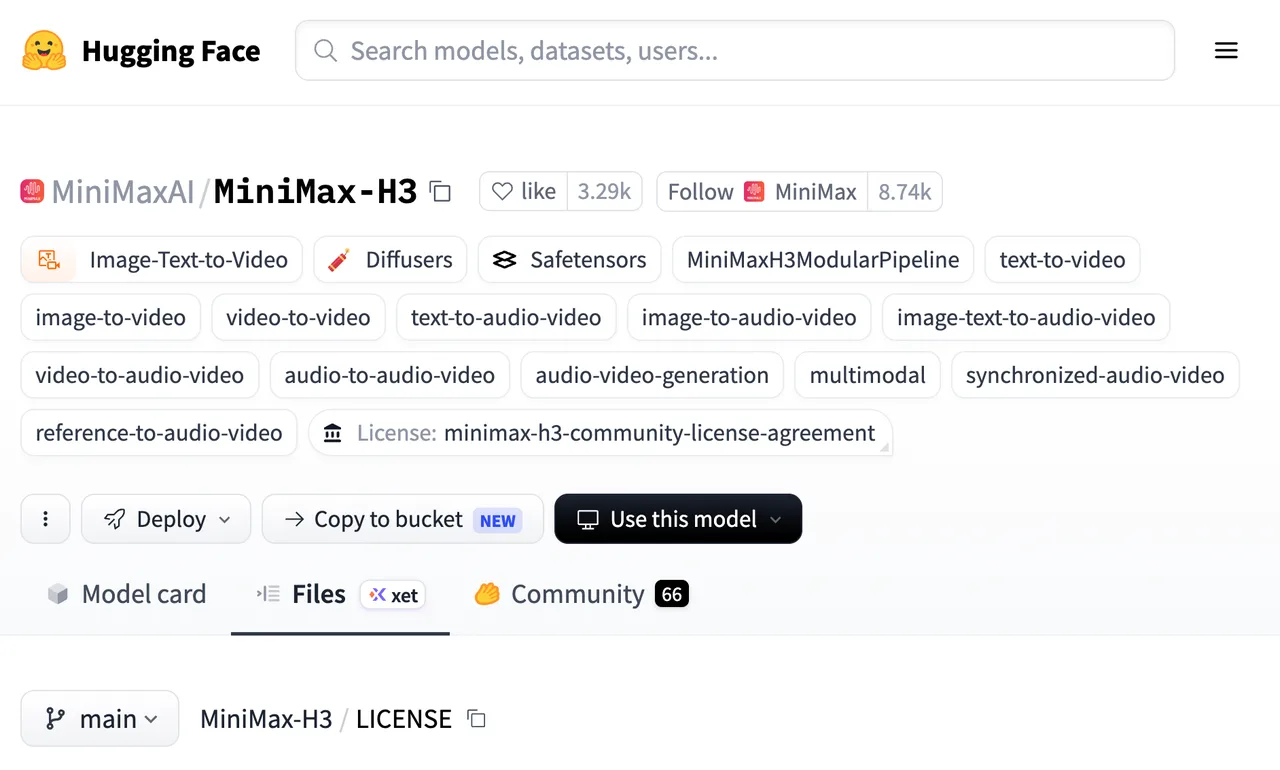
The MiniMax H3 license is a community license, not an unconditional public-domain grant. It defines applicable territory, excluded territories, commercial obligations, attribution-related terms, use restrictions, and conditions around hosted services.
This is risk identification, not legal advice. For commercial products, legal or compliance needs to read the live LICENSE text before launch. Especially if the product touches restricted regions, customer-facing hosted access, commercial revenue thresholds, or downstream redistribution.
Hosted Services and Self-Hosting Have Different Obligations
Hosted API use and self-hosting do not create the same operational burden. Hosted access shifts infrastructure work to the provider, but the customer still owns app-level consent, customer promises, billing approvals, and output use.
Self-hosting gives more control. It also gives more responsibility. The team owns safeguards, logs, storage, model updates, and license tracking. “We downloaded the weights” is not an operating model.
Choose the Right Route for Your Stage
Quick Tests and Small Prototypes
For a small prototype, I would start hosted. Run the same prompt set through the playground, record which outputs were accepted, then estimate cost per accepted clip rather than cost per run.
MiniMax H3 trial credits are useful here. They answer whether the model fits the use case. They do not answer what a month of customer traffic costs.
Production Apps and Repeatable Workloads
Production needs a different sheet. Track accepted outputs, retries, moderation failures, regeneration rate, storage duration, and human review time.
If the app needs fast launch, hosted API usually wins. If the team needs model control, internal infrastructure, or custom workflow research, local H3-Base may make sense. The point is not ideological. It is workload shape.
FAQ

Who should approve switching from trial credits to paid billing?
The budget owner for the product or client project should approve it, with FinOps copied. Trial spend is evaluation. Paid billing is delivery capacity.
How should teams document starter-credit use for client projects?
Record the account, date, project, model route, number of accepted outputs, and whether any output entered client review. MiniMax H3 trial credits still need a usage trail when client work is involved.
Can finance reconcile self-hosted compute with hosted API invoices?
Yes, but only if engineering tags both sides. Hosted invoices show provider usage. Self-hosting needs GPU hours, storage, transfer, and engineering time mapped to the same project code.
Who owns customer notices when license terms change?
Product owns the customer impact. Legal or compliance owns interpretation. Support or customer success owns delivery of the notice. One person should be accountable for the final wording.
Should trial outputs enter long-term model evaluation datasets?
Not by default. Keep licensed media, synthetic media, customer inputs, and trial outputs separated. Evaluation data becomes a governance asset once it persists beyond the test.
Conclusion
So, is MiniMax H3 free? Not in the way teams usually mean it. There may be starter credits. There are MiniMax H3 open weights. There are hosted APIs. Every route still has a cost boundary.
For one afternoon of testing, “free” may be close enough. For production, count accepted outputs, hosted usage, local infrastructure, license review, and human repair time. That is the number that survives contact with real work.
Previous posts:
Related Articles
/filters:quality(82)/media/images/1791535252286714222_v4jvJT2a.webp)
ModelsLab Review 2027: One API for Media Models?
/filters:quality(82)/media/images/1791451065663755033_qNqAKS1a.webp)
Best AI Video Background Removal Tools in 2027
/filters:quality(82)/media/images/1791359984291066138_tW5eOX6f.webp)
Best Comfy Cloud Alternatives in 2027
/filters:quality(82)/media/images/1773962750383987480_n3hqzHRZ.webp)
Qwen Image 2.1 vs Qwen Image 3.0: What Changes and When to Upgrade
What's Next for Wan Video Generation, and What It Means for Creators
/filters:quality(82)/media/images/1791271002496939282_TBLU3cmv.webp)