FLUX 3 Dev Watch for Local Image Workflows
FLUX 3 Dev watch helps builders assess local deployment, ComfyUI workflows, licensing, hardware needs, and API alternatives.
Hey, guys. It’s Dora here. I paused when the FLUX 3 announcement landed, because the part local workflow people care about most was not the video demo. It was the line about future open-weight access. As of July 29, 2026, FLUX 3 Dev is something to watch, not something I would build a client pipeline around yet.
Black Forest Labs says in its FLUX 3 announcement that FLUX 3 is in Early Access, with FLUX 3 Image planned for early access and “FLUX 3 Dev” planned as open-weight access to a multimodal backbone. That is a direction. It is not a public model card, license, ComfyUI workflow, or deployment recipe.
This note is for developers tracking open image model releases, ComfyUI Flux workflows, and local AI image generation. The useful question is not “is it exciting?” It is “what would it need to prove before it enters a real workflow?”
What FLUX 3 Dev Would Need to Prove
For me, the watchlist starts with boring artifacts.
A model card. Weight files. License text. Inference code. Runtime notes. ComfyUI support. Quantization paths. Known limits. Safety requirements. Version naming. Reproducibility behavior.
No artifact, no workflow decision.
Open model access, license, weights, and supported runtimes
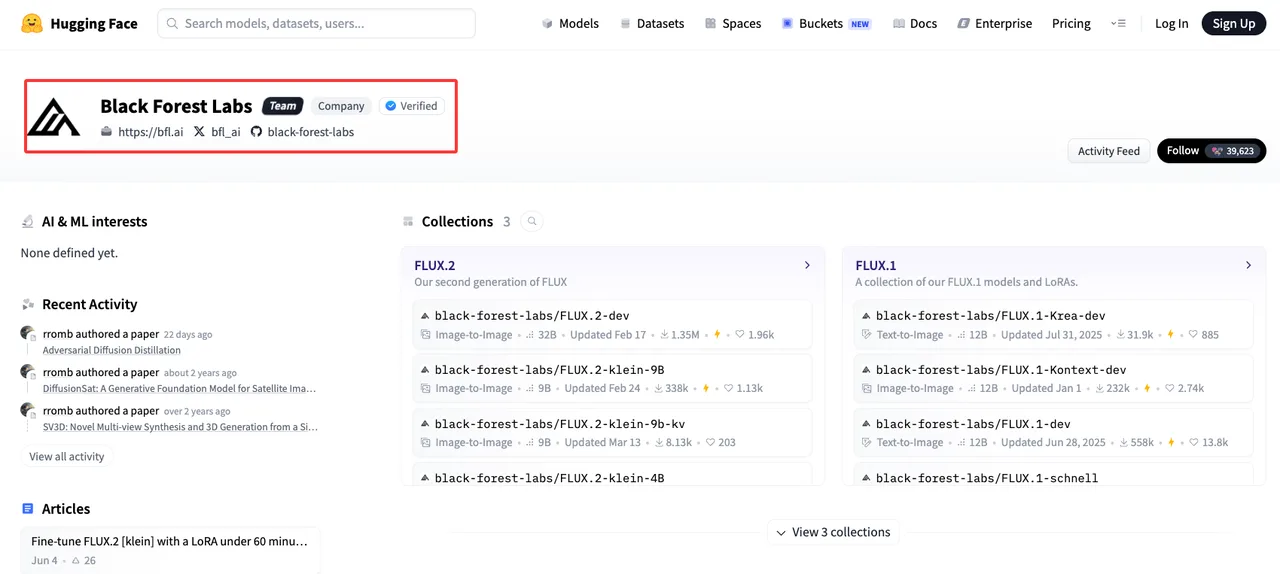
I would not treat the model as locally available until the official BFL channel or the verified Black Forest Labs Hugging Face page shows the actual repository. A screenshot of a file list does not count. A mirrored checkpoint does not count. A Discord comment does not count. Annoying, but necessary.
The license matters just as much as the weights. Existing FLUX Dev-family releases have not all meant permissive commercial self-hosting. That history does not automatically define the next license. It only tells me not to assume.
If FLUX 3 ships with a Dev label, I would still check:
- whether commercial use is allowed;
- whether client work counts as production;
- whether generated outputs have separate terms;
- whether fine-tuning and LoRA rights are included;
- whether synthetic data use is restricted;
- whether derivatives inherit the same restrictions;
- whether attribution or disclosure is required.
This is where my data ends until the actual license appears.
Why “Dev” does not automatically mean production-ready
“Dev” sounds friendly. It does not mean production-ready.
A Dev release may be meant for research, evaluation, local experimentation, or workflow prototyping. It may have a non-commercial license. It may require a separate commercial agreement. It may need a large GPU. It may break old nodes. It may produce great samples and still be too slow for batch work.
Good local deployment is not just “it runs.” It means the workflow survives repeated use.
That means stable outputs, clear runtime setup, predictable VRAM, batch behavior, version pinning, reproducible seeds where supported, and a fallback plan when the model update changes the look of a client image set.
Found the pattern on the third try: the model release is only step one. The workflow release is the thing that matters.
Local Workflow Checks
The local checklist should be written before the weights arrive. Otherwise the first test becomes a vibe check. I’ve done those. They waste afternoons.
ComfyUI support, quantization, VRAM, latency, and batch throughput
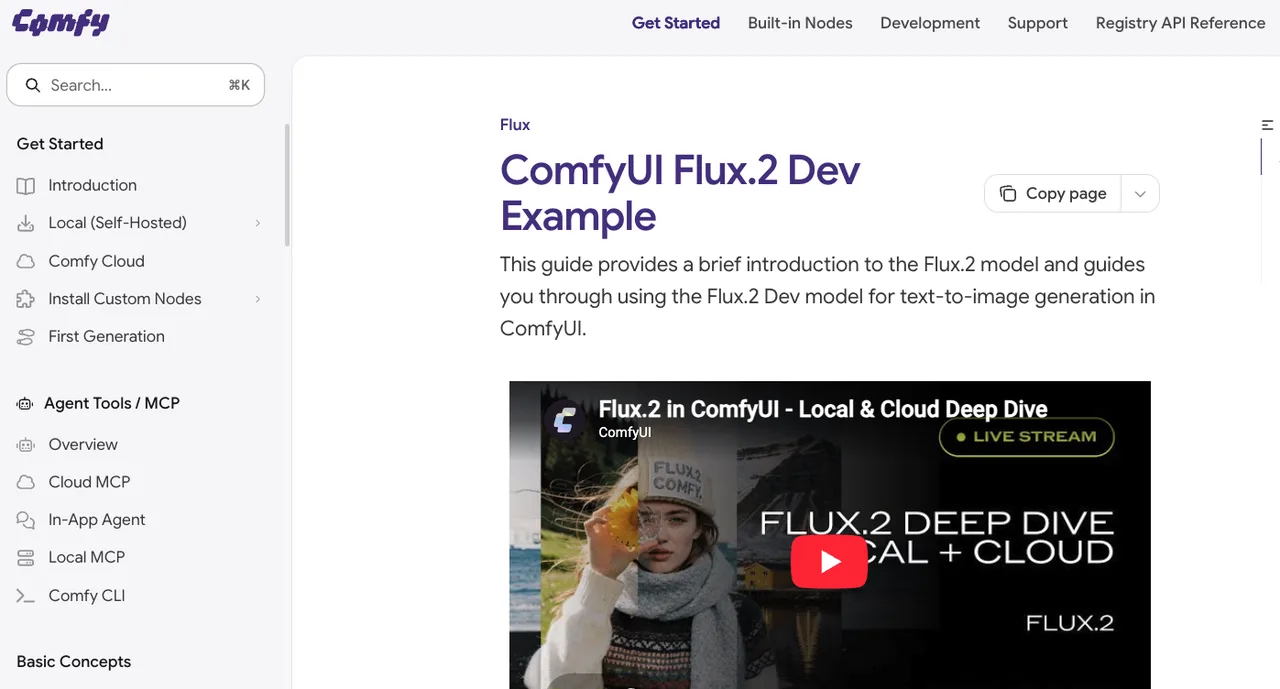
ComfyUI support should be verified from official ComfyUI docs or the project itself, not from a reposted workflow JSON. Current ComfyUI Flux.2 Dev docs are a useful reference point for what proper support looks like: model setup, workflow instructions, and software-version and model-file requirements.
For FLUX 3, I would wait for the same level of clarity before calling it usable in ComfyUI.
| Check | What I would record | Why it matters |
|---|---|---|
| Weight source | Official BFL or verified Hugging Face repo | Avoids untrusted mirrors |
| License | Exact license file and date | Prevents accidental client misuse |
| Runtime | ComfyUI, Diffusers, BFL repo, or custom server | Determines maintenance cost |
| VRAM | Peak memory at target resolution | Decides whether local is realistic |
| Quantization | Official or community, with quality notes | Controls cost and output drift |
| Latency | First image and warm-run timing | Separates testing from production use |
| Batch throughput | Images per hour at target settings | Matters for campaign or catalog work |
| Reproducibility | Seed behavior and pinned versions | Needed for revision workflows |
The VRAM line is the one I would not hand-wave. A model can be “local” and still not fit the machines the team actually owns.
Quantization also needs evidence. Smaller weights are useful only if they keep the parts your workflow depends on: text rendering, identity consistency, material detail, editing fidelity, and prompt obedience.
Prompt consistency, editing quality, and reproducibility
I would test FLUX 3 Image and the Flux Dev model candidate separately.
Text-to-image tests should include short prompts, structured prompts, typography prompts, brand color prompts, product prompts, human scenes, and hard negative-space compositions. Editing tests should include object replacement, background change, local retouching, multi-reference identity, and iterative edits.
One run is not a test. Ten is barely a smell test.
For reproducibility, I would save prompt, seed, sampler or scheduler, steps, guidance, resolution, model hash, node versions, runtime version, GPU, driver, quantization format, and output image. If one of those changes, the comparison is dirty.
Good enough is allowed. Untraceable is not.
API vs Local Deployment Tradeoffs
Local image model deployment is attractive for control. It is not automatically cheaper or safer.
Local gives you tighter data handling, more control over versions, and freedom to build custom pipelines. It also gives you GPU capacity planning, update risk, queue management, failed jobs, storage, security review, and one more thing to debug at 11 p.m. (ask me how I know. Actually, don’t.)
A hosted API removes some of that operational weight. BFL’s image generation API docs describe an asynchronous request-and-polling design, global and regional endpoints, and pinned versus preview endpoint choices for existing FLUX models. That is the kind of infrastructure teams often underestimate when they say “we’ll just self-host.”
Infrastructure cost, privacy, scaling, updates, and fallback
The API-vs-local decision should not be ideological.
Local wins when privacy constraints are strict, workloads are steady, hardware is already available, and the team can maintain inference. It also helps when version pinning matters and hosted endpoints move faster than your QA process.
API wins when demand spikes, hardware is uncertain, latency needs are easier to meet through a provider, or the team wants fewer runtime updates to own.
I would split the decision into five questions.
Can the team legally use the weights for this client?
Can the team run the model at target quality on owned hardware?
Can the team hit batch throughput without blocking other work?
Can the team reproduce old results after runtime changes?
Can the team fall back when the local stack breaks?
If one of those answers is weak, local is not ready.
When a hosted image API is safer than self-hosting
Hosted is safer when the project has paid client output, strict deadlines, and no time to validate the license. It is also safer when the model is still moving, the ComfyUI nodes are fresh, or quantized builds do not match full-quality outputs.
I would also use hosted generation for first-pass evaluation if the official local package is not out yet. That keeps the team testing prompt behavior and visual fit without pretending the deployment layer is done.
The value of a local workflow is control. The cost is owning every failure.
FAQ

Who approves local model use for client images?
Legal approves license use. The technical owner approves runtime stability. The creative or product owner approves output quality. For client images, all three matter.
For an open image model, I would not let “it runs locally” bypass approval. Local execution does not remove license terms, privacy obligations, brand rules, or disclosure requirements.
What evidence should be kept after runtime changes?
Keep the model card URL, license file, weight hash, ComfyUI workflow, node versions, runtime version, quantization format, GPU type, driver version, prompt set, seeds, output samples, and reviewer notes.
After a runtime change, rerun the same prompts. Save before/after outputs. If typography, faces, product geometry, or editing masks drift, document it.
This is boring work. It is also how you avoid arguing from memory.
How should teams document license uncertainty?
Write the uncertainty directly in the workflow notes.
Use plain language: “FLUX 3 Dev license not yet verified for client production use.” Add the date checked, the source checked, and the owner responsible for re-checking. Do not write “probably okay” in a production tracker. That phrase has no legal value and somehow always survives into the handoff.
Conclusion
FLUX 3 Dev is worth watching because it may become an important local workflow model. It is not worth pretending the local stack exists before the public artifacts do.
The checklist is simple: official weights, explicit license, supported runtime, reproducible workflow, known VRAM, measured throughput, editing benchmarks, and a fallback path.
Until those are visible, I would keep FLUX 3 in the watch column and use API-based testing where it makes sense. Local comes later, after the evidence shows up.
Previous posts: