FLUX 3 API Watch: Access and Pricing Signals
FLUX 3 API watch helps developers track access, pricing, model IDs, endpoints, and production integration risks.

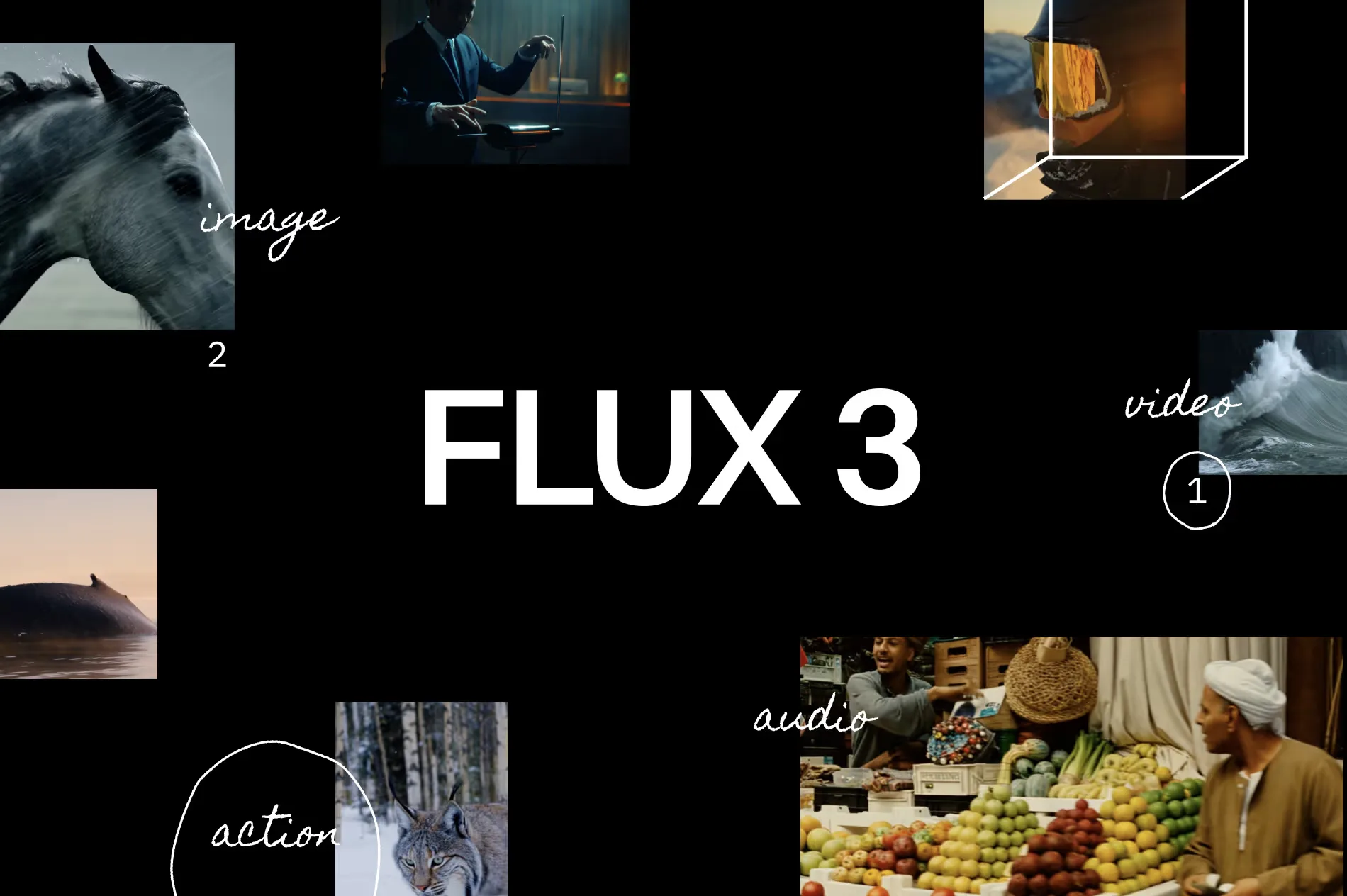
I’m Dora. I checked this like I would check a production dependency: release notes first, API docs second, pricing third. As of July 25, 2026, BFL has officially announced FLUX 3 and opened application-based Early Access, but I do not see a public FLUX 3 API model ID, documented endpoint, or price in the BFL API documentation.
For teams planning an image generation API integration, the useful work is not guessing the endpoint name. It is preparing the integration surface so a confirmed release can be tested without rewriting storage, billing, retry, and review logic.
FLUX 3 API Access Status
What needs official confirmation before integration
The current BFL release notes show FLUX.2 releases, FLUX Tools updates, preview endpoints, webhook changes, and endpoint deprecations. I found FLUX.2 [pro], [max], [flex], [klein], and several tools. I did not find a confirmed FLUX 3 entry.
That means no production plan should say “FLUX 3 is available through the Black Forest Labs API” unless the official docs change before publication. Not a rumor thread. Not a dashboard screenshot passed around in Slack. Official docs, release notes, or an account-level announcement with a model ID.
I paused here because this is the place teams usually over-read signals. A preview endpoint for FLUX.2 is not a FLUX 3 endpoint. A model family pattern is not a contract.
Model ID, endpoint, auth, pricing, and rate limits
For a future FLUX 3 API pilot, I would require this confirmation table before any real app integration:
| Item | Needs confirmation | Why it matters |
|---|---|---|
| Model ID | Exact endpoint or model string | Prevents hardcoded guesses |
| Endpoint | Stable, preview, regional, or tool endpoint | Defines reliability expectations |
| Auth | API key, project key, OAuth, or dashboard access | Controls secret handling |
| Pricing | Per image, per MP, credit rate, batch multiplier | Controls budget risk |
| Rate limits | Concurrency, 429 behavior, regional limits | Controls queue design |
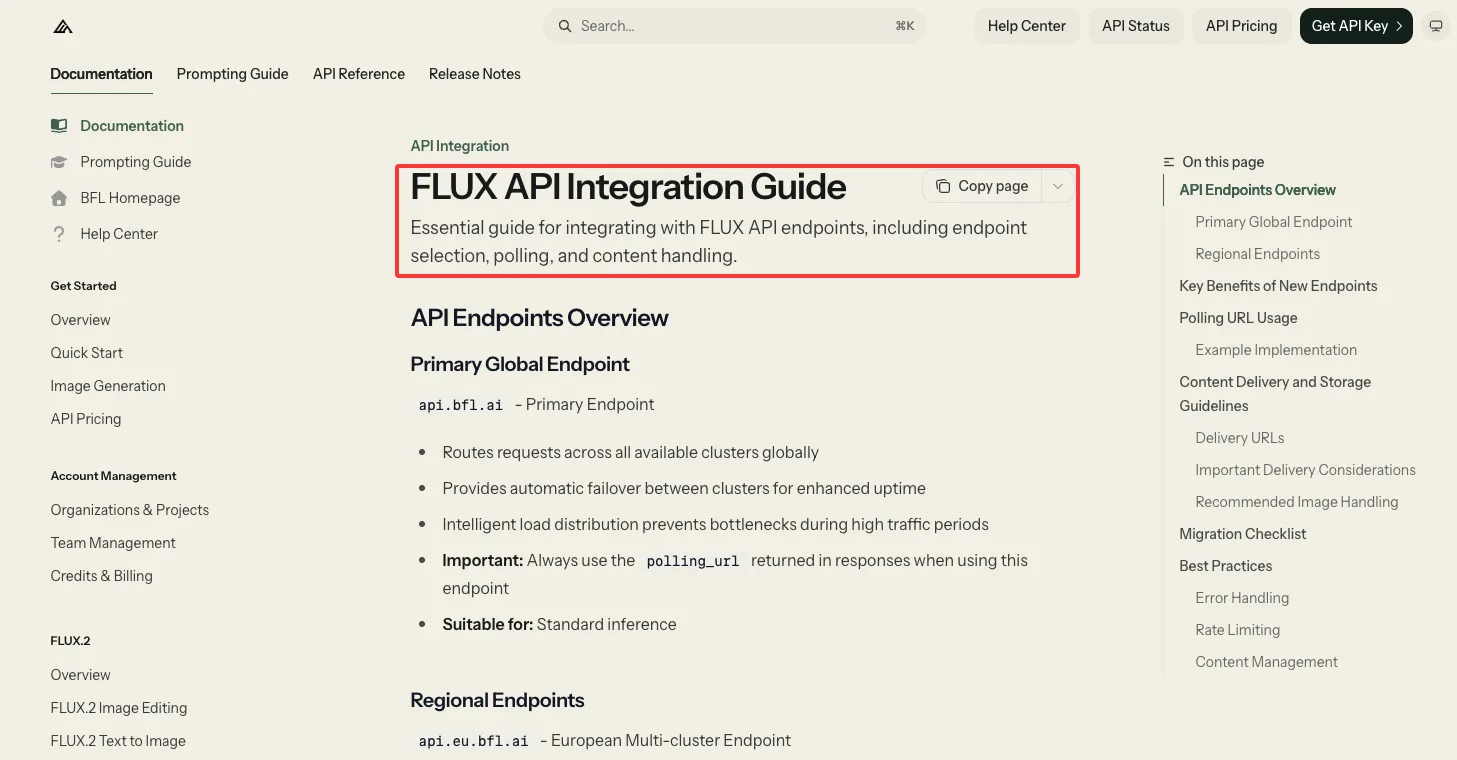
The existing FLUX API integration guide is still useful as a checklist. It documents primary and regional endpoints, async polling, returned polling_url handling, content delivery, retries, rate limiting, and storage guidance. It does not make FLUX.2 endpoint names portable to FLUX 3.
This is where my data ends. Anything beyond that is an assumption.
What Developers Should Prepare
Request format, image inputs, callbacks, storage, and moderation
A future Flux API integration will probably touch the same surfaces as current BFL image workflows: prompt fields, dimensions or aspect ratio, image references, output format, safety settings, async result handling, and possibly webhooks. “Probably” is doing work in that sentence.
The safer build is an internal adapter. Keep product code away from vendor-specific request fields. The app asks for an image job. The adapter maps it to the confirmed Black Forest Labs API shape after docs exist.
Storage needs attention early. Current BFL docs say generated images are returned through delivery URLs, and the integration guide says those URLs are not meant for direct end-user serving and can expire. A production pipeline should download outputs quickly, store them in controlled object storage, attach metadata, and re-serve through its own CDN or media layer.
Moderation should not be treated as a final UI state only. The current result API includes statuses such as Request Moderated and Content Moderated in the Get Result reference. Product logic needs separate handling for user-visible rejection, retryable failure, internal review, and silent logging. One “failed” bucket is lazy. It also becomes useless in support.
Cost logging, retry handling, fallback, and quality review
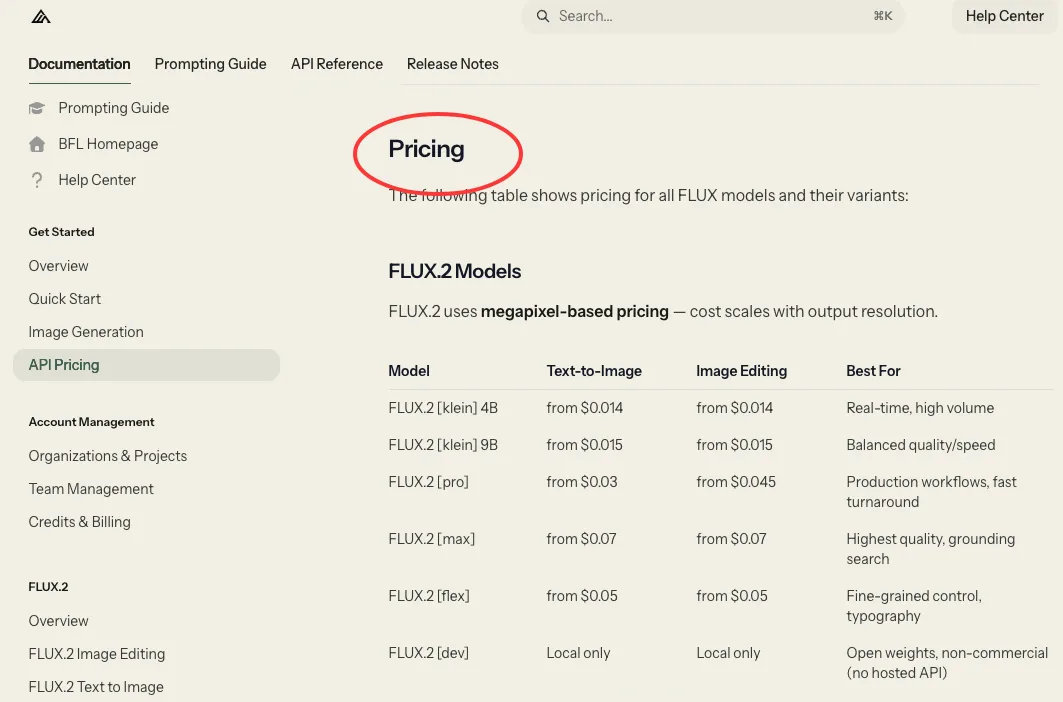
FLUX API pricing is not just a price table. It affects UX, queueing, model choice, and abuse controls. The current API pricing page uses credits and model-specific pricing, with FLUX.2 pricing tied to output resolution for several models. A future FLUX 3 price may follow that pattern, or it may not. Do not assume.
Cost logging should store:
- provider
- model ID
- endpoint
- request type
- output resolution
- batch count
- project or workspace
- user or service account
- estimated cost
- final billed cost when available
- retry count
- moderation status
Retries need two layers. Network and 429 retries can use backoff. Content moderation, invalid input, or insufficient credits should not retry blindly. Fallback is the same. Falling back from a future FLUX 3 model to a current model may be acceptable for drafts. It may be unacceptable for a brand campaign that depends on a new visual style or higher prompt adherence.
Quality review should start as a sandbox workflow. Save prompts, inputs, outputs, seed or reproducibility fields if supported, reviewer notes, and failure categories. The model may be better. The workflow may still be worse. Happens more often than vendors enjoy admitting.
Production Integration Risks
Preview endpoints, changing contracts, capacity, and policy limits
Preview endpoints are useful for exploration. They are not the same as stable production contracts. The current BFL release notes describe a FLUX.2 preview endpoint where improvements land first, while the stable endpoint remains fixed for reproducibility. If FLUX 3 follows any preview pattern, teams need to label that route clearly.
Changing contracts are the obvious risk: fields move, status values change, result payloads shift, pricing changes, capacity limits appear. Less obvious: callbacks and polling can behave differently under load. If the image generation API is part of a customer-facing product, this needs queue visibility and user messaging.
Policy limits matter too. The current BFL usage policy applies to FLUX models and services, including inputs and outputs. That means early tests need policy review before users can submit arbitrary prompts or images. The model launch date does not remove the need for abuse handling, blocked categories, dispute paths, and audit logs.
When to wait versus start a sandbox test
Wait when the work depends on a confirmed model ID, final pricing, stable rate limits, or a published production SLA. Also wait when legal, brand, or safety review requires final API terms.
Start a sandbox test when the team is only preparing wrapper code, storage, cost logs, webhook handling, moderation paths, and quality review forms. Those pieces can be built against current BFL API patterns without pretending FLUX 3 exists.
The clean boundary is this: build the integration shell now, but leave the model-specific adapter empty until the public API contract, endpoint, and pricing are documented.
Good enough. That is the most honest assessment I can give.
FAQ

Who approves a FLUX 3 API pilot?
A pilot should be approved by the engineering owner, product owner, security or trust reviewer, and the budget owner. If user-uploaded images are involved, add legal or policy review.
The approval record should say whether the pilot uses public data, internal test assets, customer data, or production prompts. That one line changes the risk level.
What logs should teams keep during early tests?
Keep request IDs, model IDs, endpoint names, prompt text or redacted prompt hashes, input image references, output storage paths, status values, latency, retry count, moderation result, user or service identity, cost estimate, and reviewer notes.
Do not rely on screenshots as the only evidence. Screenshots are fine for visual review. They are poor incident records.
How should teams document unconfirmed API assumptions?
Use an assumptions register. Mark each item as confirmed, inferred, or unknown. Include the source link, date checked, owner, and removal condition.
For example: “Endpoint name unknown until official docs publish.” That is better than writing flux-3-pro into code comments and letting it fossilize.
Conclusion
The right posture for FLUX 3 API planning is controlled readiness. Confirm access through official Black Forest Labs docs. Confirm model ID, endpoint, auth, pricing, rate limits, storage behavior, moderation states, and policy boundaries before production use.
Until then, prepare the shell: adapter, logs, queue, fallback, storage, review, and budget controls. The model can arrive later. The messy parts of production will not wait politely.
Previous posts:
Related Articles

Best AI Video Platforms for Production Teams in 2027

Best Sora 2 Alternatives for Video Teams in 2027

Lanta AI Review 2027: Best Uses, Pricing, and Limits

Sora 2 Review 2027: API Quality, Cost, and Limits

Build a GPT-6 Astra 3D Workflow With Blender Assets