
Muse Image API Watch for Builders
Muse Image API watch for builders tracking Meta AI access, API availability, pricing, permissions, and commercial terms.
A builder asks for a Muse Image API integration. The first registry row should not say “start implementation.” It should say “watch.” As of July 10, 2026, Meta has launched Muse Image inside Meta AI and selected Meta app surfaces, but a public image developer API for this model is not publicly confirmed. That is the line to keep clean.
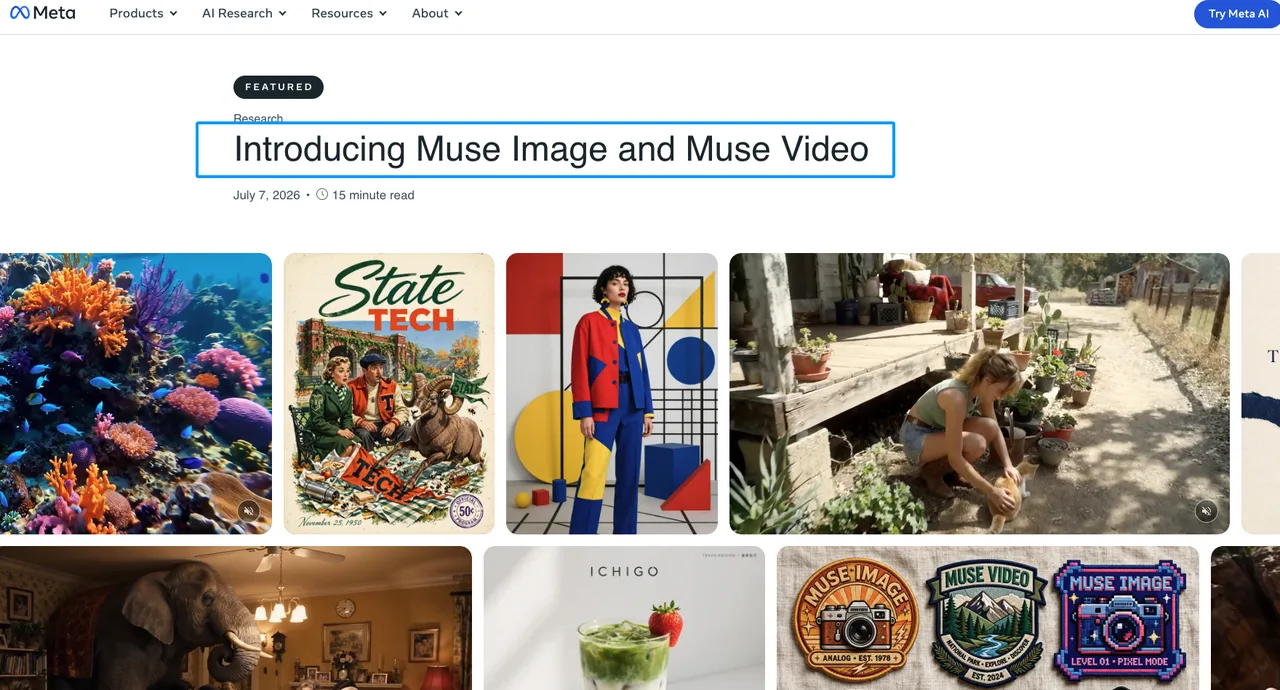
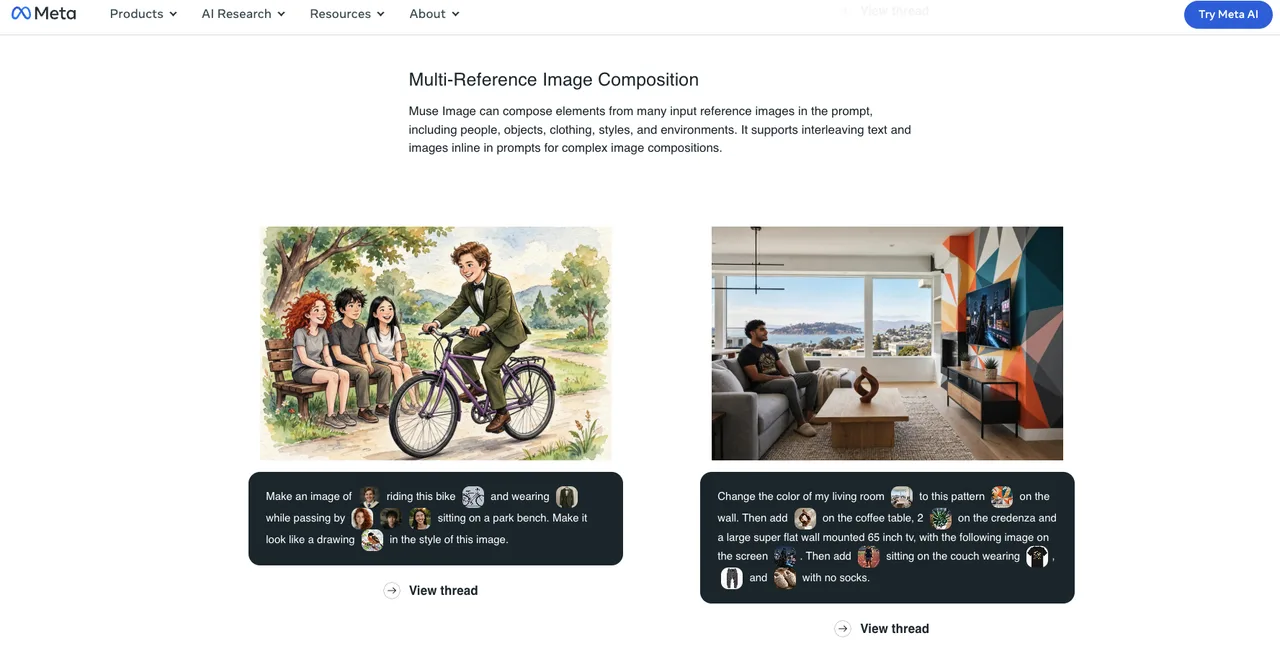
Meta’s official research post, Introducing Muse Image and Muse Video, describes Muse Image as Meta’s most advanced image generation model yet. It can generate, edit, compose from multiple references, draw on Instagram for social context, use tools, and work with Muse Spark. That is meaningful for builders. It is not the same as a documented AI image API.
Muse Image API Status Today
What is available in Meta AI apps vs developer APIs
The confirmed product story is consumer-first. Meta says Muse Image is available across the Meta AI app, on meta.ai, Instagram Stories in the US, and WhatsApp in limited countries, with Facebook support coming soon. Muse Video is previewed, not broadly launched.
That means the model is available through Meta-owned user experiences. A person can create or edit images in Meta AI contexts. In supported flows, they can use public Instagram references, uploaded images, prompts, and app-native sharing. For product teams, this matters because the model is not sitting in a neutral developer console. It is tied to identity, social content, media reuse, and distribution.
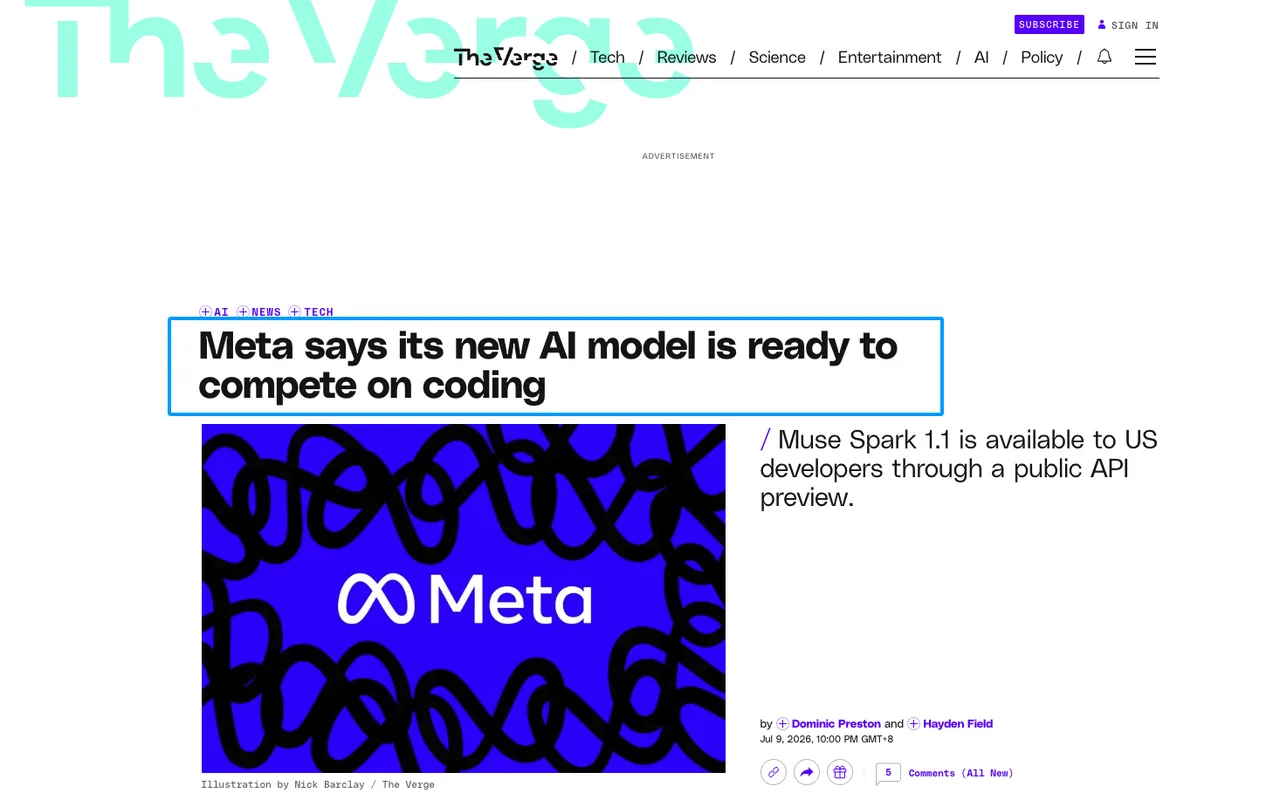
The developer story is different. The Verge reported that Muse Spark 1.1 is available through a new Meta Model API in public preview for US developers. That is an adjacent fact, not proof that Muse Image has public API access. Muse Spark is a language and agentic model. Muse Image is the image model. Those two names should not be merged in an integration plan.
A simple status table helps keep the boundary visible:
| Item | Status as of July 10, 2026 |
|---|---|
| Muse Image in Meta AI app | Publicly announced |
| Muse Image on meta.ai | Publicly announced |
| Instagram Stories support | Publicly announced for the US |
| WhatsApp support | Publicly announced in limited countries |
| Muse Video | Previewed, coming later |
| Meta Model API for Muse Spark 1.1 | Reported public preview for US developers |
| Muse Image API endpoint | Not publicly confirmed |
| Muse Image API pricing | Not publicly confirmed |
| Muse Image model ID | Not publicly confirmed |
| Image API rate limits | Not publicly confirmed |
That is all I can confirm from public information.
What remains unconfirmed for image API access
The unconfirmed list is where most integration risk lives. A builder-facing article can mention the Meta AI API direction, but it should not imply that Muse Image is ready to wire into a production image pipeline.
The missing API facts include:
- official endpoint path
- authentication method
- model ID or model alias
- text-to-image input schema
- image editing input schema
- multi-reference input limits
- output image formats and size limits
- async job behavior
- moderation behavior
- logging and retention rules
- rate limits
- region availability
- commercial terms
- price per image or compute unit
- webhook support
- watermark and provenance requirements
For a normal AI image API, those fields decide whether a team can build. Without them, a roadmap item is only a watch item.
Muse Image also has features that make a future API more sensitive than a plain image generator. Meta says the model can search the web, use coding tools, self-refine, compose from multiple references, and draw on Instagram context. Those are valuable capabilities, but they need API-level controls before production use: source visibility, prompt logs, reference consent, refusal behavior, audit records, and deletion rules.
What Builders Should Track
API endpoint, pricing, permissions, regions, terms
A watch page needs a small list that can be checked every week. The goal is not to predict Meta’s roadmap. The goal is to know when a real integration decision becomes possible.
Track these items first:
| Watch item | Why it matters |
|---|---|
| Endpoint | Confirms whether the model is callable outside Meta apps |
| Model ID | Prevents accidental confusion with Muse Spark or future models |
| Pricing | Determines whether batch generation or editing review is viable |
| Region list | Controls user availability and compliance planning |
| Permission model | Shows whether access is open, waitlisted, partner-only, or ad-account tied |
| Input schema | Defines prompt, image, mask, and reference-image handling |
| Output schema | Defines file format, metadata, watermarking, and safety signals |
| Terms | Decides whether customer-facing, commercial, or ad creative use is allowed |
Pricing needs special care. If Meta publishes pricing for Muse Spark through the Meta Model API, do not reuse it for Muse Image. Image generation has different compute costs, output review needs, storage patterns, and abuse risks. A language model price sheet does not answer image API cost.
Permissions are just as important. Meta may choose to keep the model inside Meta AI apps, open it only to advertisers, expose it to selected partners, or make it available through a broader developer API later. Each path leads to a different product plan.
Watermarking, content reuse, and commercial restrictions
Meta says Muse Image includes Content Seal, an invisible watermarking system for images created in the Meta AI app and on meta.ai. Meta also previews a Content Seal detection tool that checks whether an image carries the watermark. That is a strong signal that provenance will be central to the product.
For builders, watermarking is not only a trust feature. It can become a requirement in the output contract. If a future Muse Image API appears, teams need to know whether Content Seal is mandatory, whether it survives resizing and screenshots, whether it applies to edited uploads, and whether the detection result can be stored for audit.
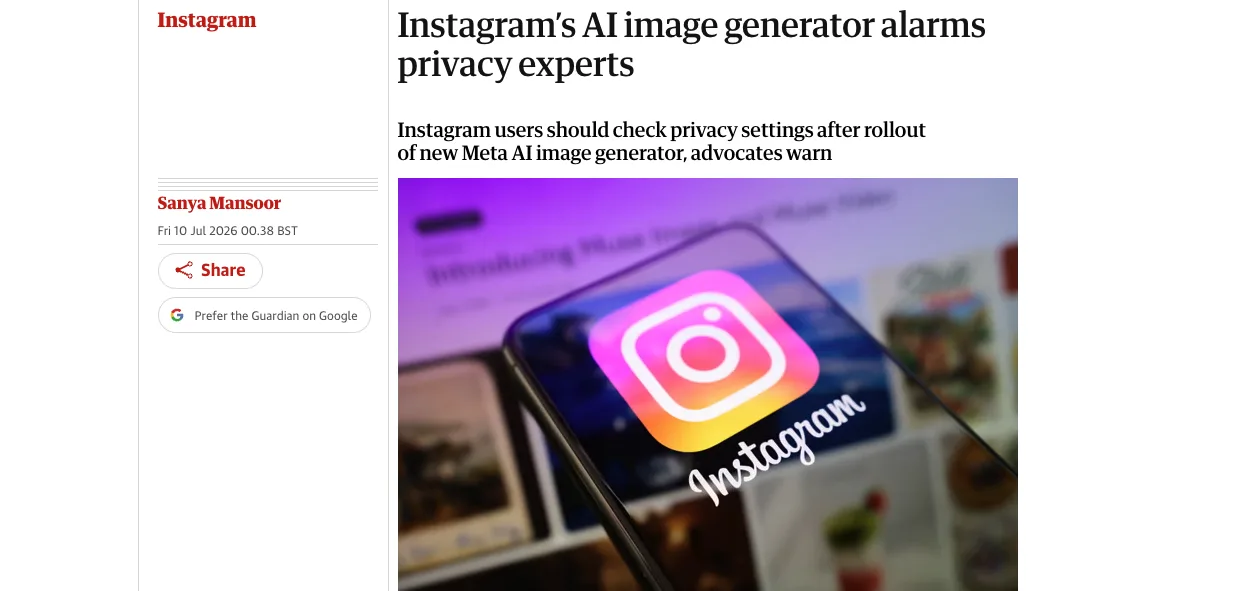 Content reuse is the harder issue. Muse Image can work with public Instagram references in supported flows. The Guardian’s privacy coverage of Instagram’s AI image generator reports concerns about public-profile reuse, opt-out controls, lack of notification, and children appearing in public adult-owned accounts. Meta told the Guardian that private accounts and accounts belonging to users under 18 are excluded, and that adult public users can opt out.
A future API would need clearer answers than a consumer feature page:
- Can developers reference Instagram accounts by handle?
- Can they use public posts, reels, profile photos, or only user-uploaded references?
- Are referenced users notified?
- Can businesses use public people or creators in commercial images?
- Are generated images removable if the source user later opts out?
- Are ad creatives held to a stricter consent standard?
- What happens in countries with stronger likeness, privacy, or data protection laws?
Until those answers are official, the safe commercial assumption is narrow: use user-provided assets, owned brand assets, licensed references, and documented consent.
Production Planning Before API Access
Evaluation prompts, risk review, and vendor monitoring
There is useful work to do before an API exists. It just should not become a fake integration project.
Build an evaluation set now. Keep it model-neutral. The prompts should test the kind of image behavior a production team actually needs:
- product-on-background generation
- single-image edit fidelity
- multi-reference composition
- text rendering in posters or ads
- brand color preservation
- face and identity handling
- refusal behavior for private people
- public figure and political content boundaries
- synthetic evidence risk
- watermark detection and metadata handling
For each prompt, define what good means. A vague “looks nice” score will not survive a production review. Use checks like prompt adherence, identity preservation, source asset integrity, text accuracy, policy refusal quality, review time, and post-edit workload.
Vendor monitoring can be lightweight but regular. A watch owner can review Meta AI announcements, Meta developer documentation, Meta app release notes, and major policy coverage. The watch log should separate confirmed facts from interpretation. A good row looks like this:
| Date | Source | Confirmed change | Impact |
|---|---|---|---|
| 2026/7/10 | Meta AI blog | Muse Image available in Meta AI app and selected app surfaces | Watch only, no public API confirmed |
| 2026/7/10 | The Verge | Muse Spark 1.1 reported in Meta Model API public preview | Track adjacent developer platform, do not assume image API |
| 2026/7/10 | Guardian | Privacy concerns reported around Instagram public-profile reuse | Add consent and likeness checks to risk template |
The point is to avoid stale assumptions. This page is built to be updated.
When not to build against consumer-only access
Do not build a production workflow by automating consumer access, scraping a web interface, instructing users to manually generate assets in Meta AI, or routing customer work through personal accounts. That creates operational and policy risk before the model risk even starts.
Consumer-only access is not enough when the workflow needs:
- service-level reliability
- batch generation
- customer asset upload
- usage logs
- billing controls
- team permissions
- policy evidence
- deletion handling
- commercial licensing clarity
- customer support escalation
- regional compliance
A customer-facing feature needs a real contract surface. That means documented API behavior, not screenshots of a consumer app.
There is one exception: internal research. A design team can study output quality manually, compare visual direction, and document prompt behavior. Even then, they should avoid uploading confidential customer assets, private people, unreleased products, or regulated content. Treat consumer testing as observation, not integration.
FAQ
Who should own Meta API availability tracking?
The owner should be the product manager for the image workflow, with support from engineering, legal, privacy, and trust and safety. One person keeps the watch page current. Engineering verifies API facts. Legal and privacy review consent, licensing, and regional terms. Trust and safety reviews misuse cases.
For a company with customer-facing image features, this should not live only in marketing. Availability tracking affects roadmap timing, vendor selection, support promises, and risk acceptance.
What announcement would justify integration planning?
A real integration plan becomes reasonable when Meta publishes official developer documentation for Muse Image access. The minimum signal is an API endpoint, model ID, access process, pricing, region list, terms, input and output formats, safety behavior, watermark rules, and commercial-use language.
A blog post saying the model is available in Meta AI apps is not enough. A Meta Model API announcement for Muse Spark is also not enough. The trigger needs to name Muse Image or the relevant Meta image model directly.
How should teams handle customer requests before API access?
Use a clear answer: Muse Image is available in Meta AI product surfaces, but a public Muse Image API is not publicly confirmed as of July 10, 2026. The team is tracking Meta’s developer announcements and can evaluate integration if official API access appears.
Do not promise timing. Do not suggest workarounds through consumer accounts. If customers need an image generation feature now, evaluate another documented AI image API with published terms, pricing, moderation behavior, and support.
Bottom line: the Muse Image API is a watch item, not a production dependency today. The model is worth monitoring because Meta has distribution, social context, watermarking work, and the adjacent Meta Model API story. The integration decision waits for official image API documentation.
Previous posts:
/filters:quality(82)/media/images/c347367a-a007-4466-b8f7-d37f5fb52819.webp)
/filters:quality(82)/media/images/cd4db796-7728-45fb-8267-6813ed28e173.webp)
/filters:quality(82)/media/images/1791535252286714222_v4jvJT2a.webp)
/filters:quality(82)/media/images/1791451065663755033_qNqAKS1a.webp)
/filters:quality(82)/media/images/1791359984291066138_tW5eOX6f.webp)
/filters:quality(82)/media/images/1773962750383987480_n3hqzHRZ.webp)