
Grok vs Claude: Choosing a Model for AI Applications
Compare Grok and Claude for AI applications using current API access, workload quality, latency, cost, tool use, and production controls.
Hello, guys. I’m Dora. I usually see Grok vs Claude become a problem after the prototype already works. The demo passes. The vendor screenshots look convincing. Then someone asks what each accepted answer actually costs after retries, tool calls, review time, and failures. Quiet room.
This note is for platform owners, eval engineers, AI product leads, and FinOps teams choosing between xAI and Anthropic APIs. I checked public docs on August 13, 2026. For a current evaluation, freeze grok-4.6 on xAI and compare it with claude-opus-5, claude-sonnet-5, or claude-fable-5. For a specific Grok 4.5 vs Claude Opus 4.8 test, freeze grok-4.5 and claude-opus-4-8 as a separate historical lane.
Do not mix those lanes. That is how a clean test turns into soup.
Grok vs Claude at a Glance
Current Public Models and API Access
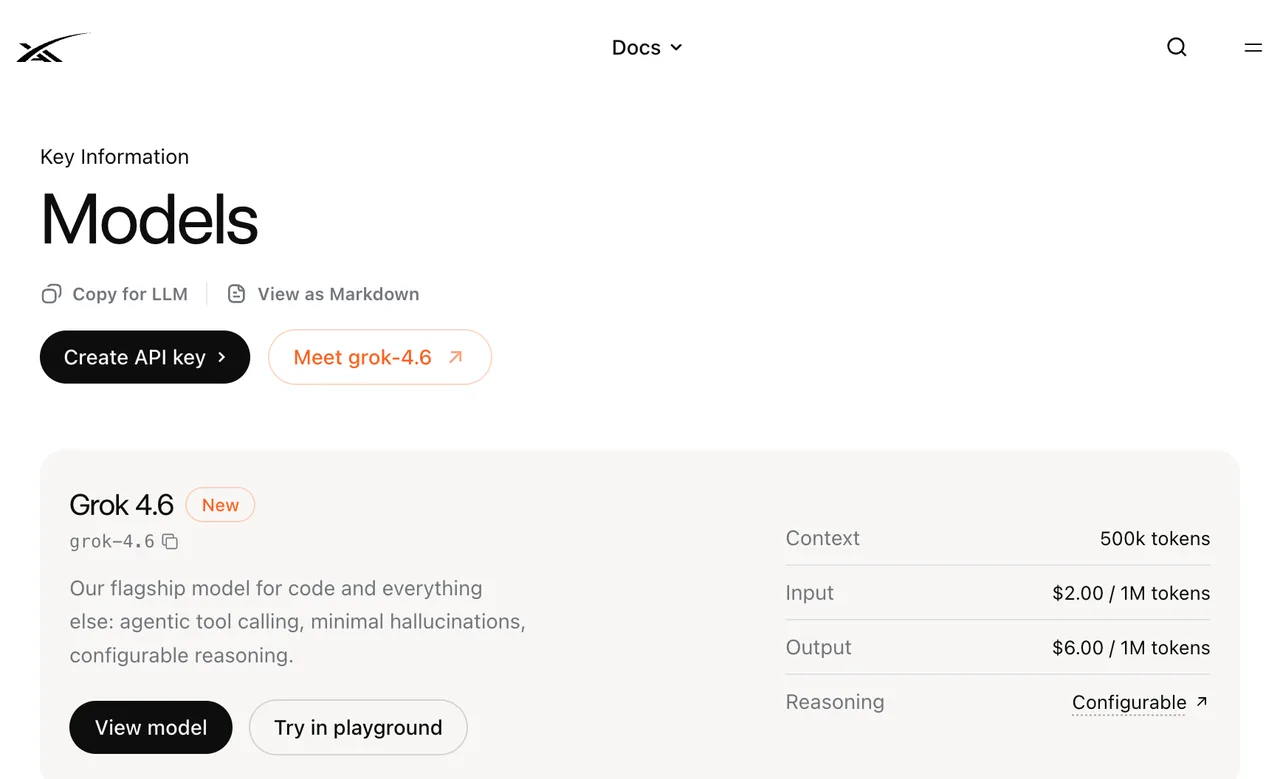
xAI’s docs list grok-4.6 as the current flagship for code, agentic tool calling, and general text work. The xAI models page lists its context and pricing details.
Anthropic’s current Claude lineup has moved beyond Opus 4.8. Fable 5 is positioned as the highest-capability Claude model, Opus 5 for complex agentic and enterprise work, Sonnet 5 for balanced production use, and Haiku 4.5 for faster workloads. The Claude Opus 4.8 announcement still matters if the brief explicitly compares that release with Grok 4.5.
| Evaluation lane | xAI model | Anthropic model | Use it for |
|---|---|---|---|
| Current high-capability test | grok-4.6 | claude-opus-5 or claude-fable-5 | Agentic coding, research, complex analysis |
| Balanced production test | grok-4.6 | claude-sonnet-5 | Cost-sensitive application workloads |
| Historical release test | grok-4.5 | claude-opus-4-8 | Launch-era comparison only |
Use pinned model IDs. Do not compare a pinned Claude ID against a latest Grok alias and call the result stable. That eval cannot be repeated.
The Workloads Each Provider Prioritizes
- xAI’s public positioning leans toward coding, agentic tasks, tool use, and knowledge work. Its API surface also includes structured outputs, function calling, search tools, code execution, context compaction, batch requests, and remote MCP tools.
- Anthropic’s positioning is more segmented by model class. Claude’s materials emphasize reasoning, coding, long-form analysis, tool use, honesty, safety controls, migration, and eval workflows.
That does not produce a winner. It produces lanes. Coding agents, research products, support automation, structured extraction, and internal workflow tools fail in different ways. One provider can win code repair and lose retrieval-heavy analysis. That is not contradiction. That is workload reality.
Compare Capability on the Same Tasks
Coding, Agentic Work, Research, and Long-Form Analysis
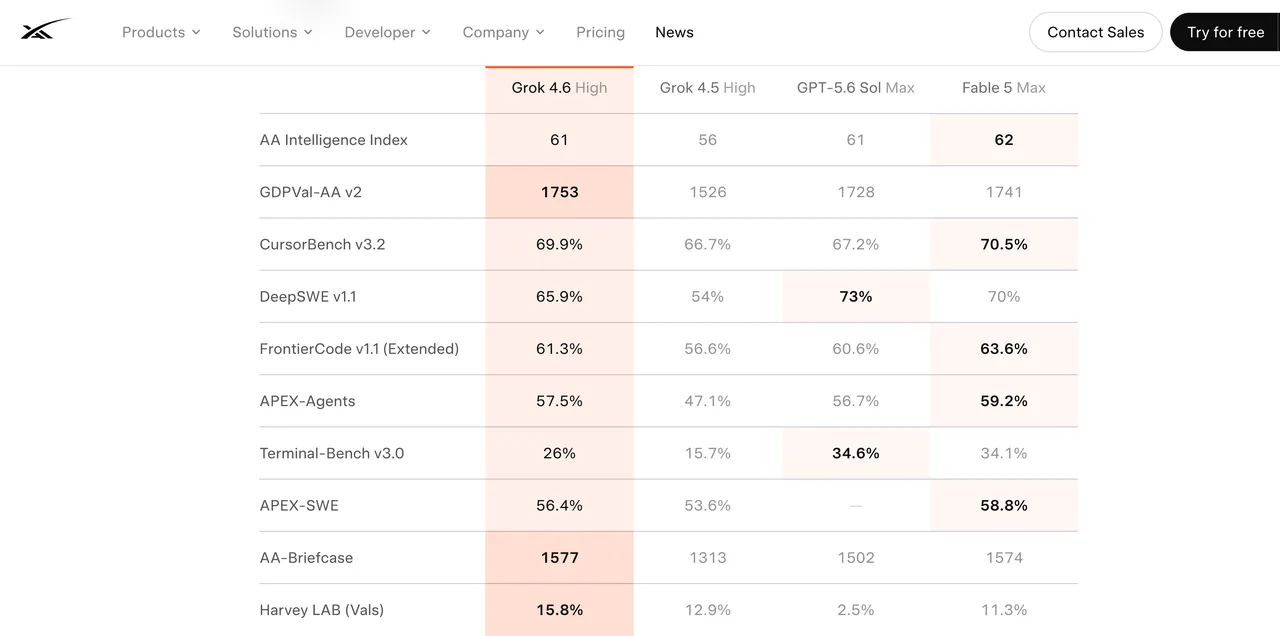
Vendor benchmarks tell me what to test. They do not decide procurement.
xAI reports Grok 4.5 results on software engineering and terminal-style tasks. Anthropic reports Opus 4.8 improvements across coding, agentic work, tool use, and alignment assessments. Both are vendor-reported. Label them that way.
Do not combine scores from different harnesses into one homemade leaderboard. Different prompts, tools, timeouts, scaffolds, and pass rules change the answer. I paused here because this is the exact place where teams accidentally make the spreadsheet look more scientific than it is.
A fair AI model evaluation uses your tasks: one real repo task with tests, one research task using supplied sources only, one long-document task with contradictions, one structured extraction task, one tool-loop task, and one policy-boundary task. The unit is accepted output. Not confidence. Not length. Accepted output.
Tool Calling, Structured Outputs, and Instruction Following
Tool behavior needs its own score. A model can write well and still fail production because it calls the wrong tool, passes malformed arguments, or ignores stop rules.
xAI documents structured outputs, including schema-style constraints and tool-call argument behavior. Claude also supports tool use, structured outputs, prompt caching, and eval workflows.
Track schema pass rate, invalid tool calls, unnecessary tool calls, missed required calls, repair attempts, and accepted-task rate after repair. Repair burden is where “smart” models often become expensive.
This is especially true for agent products. A bad tool call is rarely isolated. It can poison later context, trigger extra retries, and make the reviewer spend five minutes figuring out whether the final answer is wrong or just badly routed. That time belongs in the cost model.
Compare Production Economics
Latency, Token Use, and Cost per Accepted Task
Token price is not cost. Token price is one input.
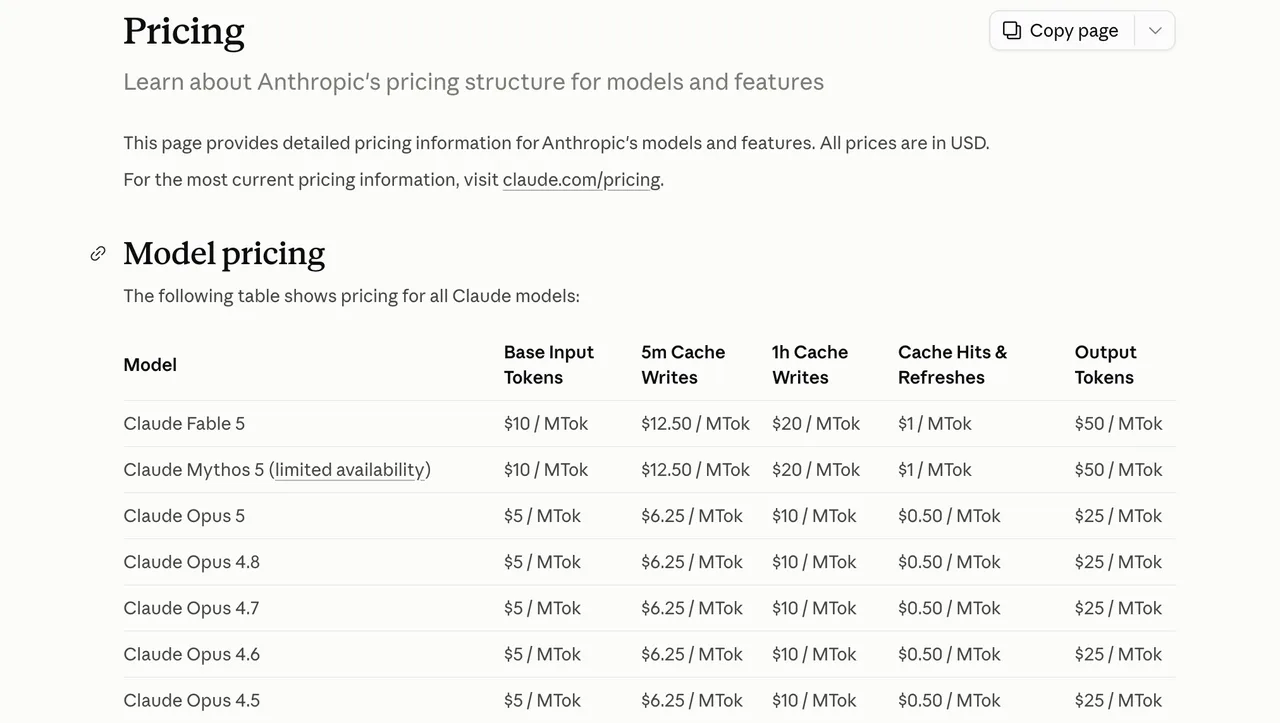
As of my check, xAI lists grok-4.6 at different token rates depending on context length. Anthropic’s Claude pricing docs list separate prices for Fable, Opus, Sonnet, and Haiku models, plus caching and batch details.
Use this formula:
cost per accepted task = tokens + tools + retries + cache writes + failed runs + reviewer repair time
Then add p95 time to accepted output. A lower token price can lose if the model needs more retries. A higher-priced model can lose if it does not improve acceptance enough. Good enough. That is the most honest assessment I can give.
Rate Limits, Context, and Operational Overhead
Rate limits affect queueing, retries, and user-visible latency.
xAI documents team and model limits across requests and tokens. Anthropic’s Claude rate limit docs describe organization-level RPM, input-token, and output-token limits, plus spend caps and token-bucket behavior.
Context also needs restraint. Bigger context helps when the input is relevant. It hurts when the app sends stale logs and duplicate documents. Context is billable attention.
There is also an engineering cost. If one provider needs different retry behavior, different schema handling, or different observability fields, that belongs in the comparison. Not as a complaint. As operating cost.
Compare Platform and Risk Controls
Versioning, Data Handling, Safety, and Regional Availability
Versioning is production behavior.
xAI documents aliases and fixed release IDs. Anthropic says Claude model IDs from the 4.6 generation onward are pinned snapshots, not evergreen pointers.
Data handling can decide the shortlist. xAI says it does not train on API inputs or outputs without explicit permission and offers Zero Data Retention with feature trade-offs. Anthropic says commercial content is not used for training by default, but its Covered Models policy requires 30-day retention for designated models such as Claude Fable 5 and Claude Mythos 5.
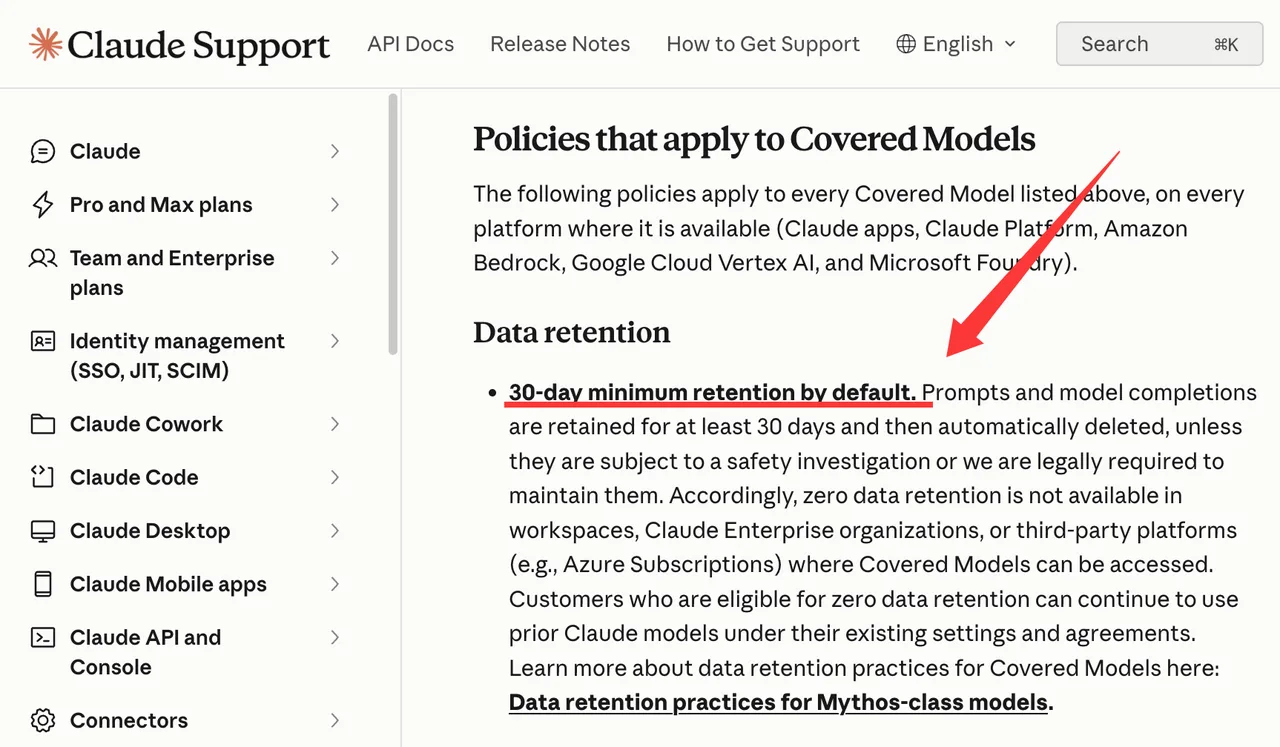
If ZDR or regional routing is mandatory, check that before the eval. Not after legal asks.
Observability, Fallbacks, and Provider Concentration Risk
For every run, log model ID, prompt version, retrieval version, tool schema, latency, token counts, cache status, tool calls, retry count, error class, reviewer decision, and acceptance result.
Fallbacks need rules. Which tasks can route to another provider? Which outputs need review after fallback? What happens to latency? What does support disclose if the routed model changes?
One-provider setups are simpler. They also concentrate risk. Having many tools is not the problem. Having to manage your tools is.
Run a Fair Grok vs Claude Evaluation
Freeze Models, Prompts, Tools, and Acceptance Criteria
Freeze exact model IDs, system prompts, task prompts, input documents, retrieval settings, tool schemas, retry count, output limits, timeout, temperature, reasoning settings, and scoring.
Anthropic’s guide on building evaluations says success criteria should be specific and measurable. That matches production reality. A single “best answer” score is too thin.
If one provider has a native feature your app needs, run a separate platform lane. Do not compare base model output against provider-side search, code execution, and retrieval, then call it model quality.
Record Failures, Repairs, Reviewer Disagreement, and Cost
The failure log matters more than the ranking. Record wrong answers, unsupported claims, schema failures, bad tool calls, missed tool calls, policy mismatches, timeouts, rate-limit errors, repair minutes, and final acceptance.
Reviewer disagreement is not noise. It means the rubric is weak. The eval engineer owns the harness. The domain owner owns the standard.
| Metric | Why it matters |
|---|---|
| Accepted-task rate | Measures usable output |
| Cost per accepted task | Catches retries and repair |
| Tool failure rate | Predicts agent reliability |
| p95 accepted latency | Shows user-visible speed |
| Reviewer disagreement | Exposes weak rubrics |
Keep failed outputs in the review set when policy allows. Removing failures makes the model look cleaner than it is. Production will not be that polite.
Choose the Better Fit by Application
Coding Agents, Research Products, and Internal Automation
- For coding agents, score test pass rate, patch size, unrelated edits, tool discipline, and stopping behavior. xAI is clearly positioning Grok for this lane. Claude’s Opus, Sonnet, and Fable lanes are also serious candidates. Your repo decides.
- For research products, score citation precision, source discipline, uncertainty handling, and contradiction detection. Claude often gets shortlisted here. Test it anyway.
- For internal automation, peak intelligence may not matter. A faster or cheaper model that passes routine routing and extraction may beat a frontier model that adds cost without more accepted tasks. Works for my frequency. Yours might differ.
Multi-Model Routing When One Provider Is Not Enough
Multi-model routing makes sense when tasks differ enough. One model for code repair. One for extraction. One for support drafts. One for long-context review.
Route by task type, not vague difficulty. Use fallback only where the backup model passed the same acceptance test. Re-run evals after pricing, model, context, retention, or availability changes.
A unified model access layer helps when teams need to compare and route providers without rewriting each integration. The value is fewer integration resets.
FAQ
Who should resolve disagreements between domain reviewers?
The domain owner. The eval engineer documents the disagreement and updates the rubric after the decision. If the question touches legal, safety, or customer commitments, route it to that accountable owner.
Can vendor benchmarks be reused in an internal procurement scorecard?
Yes, as vendor-reported evidence. They should not count as internal performance unless your team reproduces the same harness, prompts, tools, model IDs, and acceptance criteria.
How long should teams retain comparison outputs and evaluator notes?
Long enough for procurement, audit, migration, and incident review, subject to legal, privacy, and vendor terms. Use redaction or synthetic fixtures for sensitive data.
Who approves a provider change after the initial evaluation?
Match approval to risk. Internal tools may need product, platform, and FinOps. Customer-facing or regulated workflows may need security, legal, support, and compliance too.
What should customer support disclose when the routed model changes?
Disclose customer-visible effects: capability, latency, data handling, regional processing, or policy changes. Do not imply vendor endorsement unless official docs support it.
Conclusion
The useful Grok vs Claude decision is not a brand verdict. It is a controlled model selection process.
Freeze IDs. Run the same tasks. Use the same prompts, tools, retries, limits, and scoring rules. Count accepted tasks, failures, repair minutes, latency, and total cost. Treat vendor benchmarks as vendor-reported. Treat production logs as the source of truth.
Previous posts:
/filters:quality(82)/media/images/c347367a-a007-4466-b8f7-d37f5fb52819.webp)
/filters:quality(82)/media/images/cd4db796-7728-45fb-8267-6813ed28e173.webp)
/filters:quality(82)/media/images/1791535252286714222_v4jvJT2a.webp)
/filters:quality(82)/media/images/1791451065663755033_qNqAKS1a.webp)
/filters:quality(82)/media/images/1791359984291066138_tW5eOX6f.webp)
/filters:quality(82)/media/images/1773962750383987480_n3hqzHRZ.webp)