
Laguna S 2.1 Review for Local Agentic Coding
Laguna S 2.1 review for developers deciding whether one local agentic coding workflow justifies its quality and deployment burden.
This Laguna S 2.1 review is for one job: a repository-level coding agent task where the model has to inspect files, make a small patch, run checks, and report what changed. Not a chat demo. Not a leaderboard recap.
The source boundary is tight. Poolside lists Laguna S 2.1 in its official GitHub organization as an open-weight model for agentic coding, with weights on Hugging Face and pool as the native agent route. I did not find current official evidence that WaveSpeed lists this model in its model directory, so I would not describe WaveSpeed as an access layer unless that changes before publication.
Verdict for Local Coding Agents
For a platform lead evaluating a local coding model, Poolside Laguna S 2.1 is worth testing when code control matters more than setup convenience. The Laguna S 2.1 model card describes a 118B total parameter MoE model with about 8B active parameters per token, 1,048,576-token context, text-to-text modality, reasoning support, and OpenMDW-1.1 licensing.
That does not make it lightweight. Local does not mean “drop it on any laptop.” The model has BF16 weights plus quantized variants, and the serving route still needs real infrastructure judgment.
My verdict: evaluate it when you want an open-weight coding LLM inside a controlled engineering workflow, and you have the hardware, runtime skills, and review process to support it. A good single output does not mean the production workflow is ready.
Review One Repository-Level Coding Task
Define the Task and Acceptance Rules
I would test one task: fix a duplicate-submit bug in a checkout service. The agent gets the repository, issue text, test command, and permission to inspect files, edit code, and run checks.
The rules should be written before the run starts:
| Rule | Why It Matters |
|---|---|
| Name the affected files | Prevents blind edits |
| Explain the suspected cause | Shows repository understanding |
| Keep the patch small | Limits review risk |
| Run targeted checks | Confirms the change path |
| Report remaining risk | Keeps the handoff honest |
The model should not get credit for a polished explanation if the patch does not pass checks. It should not get credit for green tests if it changed unrelated behavior. Agentic coding is not autocomplete wearing a hard hat.
Observe Planning, Tool Use, and Completion
For this agentic coding model, I would watch the sequence. Did it read the right files first? Did it inspect tests before editing? Did it run one useful command, or keep firing commands until something looked green?
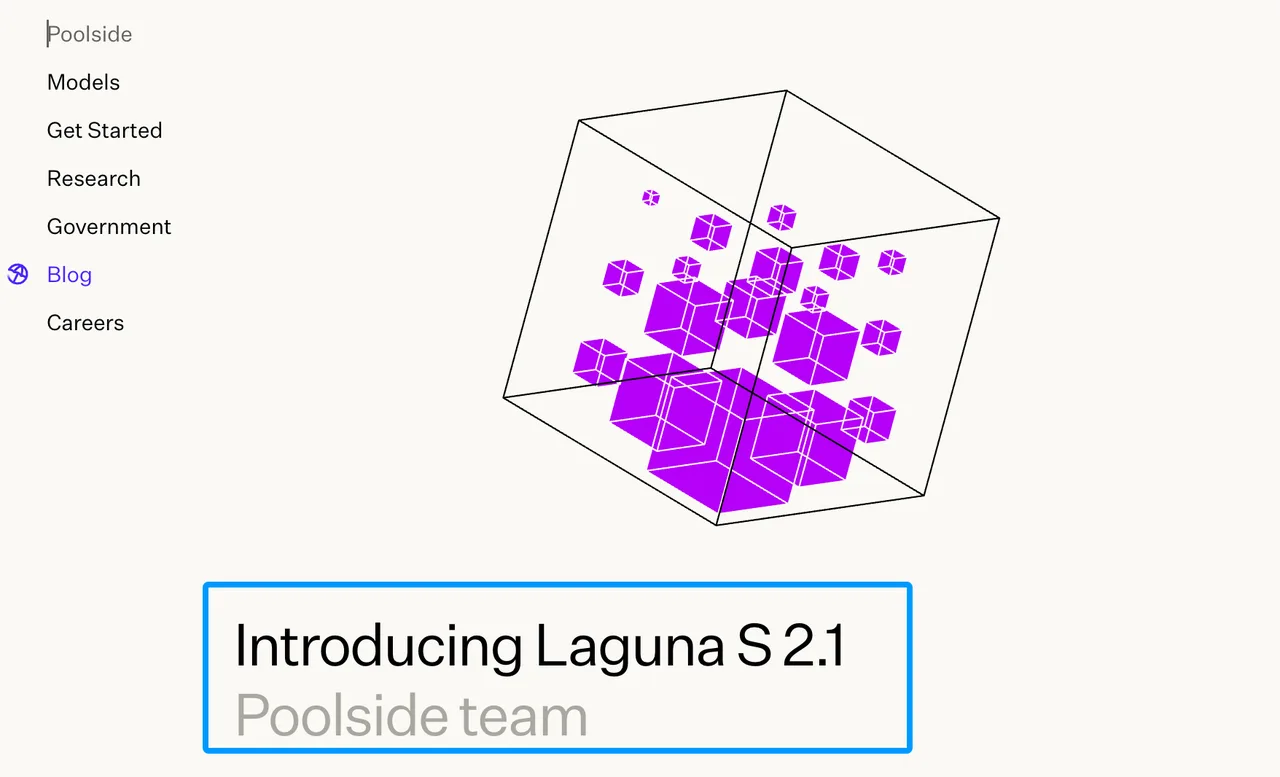
Poolside’s release post says Laguna S 2.1 was evaluated with an agent harness, published trajectories, and long-horizon coding tasks. It also names limits: tool-schema mismatch in third-party harnesses, nested tool-call formatting problems, and longer-than-expected thinking.
Those are production details. A model can be capable and still fail the handoff because the edit tool call is malformed. In repo work, shell permissions, path access, retries, and stop behavior matter.
Evaluate the Practical Trade-Offs
Useful Coding Behavior and Failure Modes
The behavior I would look for is persistence with restraint. Laguna S 2.1 is positioned for long-horizon work, and Poolside emphasizes verification, backtracking, and not declaring victory early. That fits repository tasks.
The failure modes are just as important:
| Behavior | Risk |
|---|---|
| Overthinking | Burns time before action |
| Schema drift | Breaks third-party tools |
| Invalid nested calls | Blocks edits or tests |
| Huge context use | Raises memory pressure |
| Runtime instability | Turns model quality into ops work |
Demos show the ceiling. Production shows the floor.
Local Control Versus Deployment Burden
The local-control case is real. You can keep code closer to your infrastructure, choose quantization, restrict network access, and decide exactly what the agent may read, write, and run.
The burden is real too. You own model storage, GPU memory, runtime selection, monitoring, upgrades, rollback, and developer support. Poolside lists vLLM, SGLang, Transformers, TRT-LLM, llama.cpp, Ollama, DFlash, and several quantized variants. Useful, yes. Also more combinations to maintain.
Speed matters, but stable speed matters more.
Decide Whether Laguna S 2.1 Fits

Strong Fits for Local Agentic Work
Laguna S 2.1 fits teams that already have platform capacity and want more control over coding-agent execution.
Strong fits include:
- Self-hosted coding agents.
- Regulated repositories.
- Large codebases that benefit from long context.
- Internal developer platforms with GPU operations.
- Repository tasks verified by tests, logs, and diffs.
- Teams that want to inspect or adapt open weights.
A Laguna review should not stop at “the answer looked good.” The better question is whether the model can move through the repository without making code review harder.
Cases Better Served by a Hosted Model
A hosted model may be better when the team does not want to run inference, manage quantization, or debug serving failures. If the bottleneck is developer experience rather than data control, hosted access may be the cleaner route.
Use a hosted route when GPU operations are thin, latency targets are not tied to local hardware, or the repository is not sensitive enough to justify self-hosting. Local control has value. So does not owning another fragile service at 2 a.m.
FAQ
Which license terms apply to commercial Laguna S 2.1 deployments?
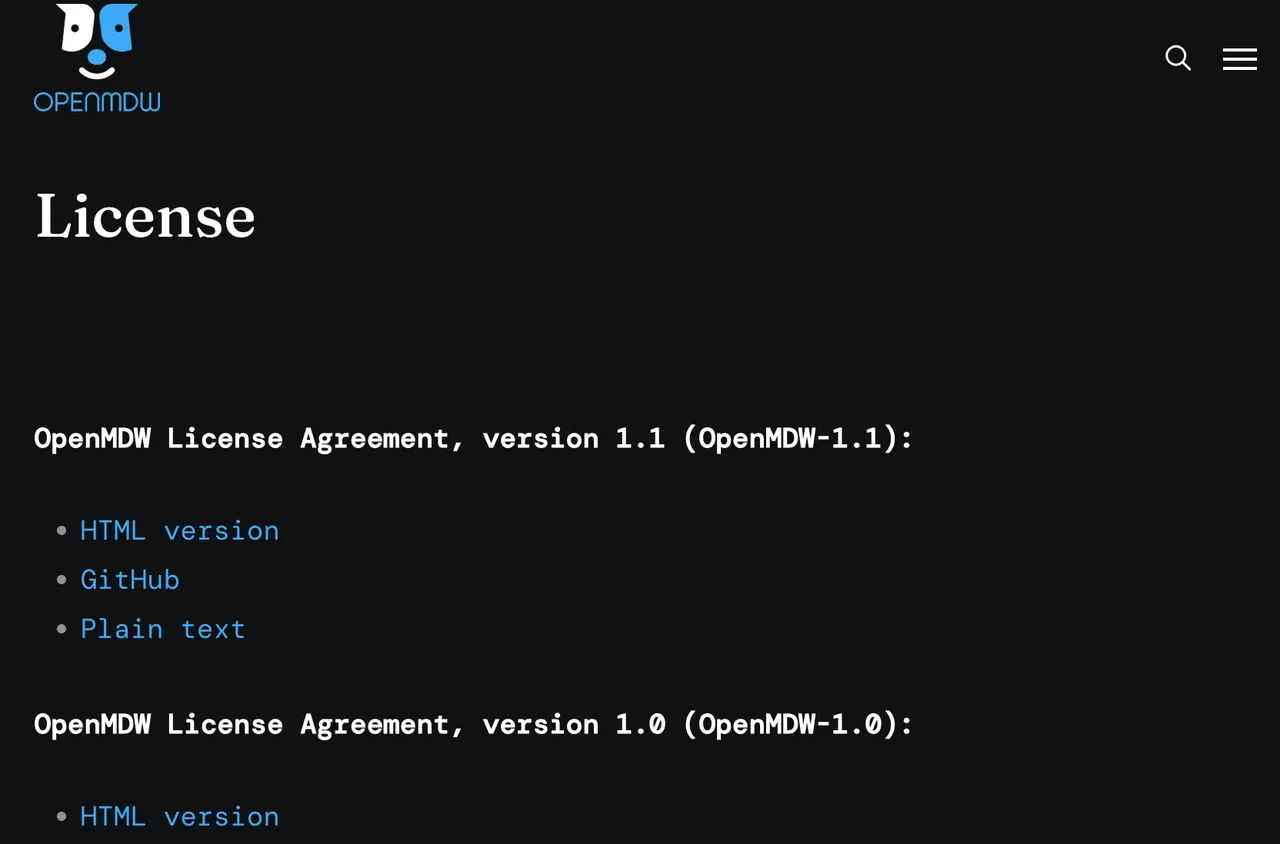
Laguna S 2.1 is listed under OpenMDW-1.1. The OpenMDW license is designed as a permissive model license, and Poolside says commercial use is allowed. Legal review still belongs in the deployment process.
Does Poolside disclose Laguna S 2.1 training data sources?
Partly. Poolside says the model uses the same pre-training data as XS 2.1, and describes post-training sources such as open-source repositories, synthetic tasks, internal systems, and external data vendors. I did not find a complete raw dataset list.
Does Laguna S 2.1 provide official LoRA training recipes?
I found references to post-training routes, but not a specific official LoRA recipe in the main Poolside materials I checked. Treat community LoRA work as community-maintained unless Poolside labels it official.
How are Laguna S 2.1 model updates versioned?
The public trail is repo-based: Hugging Face model repositories, quantized variants, model cards, and Poolside release posts. For evaluation, pin the model ID, revision, quantization, and serving runtime.
Does the Poolside agent send local code telemetry?
Do not assume “local agent” means nothing leaves the machine. Poolside’s privacy policy says personal information included in service inputs may be collected and may be used for model training unless you opt out. The policy does not specifically establish whether the pool CLI sends local code or telemetry when configured against a local endpoint.
Conclusion
The bottom line for this Laguna S 2.1 review is narrow: it is a serious candidate for local repository-level agentic coding when control, open weights, and long-context work justify the deployment burden.
I would run one repository task first, lock the harness, log every tool-call failure, and compare the final patch against human review. If it helps the task finish without making the platform harder to trust, this workflow can stay.
Previous posts:
/filters:quality(82)/media/images/b73c2438-6bdd-4b80-a229-8d71d8f819cf.webp)
/filters:quality(82)/media/images/427fd9f2-347d-4f86-a2d5-aee110cda01d.webp)
/filters:quality(82)/media/images/1773962750383987480_n3hqzHRZ.webp)
/filters:quality(82)/media/images/43fa0e7f-a0db-48d7-9bab-921d1225db30.webp)
/filters:quality(82)/media/images/5799ff56-3a73-40ca-a666-e4965d878496.webp)
/filters:quality(82)/media/images/7a8850fc-caf6-482f-ac4d-5ddbe64ec47c.webp)