
Kling AI API Pricing Explained for Developers 2026
Kling AI API pricing helps developers compare credits, video duration costs, limits, and workflow trade-offs before budgeting production use.
Kling AI API pricing is not just a credit table. For developers, the real question is how Kling credits, model version, video duration, retries, review time, and usable output rate turn into a production budget.
As of August 11, 2026, teams should verify the live official developer pricing page before launch, because API packages, credit rules, access limits, and supported models can change. This article treats Kling as a video generation API cost problem, not a consumer plan comparison or a prompt tutorial.
Kling AI API Pricing at a Glance
Credits, Resource Packages, and Video Duration
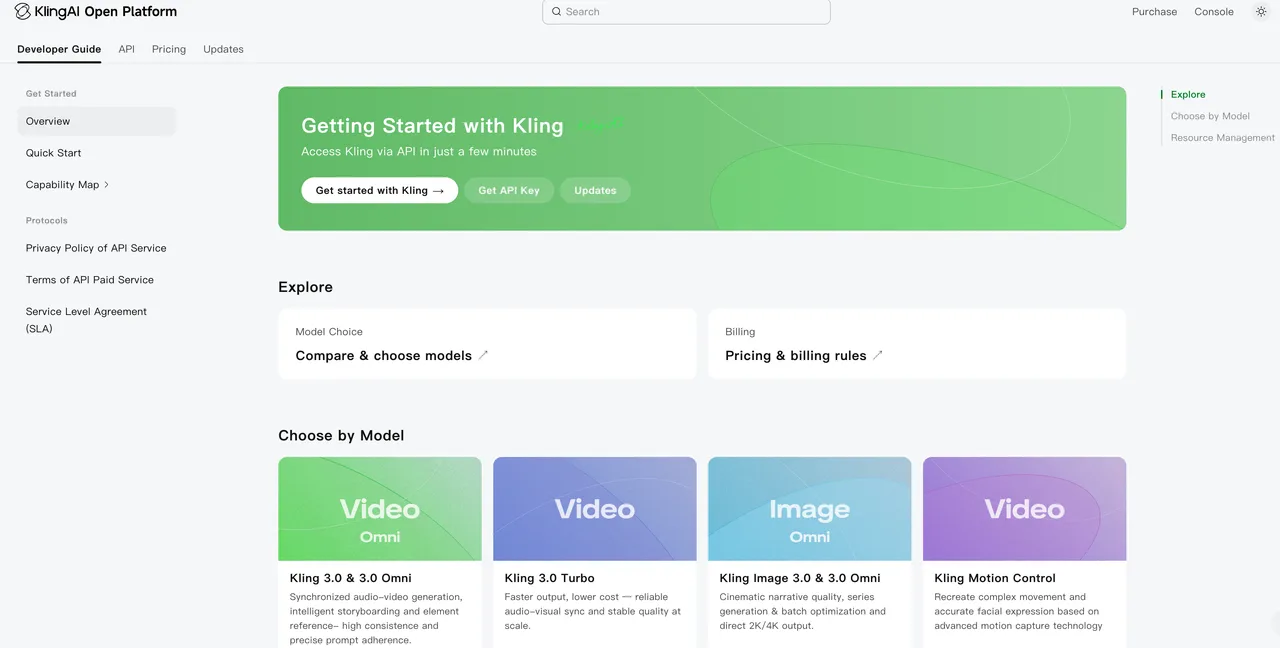
The first budgeting unit is not a video. It is the priced generation configuration behind that video. On the official Kling AI Developer Platform pricing page, developers should confirm the current resource package, credit unit, validity period, and concurrency terms before committing spend. In your own budget sheet, keep those values as variables, not hardcoded assumptions.
A practical model is:
estimated spend = submitted jobs x credits per job x effective unit price
Then add:
true spend per usable video = total spend / accepted videos
That second line matters more. Cheap requests become expensive when the output cannot ship. This is also why a cross-provider budget should compare accepted outputs, not only listed credits.
Public API Pricing Versus Studio Plan Pricing
Kling AI pricing for the consumer studio and Kling video API pricing for developers should not be treated as the same budget line unless the official account page says the credits are transferable. Studio plans are designed for interactive creation. API packages are designed for programmatic workloads, task queues, and repeated generation.
That difference changes ownership. Product may approve a studio experiment, but platform and FinOps should approve API volume. The official Kling AI Open Platform documentation should be the source of truth for current endpoint families, authentication flow, task lifecycle, and account-side access rules. If the documentation page and a sales quote disagree, do not average them. Capture both, ask Kling support to clarify, and freeze the dated answer in your launch record.
What Changes the Real Cost
Model Version, Mode, Length, Resolution, and Audio

Kling API cost changes with the generation contract. Model family, quality mode, duration, resolution, reference media, and audio can all affect consumption. The official Kling VIDEO 3.0 model guide shows this clearly: Video 3.0 pricing is expressed per second, and the documented credit rate differs by 1080p versus 720p, native audio versus no native audio, and voice control.
Do not turn one example into a universal price. A five-second no-audio draft and a longer native-audio campaign asset are different financial objects. The same prompt may also move between model versions during evaluation. If your system routes between versions, log the exact model ID, duration, resolution, audio mode, and final status for every job.
Retries, Rejected Outputs, and Review Time
Retries are where tidy pricing pages meet the production floor. A request can fail technically, pass technically but fail brand review, or look good in isolation but fail when placed in a sequence. Each case has a different cost owner.
Track at least four states: submitted, generated, accepted, and published. A generated video that is rejected by creative review still consumed engineering time, queue capacity, and reviewer attention. A good single output does not mean the production workflow is ready.
The longer the rework path, the worse the cost looks. If rejected outputs require prompt rewrites, new reference images, extra legal checks, or manual editing, those hours belong in the same budget conversation as Kling credits.
Budget Kling API for Product Workloads
Prototype Tests, Campaign Bursts, and Production Volume
Prototype spend should answer one question: can the workflow produce usable videos at an acceptable rate? It should not pretend to forecast full production from ten cherry-picked generations. For prototypes, cap total credits, separate test keys from production keys, and record why each output passed or failed.
Campaign bursts need a different model. They stress concurrency, moderation, queue time, storage, and review capacity. A production launch may need enough buffer for retries, alternate cuts, localization, and last-minute creative changes. For broader pipeline planning around queues, storage, CDN, review, and delivery, connect this article to your AI video infrastructure planning at /blog/ai-video-infrastructure.
Production volume should be budgeted by accepted asset class: hero ads, social variants, product demos, marketplace previews, internal explainers. Each class has its own tolerance for defects and rework.
Cost per Usable Video Instead of Cost per Request
The cleanest FinOps metric is cost per usable video. It should include provider credits, failed and repeated requests, moderation rejects, human review time, post-production repair, storage, bandwidth, and customer-support cost when outputs cause confusion.
Use this simple table as a starting checkpoint:
Cheap does not always mean cost-saving. Unusable generations are expensive.
Check Access, Limits, and Provider Terms
Current Endpoints, Regions, Rate Limits, and Account Rules
Before launch, platform owners should capture a dated pricing and access snapshot. Include endpoint paths, model IDs, available regions, authentication requirements, rate limits, concurrent task limits, package validity, refund rules, and support channel. If any of these are account-specific, record the account page screenshot or support ticket ID.
The official Kling AI Terms of Paid Service also matters for finance controls. It describes paid services, credit validity, credit use records, payment-page precedence, changes to pricing schemes, and refund-related limitations. That means your internal budget should not rely on a stale spreadsheet from a previous quarter.
Commercial Use, Data Handling, and Support Boundaries
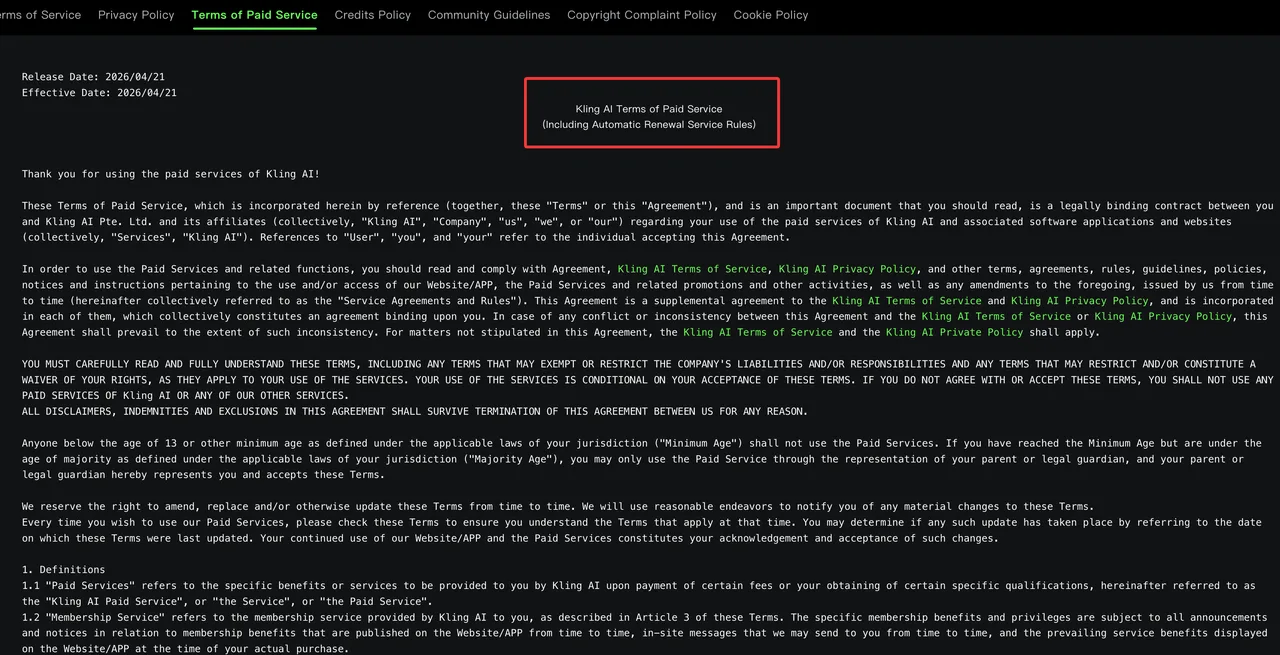
Commercial deployment needs policy review, not only API testing. Teams should confirm current rules for generated-output labeling, commercial permissions, account sharing, prohibited content, support boundaries, and dispute handling. This is risk identification, not legal advice.
For data handling, review the current Kling AI Privacy Policy with privacy or legal owners. Video prompts, uploaded images, reference footage, product shots, and customer media can carry rights and personal-data obligations. Do not put confidential customer assets into testing unless the provider terms, customer contract, and internal policy all allow it.
Direct Kling Access or an Aggregation Layer
When Direct API Use Is Simpler
Direct access is often simpler when Kling is the only target provider, your team accepts Kling’s account model, and you need the newest Kling-specific controls quickly. It can also reduce abstraction work during early evaluation. The trade-off is that your product contract may become tightly coupled to Kling model names, parameter shapes, billing states, and failure modes.
Direct integration should still have budget caps, retry limits, idempotent job IDs, and audit logs. Otherwise, a creative burst can become a billing surprise before anyone notices.
When One Model Layer Reduces Switching Cost
An aggregation layer helps when you expect multiple video providers, procurement needs fallback options, or product teams want one job contract across models. The layer should normalize model routing, file upload, callbacks, errors, and usage logs while preserving provider-specific fields for debugging.
FAQ
Who approves Kling cost assumptions before a customer launch?
The product owner should approve the customer-facing scope, platform should approve technical capacity, and FinOps should approve the spend model. For enterprise or regulated customers, legal and customer-success owners should also sign off before commitments are made.
How often should teams refresh API pricing snapshots?
Refresh before every major launch, before purchasing a large package, and whenever model versions or account terms change. For active production workloads, a monthly snapshot is a reasonable minimum.
Can procurement require a different provider fallback?
Yes. Procurement can require fallback coverage if vendor concentration, pricing volatility, regional access, or contract terms create business risk. Engineering should translate that requirement into routing tests, not a vague promise.
What evidence supports external claims about cost savings?
Use dated official pricing pages, account invoices, job logs, accepted-output rates, and review-time data. Third-party pricing pages can be useful clues, but official Kling documentation and your own billing records should control the claim.
Who owns billing disputes after failed video jobs?
Finance owns invoice reconciliation, platform owns technical evidence, and the product team owns customer impact. Keep task IDs, timestamps, request settings, response states, and support tickets together so disputes do not become archaeology.
Conclusion
Kling AI API pricing should be managed as production economics, not a static credit number. The real budget comes from model choice, seconds generated, resolution, audio, retries, review, and the share of outputs that are good enough to use. For 2026 planning, keep official pricing snapshots current, separate studio and API assumptions, and make cost per usable video the metric that decides whether Kling belongs in the workload.
Previous posts:
Related Articles
/filters:quality(82)/media/images/1791535252286714222_v4jvJT2a.webp)
ModelsLab Review 2027: One API for Media Models?
/filters:quality(82)/media/images/1791451065663755033_qNqAKS1a.webp)
Best AI Video Background Removal Tools in 2027
/filters:quality(82)/media/images/1791359984291066138_tW5eOX6f.webp)
Best Comfy Cloud Alternatives in 2027
/filters:quality(82)/media/images/1773962750383987480_n3hqzHRZ.webp)
Qwen Image 2.1 vs Qwen Image 3.0: What Changes and When to Upgrade
What's Next for Wan Video Generation, and What It Means for Creators
/filters:quality(82)/media/images/1791271002496939282_TBLU3cmv.webp)