
GLM 5.3 Pricing: API Cost and Agent Economics
Track confirmed GLM 5.3 pricing, cached-token rules, subscription access, and agent workload costs without relying on unverified price claims.
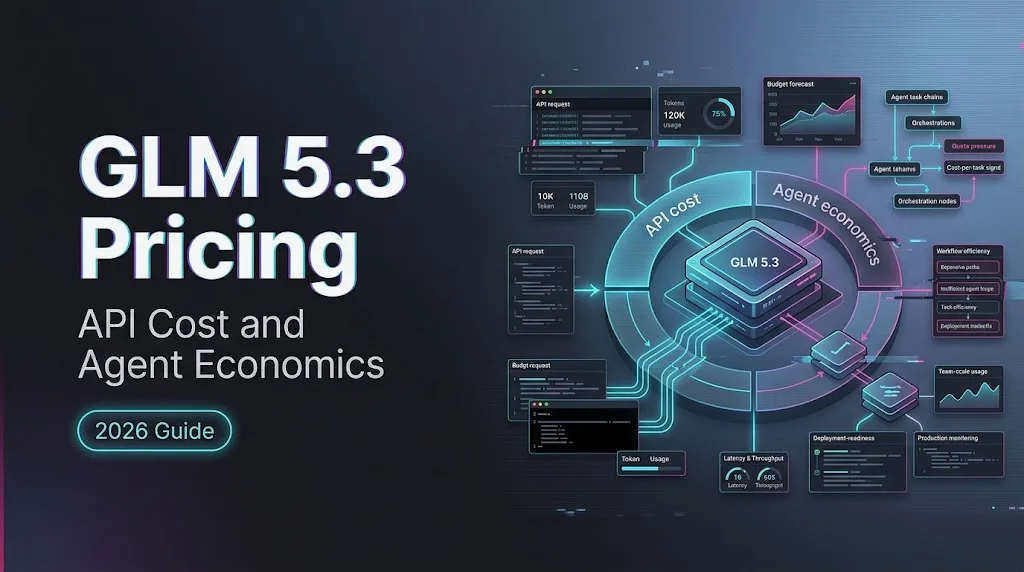
I started with the billing sheet. For this GLM 5.3 pricing note, the useful question was not “is the token price low?” It was whether a coding task still looks cheap after repo context, cached tokens, retries, tool calls, and failed agent loops are counted. That is where model pricing stops being a clean line item.
As of August 19, 2026, Z.ai publishes GLM-5.3 API prices and separate GLM Coding Plan rules. This article records what is public, what each number means, and how I would turn it into cost per completed task. This is where my data ends.
What GLM 5.3 Pricing Is Confirmed
Direct API, Coding Plan, and Partner Routes
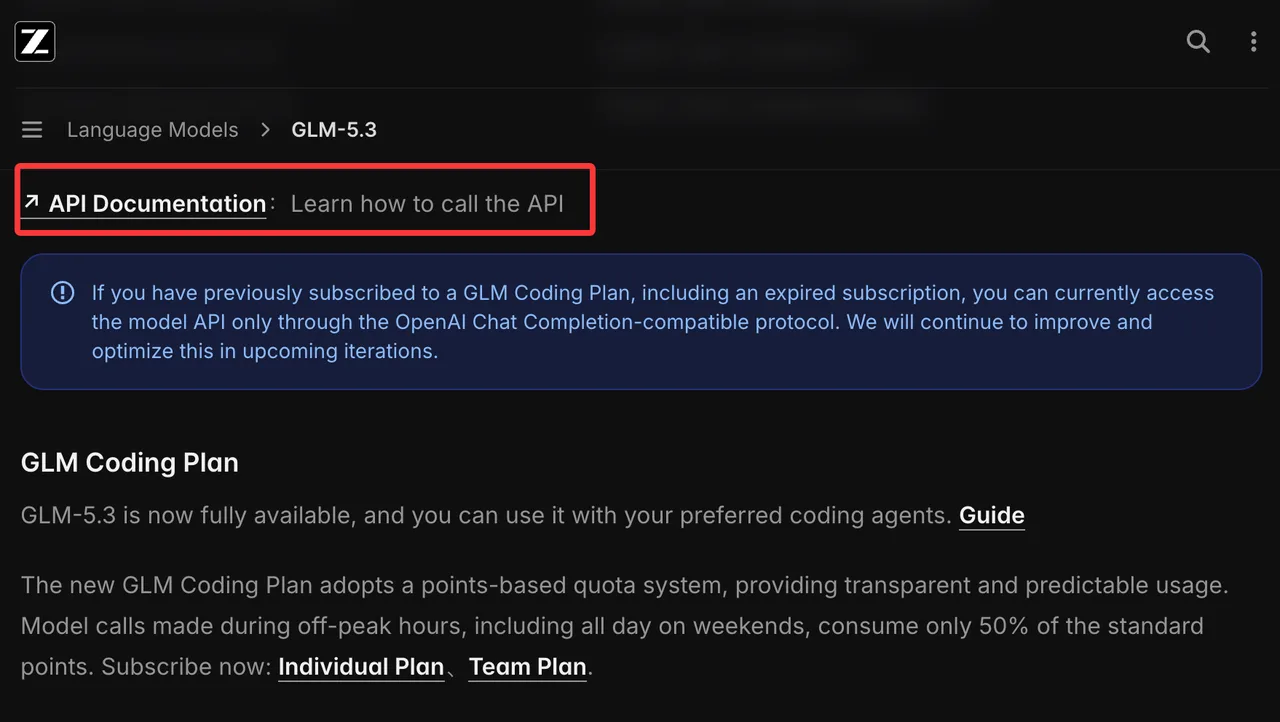
Z.ai’s official GLM-5.3 documentation lists glm-5.3 and describes API access paths. That confirms there is a direct model route to evaluate.
Direct API billing and GLM Coding Plan billing are not the same thing. The API is priced by token categories and other billable units. The Coding Plan uses subscription allowances and credits for supported coding tools. Partner or aggregator routes need separate records because their price, routing, cache behavior, and usage reports may differ.
Do not average these into one “GLM price.” It makes the spreadsheet prettier. It also hides the cost.
Input, Output, Cache, and Other Billing Units
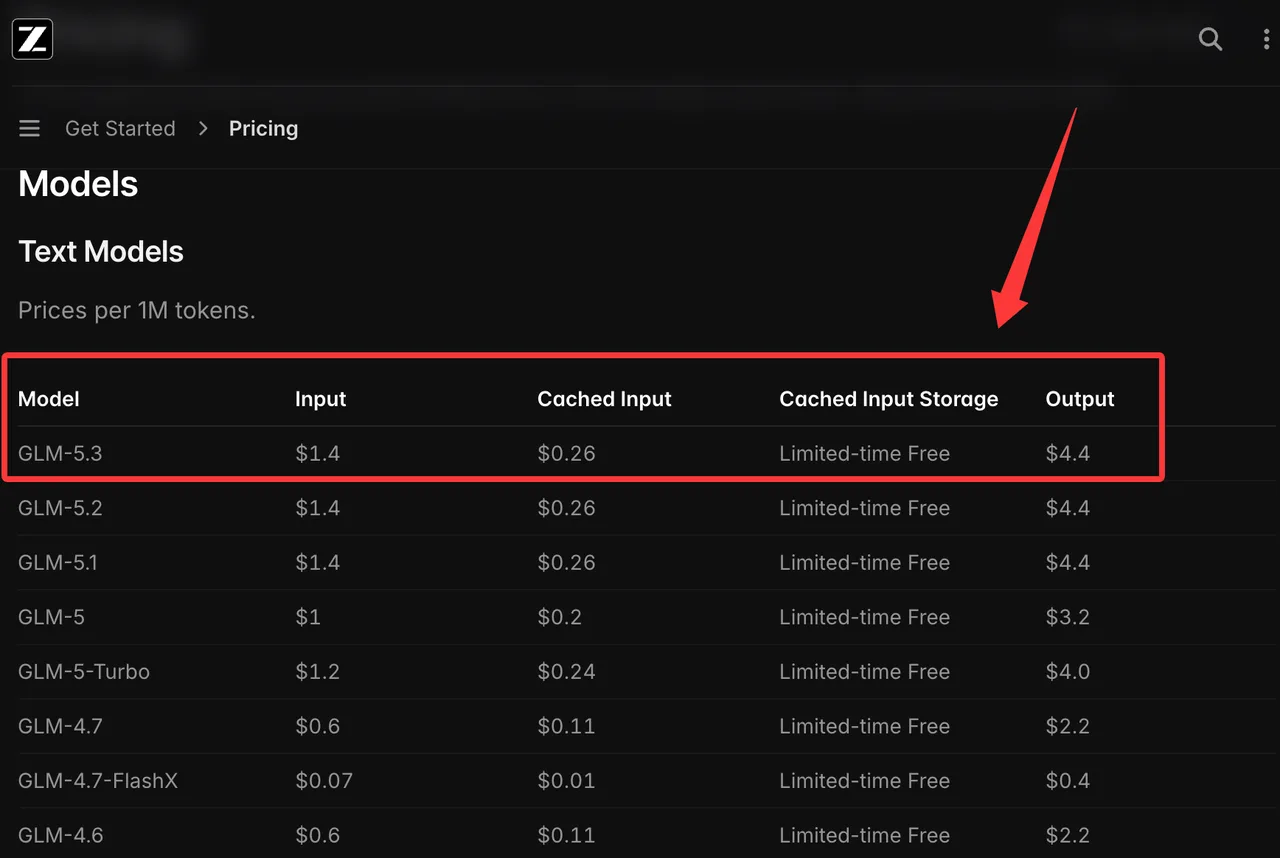
The Z.ai pricing page lists GLM-5.3 direct API prices in USD. As of August 19, 2026, input is $1.40 per 1M tokens, cached input is $0.26 per 1M tokens, cached input storage is listed as limited-time free, and output is $4.40 per 1M tokens.
The GLM 5.3 output price matters for agent work. Coding sessions often produce plans, diffs, test notes, repair attempts, and final summaries. Output can grow faster than expected. Tool use can add another charge. Z.ai lists Web Search at $0.01 per use, so I would log tool calls outside token totals.
Translate Token Prices Into Task Cost
Short Coding Requests and Long Agent Sessions
A short request is easy. A few thousand input tokens and a small answer usually cost only cents or less. That number is useful for smoke tests. It is not useful for judging agent economics.
Long sessions behave differently. A repo-level task can carry tens or hundreds of thousands of tokens. Cached input helps when the same context is reused, but it does not make context free. The cost changes again when the model retries, expands the plan, or produces a long patch explanation.
Retries, Tool Loops, and Context Growth
GLM agent cost should be counted by completed task, not by first request. I would track successful runs, failed runs, retries, tool calls, uncached input, cached input, and output separately.
The failure line matters. A task that fails after several tool loops still consumed tokens. It may also consume engineer review time. The invoice will not show that second part. The budget still feels it.
Context growth needs a stop rule. Without one, every turn carries more files, logs, previous reasoning, and test output. Found the pattern on the third try.
Compare Access Models
Metered API Versus Subscription Allowances
The GLM Coding Plan is useful for teams doing supported coding work inside approved tools. It uses credits and time-window allowances rather than simple per-token billing. Z.ai’s Coding Plan documentation lists plan rules, weekly allowances, and credit multipliers for GLM-5.3.
That model can work well for steady internal coding. It is less clean for customer-facing product traffic, where finance usually needs request-level logs, token totals, owner tags, and environment separation.
Aggregator Markups and Provider Differences
Aggregator access should be evaluated as its own provider route. OpenRouter lists a GLM 5.3 route at z-ai/glm-5.3, but that does not make it identical to direct Z.ai billing.
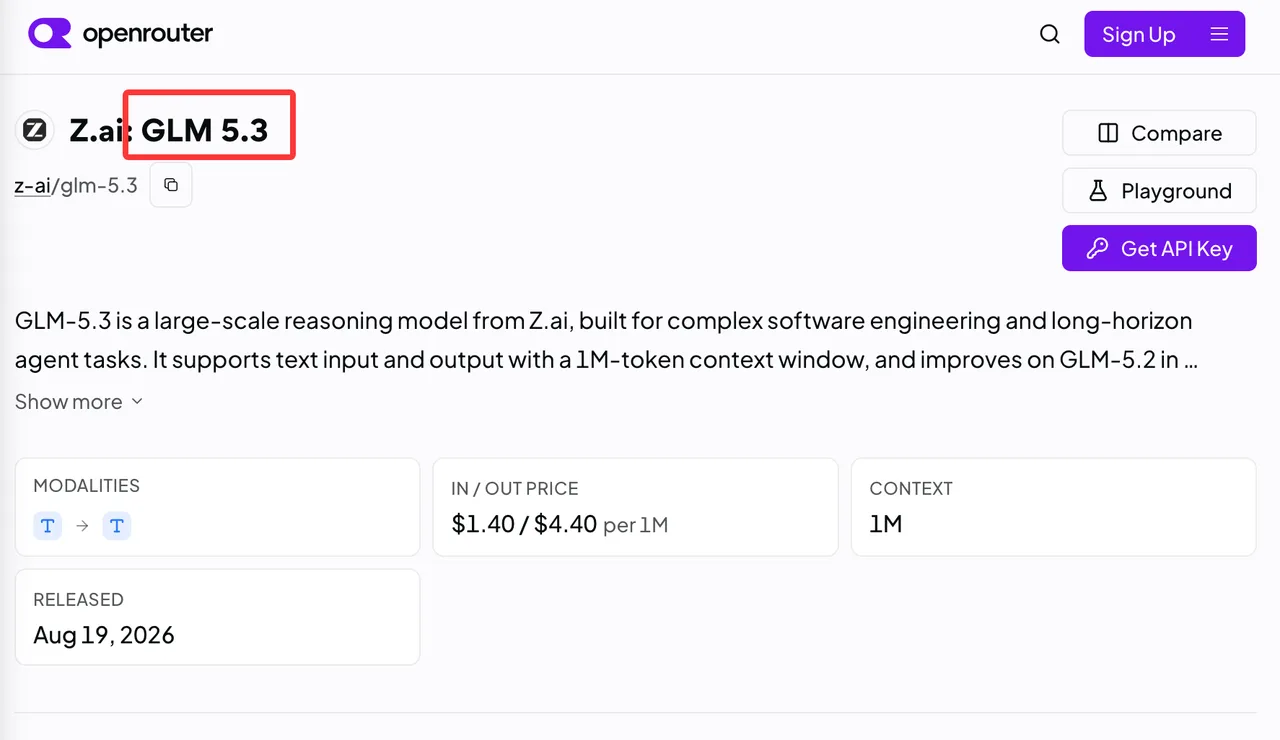
Provider routes can differ in markup, cache handling, streaming behavior, tool support, reliability, and usage records. Same model name. Different cost surface.
Build a Cost Estimate
Measure Tokens, Cache Hits, and Failed Runs
I would not estimate from one demo prompt. I would sample 50 to 100 real tasks and log the parts that move the bill: input, cached input, output, tool calls, retries, failures, and completion status.
Cache hit rate gets its own column. A repeated repo workflow may benefit from cached context. A mixed support queue may not. Works for my frequency. Yours might differ.
Calculate Cost per Completed Task
The useful metric is cost per completed task. Start with successful model calls, add failed runs, add tool charges, then add review cost if humans had to repair the result.
This is where sticker price can mislead. A model with cheaper input can lose if it needs more retries. A model with higher output cost can still win if it finishes the task cleanly.
Limits and Trade-Offs
Promotional Prices and Allowances Can Expire
Cached input storage is listed as limited-time free. Coding Plan allowances, off-peak discounts, and partner prices can also change. Record the verification date beside every number.
Sticker Price Does Not Predict Cost per Outcome
GLM 5.3 pricing is only useful after it touches a workload. Token prices explain the bill. They do not explain whether the work finished.
FAQ
Can GLM 5.3 budgets be capped by project?
Yes, if the platform setup supports project-level keys, quotas, or internal chargeback. If not, a gateway can enforce caps by model ID, route, owner, and environment.
Can finance reconcile provider invoices with internal usage logs?
Only if engineering logs token categories, request IDs, model IDs, routes, tool calls, and failures. Without those fields, finance is guessing.
Can cached input be shared across separate applications?
Do not assume that. Cache scope depends on provider rules and data boundaries. Shared cache can also create privacy questions.
What billing records should finance teams retain?
Keep invoices, pricing snapshots, plan terms, usage exports, allocation logs, and approval records for model changes. Retention periods depend on company policy.
Who reviews unexpected changes in GLM usage cost?
FinOps should own the alert. Platform engineering should diagnose token, cache, retry, and route changes. Product should decide whether the workload still justifies the spend.
Conclusion
GLM 5.3 pricing is clear enough to model, but not simple enough to eyeball. The confirmed public numbers cover input, cached input, output, Coding Plan rules, and some tool charges. The real cost depends on how much work actually completes.
I would price glm-5.3 by finished task, not by token headline. Count cache hits. Count failed loops. Count tool calls. Then decide whether the economics hold.
Previous posts:
/filters:quality(82)/media/images/5f15570a-6a68-432e-a6f1-1dcbf799ba81.webp)
/filters:quality(82)/media/images/b73c2438-6bdd-4b80-a229-8d71d8f819cf.webp)
/filters:quality(82)/media/images/427fd9f2-347d-4f86-a2d5-aee110cda01d.webp)
/filters:quality(82)/media/images/1773962750383987480_n3hqzHRZ.webp)
/filters:quality(82)/media/images/43fa0e7f-a0db-48d7-9bab-921d1225db30.webp)
/filters:quality(82)/media/images/5799ff56-3a73-40ca-a666-e4965d878496.webp)