Krea 2 Turbo with LoRA support runs custom LoRAs and generates personalized images natively at 1K to 2K resolution, with both text-to-image and image-to-image support. Ready-to-use REST inference API, best performance, no cold starts, affordable pricing.
Idle
$0.018per run·~55 / $1
ExamplesView all
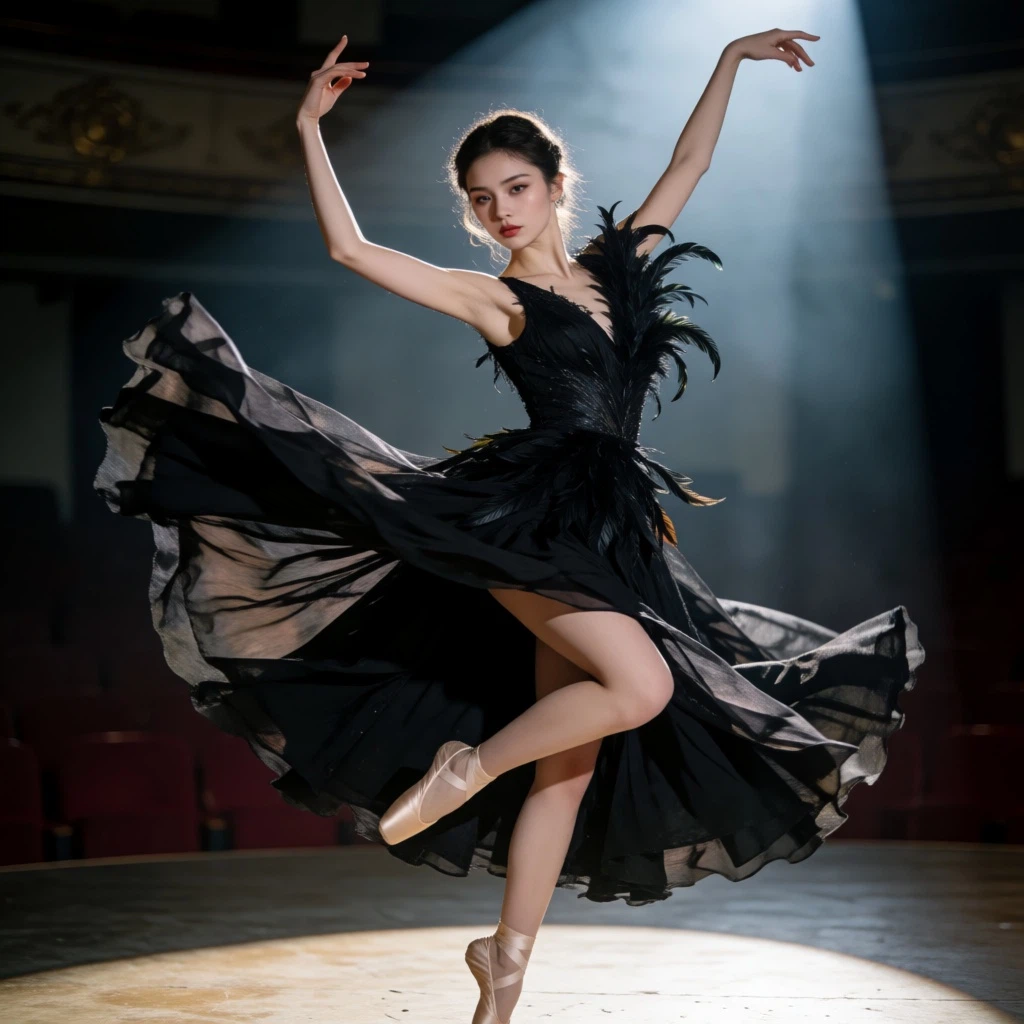
A graceful young woman in a dramatic black ballet-inspired dress, captured mid-turn with one leg extended and arms curved elegantly, dark feathers and layered fabric sweeping outward, spotlight cutting through a dim theater, pale skin, intense gaze, fine-art fashion photography, expressive movement, artistic and cinematic, highly detailed.

A rugged handsome foreign man standing in a dusty frontier town at sunset, captured in the moment of tossing a wide-brimmed hat upward with one hand while the other rests near his belt, long coat moving in the wind, leather boots, subtle stubble, golden dust in the air, cinematic western art style, dramatic backlight, richly textured realism.
Related Models
/filters:quality(82)/media/images/1789888783447157992_hG8iqAJS.webp)
/filters:quality(82)/media/images/1788760867264586097_7BZ9isBK.webp)
/filters:quality(82)/media/images/1786952854061501695_t8heoxGQ.webp)
/filters:quality(82)/media/images/1786952873106530692_cwjsCLT3.webp)
/filters:quality(82)/media/images/1788684121915845410_PlPY7gqA.webp)
/filters:quality(82)/media/images/1788684887040987486_ILX6fU3e.webp)
README
Krea 2 Turbo LoRA
Krea 2 Turbo LoRA is a fast, aesthetic-first image generation model for both text-to-image and image-to-image workflows. It supports native 1k and 2k output, and adds on-the-fly LoRA loading so you can apply up to 3 LoRAs in a single request for more targeted style and subject control.
Why Choose This?
-
Native high-resolution generation
Generate images at1kor2kresolution without relying on a separate upscaling pass. -
Fast Turbo workflow
The Turbo checkpoint is optimized for fast generation, making it suitable for quick prompt iteration and production workflows. -
LoRA support
Load up to 3 LoRAs per request, each with its own scale, for stronger style, subject, or concept control. -
Text-to-image and image-to-image
Generate from a text prompt alone, or provide animageinput for guided restyling and variation. -
Flexible image-to-image strength
Usestrengthto control how strongly the model follows or repaints the source image. -
Wide aspect ratio support
Supports square, portrait, landscape, tall, wide, and cinematic aspect ratio presets.
Parameters
| Parameter | Required | Description |
|---|---|---|
| prompt | Yes | Text description of the desired image. |
| resolution | No | Output resolution: 1k or 2k. |
| aspect_ratio | No | Output aspect ratio. Options: 1:1, 1:2, 2:1, 1:3, 3:1, 2:3, 3:2, 3:4, 4:3, 4:5, 5:4, 9:16, 16:9, 9:21, or 21:9. |
| image | No | Source image URL. When provided, the model runs image-to-image generation. |
| strength | No | Controls how strongly the source image is repainted in image-to-image mode. Range: 0–1. |
| loras | No | Up to 3 LoRA objects. Each object uses {path, scale}, where path is a direct .safetensors URL and scale controls LoRA intensity. |
| seed | No | Random seed. Use -1 for a random seed. |
How to Use
- Write your prompt — Describe the subject, composition, lighting, style, and visual details.
- Choose resolution — Use
1kfor faster iteration or2kfor higher-resolution output. - Select aspect ratio — Pick the layout that matches your target format.
- Add image optional — Provide an
imagewhen using image-to-image generation. - Adjust strength optional — Lower values preserve more of the source image, while higher values allow stronger repainting.
- Add LoRAs optional — Provide up to 3 LoRAs, each with its own
pathandscale. - Set seed optional — Use a fixed seed for more reproducible results.
- Submit — Generate the final image.
Pricing
Pricing is based on selected resolution.
| Resolution | Cost per image |
|---|---|
| 1k | $0.018 |
| 2k | $0.03 |
Best Use Cases
- LoRA-guided image generation — Apply custom styles, subjects, or concept tuning with one or more LoRAs.
- Text-to-image creation — Generate polished images from natural-language prompts.
- Image variation and restyling — Use a source image with prompt control for creative reinterpretation.
- Marketing and creative assets — Generate campaign visuals, product concepts, and branded creative content.
- Concept exploration — Test different looks, styles, and directions quickly with Turbo generation.
- Higher-resolution final assets — Use
2kwhen you need more detailed final output.
Pro Tips
- Use detailed prompts with subject, composition, lighting, mood, and style direction.
- Use
1kfor faster testing and2kfor final-quality output. - For image-to-image,
strengtharound0.4–0.6usually preserves more composition, while0.7–0.9allows more aggressive repainting. - Start LoRA
scalearound0.8–1.0, then lower it if the LoRA effect becomes too dominant. - Use fewer LoRAs when you need tighter control, and combine multiple LoRAs only when their effects are compatible.
- Set a fixed
seedwhen comparing prompt or LoRA changes.
Related Models
- Krea 2 Turbo — The base Turbo model without LoRA loading.
Reference
Krea v2 Turbo Lora API — Quick start
Grab a WaveSpeedAI API key, then call POST https://api.wavespeed.ai/api/v3/wavespeed-ai/krea-v2/turbo-lora with your input as JSON. The endpoint returns a prediction id. Start polling the result endpoint around every 2 seconds, increase the interval for long-running tasks, and stop on any terminal status. On completed, read output values from data.outputs. Examples for Krea v2 Turbo Lora below.
HTTP example
set -euo pipefail

: "${WAVESPEED_API_KEY:?Set WAVESPEED_API_KEY}"

REQUEST_BODY=$(cat <<'JSON'
{
    "prompt": "A cinematic shot of a city at sunset, soft golden light",
    "aspect_ratio": "1:1",
    "resolution": "1k",
    "strength": 0.8
}
JSON
)

# 1. Submit the prediction.
SUBMIT_RESPONSE=$(curl --silent --show-error --fail-with-body \
  -X POST "https://api.wavespeed.ai/api/v3/wavespeed-ai/krea-v2/turbo-lora" \
  -H "Content-Type: application/json" \
  -H "Authorization: Bearer $WAVESPEED_API_KEY" \
  -d "$REQUEST_BODY")

TASK=$(printf '%s' "$SUBMIT_RESPONSE" | jq 'if has("data") then .data else . end')
PREDICTION_ID=$(printf '%s' "$TASK" | jq -r '.id')
if [ -z "$PREDICTION_ID" ] || [ "$PREDICTION_ID" = "null" ]; then
  printf 'Submission response did not contain a prediction id
' >&2
  exit 1
fi
RESULT_URL="https://api.wavespeed.ai/api/v3/predictions/$PREDICTION_ID/result"

# 2. Poll until the prediction finishes.
while true; do
  RESPONSE=$(curl --silent --show-error --fail-with-body "$RESULT_URL" \
    -H "Authorization: Bearer $WAVESPEED_API_KEY")
  RESULT=$(printf '%s' "$RESPONSE" | jq 'if has("data") then .data else . end')
  STATUS=$(printf '%s' "$RESULT" | jq -r '.status')
  case "$STATUS" in
    completed) printf '%s\n' "$RESULT" | jq '.outputs'; break ;;
    failed|cancelled|timeout|deleted) printf '%s\n' "$RESULT" | jq . >&2; exit 1 ;;
    *) sleep 2 ;;
  esac
done
Node.js example
const submitUrl = "https://api.wavespeed.ai/api/v3/wavespeed-ai/krea-v2/turbo-lora";
const apiKey = process.env.WAVESPEED_API_KEY;
if (!apiKey) throw new Error('Set WAVESPEED_API_KEY');

async function requestJson(url, options = {}) {
  const response = await fetch(url, options);
  if (!response.ok) throw new Error(await response.text());
  return response.json();
}

// 1. Submit the prediction.
const body = await requestJson(submitUrl, {
  method: "POST",
  headers: {
    "Authorization": `Bearer ${apiKey}`,
    "Content-Type": "application/json",
  },
  body: JSON.stringify({
        "prompt": "A cinematic shot of a city at sunset, soft golden light",
        "aspect_ratio": "1:1",
        "resolution": "1k",
        "strength": 0.8
}),
});
const task = body.data ?? body;
if (!task.id) throw new Error("Submission response did not contain a prediction id");
const resultUrl = `https://api.wavespeed.ai/api/v3/predictions/${task.id}/result`;

// 2. Poll until the prediction finishes.
while (true) {
  const resultBody = await requestJson(resultUrl, {
    headers: { "Authorization": `Bearer ${apiKey}` },
  });
  const result = resultBody.data ?? resultBody;
  if (result.status === "completed") {
    console.log(result.outputs);
    break;
  }
  if (["failed", "cancelled", "timeout", "deleted"].includes(result.status)) throw new Error(JSON.stringify(result));
  await new Promise(resolve => setTimeout(resolve, 2000));
}
Python example
import json
import os
import time
from urllib.request import Request, urlopen

api_key = os.environ["WAVESPEED_API_KEY"]
headers = {"Authorization": f"Bearer {api_key}", "Content-Type": "application/json"}
payload = {
    "prompt": "A cinematic shot of a city at sunset, soft golden light",
    "aspect_ratio": "1:1",
    "resolution": "1k",
    "strength": 0.8
}

def request_json(url, data=None):
    request = Request(url, data=data, headers=headers, method="POST" if data else "GET")
    with urlopen(request) as response:
        return json.load(response)

# 1. Submit the prediction.
body = request_json("https://api.wavespeed.ai/api/v3/wavespeed-ai/krea-v2/turbo-lora", json.dumps(payload).encode())
task = body.get("data", body)
if not task.get("id"):
    raise RuntimeError("Submission response did not contain a prediction id")
result_url = f"https://api.wavespeed.ai/api/v3/predictions/{task['id']}/result"

# 2. Poll until the prediction finishes.
while True:
    result_body = request_json(result_url)
    result = result_body.get("data", result_body)
    status = result.get("status")
    if status == "completed":
        print(result.get("outputs", []))
        break
    if status in {"failed", "cancelled", "timeout", "deleted"}:
        raise RuntimeError(result)
    time.sleep(2)
Krea v2 Turbo Lora API — Frequently asked questions
What is the Krea v2 Turbo Lora API?
Krea v2 Turbo Lora is a WaveSpeedAI model for AI inference, exposed as a REST API on WaveSpeedAI. Krea 2 Turbo with LoRA support runs custom LoRAs and generates personalized images natively at 1K to 2K resolution, with both text-to-image and image-to-image support. Ready-to-use REST inference API, best performance, no cold starts, affordable pricing. You can call it programmatically or try it from the playground above.
How do I call the Krea v2 Turbo Lora API?
POST your input parameters to the model's REST endpoint (shown in the API tab of this playground) with your WaveSpeedAI API key in the Authorization header. Submission returns a prediction ID. Poll the result endpoint starting around every 2 seconds, increase the interval for long-running tasks, and stop on any terminal status. The playground generates Python, JavaScript, and cURL examples for submitting requests and polling results. Full request/response shape is documented at https://wavespeed.ai/docs/docs-api/wavespeed-ai/krea-v2-turbo-lora.
How much does Krea v2 Turbo Lora cost per run?
Krea v2 Turbo Lora starts at $0.018 per run. That figure is the base price — the final charge scales with the parameters you set in the form (output size, length, count, references, or whatever knobs this model exposes), so a higher-quality or larger output costs more than a minimal one. The exact cost for your current input is shown live next to the Generate button before you submit, and the actual per-call charge is recorded on the prediction afterwards.
What inputs does Krea v2 Turbo Lora accept?
Key inputs: `prompt`, `image`, `aspect_ratio`, `resolution`, `seed`, `enable_base64_output`. The full JSON schema (types, defaults, allowed values) is rendered above the Generate button and mirrored in the API reference at https://wavespeed.ai/docs/docs-api/wavespeed-ai/krea-v2-turbo-lora.
How long does Krea v2 Turbo Lora take to generate?
Reported generation time on WaveSpeedAI is around 10 seconds per request. This is an estimate, not a latency guarantee; queue time and input settings can change the total wait. live status is visible in the prediction record.
Can I use Krea v2 Turbo Lora outputs commercially?
Commercial usage rights depend on the model's license, set by its provider (WaveSpeedAI). Check the provider's applicable terms and WaveSpeedAI's Terms of Service before commercial use.
More from WaveSpeed
View all- wavespeed-ai/ace-stepText to Audio
- wavespeed-ai/ace-step-1.5Text to Audio
- wavespeed-ai/ace-step/audio-inpaintAudio to Audio
- wavespeed-ai/ace-step/audio-outpaintAudio to Audio
- wavespeed-ai/ace-step/audio-to-audioAudio to Audio
- wavespeed-ai/ace-step/prompt-to-audioText to Audio
- wavespeed-ai/ai-age-filterImage to Image
- wavespeed-ai/ai-breast-expansionImage to Image
More Lora Support models
View all- wavespeed-ai/minimax-h3/image-to-video-loraLora Support
- wavespeed-ai/flux-2-klein-9b/edit-loraLora Support
- wavespeed-ai/z-image/turbo-loraLora Support
- wavespeed-ai/minimax-h3/reference-to-video-loraLora Support
- wavespeed-ai/flux-dev-loraLora Support
- wavespeed-ai/open-video/image-to-video-loraLora Support
- wavespeed-ai/qwen-image/edit-2511-loraLora Support
- wavespeed-ai/wan-2.2/i2v-720p-loraLora Support