
Best Talking Head Video APIs for 2027
Best talking head video APIs for 2027: compare avatars, lip sync, async delivery, consent controls, current pricing, and production fit.
A talking-head demo looks finished before the integration is finished. Then a callback arrives twice, consent cannot be traced, or a failed render still appears on the bill. I started this best talking head video APIs review from that less photogenic end of the workflow.
I mapped one 46-second, rights-cleared product-update script across five API surfaces and built one acceptance sheet. I did not run paid renders, so this is a documentation audit and reproducible test plan, not a fabricated visual benchmark.
How We Evaluated Talking Head Video APIs
Avatar Enrollment, Voice, Lip Sync, and Output Quality
The matched job uses one consented presenter, neutral 16:9 framing, an approved voice track, and the same script. If a vendor requires video enrollment instead of a photo, that difference is logged. Three runs per provider score word-level lip sync, pause behavior, gaze, head motion, voice identity, frame stability, and artifacts. A clip is usable only if it needs no avatar rerender; downstream editing time still counts.
Async Jobs, Webhooks, Consent, Data Controls, and Usable Cost
The run log records submission time, job ID, status changes, callback time, duplicates, failure code, retry, output duration, and review time. Webhook verification and idempotency are acceptance requirements.
Usable cost per minute = API and voice charges + billed failures + rerenders + reviewer labor, divided by accepted output minutes. Also test the queue at the contracted concurrency limit. Published unit prices cannot reveal either acceptance rate or silent waiting.
-
Tavus — Best for Personalized Video at Scale
Best Use Case and API Workflow
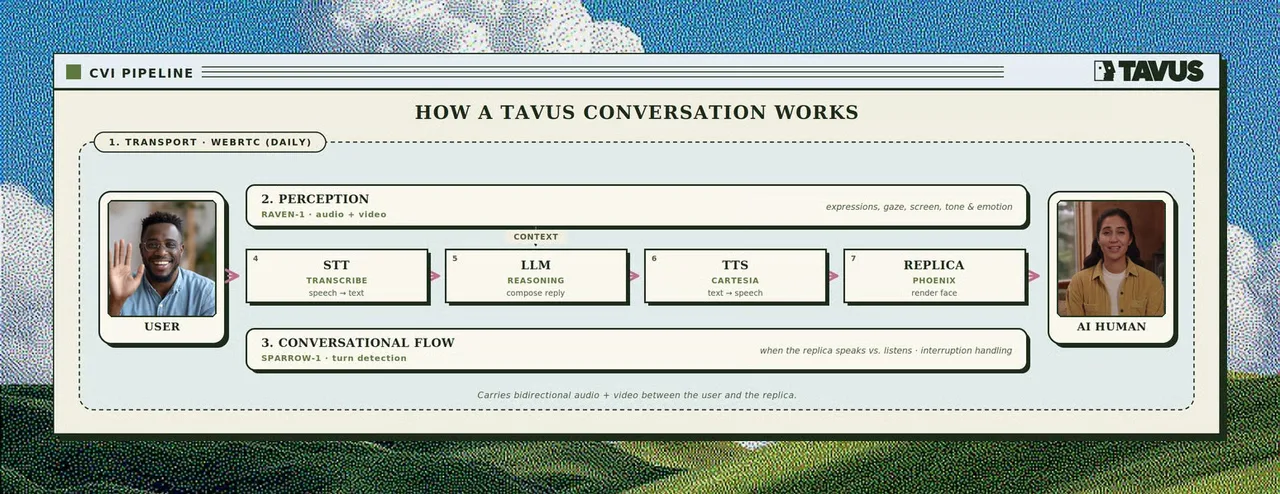
The concrete fit is a customer-success system producing an onboarding clip after each account activates. Inputs are an approved face, authorized voice, fixed script, and variables such as name and workspace. Where prerecorded generation remains enabled, submit the job with a callback URL, store its ID, and accept only a matching ready event. Deliverables are the MP4, consent reference, render log, and personalization manifest.
Tavus suits one presenter serving many individualized messages. Its callback documentation still describes video-generation ready and error events, while current navigation emphasizes Faces and real-time PAL conversations. Confirm access first. Record queue time, failures, duplicates, acceptance, and usable cost.
Key Limits and Current Access
Documentation is moving from replica to face, and callbacks may contain both identifiers. Deduplicate them. Prerecorded POST /videos is also no longer prominent in the main index, so obtain written confirmation of route, quota, and terms.
The callback page does not document signing. Correlate every event to a stored job and ask Tavus for the contracted authentication control. For a new batch integration, that surface needs confirmation before selection.
-
HeyGen — Best for Broad Avatar and Localization Workflows
Best Use Case and API Workflow
Use HeyGen for localized SaaS release notes with one approved digital twin. Inputs are a consented avatar group, allowed voice, script, locale, and background. Submit POST /v3/videos, store video_id and callback_id, then handle success or failure. Its webhook system signs the raw body with HMAC-SHA256, retries delivery, and may duplicate events. Verify before parsing and process idempotently.
Deliver the video, locale, returned avatar metadata, consent record, and event log. Measure language and animation review separately. This broad avatar video API fits teams expecting translation, lipsync, or batch generation later.
Key Limits and Current Access
Digital twins have a consent workflow; uploaded consent at scale is an enterprise path. Photo-avatar permission remains the customer’s responsibility. Batch submission does not remove per-job review.
Do not import browser-editor claims into the API score. Test the exact model, avatar type, endpoint, concurrency, and API contract. It is a weaker fit when procurement requires a region selectable per request.
-
D-ID — Best for Fast Talking-Portrait Integration
Best Use Case and API Workflow
D-ID fits a support product turning an authorized profile photo into a service update. Input is a front-facing image plus approved audio or text. Call POST /talks, store the talk ID, then poll or receive an HTTPS callback. The Talks API returns a result URL; download it to controlled storage before expiry.
Deliver the source-rights record, request hash, status history, MP4, and review decision. Track facial artifacts, failure codes, URL expiry, and retry cost. This is a practical prototype when fast integration matters more than a managed presenter library.
Key Limits and Current Access
A photo call is not a reusable custom digital human. D-ID’s custom route adds consent, training footage, status, and deletion. Choose before estimating.
The Talks reference supports callbacks, but I found no signing scheme there. The default Talks result URL is valid for 24 hours. Download it to controlled storage or re-fetch the talk to obtain a fresh URL. It is weaker for teams needing signed events, avatar-level key permissions, or a public regional-processing control.
-
Synthesia — Best for Managed Enterprise Presenter Video
Best Use Case and API Workflow
Synthesia fits a learning team generating policy updates from an approved template and presenter. Enrollment happens in the managed product, not the Video API. After consent, use the avatar or template ID, insert the script and controlled variables, create the video, and await completion or failure.
Deliver the MP4, captions, template version, presenter ID, consent owner, and review record. This favors governance: presenter and layout are approved first. Finished-video, upload, billing, and live-avatar APIs are separate. Its signature guide supports authenticated webhooks.
Key Limits and Current Access
Enrollment and much approval work remain UI-managed. Keys belong to a user, and webhook subscriptions inherit that ownership, affecting offboarding. Test videos are watermarked and limited.
It fits repeatable training and internal communication. It fits less well when users must create and revoke avatars inside your application or every visual decision must be code-controlled.
-
VEED — Best for Editor-Connected Avatar Production
Best Use Case and API Workflow
The defensible use case is a creator tool with approved narration that animates a rights-cleared portrait before human editing. VEED’s Fabric 1.0 API accepts image and audio, generates up to one minute, and is hosted and billed by fal.ai. Submit to the fal queue, store the request ID, verify its webhook, fetch the MP4, then hand it to editing.
Deliver the clip, callback log, source license, and final export. Measure wait, failures, accepted seconds, cleanup, and total cost. It is a useful talking head generator API when audio already exists.
Key Limits and Current Access
The heading needs a correction: this API is not connected to a VEED editor project. Handoff means export and separate import. Fabric does not document custom-avatar enrollment, voice cloning, or a VEED consent object.
It uses fal credentials and billing, so fal’s queue, storage, and data terms belong in procurement. It suits a narrow image-plus-audio endpoint, not one managed presenter lifecycle.
Choose an API by Risk and Workflow
Match Avatar Type, Volume, Review, and Delivery Requirements
Choose Tavus conditionally for established personalized-video access; HeyGen for a broad digital-twin roadmap; D-ID for a lightweight portrait; Synthesia for governed templates; and VEED Fabric for owned image plus finished audio. None is the unconditional best talking avatar API.
Run a 15-job canary: three matched runs per provider, one invalid input, and one callback outage. Require at least 80% first-pass acceptance, no unverified event, no duplicate fulfillment, and documented recovery. The winning AI presenter API clears those gates at the lowest usable cost.
Run a Consent and Failure-Handling Review Before Launch
Store subject, scope, timestamp, channels, expiry, and revocation route for every face and voice. Separate avatar from account ownership.
Classify validation, moderation, provider, timeout, and callback failures. Define retriable classes, cap attempts, and review ambiguous cases. Test media deletion end to end. These likeness, voice, and commercial-use notes are general information, not legal advice.
FAQ
Can avatar enrollment be revoked without deleting an account?
Sometimes. Tavus can hard-delete a Face and training assets; D-ID exposes avatar deletion; Synthesia owners can revoke sharing and delete many personal avatars, while Studio Avatar deletion uses support. Confirm the deletion route for each HeyGen avatar type. VEED Fabric has no enrollment object because it receives an image per job.
Deletion rarely retracts videos already exported. Build a separate takedown process for stored and distributed clips.
Which APIs allow signed webhooks?
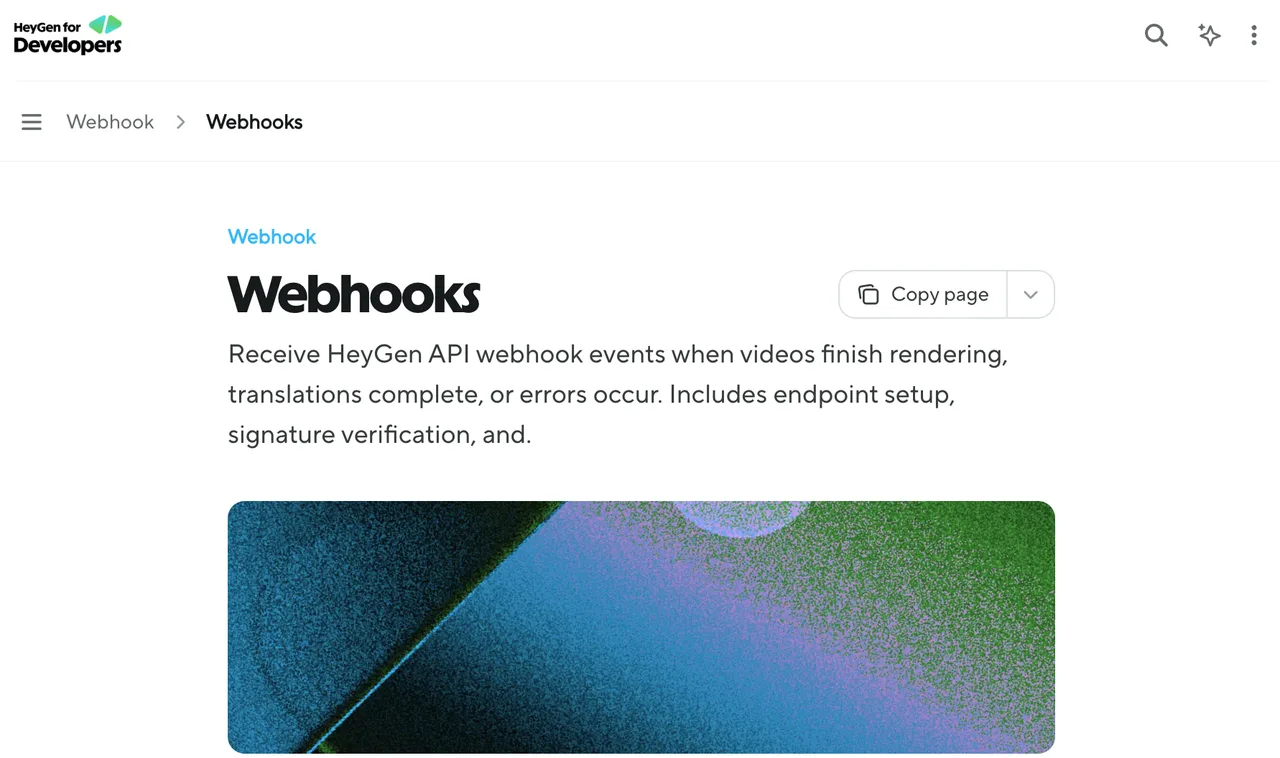
HeyGen and Synthesia publicly document signed webhook verification. fal.ai also signs queue webhooks used by VEED Fabric. Tavus and D-ID document callback URLs, but I did not find signature verification in the reviewed public callback pages.
Still add replay protection and idempotency. A signature proves origin, not that the job belongs to the current customer record.
Are generated clips watermarked for provenance?
There is no consistent answer. Synthesia test videos carry a visible watermark, and its hosted player can expose C2PA Content Credentials. HeyGen’s Studio watermark rules do not establish provenance behavior for every API export.
The reviewed Tavus, D-ID, and VEED Fabric API pages do not promise universal visible watermarks or C2PA metadata. Verify the downloaded file with a metadata inspector and add application-level disclosure when policy requires it.
Can teams restrict avatar use by API key?
Mostly not at avatar granularity. HeyGen supports endpoint scopes; Synthesia keys have product scopes but are user-owned. D-ID uses account credentials; Tavus and fal keys belong behind server-side services.
Use one backend identity per environment, deny client-side key access, and enforce the avatar allowlist in your own authorization layer. Vendor scopes are a second control, not the policy engine.
Which vendors support regional processing?
Public promises are uneven. Synthesia reports EU storage with some safeguarded US processing in its security practices. HeyGen’s security page reports US AWS storage.
I did not find a public per-request region selector for Tavus prerecorded video, D-ID Talks, or VEED Fabric. Enterprise or self-hosted arrangements may differ, but they require written confirmation covering both storage and inference, not a generic GDPR badge.
Conclusion
The best talking head video APIs for 2027 separate into jobs, not a podium. HeyGen covers the broadest path; Synthesia provides managed-presenter governance; D-ID keeps photo animation simple; VEED Fabric narrows the task to image plus audio; Tavus remains compelling where prerecorded access is confirmed.
My stopping rule is plain: no launch until consent can be revoked, callbacks can be trusted or independently reconciled, and usable cost is measured from accepted footage. The face is the visible part. The job ledger decides whether the integration is ready.
Previous posts:
/filters:quality(82)/media/images/1790673203845090867_ZwbkuCLU.webp)
/filters:quality(82)/media/images/1790674052777090724_VkQ0airA.webp)
/filters:quality(82)/media/images/1790667061147571629_q61iPczX.webp)
/filters:quality(82)/media/images/1790674802528777336_lzVsEXlH.webp)
/filters:quality(82)/media/images/1790675047405706000_iR5fnwFP.webp)
/filters:quality(82)/media/images/1790589731632080935_0wwFPY8h.webp)