
Best AI Lip Sync APIs for 2027
Best AI lip sync APIs for 2027: compare input media, language support, face fidelity, async jobs, consent controls, and usable cost.
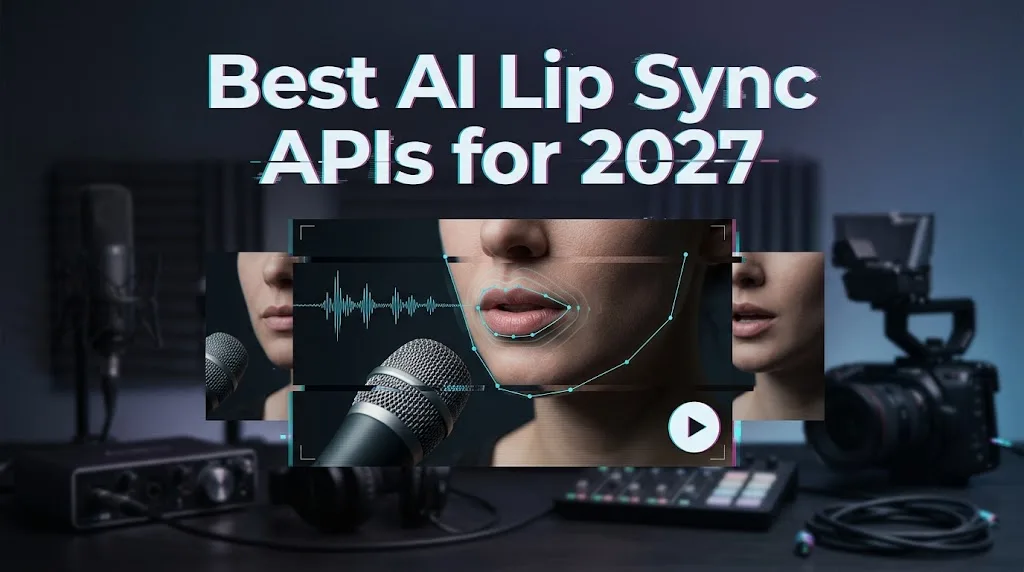
I started this comparison of the best AI lip sync APIs with a failure state, not a showcase clip: the job says completed, the MP4 opens, and the mouth freezes when a hand crosses the speaker’s face. The provider has delivered a file. The production team still has a reject.
That distinction shaped my review. I audited five current API surfaces and designed one matched test, but did not run paid generations. The labels therefore describe documented workflow fit, not invented winners.
How We Evaluated AI Lip Sync APIs
Source Media, Language, Identity Fidelity, and Visual Stability
The matched test starts with a 30-second, 1080p, single-speaker clip containing frontal speech, a three-quarter turn, fast phonemes, an occluded mouth, and four seconds of silence. The same owned source and duration-matched English, Spanish, and Japanese tracks go to every existing-video API. A two-face variant tests speaker selection. Still-image systems receive the same approved portrait and audio, but remain a separate category.
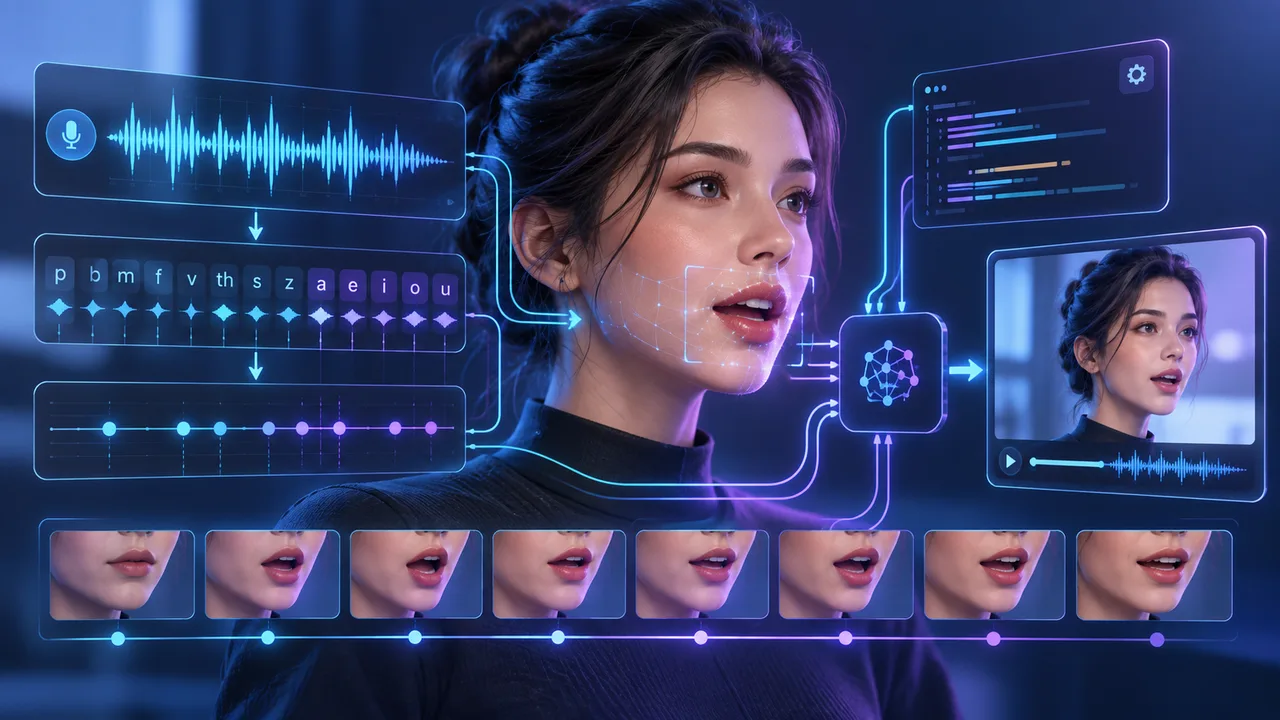
Review teeth, jawline, facial edges, occlusions, blinks, and turns. A pass requires stable identity, mouth closure during silence, no unintended edits, and sync that survives the final transcode. A video lip sync model may be audio-driven while an AI dubbing API also transcribes, translates, and generates voice.
Async Jobs, Webhooks, Failure Handling, Consent, and Cost
Log request ID, model, input hashes, timing, terminal status, callback attempts, output duration, usage, and human verdict. Then submit bad URLs, unsupported media, a no-face clip, duplicate retries, mismatched durations, and a valid render with broken sync. That last case is the silent failure most dashboards miss.
Usable cost is (generation + storage + review labor) / accepted outputs, not the advertised rate. Require deduplication, verified callbacks where available, polling fallback, terminal errors, expiring-URL handling, and a consent record for each face and voice. This is operational guidance, not legal advice.
-
Sync Labs — Best for Dedicated Lip Sync Workflows
Best Use Case and API Workflow
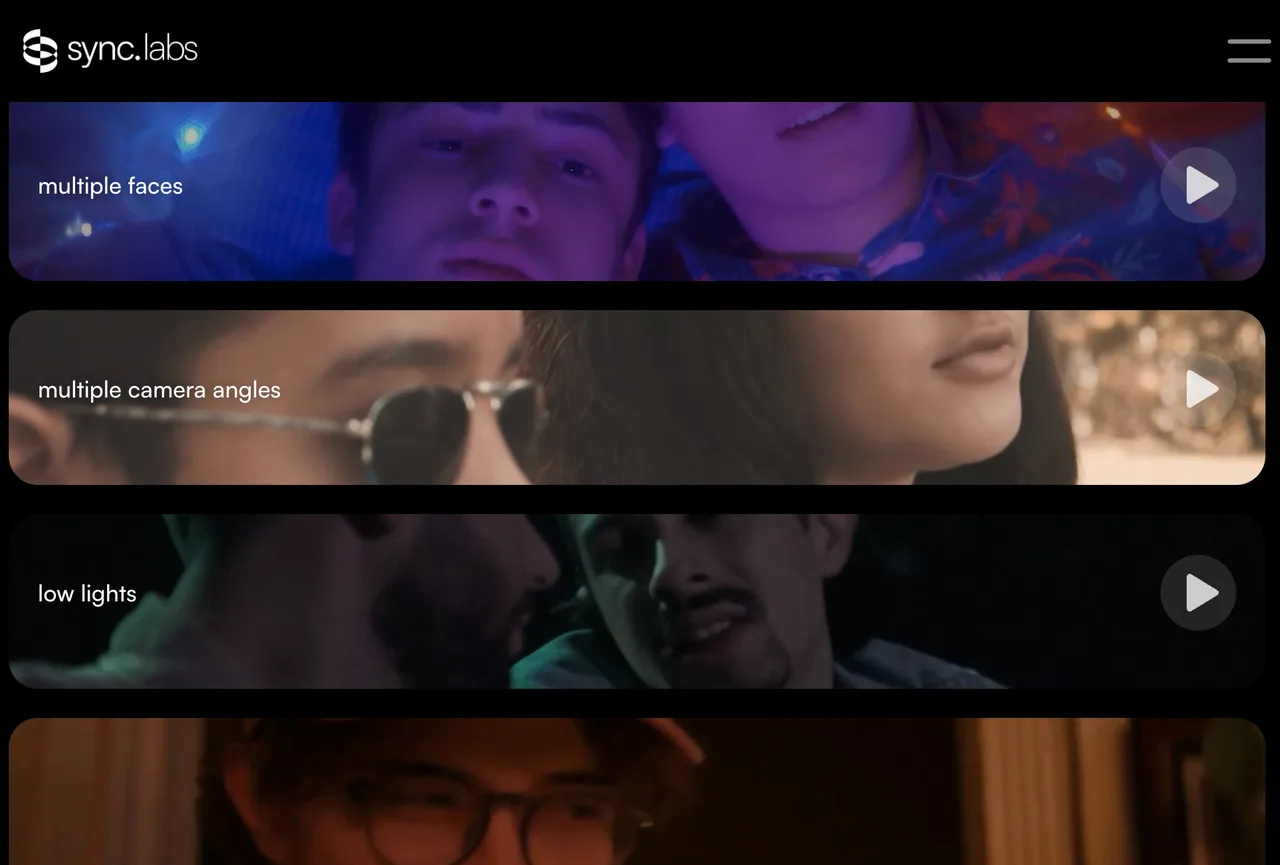
Sync Labs is the cleanest fit when the application owns translated audio and must re-sync footage. Its current API overview documents video or image plus audio or text, model discovery, estimates, assets, batches, and SDKs. Submit to POST /v2/generate, store the ID, then poll or receive a callback.
It is also the strongest documented multi-person route here. Segments can target speakers; active-speaker detection, coordinates, or bounding boxes reduce ambiguity. Model responses include version fields. HMAC webhooks report completion or failure, but missed delivery is not automatically retried, so polling remains necessary.
Key Limits and Current Access
Input behavior varies by model. Sync says lipsync-2 and Pro need speaking motion and may fail on static sections; sync-3 accepts images and handles wider poses and obstructions at a higher rate. MP4 with WAV/MP3 is the clearest baseline. Concurrency and duration caps vary, and public materials do not disclose frame confidence, a face denylist, or customer-managed keys.
-
HeyGen — Best for Localization With Avatar Workflows
Best Use Case and API Workflow
HeyGen fits teams that need both direct lip sync and a broader localization system. Its current Lipsync Precision documentation clearly separates engine-only lip sync, where the caller supplies video and audio, from Video Translation, which can add transcription, translation, generated speech, captions, and glossary controls. Both Speed and Precision use POST /v3/lipsyncs; poll GET /v3/lipsyncs/{id} or send a callback URL.
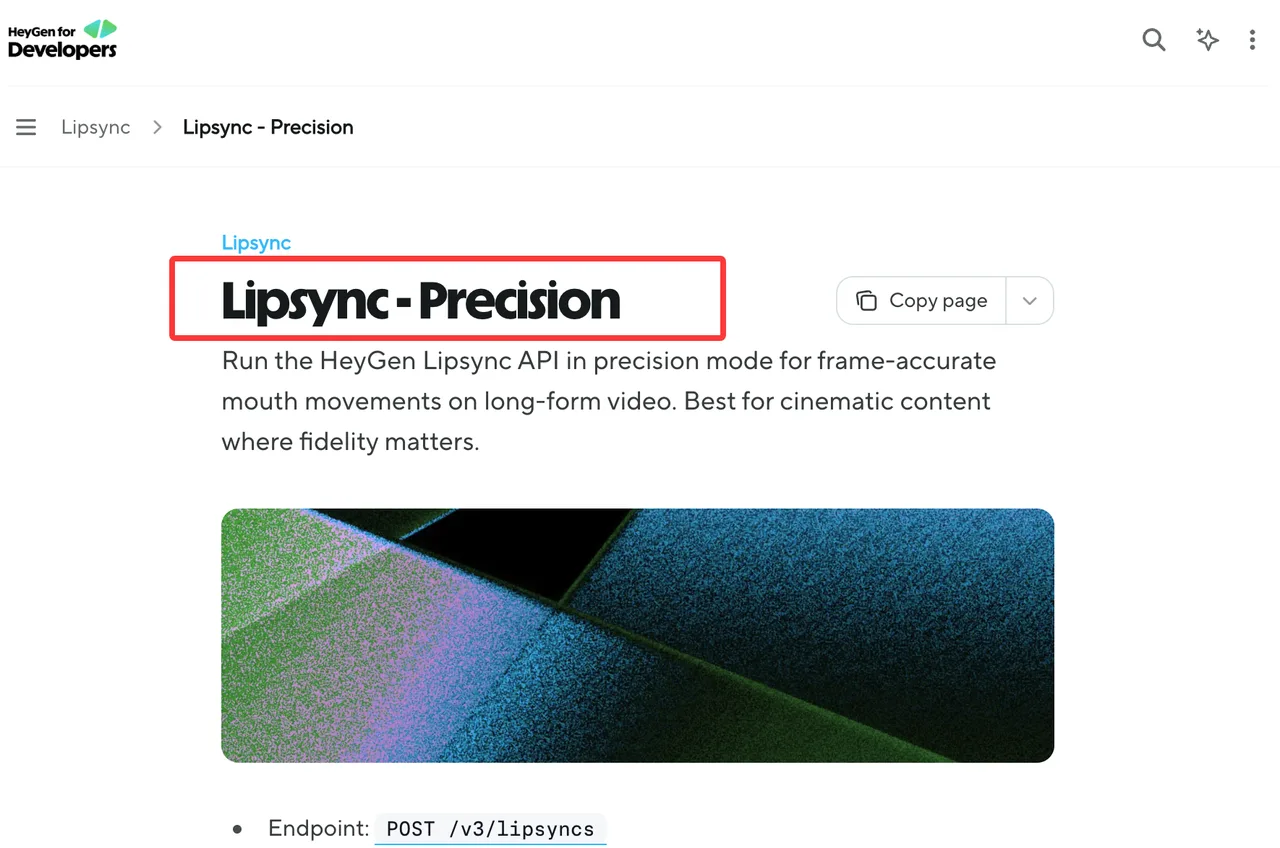
That boundary suits launches and training libraries already using avatars or translation review. Options include partial ranges, dynamic duration, captions, music removal, speech enhancement, frame-rate mode, and source resolution and bitrate preservation. Statuses cover pending through failed; registered webhooks use HMAC-SHA256 and documented retries.
Key Limits and Current Access
HeyGen is not automatically the best raw lip sync API because its workflow is broad. Translation adds failure points, and “keep the same format” covers resolution and bitrate, not codec passthrough. Precision and Speed still need visual review. API billing is separate from creator plans.
Digital Twin enrollment normally uses HeyGen’s subject-consent flow; HeyGen also documents an Enterprise-only path that can waive platform consent collection for accounts with an indemnity agreement. Operators remain responsible for input rights.
-
VEED Fabric — Best for Editor-Connected Lip Sync
Best Use Case and API Workflow
The heading needs one correction before selection: Fabric is an image-and-audio face animation API, not an existing-video re-sync endpoint. In the current VEED API documentation, Fabric 1.0 creates a talking video from a still image, while Lipsync 2.0 takes an existing video and replacement audio. Both are asynchronous, return 202 with a job ID, and expose polling endpoints.
Choose Fabric when a portrait must become an editable presenter asset inside a VEED-centered production flow. Choose Lipsync 2.0 for dubbing or voice replacement. The latter currently returns MP4, publishes stable failure codes such as invalid file, moderation, timeout, and generation failure, and lists a per-second price. VEED also allows request and response bodies to be excluded from request logs with X-Veed-Store-IO: 0.
Key Limits and Current Access
The direct docs emphasize polling; webhook users need to verify route and signing behavior. Fabric and Lipsync cannot share one quality score: one synthesizes portrait motion, the other modifies footage. Public docs do not promise multi-face targeting, frame confidence, codec preservation, or CMK. API access currently requires a workspace request.
-
Hedra — Best for Character-Led Video Pipelines
Best Use Case and API Workflow
Hedra is the fit for stylized characters, mascots, presenters, and singing or talking portraits. Hedra Character 3’s current model page accepts a start image and one or more audio inputs, supports speaker positions, and publishes resolution-based per-second rates. Hedra Avatar is similarly audio-driven and lists up to ten minutes, subject to model and plan limits.
The developer flow uses a model-specific v3 route, then a common job lifecycle with polling or webhook. Its value is generating a new performance around a supplied identity or character, not preserving every untouched pixel in actor footage.
Key Limits and Current Access
Static-image generation changes more than a mouth, so review identity, eyes, pose, hands, and background. Schemas, duration, resolution, and price differ; read the live model schema. Webhooks and estimates are documented, but model-specific error taxonomies, frame confidence, codec retention, and CMK are not. Hedra’s terms place consent and input-rights responsibility on the customer.
-
D-ID — Best for Talking-Portrait Integration
Best Use Case and API Workflow
D-ID fits photo-based presenters, not altered live-action footage. The Talks endpoint accepts JPG or PNG plus text or audio, returns a talk ID, and supports a webhook URL. Poll until done, then retrieve MP4 from the signed URL. This compact contract suits explainers and support messages.
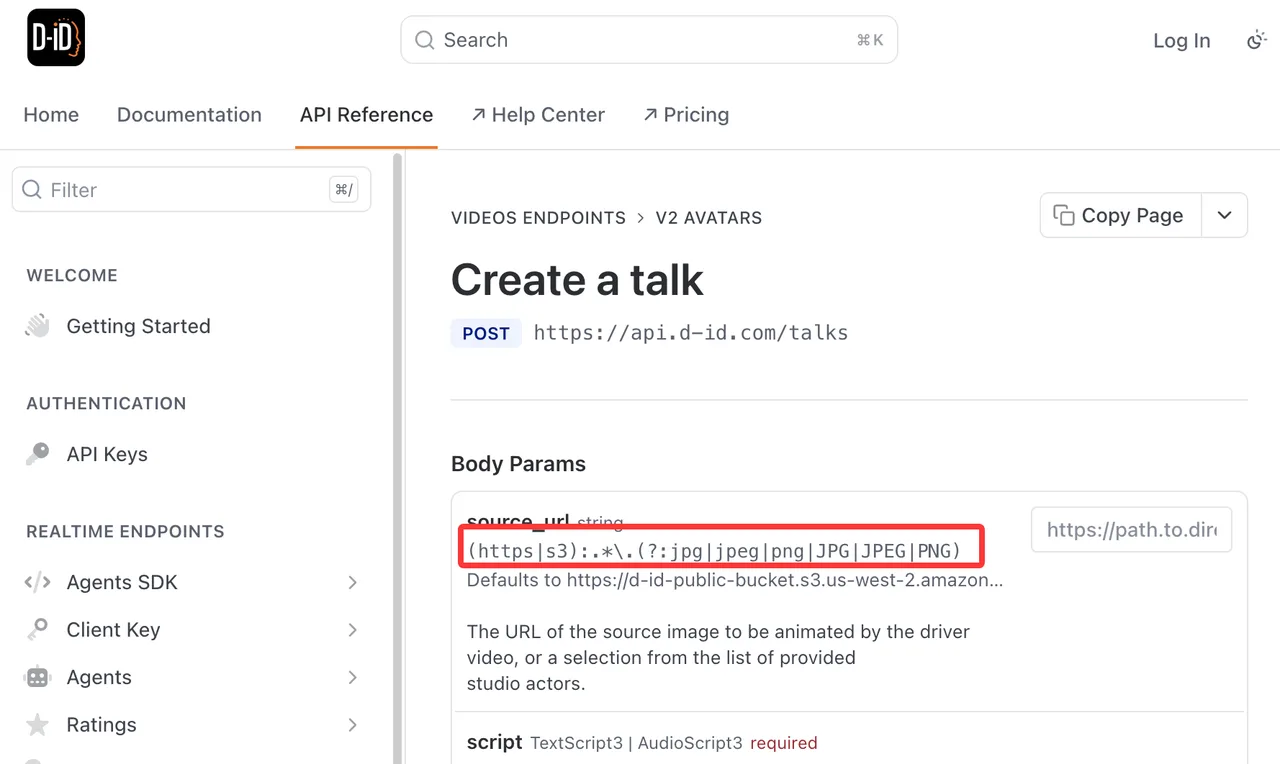
D-ID also documents distinct avatar generations and a consent workflow for custom video avatars. The consent challenge must be read by the depicted person before an Instant Avatar is created, giving teams a concrete enrollment artifact instead of a checkbox buried in their own application.
Key Limits and Current Access
Talks animates one portrait; it is not a general editor for arbitrary source video. Check likeness, teeth, blinking, crop, and pauses. Responses expose status and moderation errors, but not frame confidence. The callback is documented without public signing details. Result links may expire, so copy approved files to controlled storage and follow deletion terms.
Choose by Input and Failure Tolerance
Match Live Action, Avatar, or Stylized Character Inputs
For an owned live-action clip plus finished audio, start evaluation with Sync Labs, HeyGen Lipsync, and VEED Lipsync 2.0. For a localization stack that must also translate, proofread, caption, and manage avatars, HeyGen has the broader documented surface. For a still portrait, VEED Fabric or D-ID Talks is the more honest comparison. For a stylized or multi-character generated performance, Hedra deserves a separate lane.
I paused here because “supports lip sync” hides four different contracts. Requiring the wrong one creates expensive glue code and misleading quality scores. Keep the provider that minimizes accepted-output cost and manual intervention on the actual media type, even when another produces the prettier demo.
Validate Multilingual Audio and Silent Failure Cases
Run every target language with identical loudness, sample rate, duration, and pause locations. Add names, plosives, fricatives, fast speech, laughter, silence, profile turns, occlusions, facial hair, and two visible faces. Have bilingual reviewers judge semantic audio separately from visual sync; a mouth can track a mistranslation perfectly.
Treat a visually bad completed job as failed, quarantine it, and store the reason: wrong face, frozen mouth, drift, identity change, teeth artifact, or unintended scene edit. Canary new model versions, keep the previous route available, and compare accepted-output rate before promotion. This is where a small review queue earns its keep.
FAQ
Can lip sync jobs preserve the original video codec?
No reviewed API publicly guarantees codec preservation end to end. HeyGen can preserve resolution and bitrate and pass through frame-rate behavior; VEED explicitly returns MP4. Assume re-encoding, inspect codec, profile, color space, audio mapping, and timestamps with ffprobe, then transcode to the delivery standard.
Which APIs return frame-level confidence data?
None of the five public API references reviewed exposes frame-by-frame lip-sync confidence. They provide job states, errors, and output URLs. Build visual sampling and human review into acceptance rather than converting completed into approved.
Can teams block unauthorized faces from processing?
The reviewed public APIs do not document a customer-managed face denylist. HeyGen and D-ID provide consent enrollment for custom avatars, while providers apply moderation and require rights to inputs. Teams still need an upstream authorization registry that rejects an unknown face before upload and supports revocation.
Do providers support customer-managed encryption keys?
CMK support is not publicly disclosed for these five API products. Encryption claims without a key-ownership statement are not equivalent to CMK. Regulated deployments need written confirmation covering media, derived biometric data, logs, backups, region, rotation, and deletion before production approval.
Which APIs publish model-version change logs?
Sync exposes model IDs and version fields and maintains a product changelog. HeyGen publishes an API changelog covering endpoints, deprecations, and version changes. VEED publishes a product changelog that includes model launches. Hedra has product updates and live schemas, while D-ID dates documentation updates, but neither currently offers the same clearly scoped public model-version ledger for every avatar route.
Conclusion
There is no unconditional winner among the best AI lip sync APIs for 2027. Sync Labs is the strongest dedicated starting point; HeyGen suits localization and avatar operations; VEED connects portrait or re-sync jobs to editing; Hedra favors generated characters; D-ID keeps talking portraits straightforward. The durable choice is the one that survives the matched source, signed-job recovery, consent gate, silent-failure review, and cost-per-approved-output calculation. Recheck the contract and live schema quarterly; this conclusion has an expiration date.
Previous posts:
/filters:quality(82)/media/images/1790757509548436753_yzIR19zJ.webp)
/filters:quality(82)/media/images/1790760268656782522_xT4frCNY.webp)
/filters:quality(82)/media/images/1790758509393182709_xXaltBLV.webp)
/filters:quality(82)/media/images/1790759953031965921_TxT8L5xV.webp)
/filters:quality(82)/media/images/1790758722893740431_0EQ2bkuD.webp)
/filters:quality(82)/media/images/1790673203845090867_ZwbkuCLU.webp)