ViiTorVoice vs Open TTS Models
ViiTorVoice vs open TTS models for teams testing voice cloning quality, governance, commercial risk, and production readiness.
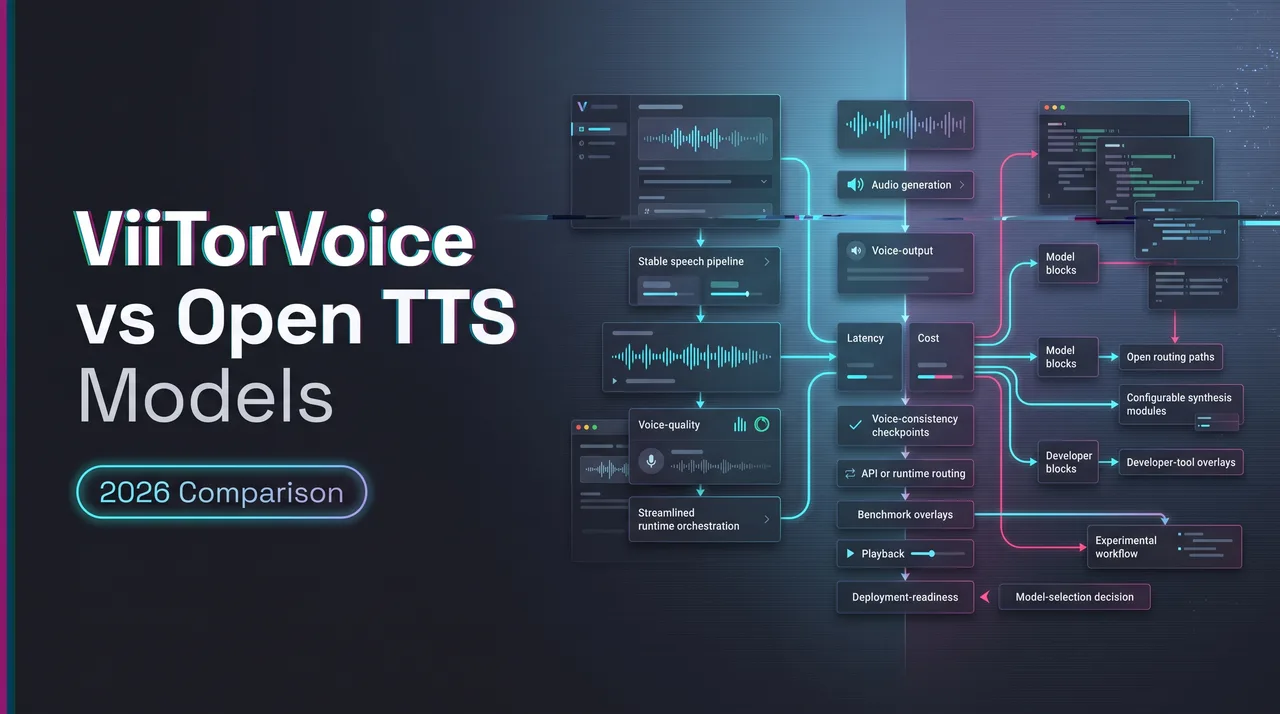
A ViiTorVoice evaluation should start with one uncomfortable question: would this voice system survive your actual production workflow, or only a clean demo clip? That distinction matters. Demo audio can sound smooth while hiding weak consent controls, speaker drift, edit artifacts, slow review loops, or unclear commercial rights.
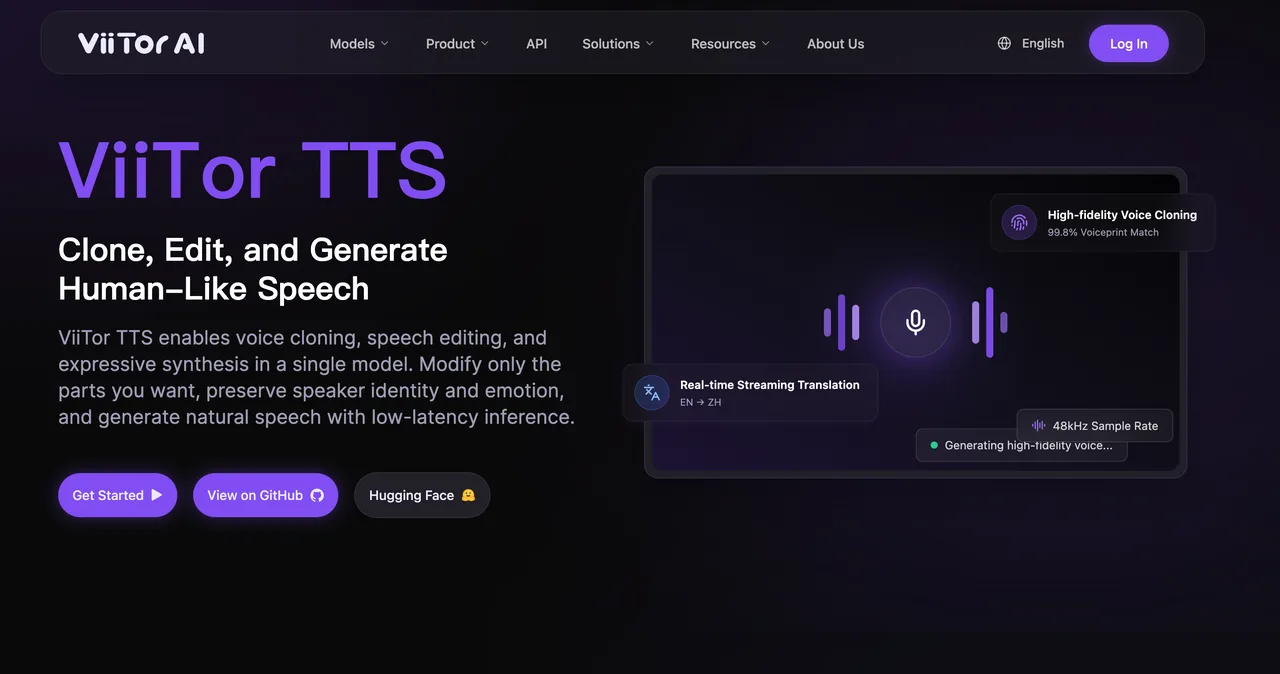
As of August 7, 2026, the public ViiTor TTS model page describes voice cloning, speech editing, expressive synthesis, and API access. That is enough to justify evaluation. It is not enough to approve procurement.
ViiTorVoice vs Open TTS Is a Production Test
Why demo audio is not enough
A voice demo usually tests the easiest version of the problem: short text, clean reference audio, one speaker, no legal pressure, no angry customer, no brand review, and no deadline.
Production AI voice is different. The model must handle names, numbers, noisy recordings, emotional mismatch, pacing changes, multilingual scripts, and content reviewers who hear problems that metrics miss. A generated line can be technically fluent and still unusable because the speaker sounds slightly younger, the breath timing changes, or the edit boundary clicks.
Open models can fail the same way. A strong open source TTS sample does not prove deployment readiness. It proves that the model can produce a convincing clip under known conditions. Teams still need to test repeatability, licensing, hosting cost, safety controls, and review time.
I paused here because the real comparison is not “which model sounds better once.” It is “which model reaches approved audio with fewer surprises.”
Voice cloning, editing, speech synthesis, and dubbing use cases
Different voice products need different tests.
For voice cloning, the main question is whether the output preserves speaker identity without creating consent risk. Similarity is useful only when the reference voice is cleared, traceable, and approved for the target use.
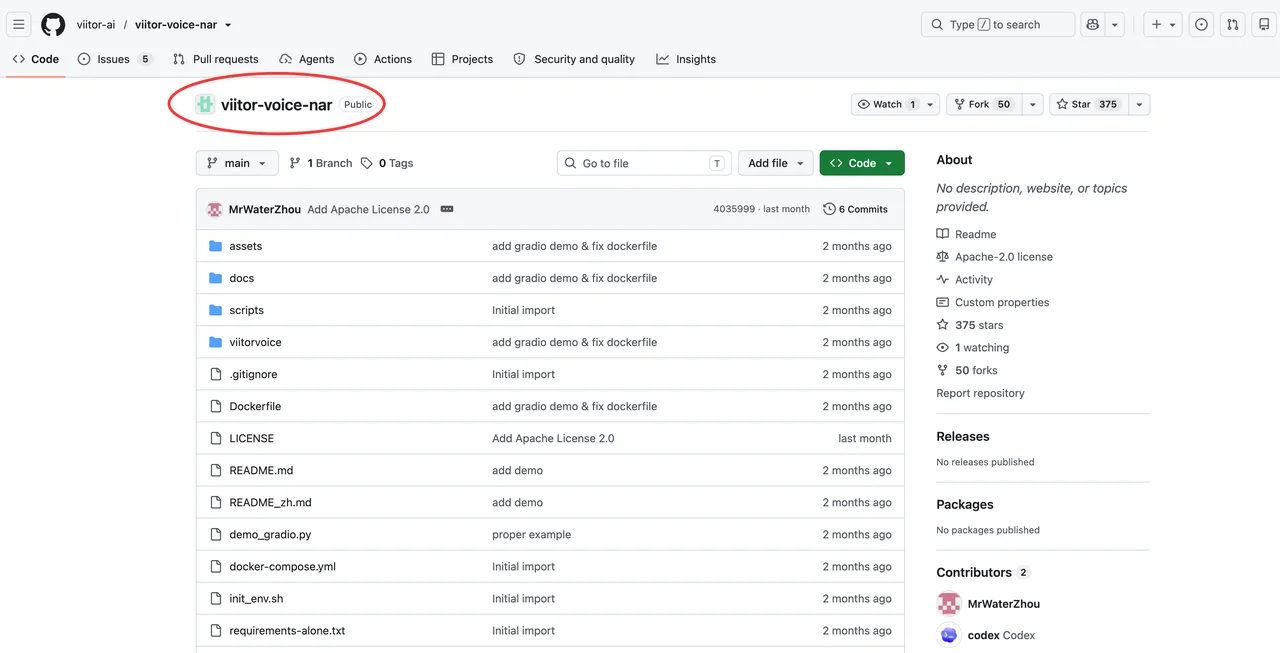
For editing, the hardest part is continuity. ViiTorVoice’s public repository describes local speech editing, where source audio, original text, and edited text are used to replace a changed region. The ViiTorVoice-NAR repository is the better source for that technical claim than a marketing page.
For speech synthesis, teams should test pronunciation, rhythm, long passages, and batch output. A simple narrator voice may not need cloning at all.
For an AI dubbing API, the contract becomes broader: language coverage, timing, subtitle alignment, speaker separation, file handling, and human review all matter. Dubbing is not only TTS. It is localization plus audio production plus rights management.
Compare Before Adoption
Speaker similarity, emotion control, long-form stability, and languages
A fair test compares ViiTorVoice with open TTS models on the same scripts, same reference clips, same output format, and same approval rules. Do not let one model run on polished samples while another gets messy production files.
Use a small matrix like this:
| Evaluation area | What to test | Passing signal |
|---|---|---|
| Speaker similarity | Short and long lines from the same reference voice | Reviewers identify the intended speaker without obvious drift |
| Emotion control | Neutral, happy, tense, whispered, and emphatic lines | Emotion fits the scene without sounding forced |
| Local editing | One-word, number, name, and disclaimer changes | The replaced region does not expose boundary artifacts |
| Language coverage | Your actual markets, not a vendor language list | Native reviewers approve pronunciation and pacing |
| Long-form stability | 5, 10, and 20 minute generation or edit batches | Voice, volume, and rhythm remain consistent |
| Review efficiency | Time from request to accepted output | Audio passes faster than rerecording or manual editing |
Open models should be tested by their actual strengths. OpenVoice, for example, is positioned around instant voice cloning and multilingual support. Piper is a different kind of option: the Piper repository describes a fast local neural text-to-speech system, now archived, but still useful as a reference point for local, simpler speech synthesis.
That difference matters. One model may be better for cloned creator voices. Another may be safer for private internal narration. Another may be good enough for accessibility readouts where identity is not important.
Latency, deployment cost, license, and commercial use limits
Latency should be measured as a workflow number, not a render number. Track upload time, queue time, first audio time, full export time, retry time, and reviewer time.
Deployment cost is also not just GPU cost. Open source TTS may reduce vendor dependency, but it adds maintenance work: model hosting, dependency upgrades, security patches, storage, monitoring, and staff time. Hosted systems may reduce infrastructure work, but they create provider risk, pricing uncertainty, and data-handling questions.
Licensing needs its own review. Check the model license, training data notes, third-party components, output usage terms, and whether commercial use is allowed. Do not assume “open source” means unrestricted business use. Also do not assume a hosted product gives you rights to clone any voice uploaded by a user.
Found the pattern on the third try: the cheapest voice stack is usually the one with the lowest accepted-output cost, not the lowest generation cost.
Governance Before Launch
Consent workflow, watermarking, user reporting, and review process
Voice identity is sensitive. Treat it like a protected asset, not a preset.
A production workflow should require explicit consent before voice cloning. Store who approved the voice, what use cases are allowed, when permission expires, and whether the voice can be used for ads, dubbing, internal training, or public content.
Watermarking and disclosure policies should be decided before launch. Some use cases need visible labels. Some need metadata. Some need internal-only traceability. The rule should not live inside one engineer’s memory.
User reporting also matters. If someone claims a voice was cloned without permission, support must know where to send the complaint, what evidence to preserve, and who can suspend the voice while review happens.
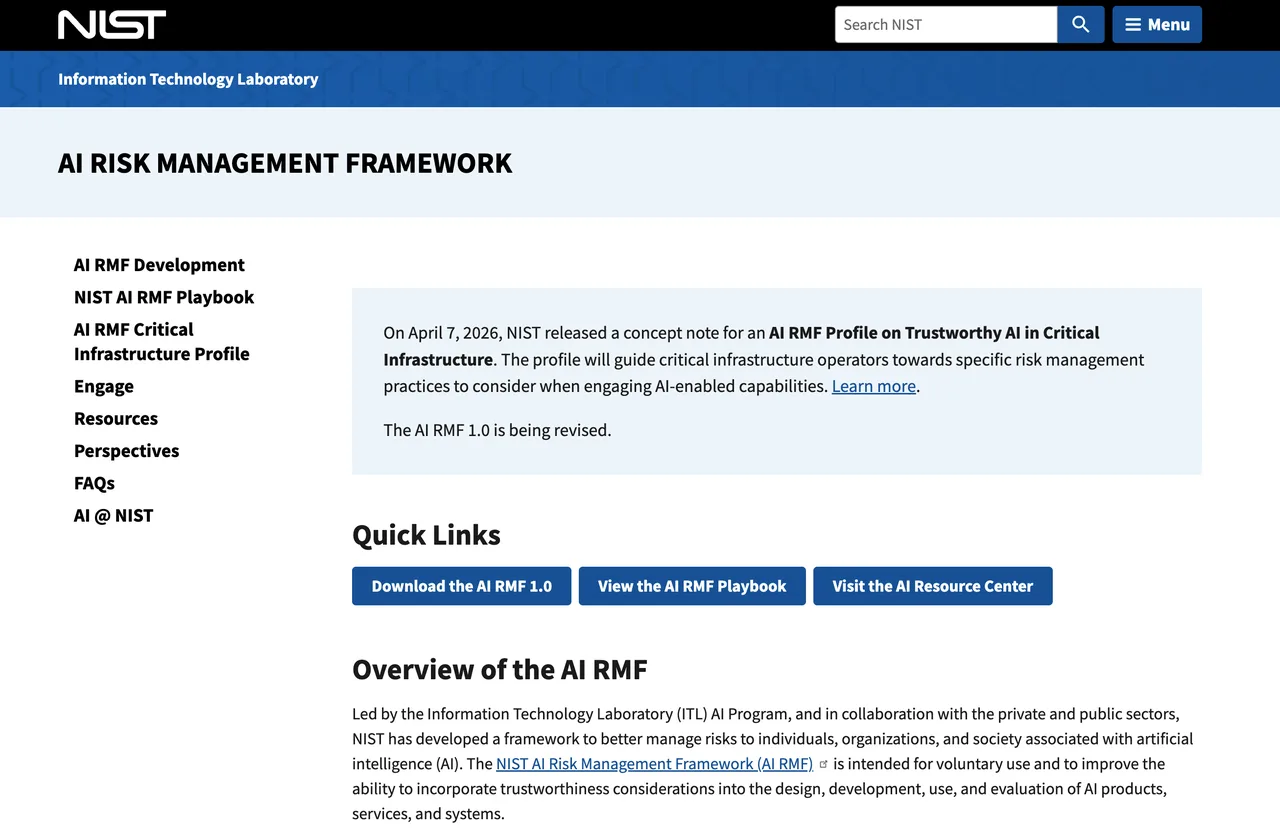
For risk structure, use a general framework such as the NIST AI RMF, then adapt it to synthetic speech. The important parts are accountability, traceability, safety, privacy, and review.
When a simpler TTS model is safer
A simpler TTS model is safer when the product does not need a real person’s identity.
Use non-cloned speech for system notifications, accessibility reading, internal drafts, low-risk prototypes, temporary narration, and generic product walkthroughs. A neutral synthetic voice may be less impressive, but it avoids many consent and impersonation risks.
Use voice cloning only when identity creates real value and the rights are clear. Creator dubbing, approved brand voices, game characters, accessibility voice preservation, and localized recurring content may qualify. Even then, approval should depend on the use case, not the model’s demo quality.
A model can pass audio quality and still fail launch readiness. That is not a contradiction. It is the point of governance.
FAQ
Who reviews a voice model before it enters procurement?
Procurement should not own the review alone. A voice model needs review from platform engineering, audio production or ML, security, legal, product, and support.
Platform engineering checks deployment, latency, storage, observability, and fallback. Audio reviewers judge quality. Legal reviews consent, license, commercial use, and jurisdiction risk. Product defines allowed use cases. Support confirms the complaint path. No single team sees the whole risk surface.
When should legal override a passing audio-quality eval?
Legal should override when consent is missing, license terms are unclear, the voice resembles a real person without permission, the use case involves sensitive claims, or the vendor terms do not support the planned commercial use. Legal should also override when marketing wants to imply human endorsement, celebrity likeness, medical advice, financial advice, political speech, or customer-specific personalization without clear approval.
Good audio does not create rights.
What support path is needed after a synthetic voice complaint?
Support needs a documented intake path, not a Slack scramble.
The evidence package should include the generated audio, source prompt, reference audio ID, model name, version, request time, user account, consent record, output hash if used, reviewer notes, and publication destination. Support should be able to pause the disputed voice, escalate to legal, notify the customer, and record the final decision.
The complaint process should also feed back into model policy. A serious complaint is not only a ticket. It is a signal that the review system may need to change.
Conclusion
ViiTorVoice and open source TTS models should be compared as production systems, not as audio demos. The useful test covers speaker similarity, edit quality, long-form stability, latency, cost, licensing, consent, and complaint handling.
The best model is not always the most expressive one. For many products, the safer choice is the voice stack that creates approved audio reliably, keeps rights clear, and gives the team a clean way to stop when something goes wrong.
Previous posts: