Qwen-Audio-3.0-Realtime Pricing
Qwen-Audio-3.0-Realtime pricing needs a voice-agent cost model for audio tokens, session minutes, concurrency, and retries.
Dora here. I would not price a realtime voice pilot from a single “per token” number. That number is only the top line. Qwen-Audio-3.0-Realtime pricing has four moving pieces before the product team even starts arguing about call length: text input, text output, audio input, and audio output.
The useful question is not “is this cheap.” The useful question is what one resolved voice session costs after listening time, interruptions, retries, tool calls, and long context are counted. This piece is my working note for that calculation.
What Pricing Fields Teams Need to Confirm

Start with the official price table. As of the Alibaba Cloud Model Studio pricing page updated July 15, 2026, the Model Studio pricing page lists realtime voice chat under China (Beijing). The page shows two model IDs: qwen-audio-3.0-realtime-plus and qwen-audio-3.0-realtime-flash.
Do not copy a price from a screenshot in a chat thread. Prices, regions, discounts, and free quotas move.
Text input, text output, audio input, and audio output tokens
The official table separates text and audio for both input and output. For Plus, the listed prices are $0.688 per million text input tokens, $5.501 per million audio input tokens, $5.501 per million text output tokens, and $20.628 per million audio output tokens. For Flash, the listed prices are $0.413, $4.126, $4.126, and $13.752 in the same order.
The same page says audio tokens are converted by duration: total audio tokens equal audio seconds multiplied by 12.5, and audio shorter than one second is rounded up to one second. That means one minute of audio equals 750 audio tokens before any text, context, or tool activity is added.
| Model | Text input / output per 1M | Audio input / output per 1M | One minute audio input | One minute audio output |
|---|---|---|---|---|
| Plus | $0.688 / $5.501 | $5.501 / $20.628 | about $0.0041 | about $0.0155 |
| Flash | $0.413 / $4.126 | $4.126 / $13.752 | about $0.0031 | about $0.0103 |
I paused here. Per-minute audio looks small until the agent talks too much.
Model tier, region, rate limits, and minimum billing units
The published realtime voice chat price table only shows China (Beijing) for these two model IDs. If your product runs outside that region, confirm availability and price in the console before estimating production spend.
The official Qwen-Audio realtime guide describes the model as a WebSocket full-duplex voice system with streaming input and streaming output. It supports voice assistants, intelligent customer service, and AI companions. It also lists 50 max audio turns and 300 seconds of retained audio context for both Plus and Flash.
Alibaba’s Realtime API overview shows Qwen-Audio realtime voice conversation on WebSocket, not WebRTC or AOQ, so protocol choice belongs in cost planning too.
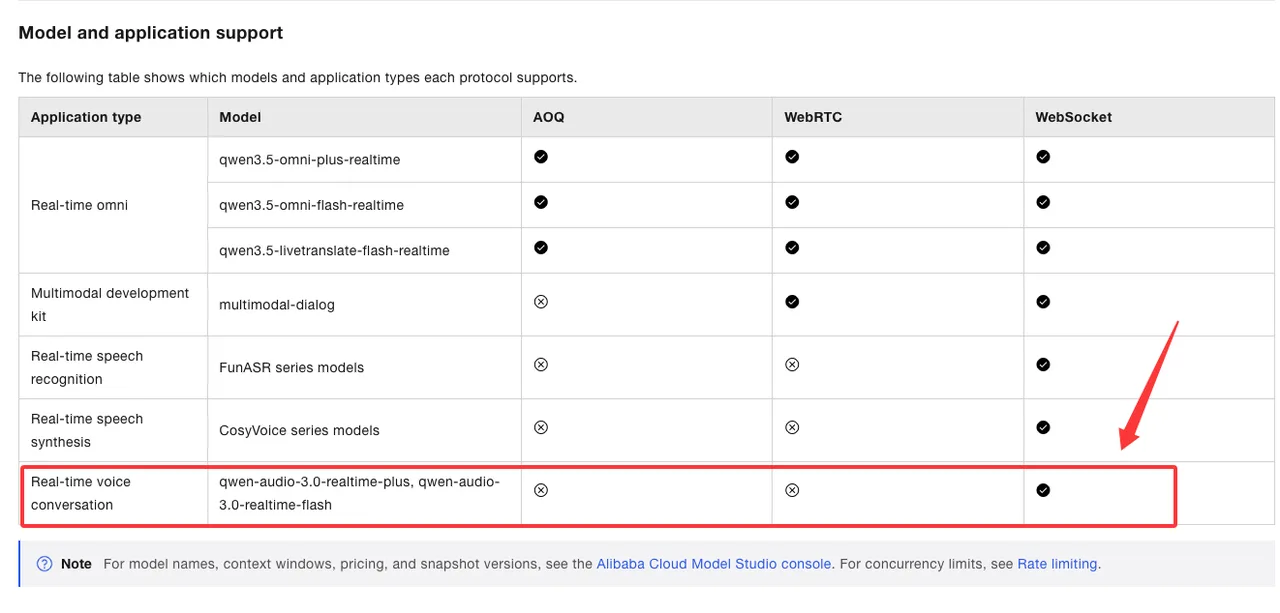
That context number matters. History is not just memory. It can become billable input.
Convert Tokens Into Voice Agent Cost
Use a small formula first. Then make it uglier.
Base audio cost per session equals user audio seconds × 12.5 × audio input price per 1M tokens ÷ 1,000,000, plus assistant audio seconds × 12.5 × audio output price per 1M tokens ÷ 1,000,000. Add text tokens for instructions, transcripts, tool messages, and model text output. Then add repeated context from later turns.
Cost per minute, cost per session, and cost per resolved case
For a five-minute support call on Plus, if the user talks for three minutes and the agent talks for two minutes, audio alone is roughly $0.043. That is 180 seconds of input audio and 120 seconds of output audio. Flash would be roughly $0.030 for the same audio pattern.
That is not the full realtime voice agent cost. A resolved case also includes the system prompt, conversation history, returned text, function calling payloads, retries, and any escalation handoff.
I would track three units: cost per active minute, cost per session, and cost per resolved case. The last one is the only number finance will care about after the pilot.
Why silent listening and interruptions can still affect cost
The pricing page says user audio is counted as input and model audio is counted as output. The user guide says the client streams microphone audio over WebSocket using input_audio_buffer.append.
So if the client keeps sending audio during silence, do not assume silence is free. Test it. Same for barge-in. That already-generated audio may still be billable—verify this against the account’s billing and usage records during the pilot.
Good voice UX is not automatically good cost control.
Estimate Production Spend
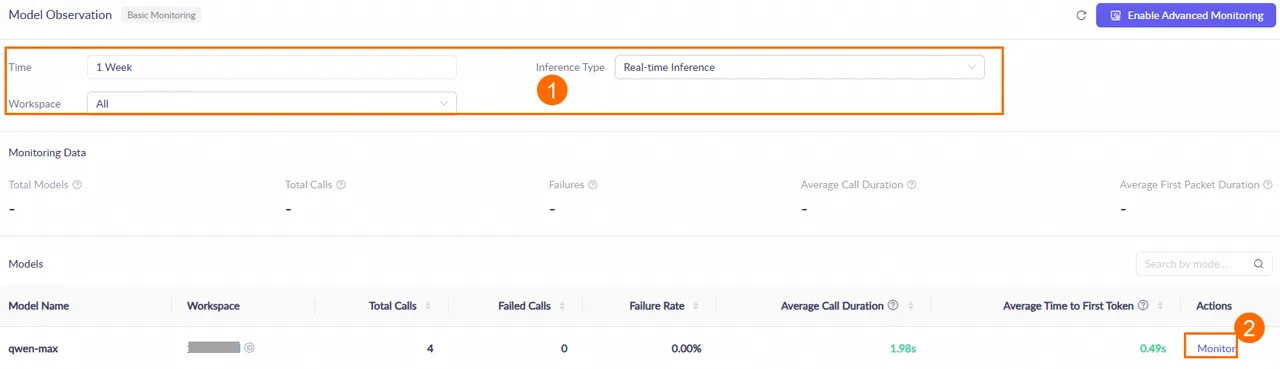
Production spend is shaped by traffic, not by list price.
You need call volume, average user speech duration, average agent speech duration, average turns, retry rate, tool-call rate, and escalation rate. Then split by workload type.
Concurrent sessions, retry rate, long calls, and tool calls
Concurrency is the first surprise. The official rate limiting page lists realtime voice chat limits for these Qwen-Audio models in China (Beijing): 60 requests per minute and 100,000 tokens per minute. The page also notes per-second limits can apply even when the per-minute number looks safe.
For budgeting, retries are worse than latency. A failed connection, repeated tool call, or regenerated answer can double part of the session cost without creating a resolved case.
Long calls are their own class. The longer the conversation, the more historical context can come back as input in later turns. Qwen Audio token pricing is not just live audio duration. It is conversation state plus generated output.
Support workload versus tutoring or companion workload
Support calls usually have short goals: identify issue, check account, resolve or escalate. Cost per resolved case can be controlled with session caps and escalation rules.
Tutoring and companion workloads behave differently. Users talk longer. The agent talks longer. Silence, hesitation, and emotional pacing are part of the product. Audio token cost becomes a core margin variable, not an infrastructure footnote.
Found the pattern on the third try: the highest-risk voice AI pricing model is not the expensive model. It is the unbounded session.
Cost Controls Before Launch
Cost controls need to exist before the first pilot user joins.
Not after the invoice arrives. That version is popular. Also bad.
Session caps, escalation rules, model tier routing, and fallback
Put hard caps on session length, agent speech duration, and unresolved turns. Use Flash for low-risk flows and evaluate Plus for cases where measured reasoning or voice-quality gains change resolution. Send low-confidence cases to human support before the agent spends ten more minutes being polite.
Fallback should be a cost-control path, not only an outage path. A cheaper text agent, an ASR-plus-text route, or a human queue may all be cheaper than a voice loop that keeps failing.
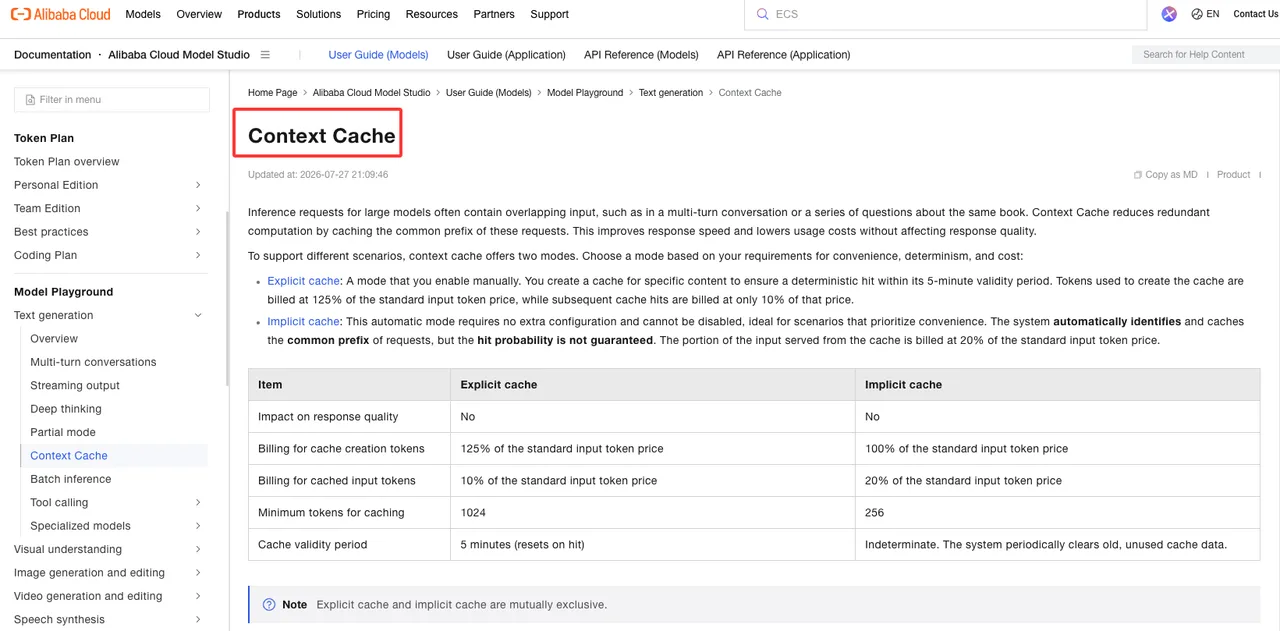
Also check whether discounts apply before building assumptions. Alibaba Cloud’s context cache documentation explains explicit and implicit cache discounts for supported models, but you should verify whether the realtime voice model in your region actually supports the discount path. Do not apply cache math because another Qwen model supports it.
Budget alerts, logs, and per-customer attribution
Logging should preserve session ID, customer ID, model ID, region, start and end time, input audio seconds, output audio seconds, text tokens, tool calls, retry count, interruption count, and final outcome.
Budget alerts should fire on cost per session and cost per resolved case, not only total daily spend. Total spend tells you the bill is large. Per-case cost tells you which workflow is broken.
FAQ
Who owns budget approval for realtime voice pilots?
Usually finance owns the spend gate, but the pilot owner must provide the model. That means traffic assumptions, Qwen voice API cost, expected session length, escalation rate, and stop conditions. Budget approval without usage assumptions is theatre.
How should finance classify failed or abandoned voice sessions?
Classify them separately from resolved cases. A failed setup session, abandoned user call, tool failure, and rate-limit retry are different cost classes. Mixing them hides the reason spend increased.
What customer-facing billing evidence should be retained?
Keep enough evidence to explain the bill: session ID, timestamps, model tier, region, usage fields, final status, and customer attribution. Do not retain raw audio longer than policy allows. Billing evidence and conversation recording are not the same thing.
Conclusion
Qwen-Audio-3.0-Realtime pricing is not hard because the token prices are hidden. They are published. It is hard because realtime voice turns those prices into minutes, turns, interruptions, retries, and unresolved sessi56ons.
Start with official prices. Convert audio seconds into tokens. Model session cost, then resolved-case cost. Add caps before launch. Keep logs that finance can audit. That is the only way a voice pilot survives contact with production usage.
Previous posts:
- What Is Qwen-Audio-3.0-Realtime and How Its Voice API Works
- Qwen-Audio-3 Plus vs Flash for Realtime Voice Agent Routing
- Qwen-Audio-3 Function Calling for Tool-Using Voice Agents
- Full-Duplex Voice Agent Interruptions, Barge-In, and Streaming Control
- GPT Live vs GPT Realtime 2 for Production Voice Agent Workloads