Qwen-Audio-3.0-Realtime Plus vs Flash
Qwen-Audio-3.0-Realtime Plus vs Flash helps voice AI teams compare latency, reasoning depth, concurrency, and workload fit.
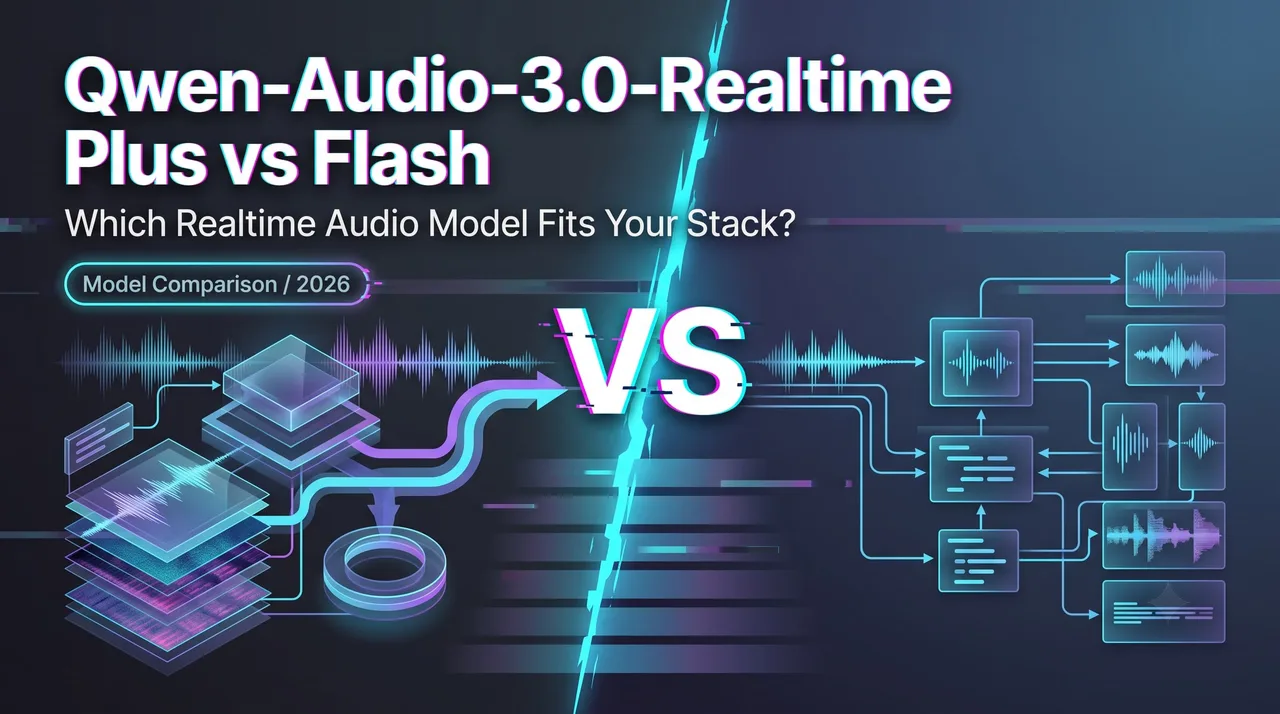
I had a routing table open before I had a model opinion. That is usually the right order. Qwen-Audio-3.0-Realtime Plus vs Flash is not a “which one is stronger” page. It is a production split: which voice traffic should be evaluated for the higher-tier route, which traffic prioritizes cost efficiency and low delay, and what has to be checked again before anyone ships the policy.
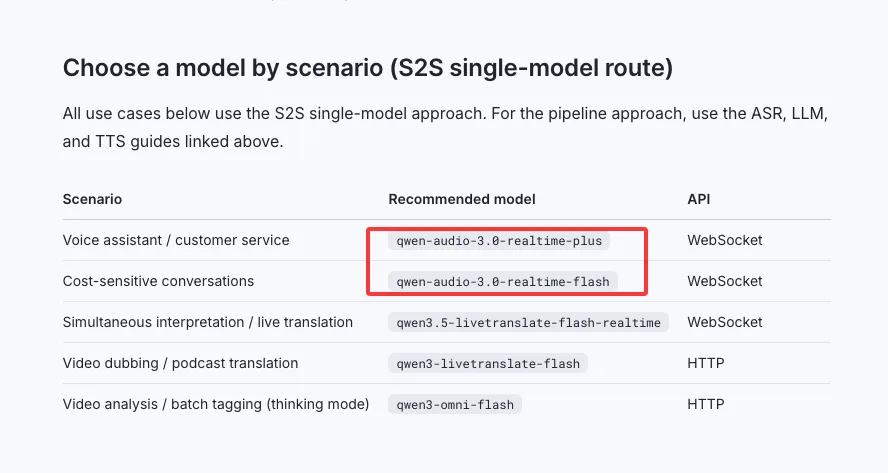
As of my July 20, 2026 check, the official Qwen speech-to-speech model page lists both qwen-audio-3.0-realtime-plus and qwen-audio-3.0-realtime-flash. It maps Plus to voice assistant / customer service and Flash to cost-sensitive conversations. That is enough to start a routing design. It is not enough to freeze pricing, quota, region, or SLA assumptions.
Plus vs Flash at a Glance
| Routing question | Plus candidate | Flash candidate | Must verify before launch |
|---|---|---|---|
| Task complexity | First candidate to evaluate for multi-step support, education, and policy-heavy service | Simple intent capture, status checks, FAQ flows | Official capability deltas and eval results |
| Customer value | VIP, paid, regulated, escalation-sensitive | Free, trial, low-risk, high-volume | Account rules and exception owner |
| Latency target | Accept slightly higher cost if answer quality matters | Prefer for latency-sensitive traffic, subject to measured response performance | First audio latency and interruption behavior |
| Cost pressure | Evaluate first when failure is expensive | Evaluate first when traffic volume and cost are the main constraints | Current per-model billing |
| Conversation length | Use when context quality matters | Use when sessions are short and repetitive | Context retention and session limits |
| Fallback role | Primary for high-risk tasks | Backup or default for low-risk tasks | Rate limits and region availability |
Good enough for a first cut. Not good enough for procurement.
What must be confirmed in official model docs
The first verification pass is mechanical. I check model ID, API protocol, region, context, billing unit, rate limit, and supported features. If one cell is blank, it stays blank in the policy.
The Qwen-Audio real-time guide confirms WebSocket streaming, full-duplex interaction, VAD modes, function calling, audio format, and the published context capacity for both Plus and Flash. It also shows Beijing-region access in the current documentation. If your deployment uses another region, do not infer availability. Confirm it in the console or provider documentation.
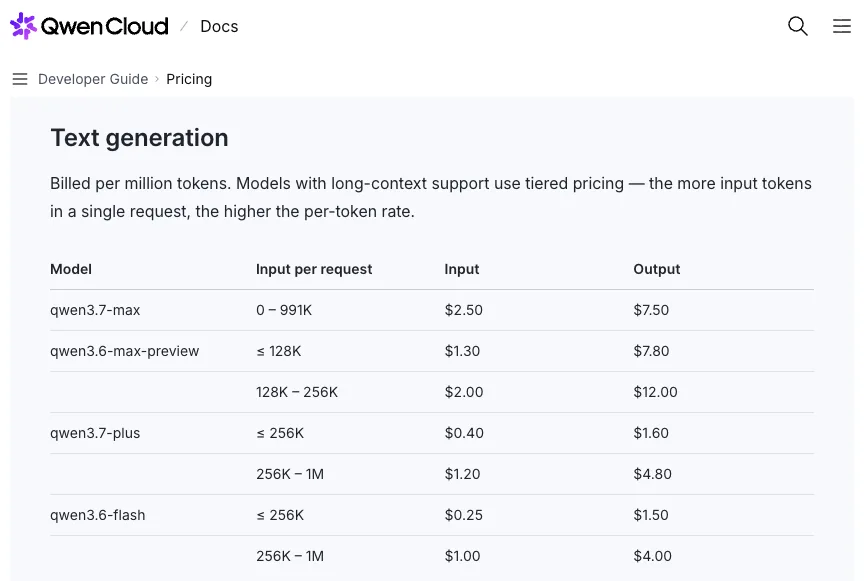
Pricing needs its own check. The Qwen Cloud pricing page says the visible pricing table covers selected representative models and points unlisted models to the Model Marketplace. So unless the exact Qwen Audio Plus and Qwen Audio Flash prices are visible on the model page or your contract, write “pricing pending verification.” I know, boring. Still better than explaining a wrong cost model later.
Rate limits are the other trap. Qwen’s rate-limit guide describes RPM, TPM, account-level limits, workspace limits, 429 behavior, and analytics views for latency and failures. For a realtime voice model comparison, this matters as much as benchmark quality. A voice agent that sounds great but throttles during lunch-hour traffic is not production-ready.
Why Flash should not be framed as simply weaker
Flash is not the apology tier. It is the candidate volume tier, subject to pricing, latency, and quality evaluation.
The mistake I keep seeing in routing docs is simple: Plus gets described as “good,” Flash gets described as “cheap.” That makes support, sales, and product teams treat every Flash route as a downgrade. It is cleaner to define Qwen Audio Flash as the preferred path when the task is low-risk, repeated, short, and latency-sensitive.
A password reset assistant does not need the same route as a tutoring session. A delivery-status voice bot does not need the same route as a medical intake assistant. If your evaluation shows that Flash resolves the job with lower cost and fewer delay spikes, the user got the better product experience. The model label is not the experience. The completed task is.
Compare by Voice Agent Workload
Complex reasoning, education, and multi-step task handling
Plus belongs in the first evaluation bucket when the voice agent has to hold intent, ask clarifying questions, use tools, and avoid bad shortcuts.
I would evaluate these workloads on Plus first:
- tutoring and coaching where the user may interrupt, correct themselves, or change direction
- customer service with policy lookup, refunds, eligibility, or account state
- sales qualification where misunderstanding one answer changes the next five questions
- internal helpdesk flows that call tools and summarize next steps
- VIP support where retrying the conversation is more expensive than using the stronger route upfront
This does not mean Plus automatically wins. Hypothesis, then eval. Run the same call set across both tiers, measure task completion, interruption recovery, tool-call accuracy, and support-review rate. If Plus only improves tone but not resolution, the routing rule is too generous.
I paused here because voice makes quality failures feel personal. In text, a weak answer looks annoying. In voice, it sounds careless. That changes how I score risk.
High-concurrency support, simple service flows, and fast response needs
Flash should be the default candidate for short service loops.
Think appointment confirmation, order status, simple lead capture, store hours, basic triage, scripted FAQ, and “press one, but natural language” flows. These workloads need fast turn-taking and predictable cost more than deep reasoning.
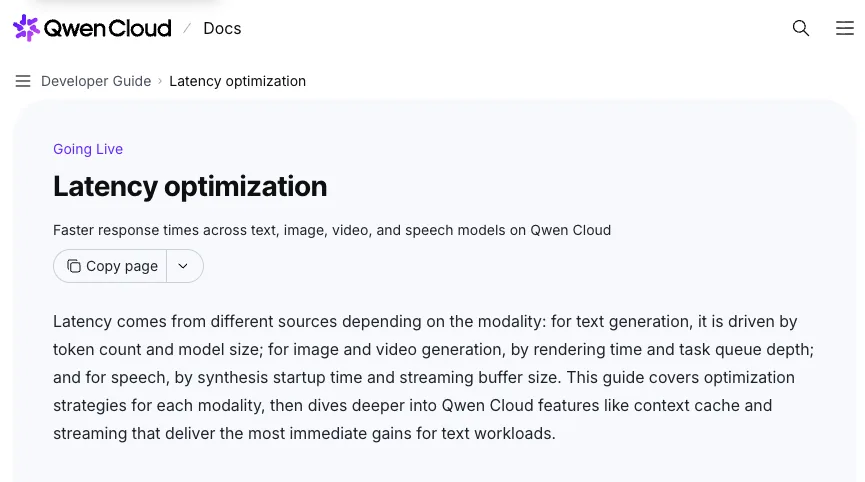
This is where voice agent latency becomes a product metric, not just an infra metric. First audio latency, time to interruption cancel, and recovery after barge-in all affect whether the user keeps speaking naturally. The Qwen latency guide is a useful reminder that perceived speed depends on streaming, shorter outputs, and avoiding unnecessary model calls. For voice, I track when the user first hears something, not only when the backend finishes.
Flash also helps with concurrency planning. If a simple-flow agent gets ten times more calls than expected, moving all of that traffic to Plus because “quality is safer” can break the monthly budget before the team notices. Found the pattern on the third try: cheap routes need quality gates, but expensive routes need justification gates.
Latency, Cost, and Quality Tradeoffs
First audio latency, interruption handling, and output naturalness
The voice route has three latency moments.
- First, the model has to detect that the user stopped or paused.
- Second, it has to start producing a useful response.
- Third, the client has to play that response without stale buffered audio continuing after the user interrupts.
The Qwen-Audio guide explicitly calls out chunk sizing, streaming playback, and clearing the local playback buffer on interruption. That is not a small implementation note. It is the difference between “the agent listened” and “the agent talked over me.”
For Plus vs Flash, I would not use one average latency number. Split it:
- first audio packet
- first intelligible word
- full response completion
- interruption cancel time
- second-turn recovery
- failed-session retry rate
Output naturalness belongs in the same test. A faster model that sounds rushed may lose trust. A better-sounding model that waits too long may lose the user. Voice is rude when it is slow.
Audio token cost, session duration, and retry behavior
Cost is not only the model’s listed price.
For realtime voice, the real bill is shaped by session length, retry rate, silence handling, tool-call failures, and whether the agent keeps too much context alive. If a Flash route creates more repeats, escalations, or abandoned calls, it may be cheaper per unit and more expensive per resolved task.
Use cost per resolved conversation as the main number. Then break it down:
- input audio duration
- output audio duration
- average turns per session
- retry percentage
- escalation percentage
- support-review minutes
- refund or concession rate after bad calls
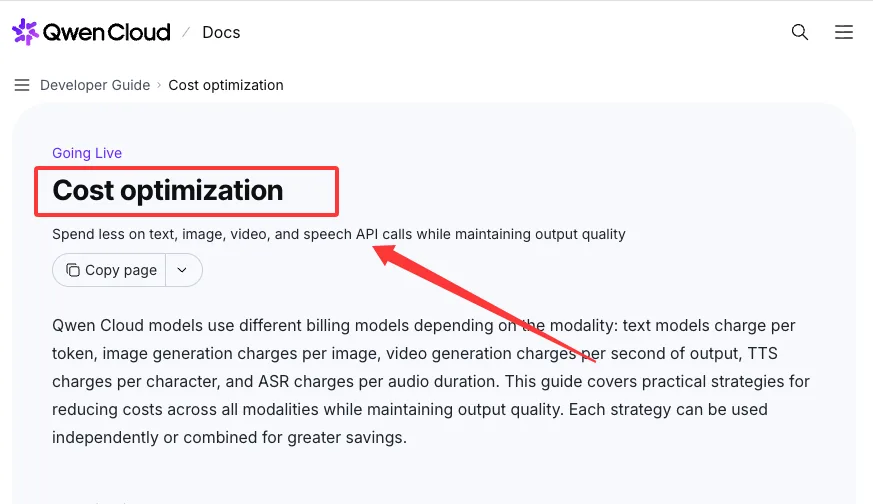
The Qwen cost optimization guide gives the right general discipline: match model choice to task complexity and avoid unnecessary work. For voice AI model routing, I translate that into one rule: pay for Plus where the next mistake is expensive; use Flash where the next successful turn just needs to be fast and clear.
Routing Strategy for Production
Route by task risk, complexity, and customer value
My production route would not start with model names. It would start with labels the business can defend.
Use Plus when the call is high-risk, high-value, or high-ambiguity. Use Flash when the call is high-volume, low-risk, and repeatable. Route by the cost of being wrong.
A simple policy can look like this:
- Plus: VIP account, billing dispute, regulated topic, multi-step education, tool-heavy resolution, user already frustrated
- Flash: order lookup, appointment reminder, scripted FAQ, first-pass intake, low-value trial traffic
- Text-first: legal language, long policy explanation, document review, anything where voice adds risk instead of clarity
- Human handoff: user distress, repeated model uncertainty, identity verification failure, complaint escalation
The owner matters. Product can define the route. Platform can enforce it. Support should be able to dispute it. Finance should see the cost impact. No single team should quietly move VIP support from Plus to Flash because the monthly chart looked ugly.
Fallback from Plus to Flash and from realtime to text-first flows
Fallback should be written before launch, not during the outage.
Plus to Flash is acceptable when the user’s task can still be completed safely. It is not acceptable when the task depends on nuance, policy judgment, or high-value account handling. If Plus is unavailable during a VIP billing dispute, the fallback may be text-first plus human escalation, not Flash.
Realtime to text-first is underrated. Some tasks become safer when the system slows down: long explanations, consent language, compliance notices, detailed troubleshooting, and anything requiring the user to review exact terms. Speed is not the goal. Not breaking flow is.
The fallback log needs to keep enough evidence: original route, fallback route, trigger reason, latency, error code, transcript, tool calls, user outcome, and reviewer decision. Without that, every routing dispute becomes opinion theater. I have no patience for opinion theater in incident review.
FAQ
Who approves model-tier exceptions for VIP accounts?
The exception owner should be named before launch. In most teams, product defines the VIP policy, support requests the exception, platform implements the route, and finance reviews the cost impact.
A good rule: support can request Plus for a VIP account, but only product or customer operations can approve a standing exception. Temporary incident overrides should expire automatically.
How should support explain tier-driven voice quality changes?
Support should not say “we moved you to a cheaper model.” That is technically blunt and commercially unhelpful.
Say the route is adjusted based on task type, account needs, and service reliability. If a customer notices a quality change, support should be able to say whether the session used Qwen Audio Plus, Qwen Audio Flash, or a fallback path, and why. Keep the answer factual. Do not promise that Plus always sounds better unless your eval data proves it.
What evidence belongs in a Plus-to-Flash routing dispute?
Use evidence that ties model choice to user outcome.
The packet should include the route decision, task category, account tier, transcript, interruption events, tool calls, latency metrics, retry count, escalation result, and cost per resolved session. A dispute is not “Flash felt worse.” A dispute is “Flash increased retry rate for this task class by X and caused more escalations.” That is reviewable.
Conclusion
The practical answer to Qwen-Audio-3.0-Realtime Plus vs Flash is not a winner. It is a routing policy.
Plus is the first candidate for complex, high-value, high-risk voice work. Flash is the first candidate for simple, high-volume, cost-sensitive service flows. Both need official-doc verification before launch: model IDs, pricing, context, limits, regions, feature differences, and fallback behavior.
This conclusion has an expiration date. Models update fast. Keep the route table alive, or it will become fiction with YAML formatting.
Previous posts:
Related Articles
Best AI Video Platforms for Production Teams in 2027
Best Sora 2 Alternatives for Video Teams in 2027

Lanta AI Review 2027: Best Uses, Pricing, and Limits
Sora 2 Review 2027: API Quality, Cost, and Limits

Build a GPT-6 Astra 3D Workflow With Blender Assets