
Ornith-1.5 Review: Is the Self-Improving Model Ready?
Read our Ornith-1.5 review of coding, agent, deployment, and evidence quality before evaluating the open model for an AI product.
I’m John. I would not move Ornith into a coding-agent stack because one launch table looks strong. For this Ornith-1.5 review, I’m treating it like any new local coding LLM: verify the claim, pin the checkpoint, run the same repo tasks three times, and see where the workflow breaks. A good single output does not mean the production workflow is ready.
Ornith-1.5 looks worth testing. It does not look production-proven yet.
What Changed in Ornith-1.5
The model family and its self-improvement claim
The official Ornith-1.5 blog says the release extends self-scaffolding into a fuller self-improvement loop. That phrase needs a guardrail.
It does not mean the model keeps training itself after you deploy it. It means the training process includes task generation, task-specific scaffold generation, and solution rollouts for reinforcement learning. The self-improving coding model claim belongs to training, not live production.
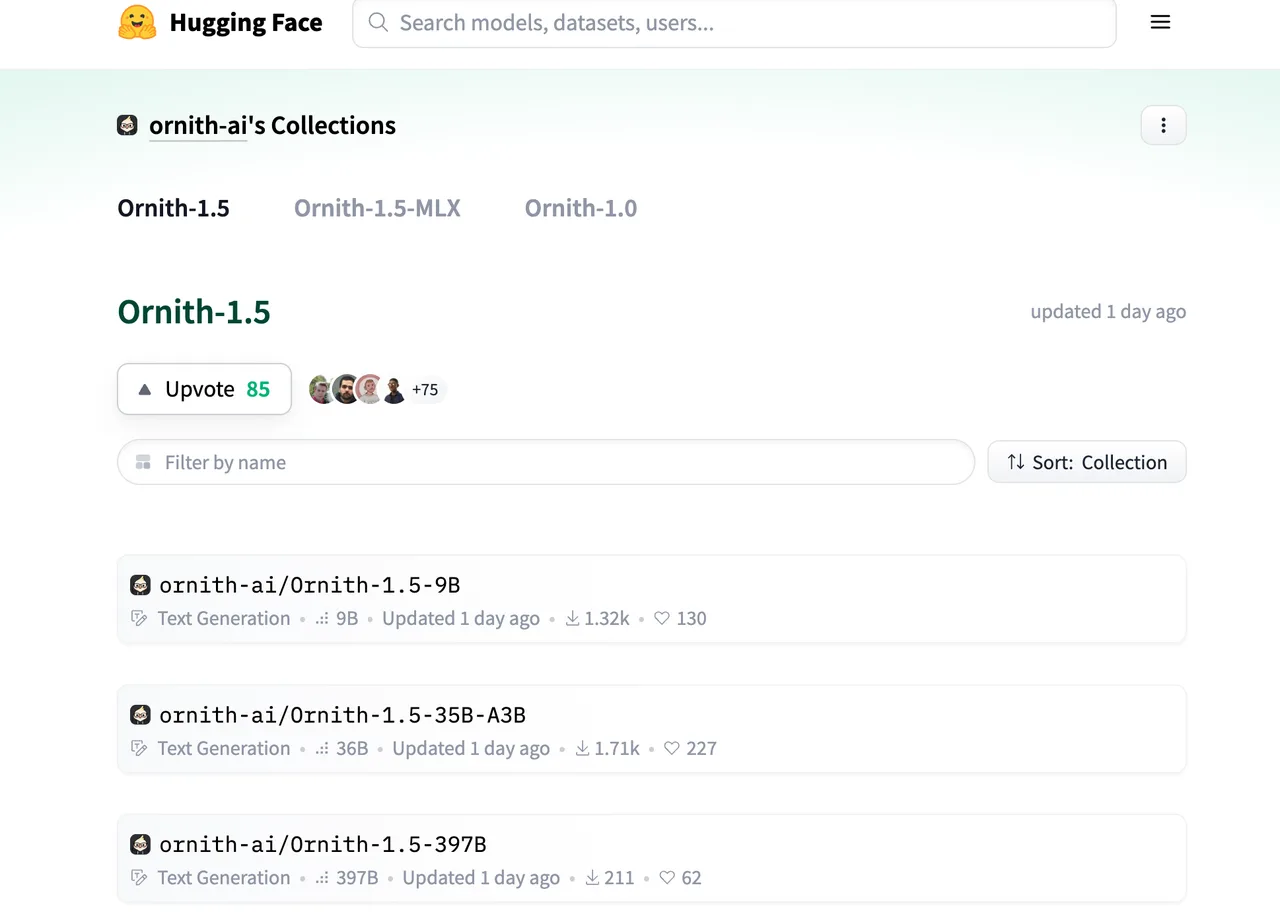
The current Ornith-1.5 collection lists 9B, 35B-A3B, and 397B checkpoints, plus GGUF, FP8, NVFP4, and MLX builds. That gives builders options, but it also creates a version-control problem. One person can remember parameters. A team cannot.
Official evidence and unanswered questions
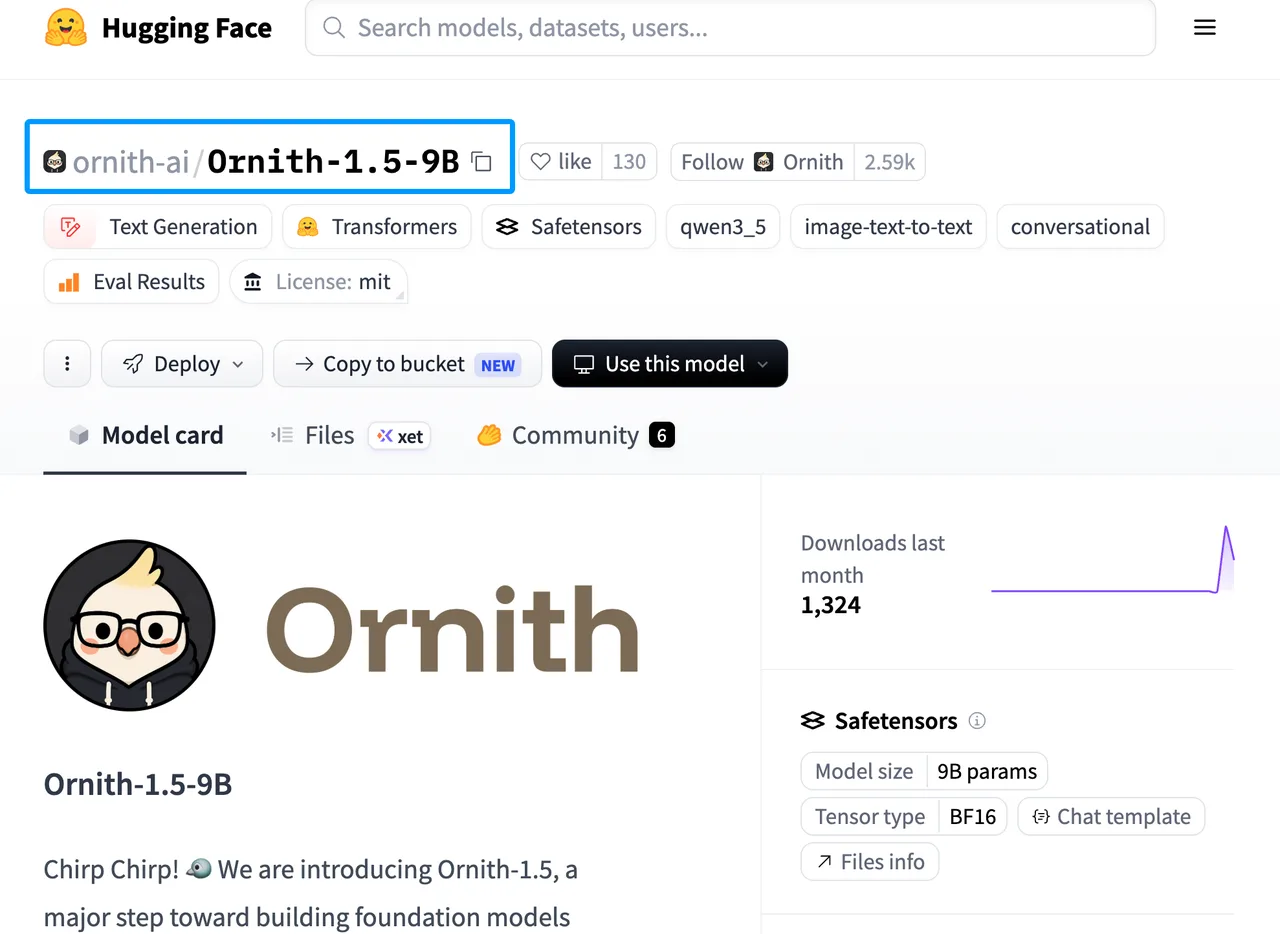
The official sources disclose model sizes, MIT license labels, benchmark tables, runtime recipes, tool-call parsing notes, and OpenAI-compatible local serving examples. The 9B model card also lists recent runtime requirements: Transformers 5.8.1 or newer, vLLM 0.19.1 or newer, and SGLang 0.5.9 or newer.
The gaps matter. I did not find independent replication for the headline Ornith-1.5 benchmarks during this check. The main Hugging Face checkpoint pages also show no active Inference Provider deployment, so the practical path is local or self-hosted serving unless another provider is verified on publication day.
Review the Coding and Agent Results
How to read the reported benchmark setup
Treat launch scores as vendor-reported until your team repeats them. That is not a criticism. It is basic production hygiene.
The blog reports Ornith-1.5-397B at 86.1 on Terminal-Bench 2.1, 56.0 on DeepSWE, and 86.0 on SWE-bench Verified. Those are strong signals. But they depend on harness choice, context length, sampling settings, anti-hacking controls, and judge models.
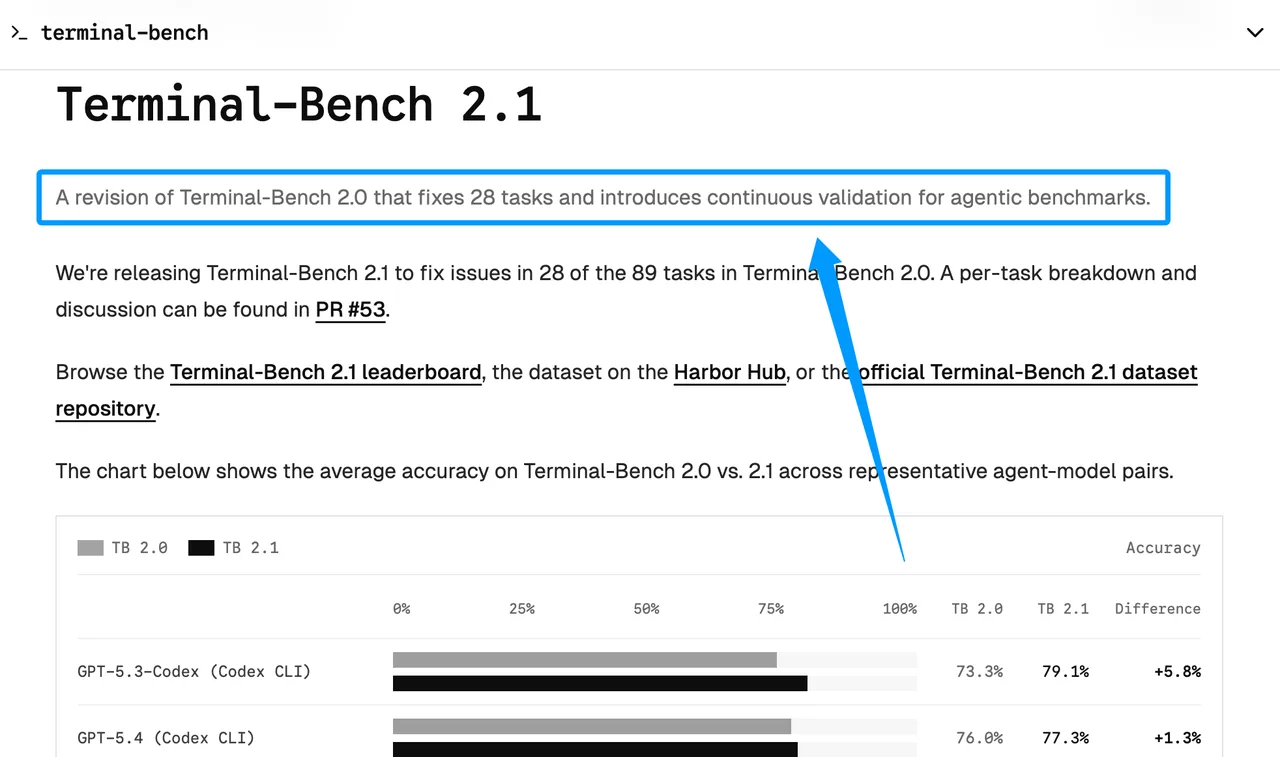
The official Terminal-Bench 2.1 notes describe a revised agentic benchmark with task fixes and validation changes. So benchmark version matters. A score without the exact setup is not enough to justify a model switch.
Tool use, long-context work, and coding tasks
The model cards describe reasoning parsing and tool-call parsing so <think> and <tool_call> blocks can be exposed through OpenAI-style fields. That is the right surface for agent work. It still needs a sample run.
I would test four tasks first:
- A small bug fix with clear tests.
- A repo-navigation task with no code change.
- A tool-call task with strict JSON arguments.
- A long-context task that depends on files spread across the repo.
For each run, record success, invalid tool calls, unnecessary edits, test output, token usage, runtime errors, and recovery after a failed command. Benchmarks tell you where to look. Your harness tells you whether it survives the work.
Decide Whether Ornith-1.5 Fits Your Stack
Model sizes, runtimes, and deployment surfaces
This is not one deployment decision.
The Ornith-1.5-9B model card positions the 9B dense model for local and edge-oriented use, with a mobile quantized variant mentioned. I would use it for local experiments only after checking tool-call discipline under your prompts.
The 35B-A3B model is the more interesting middle option: MoE, about 3B active parameters per token, and large enough to test serious agent behavior without jumping straight to 397B infrastructure.
The 397B model is the flagship. I would only test it when maximum quality could justify multi-GPU serving, higher operational cost, and a stricter rollback plan.
For agent frameworks, the model cards lean on OpenAI-compatible endpoints. That helps. The OpenHands LLM configuration docs show the same operational pieces: model name, API key, base URL, retry settings, and provider behavior all affect the agent. They are not plumbing details.
A practical evaluation plan for AI builders
Start offline. Use a sanitized copy of a real repo, not a toy project. Remove secrets, disable network access unless the task needs it, and freeze test cases.
Run 10 to 20 historical issues already solved by your current model. Then run each task three times with the same settings. Do not average away the bad runs. If the model succeeds once and damages the repo twice, that is not “promising.” That is expensive.
Compare against your current stack on patch correctness, tool-call validity, extra file edits, recovery behavior, context use, wall time, memory, and reviewer effort. I care about reviewer effort because coding models often move cost onto humans.
Keep 9B, 35B-A3B, and quantized builds separate. Do not use a GGUF result to claim BF16 quality. Do not use BF16 launch scores to sell a mobile workflow. The conclusion is valid only at the tested scale.
Frequently Asked Questions
Who should approve an Ornith checkpoint for production?
Platform engineering should own approval, with input from the AI product lead and security. The person impressed by the demo should not be the only signer.
How often should teams repeat their internal evaluations?
Repeat the test whenever the checkpoint, quantization, runtime, prompt template, tool schema, or agent harness changes. During a pilot, I would rerun a small canary suite weekly.
What artifacts should an Ornith AI review retain?
Keep the model ID, revision, runtime version, launch flags, prompts, tool schemas, input repos, generated patches, test output, logs, reviewer notes, and hardware records.
When should an Ornith pilot remain offline?
Keep it offline when repos contain sensitive code, external tools are not sandboxed, launch benchmarks have not been checked internally, or rollback is not ready.
Who owns rollback after a checkpoint update?
The same team that approved the checkpoint. In practice, platform engineering should keep the previous model, config, and agent profile ready.
Conclusion
My bottom line for this Ornith-1.5 review: test it, but do not promote it from launch notes into production. The open-weight story is promising, and the reported coding results deserve a serious canary run. But self-improvement is a training method, not a deployment guarantee. Pin the checkpoint, run your own tasks, keep the logs, and make Ornith earn its place in the workflow.
Previous posts:
Related Articles
/filters:quality(82)/media/images/1791192288445452271_ToxGQZ8i.webp)
Holo4 27B vs 35B-A3B: Which Fits Your Agent?
/filters:quality(82)/media/images/1791194933461111356_WeoxGPY8.webp)
Holo4 API vs Local Deployment: Which Fits Your Agent?
/filters:quality(82)/media/images/1790934318687045151_6DhqzIS1.webp)
Best AI Video APIs for High-Volume Workflows in 2027
/filters:quality(82)/media/images/1790879706333726948_TmjHVhrF.webp)
Introducing AI Cinema Studio on WaveSpeedAI: Direct Cinematic AI Video Shots
/filters:quality(82)/media/images/1790934887466368319_r2GQZ8hr.webp)
LTX Studio Review 2027: Does the Video Workflow Hold Up?
/filters:quality(82)/media/images/1790935090456133598_u9CLU4dm.webp)