What Is the WaveSpeedAI API and How Does It Work?
Learn how the WaveSpeedAI API authenticates requests, submits route-specific generation tasks, tracks prediction IDs, and retrieves results.
Overview
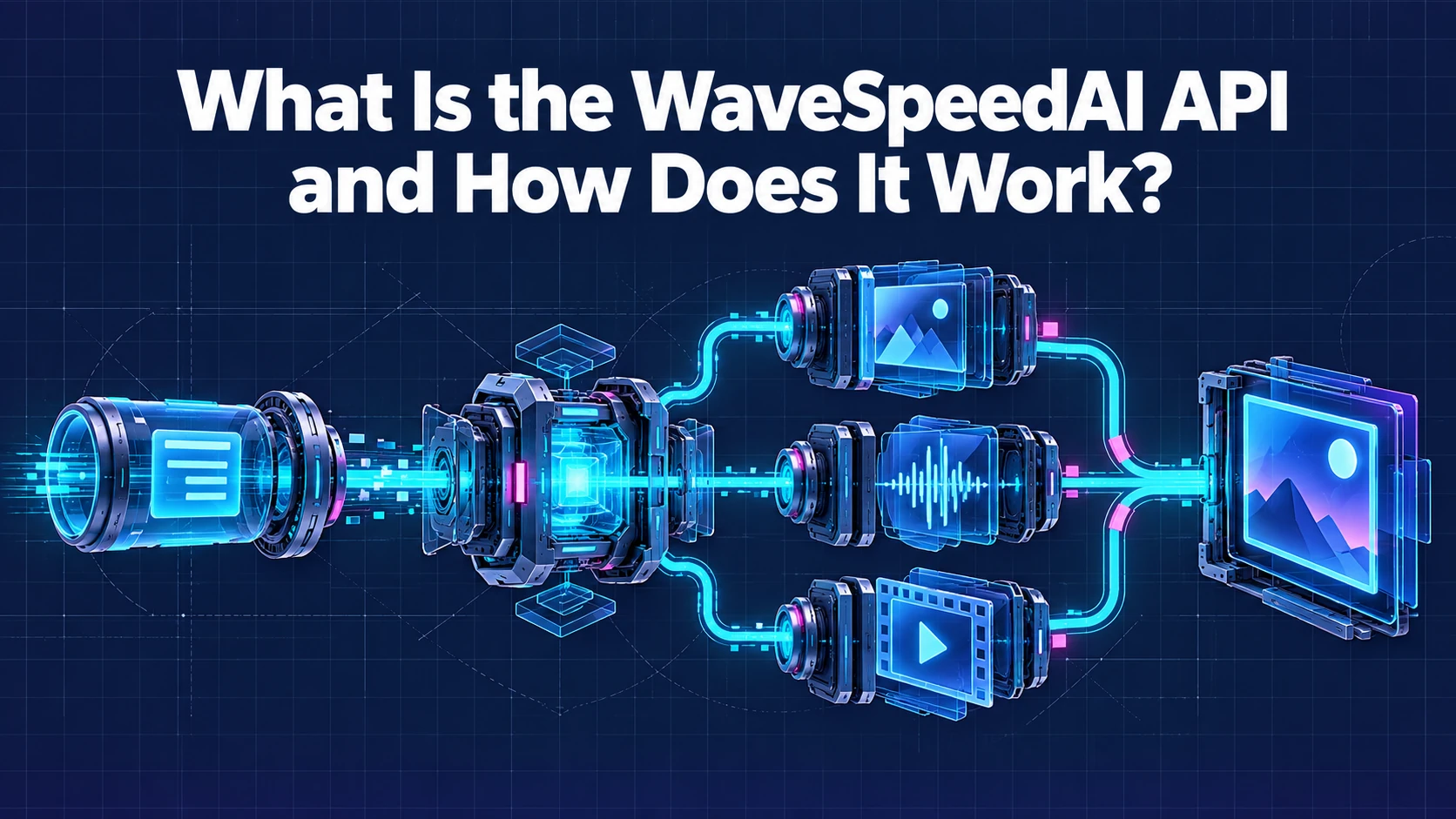
The WaveSpeedAI API is a developer interface for running selected AI models for media and related tasks through model-specific routes. A typical flow is to authenticate with a bearer key, submit a task with that route’s required inputs, save the returned prediction ID and retrieve the completed result. It is an access and workflow layer, not one single model with universal settings.
The developer chooses a route by the job: text-to-image for a new still, image editing when a source image guides changes, or a video route when the output is a clip. The selected model page defines accepted fields and current access conditions. WaveSpeedAI’s quickstart shows the task-and-result pattern, while its catalog separates model families. Your backend should keep the key private and store a local job record that connects the user request, model ID, prediction ID and delivered asset. The result endpoint reports completion or failure rather than making the front end wait on one open request.
Production use adds checks around the API call. Validate uploads, consent and output rights; handle pending and failed states; and copy approved media to storage you control. Pricing and model availability can differ by route, so consult the live page before setting product limits.
For a first integration, choose one route and a representative test input. Once that full cycle works, add other models only when a distinct user need justifies them.
Log the route, request settings and final state during development. That record gives support staff enough context to distinguish invalid input from an account issue or a failed model task.
Source: WaveSpeedAI API quickstart; WaveSpeedAI model categories; WaveSpeedAI result API. Source check: 2026-09-29.