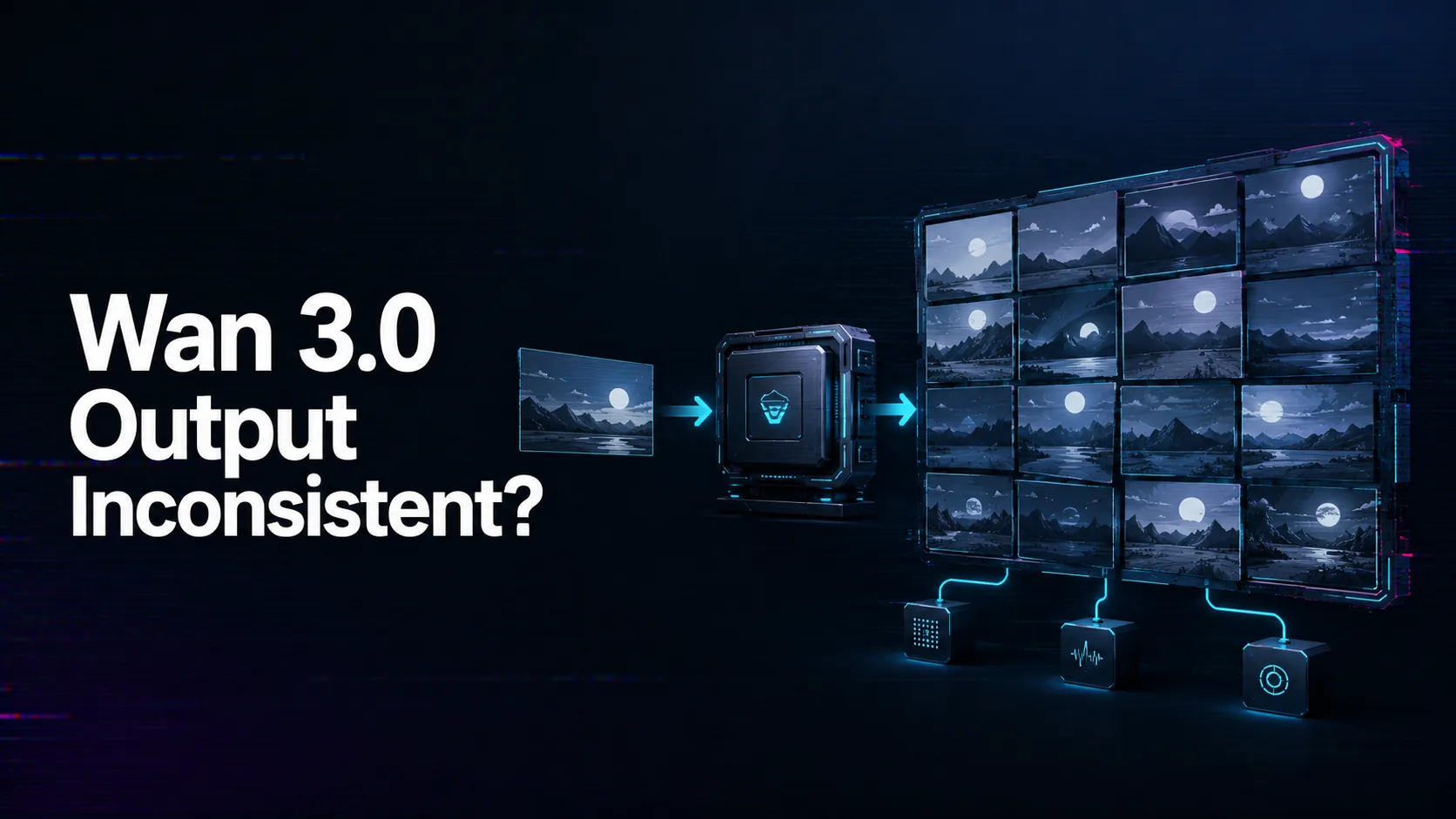
Why Is My Wan 3.0 Output Inconsistent?
Wan 3.0 inconsistency often comes from vague prompts, conflicting references, overloaded scenes, or uncontrolled retries.
Overview
Wan 3.0 output is often inconsistent because the prompt, references, or settings ask for too many things at once. Common causes include vague scene direction, conflicting source images, overloaded motion, fast character changes, unclear audio instructions, and changing several parameters between retries.
Debug by isolating one variable. If identity drifts, simplify motion and strengthen the reference. If product details change, use a cleaner image and reduce style transformation. If camera movement breaks, shorten the clip and remove secondary actions.
Create a retry log. Record route, prompt, references, duration, resolution, aspect ratio, audio setting, prediction id, status, and failure reason. Without that evidence, the team only knows that the output was inconsistent, which is not enough to improve it.
WaveSpeedAI prediction records can support this loop. Compare failed and accepted clips side by side, then freeze settings that work. If a scene type keeps failing after controlled retries, route it to another model instead of spending more on the same setup. Turn repeated failure reasons into input validation rules where possible. That turns inconsistency from a mystery into a testable production signal.
Source: WaveSpeedAI Wan 3.0 API collection; Alibaba Cloud Wan3.0 API reference. Source check: 2026-08-29.