
What Are Text-to-3D API Access Options and Use Cases?
Text-to-3D API access and use cases: how prompt-to-mesh generation works, where quality stands today, and which asset types are production-ready.
Overview
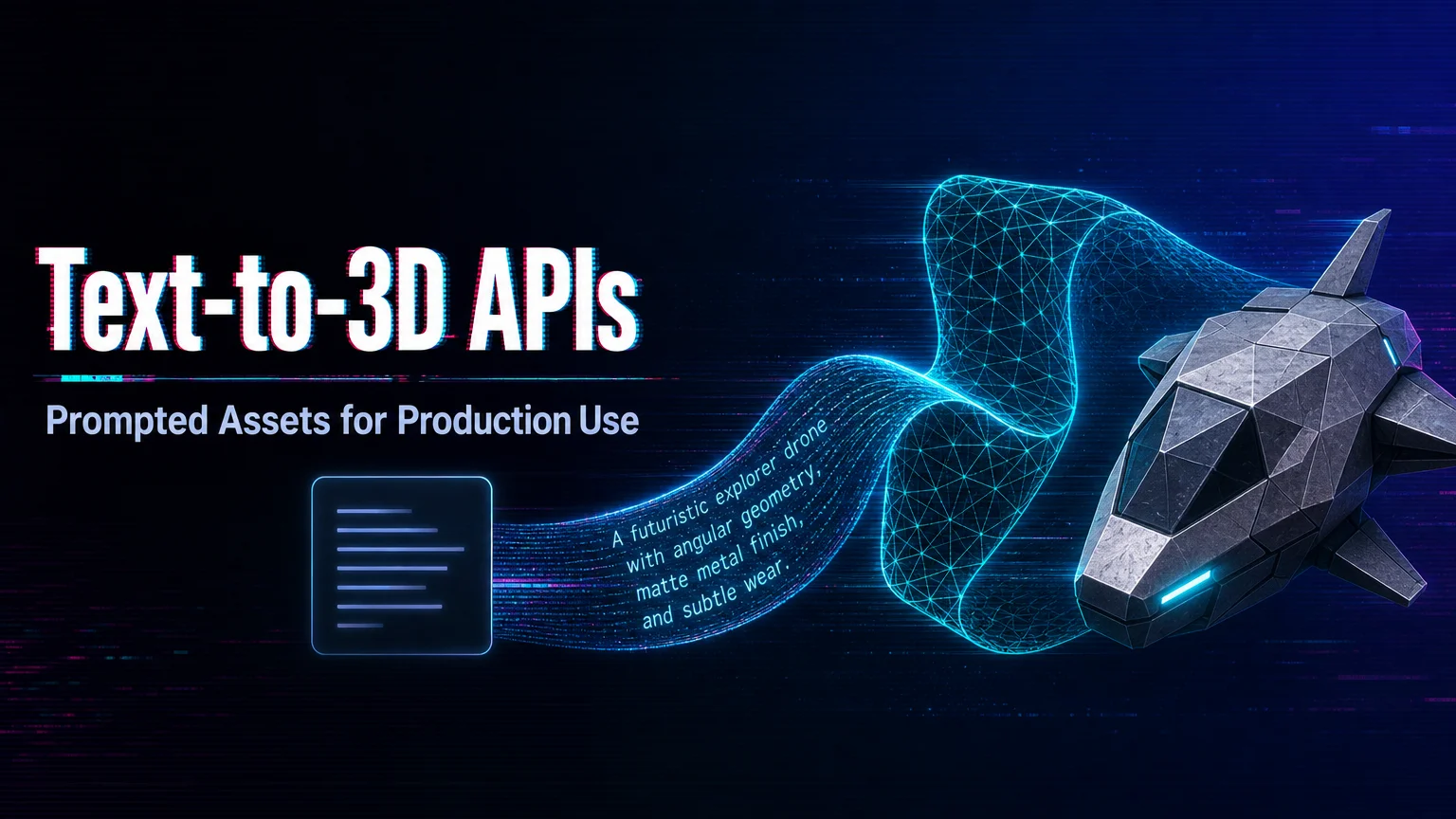
Text-to-3D API access lets a product generate 3D assets from written prompts through an API, but teams should evaluate output quality, file formats, topology, texture quality, and commercial rights before using it in production. A usable 3D asset must work beyond the preview.
- Check supported formats such as GLB, OBJ, FBX, or USDZ.
- Test whether assets are suitable for games, e-commerce, AR, prototyping, or visualization.
- Review licensing and editing needs before using generated models commercially.
Text-to-3D can help teams create rough concepts, product props, scene elements, game prototypes, and e-commerce visualization assets faster. The risk is that generated geometry may still need cleanup before it works in a real engine, store page, or AR viewer.
WaveSpeedAI is relevant when 3D generation is part of a broader multimodal production stack. Teams may want image, video, 3D, and LLM models through one API layer. The practical test is not whether a model can generate something impressive, but whether the asset can be used, edited, optimized, and licensed for the intended workflow. Start text-to-3D adoption with one asset class, such as props or simple product stand-ins, and define an acceptance bar for geometry and topology before promising 3D output to any downstream team.
/filters:quality(82)/media/images/c347367a-a007-4466-b8f7-d37f5fb52819.webp)
/filters:quality(82)/media/images/cd4db796-7728-45fb-8267-6813ed28e173.webp)
/filters:quality(82)/media/images/1791535252286714222_v4jvJT2a.webp)
/filters:quality(82)/media/images/1791451065663755033_qNqAKS1a.webp)
/filters:quality(82)/media/images/1791359984291066138_tW5eOX6f.webp)
/filters:quality(82)/media/images/1773962750383987480_n3hqzHRZ.webp)