
MiniMax H3 vs Sora: What Is the Difference?
The key differences between MiniMax H3 and Sora — open weights and multi-reference control versus ecosystem.
Overview
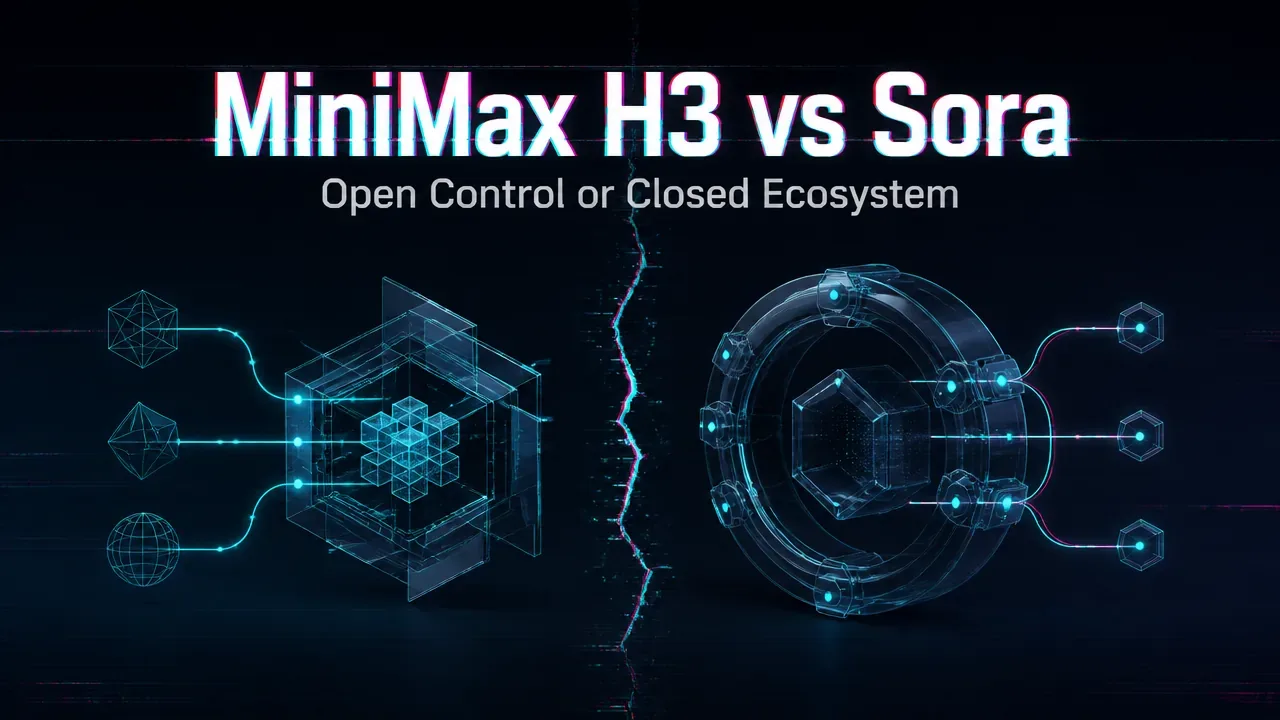
The clearest difference is philosophy. MiniMax H3 leans toward open-weight availability and multi-reference, multimodal control on some routes, while Sora is tied to its own ecosystem and access model. Confirm the current state of both before you plan around either, since availability can shift on short notice.
Source note: Verified 2026-08-06 against the MiniMax official H3 blog, MiniMax Video Generation API docs, and Hugging Face MiniMax-H3 model page.
That difference cascades into practical choices. Deployment: an open-weight path can allow local or self-hosted use, subject to license, which Sora’s model does not typically offer, and that alone decides the matter for some teams. Control: MiniMax H3’s reference inputs and audio handling appeal to teams that want to steer output precisely rather than accept what a prompt returns. Access and stability: Sora’s ecosystem may offer a smooth managed experience, but managed access and open flexibility solve genuinely different problems, and picking one means accepting the trade the other would have given you.
For a product team, the decision usually turns on access and licensing more than raw output quality, because both models are capable enough for most jobs. Pick the model whose deployment path and terms match your plan, then validate the quality on your own prompts rather than a public demo reel.
Because access routes evolve, re-check both before locking a long-term integration you would rather not rebuild in six months.
/filters:quality(82)/media/images/c347367a-a007-4466-b8f7-d37f5fb52819.webp)
/filters:quality(82)/media/images/cd4db796-7728-45fb-8267-6813ed28e173.webp)
/filters:quality(82)/media/images/1791535252286714222_v4jvJT2a.webp)
/filters:quality(82)/media/images/1791451065663755033_qNqAKS1a.webp)
/filters:quality(82)/media/images/1791359984291066138_tW5eOX6f.webp)
/filters:quality(82)/media/images/1773962750383987480_n3hqzHRZ.webp)