
Can MiniMax H3 Do Reference-to-Video Generation?
Learn what reference-to-video means for MiniMax H3 and how it helps preserve subjects, style, motion, or audio cues.
Overview
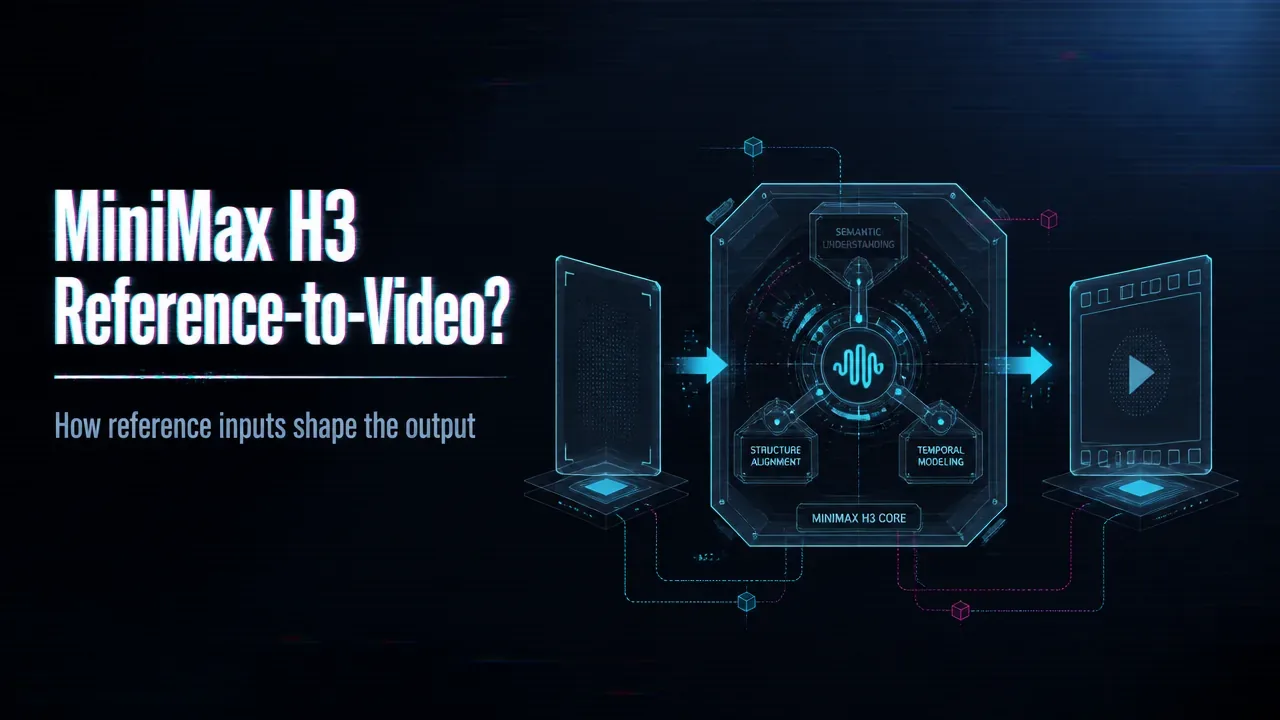
MiniMax H3 is often evaluated for reference-to-video generation, where the model uses extra media inputs to guide the result. Those references may be images, video, or audio depending on the route, so teams must check the exact provider schema.
Source note: Verified 2026-08-06 against the MiniMax official H3 blog, MiniMax Video Generation API docs, and Hugging Face MiniMax-H3 model page.
Reference-to-video is valuable because production work usually needs consistency. A brand team may need the same product shape. A game team may need a character to keep a recognizable outfit. A creator tool may need the motion or mood of a reference clip. An audio-aware workflow may need dialogue, ambience, or sound timing to influence the video. The mistake is to treat every reference type as interchangeable. Image references tend to support subject, identity, style, and composition. Video references tend to support motion, camera, or scene dynamics. Audio references tend to support soundscape, rhythm, or speech-related cues. WaveSpeedAI should separate these paths clearly so API users can choose the right input type.
The best test is a controlled reference pack: one product, one character, one motion sample, and one audio prompt. Compare drift and retry rate.
Reference workflows are strongest when they reduce ambiguity. They still need human review for brand, legal, and quality-sensitive outputs, especially when a recognizable person or product is involved.
/filters:quality(82)/media/images/c347367a-a007-4466-b8f7-d37f5fb52819.webp)
/filters:quality(82)/media/images/cd4db796-7728-45fb-8267-6813ed28e173.webp)
/filters:quality(82)/media/images/1791535252286714222_v4jvJT2a.webp)
/filters:quality(82)/media/images/1791451065663755033_qNqAKS1a.webp)
/filters:quality(82)/media/images/1791359984291066138_tW5eOX6f.webp)
/filters:quality(82)/media/images/1773962750383987480_n3hqzHRZ.webp)