
Why Do Subprocessor Lists and Data Handling Matter for AI Vendors?
Why the subprocessor list matters for AI vendors: how downstream processors affect your compliance story, and staying ahead of change notifications.
Overview
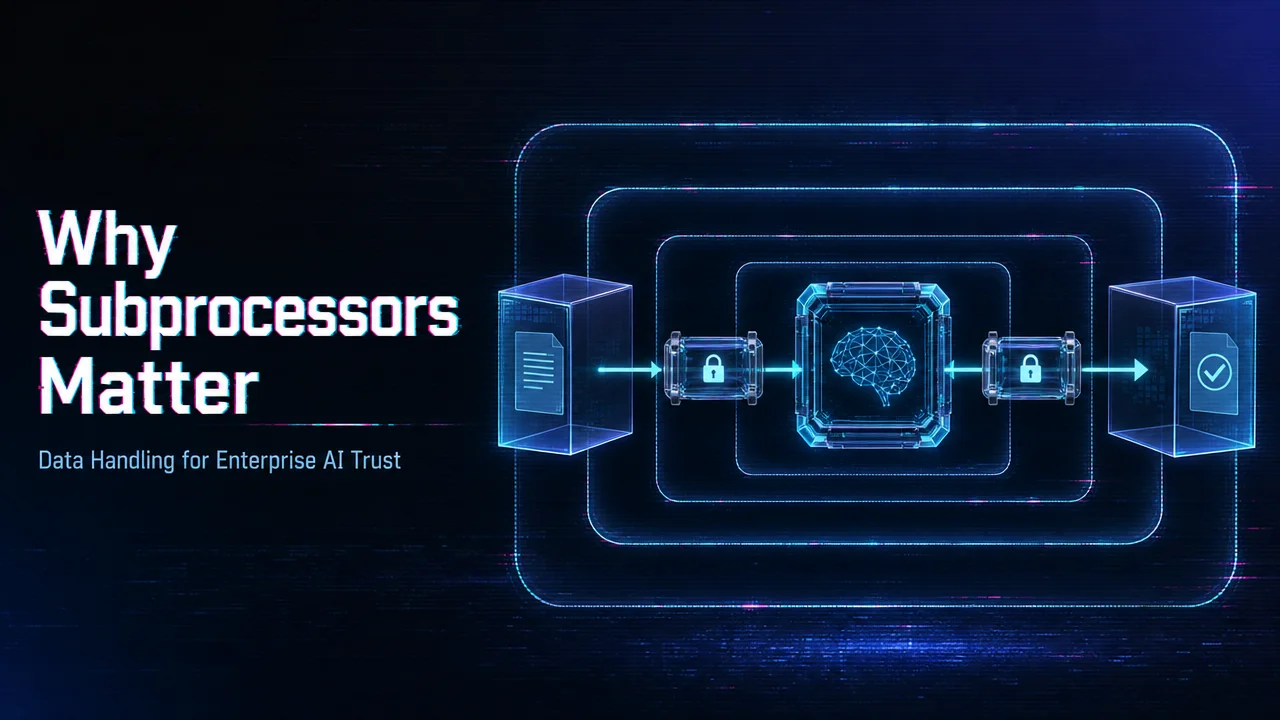
A subprocessor list and data handling policy explain which third parties may process customer data and how prompts, uploads, outputs, logs, metadata, and support data are handled. Enterprise buyers need this before approving AI workflows that include personal, customer, or confidential data.
- Ask for subprocessors, processing locations, retention, deletion, and access controls.
- Check whether upstream model providers receive data and under what terms.
- Review DPA, privacy policy, terms, and security documentation together.
AI vendors may depend on cloud providers, model providers, payment processors, analytics tools, and support platforms. That does not automatically make the vendor unsafe, but the chain must be visible enough for procurement and legal review.
For WaveSpeedAI users, the details worth pinning down are specific and current: what data is stored, for how long, who may process it, whether content is used for training, and which enterprise documents are available. For sensitive workloads, teams should not send production data until subprocessor and retention questions are answered. Pull the subprocessor list into your vendor file and subscribe to change notifications; a new downstream processor can alter your own compliance story without any change in your integration.
/filters:quality(82)/media/images/c347367a-a007-4466-b8f7-d37f5fb52819.webp)
/filters:quality(82)/media/images/cd4db796-7728-45fb-8267-6813ed28e173.webp)
/filters:quality(82)/media/images/1791535252286714222_v4jvJT2a.webp)
/filters:quality(82)/media/images/1791451065663755033_qNqAKS1a.webp)
/filters:quality(82)/media/images/1791359984291066138_tW5eOX6f.webp)
/filters:quality(82)/media/images/1773962750383987480_n3hqzHRZ.webp)