STEPX Neo Architecture: On-Device and Cloud AI
STEPX Neo architecture combines device models, cloud inference, agent execution, tools, and security. See what builders can verify after launch.
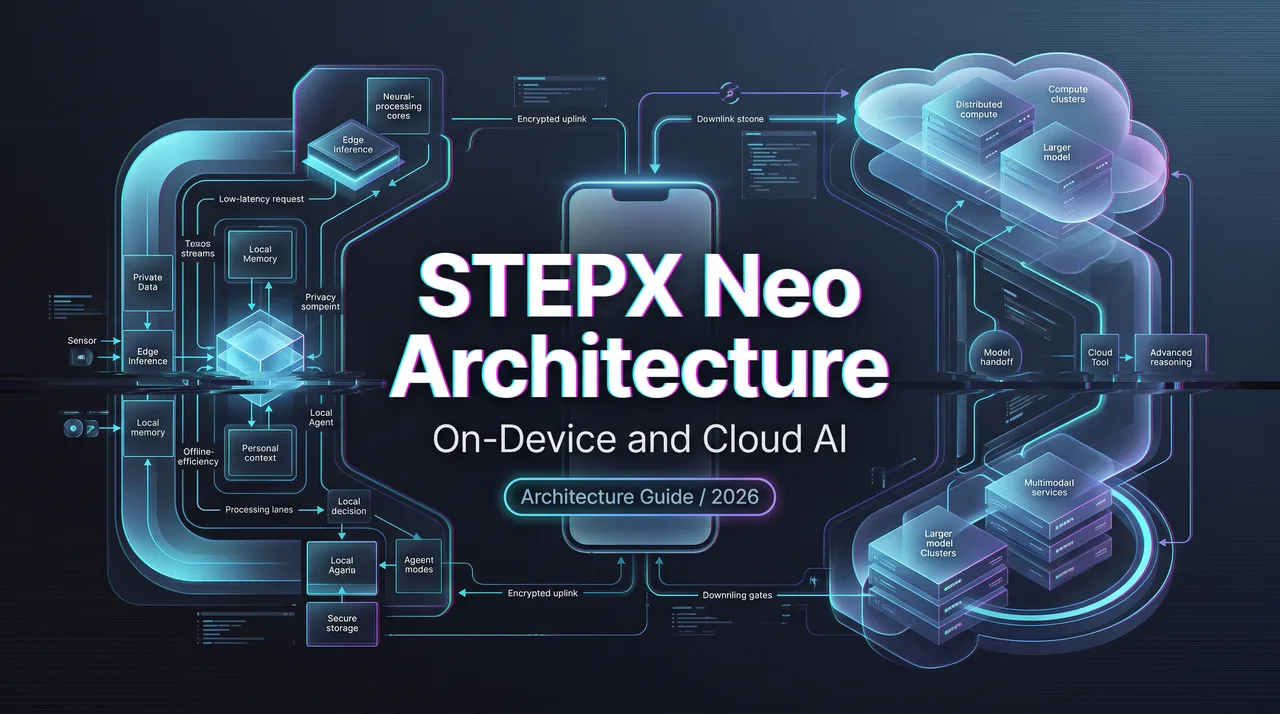
I’m Dora. I read STEPX Neo architecture less like a phone launch and more like an agent stack proposal. The interesting part is not the shell, camera island, or whatever hardware slide usually gets applause. The useful question is narrower: can a terminal agent move from “understanding what the user wants” to “executing across apps” without turning the phone into an opaque automation box.
For AI product architects and terminal agent teams, that is the work. Not the demo.
The short version: according to launch-side claims, STEPX Neo tries to combine a local execution layer, cloud reasoning models, OS-level app access, and device permissions into one agentic phone technology stack. Public StepFun materials do support the broader direction: its open platform describes production-oriented Agent models, tool calling, orchestration, multimodal understanding, and MCP/Skills compatibility in the StepFun open platform. But I could not verify every STEPX-specific layer from a public official technical spec. This is where my data ends.
What STEPX Neo Claims to Change
The claim is a shift in control surface.
A normal phone starts with apps. The user opens the calendar, opens chat, opens maps, copies text, checks a message, switches back, and finishes the task by hand. An agent-centered phone starts with intent. The system decides which app capability, model, local memory, and permission boundary are needed.
That sounds obvious until implementation starts. Then it becomes messy fast.
From app-centered interaction to agent-centered execution
The old mobile interaction model is “**tap first, reason later.**” STEPX Neo appears to invert that. The user gives a task. The assistant decomposes it. The OS or agent layer maps the task into actions.
A simple request like “send my meeting notes to Alex and schedule the follow-up” touches at least four surfaces: speech or text input, local notes, contacts or chat, and calendar. If the phone cannot expose those surfaces as controlled actions, the model is just narrating.
That is why Step AOS architecture matters more than the industrial design. The OS layer has to decide what counts as an action, which actions require confirmation, and which app states are readable. Having many tools is not the problem. Having to manage your tools is.
Model, operating system, tool, and device layers
The architecture can be read as four layers:
| Layer | What it must do | What still needs proof |
|---|---|---|
| Model layer | Understand intent, plan steps, choose local or cloud execution | Model routing policy, failure handling, benchmark scope |
| OS layer | Expose app capabilities and permissions | Public Step AOS API or developer contract |
| Tool layer | Turn app functions into structured actions | Schema stability, audit logs, rollback behavior |
| Device layer | Run local tasks, protect sensitive data, manage battery and latency | Chip, memory, local model limits, thermal behavior |
The gap between a nice launch demo and a reliable terminal agent lives in that table.
The Model and Execution Architecture
The most plausible design is not “one model does everything.” That would be expensive, slow, and fragile.
A better design uses local models for low-risk, low-latency work, then escalates to cloud models when the task requires more reasoning, more context, or heavier multimodal processing. StepFun’s public model list already frames recent models around Agent, multimodal reasoning, tool calling, long context, and production use in its model capability overview. That does not prove the phone runtime. It does show the model-side direction.
Step Edge for local tasks and cloud models for complex work
The Step Edge model, as described in launch-side positioning, should be treated as the local executor, not the whole brain.
Local execution is useful for wake-word handling, short command parsing, private context retrieval, screen-state interpretation, and small transformations. It also gives the system a way to avoid sending every interaction to the cloud.
Cloud models make sense when the task has long context, uncertain planning, code-like tool composition, image/video reasoning, or external search. StepFun’s public materials for Step 3.7 Flash describe multimodal understanding, visual search enhancement, and tool orchestration. That aligns with a cloud-side planner role.
But alignment is not evidence. Until StepFun or STEPX publishes the actual routing rules, the Step Edge model should be treated as a claimed local component, not a measurable product boundary.
Routing signals, escalation, and context handoff
Edge cloud model routing is the central design problem.
A good router needs signals:
- Sensitivity: contacts, messages, location, payment, health data.
- Complexity: number of steps, ambiguity, dependency on external knowledge.
- Modality: text only, screen, image, audio, video.
- Cost: latency, token use, battery, network.
- Risk: irreversible action, user reputation, money movement.
The handoff matters as much as the decision. If a local model escalates to the cloud, what context goes with it. Raw screen contents. A structured summary. Redacted entities. Tool outputs. User memory.
I paused here. Most architecture diagrams show routing as a clean arrow. In production, that arrow is a policy engine with logs, consent states, and failure modes.
How the System Reaches App Capabilities
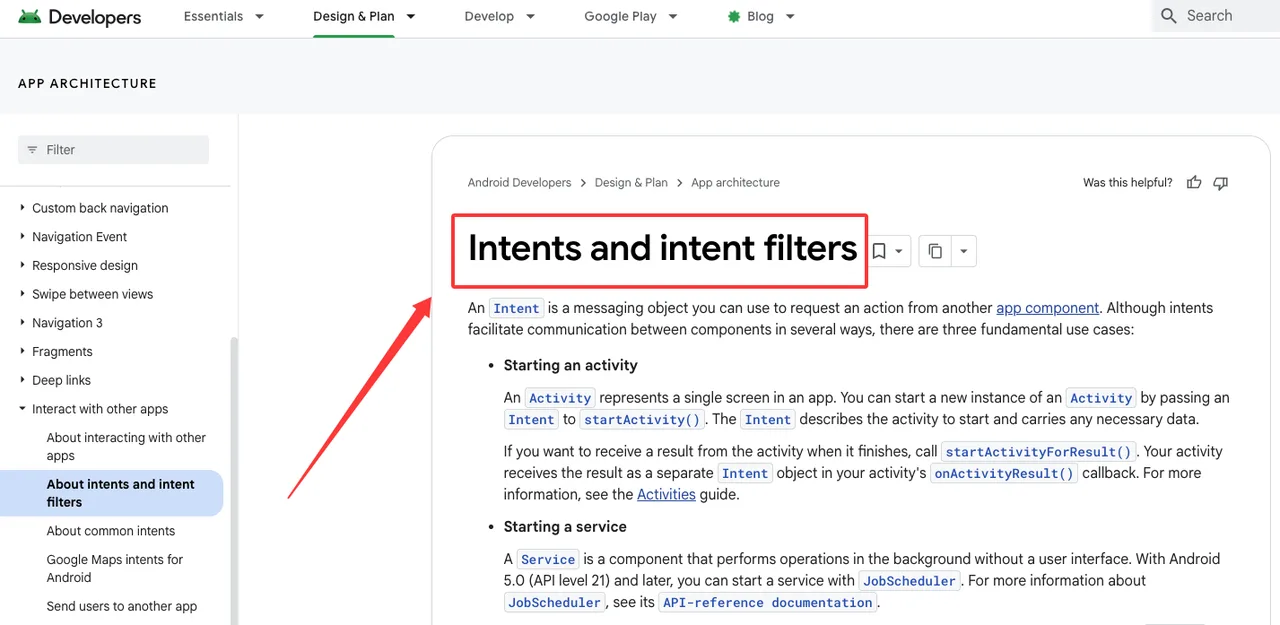
An agent phone only works if apps expose capabilities in a way the agent can call.
Android already has a long history of inter-app action requests through intents and intent filters. Intents are not enough for modern agents, but they show the old shape of the problem: one component requests an action, another component handles it, and the system resolves the target.
Agent execution needs a stricter version of that idea.
Atomic actions, structured tools, and task orchestration
Atomic actions should be small, typed, and inspectable.
“Book travel” is not atomic. “Search flights,” “select itinerary,” “hold booking,” “confirm payment,” and “send receipt” are closer. Each step needs input schema, output schema, permission scope, and undo behavior where possible.
This is where MCP-style thinking becomes relevant. The official Model Context Protocol describes tools as callable capabilities exposed by servers, with schemas, tool listing, invocation, security considerations, and human confirmation for sensitive operations in the MCP tools specification. It also defines a host-client-server architecture with isolated server connections in the MCP architecture spec.
For Step AOS architecture, the practical question is whether app actions are exposed like stable tools or scraped from UI state. UI automation can work. It is brittle. Structured tools are harder to negotiate with app developers, but they are easier to test, permission, and audit.
One fewer switch. Sounds small. Adds up fast.
Security and Control Requirements
A terminal agent is a security product whether the vendor says so or not.
The moment an assistant can read app state and perform actions, prompt injection stops being a chatbot problem. It becomes an operating-system problem. OWASP lists prompt injection as the first 2025 LLM application risk and calls out direct, indirect, and multimodal injection in its LLM01 Prompt Injection guidance.
A phone agent sees messages, images, web pages, files, notifications, and app screens. Any of those can contain hostile instructions.
Permissions, auditability, reversibility, and sensitive data
The minimum control set should include:
| Requirement | What to verify |
|---|---|
| Permission scope | Per-app, per-action, and per-data-class controls |
| Human confirmation | Required for payments, external messages, account changes, deletion |
| Audit trail | User-visible log of model decisions, tool calls, data accessed |
| Reversibility | Undo path or compensating action for every supported operation |
| Data minimization | Local summaries or redacted context before cloud escalation |
| External content labeling | Clear separation between user intent and retrieved content |
| Failure state | What happens when a tool call partly succeeds |
NIST’s AI RMF is not phone-specific, but its purpose is useful here: managing AI risks across design, development, use, and evaluation, as described in the NIST AI Risk Management Framework. For STEPX, the relevant question is not “is the model safe.” It is “where are the enforceable boundaries outside the model.”
Good infrastructure makes you forget it is there. Security is the opposite. Users should see it at the exact moments it matters.
What Builders Still Cannot Verify
The architecture is interesting. The verification surface is thin.
I could not find a public official STEPX Neo technical page that exposes the full hardware stack, Step AOS SDK, Step Edge runtime constraints, model routing policy, latency envelope, memory design, developer onboarding, or production limits. The StepFun open platform gives useful adjacent signals about Agent models and tool orchestration. It does not fully document the phone.
SDK access, hardware details, availability, and production limits
Builders should avoid hard-coding unsupported assumptions into planning docs.
Do not write:
- “STEPX Neo will support our app through SDK access.”
- “The local model can handle all private tasks.”
- “Cloud routing preserves privacy by default.”
- “Latency is acceptable for production workflows.”
- “The phone will be available in our launch market.”
Write this instead:
| Assumption | Status | Owner | Exit condition |
|---|---|---|---|
| Step AOS exposes structured app actions | Unsupported | Platform architect | Public SDK or partner docs |
| Step Edge can run our target local task | Unsupported | ML lead | Device benchmark under real constraints |
| Cloud escalation redacts sensitive fields | Unsupported | Security lead | Published policy plus test evidence |
| Agent actions are reversible | Unsupported | Product lead | API contract and UX proof |
| Deployment timing fits roadmap | Unsupported | Program owner | Official availability notice |
This looks boring. It saves meetings later.
FAQ
Who should verify STEPX claims during vendor due diligence?
Three groups, separately.
The AI architecture team should verify model routing, Step Edge model boundaries, tool orchestration, and context handoff. The security team should verify permissions, data movement, audit logs, prompt injection defenses, and privileged-action controls. The product owner should verify availability, developer access, support path, and roadmap dependency.
Do not let one enthusiastic prototype owner sign off on all three. That is how assumptions become “strategy.”
How should teams record unsupported architecture assumptions?
Use an assumption register, not a slide footnote.
Each entry should include the claim, source, evidence level, dependency, owner, deadline, and removal condition. For edge cloud model routing, record exactly what is known: local task class, cloud task class, escalation trigger, data passed, user control, and fallback.
If the answer is “the vendor said it on stage,” mark it as launch claim. Not verified.
When should STEPX references be removed from a roadmap?
Remove them when the dependency becomes stronger than the evidence.
That includes missing SDK access, unclear Step AOS architecture contracts, no confirmed device availability, no security review path, or no reproducible test for the on-device AI agent workflow your product needs. A roadmap can mention a watch item. It should not depend on a black box.
Conclusion
The useful read on STEPX Neo architecture is simple: it is a claim that the phone can become an agent execution surface, with local models for immediate work, cloud models for heavier reasoning, and an OS layer that exposes app capabilities as controllable actions.
That is the right problem.
The hard part is not the phrase “AI phone.” The hard part is routing, permissioning, auditing, reversing, and testing every action that sits between a user request and an app-side consequence. Until STEPX publishes more technical material, builders should treat it as a promising architecture direction with unresolved production evidence.
Good enough for tracking. Not enough for dependency.
To be verified.
Previous posts:
Related Articles

DeepSeek V4.1 Flash API: Access and Migration

GPT-6 Astra Pro Pricing and Real Workload Cost

GPT Image 2.5 vs Nano Banana 2: Quality, Speed, and Cost

GPT Image 2.5 vs Nano Banana Pro for Precision Editing

Is K2 Horizon Open Source? Audit the Release