What Is an AI Generation Cold Start?
AI generation cold start explained: why first requests after idle periods run slow, how much latency it adds, and the warm-up strategies that help.
Overview
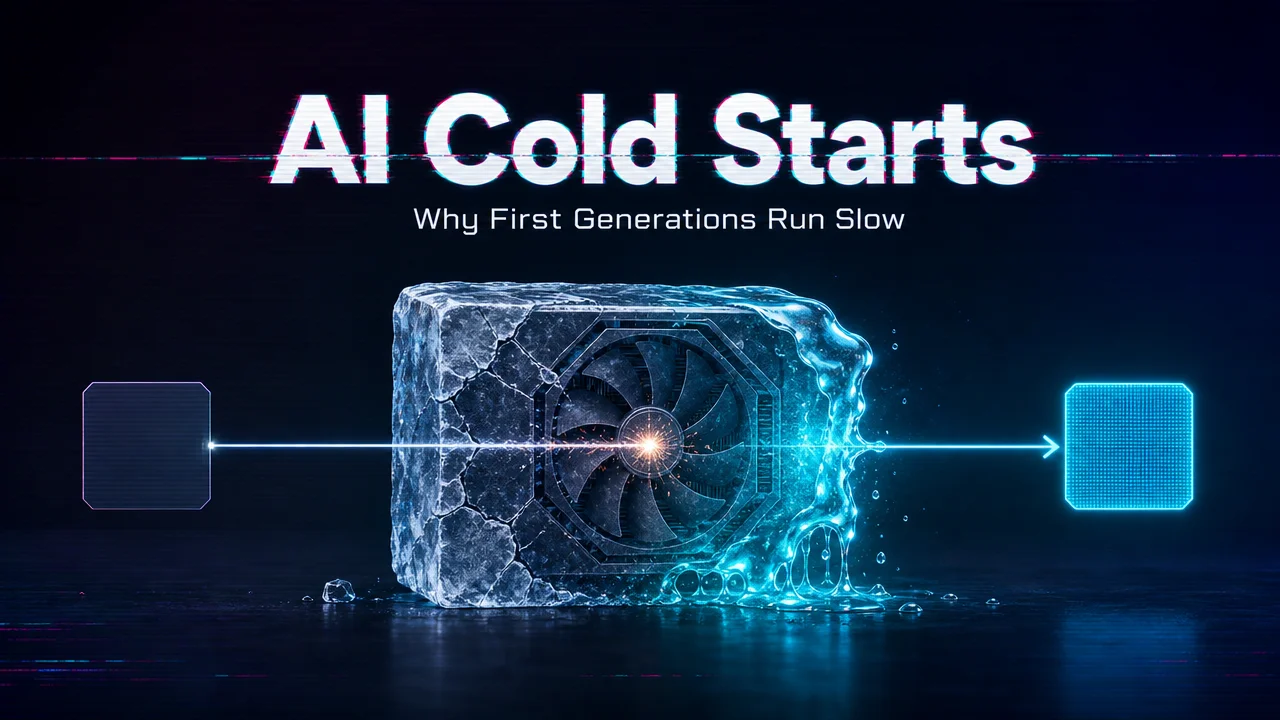
AI generation cold start means a model or compute environment takes extra time to become ready before processing a request. It can increase latency, especially when workloads are bursty, models are large, or infrastructure is not already warm.
- Cold starts can affect first requests more than steady traffic.
- They may be hidden inside queue time, startup time, or model loading time.
- Teams should measure cold-start impact separately from actual generation time.
For user-facing products, cold starts matter because they make performance feel unpredictable. A demo may be fast after the first call, while real users see slow first generations. Video models and large image models can be especially sensitive because setup time and generation time both affect the experience.
For WaveSpeedAI users, cold-start claims need careful testing. If a platform claims faster inference or no-cold-start behavior for certain routes, that should be supported by real testing and documentation. For buyers, the right evaluation is to measure first request, repeated requests, and peak traffic separately. A production decision should use realistic latency data, not only a warm demo. Measure cold-start impact on your actual traffic pattern before engineering around it; if first-request latency after idle periods breaks your user experience, warm-up pings or provisioned capacity are the standard answers.
Related reading
Related Articles

Best AI Video Platforms for Production Teams in 2027

Best Sora 2 Alternatives for Video Teams in 2027

Lanta AI Review 2027: Best Uses, Pricing, and Limits
Sora 2 Review 2027: API Quality, Cost, and Limits

Build a GPT-6 Astra 3D Workflow With Blender Assets