
What Are AI-Generated Content Disclosure Requirements in Platform Policies?
AI generated content disclosure requirements across ad platforms, social networks, and app stores, and how to track rules that change quietly.
Overview
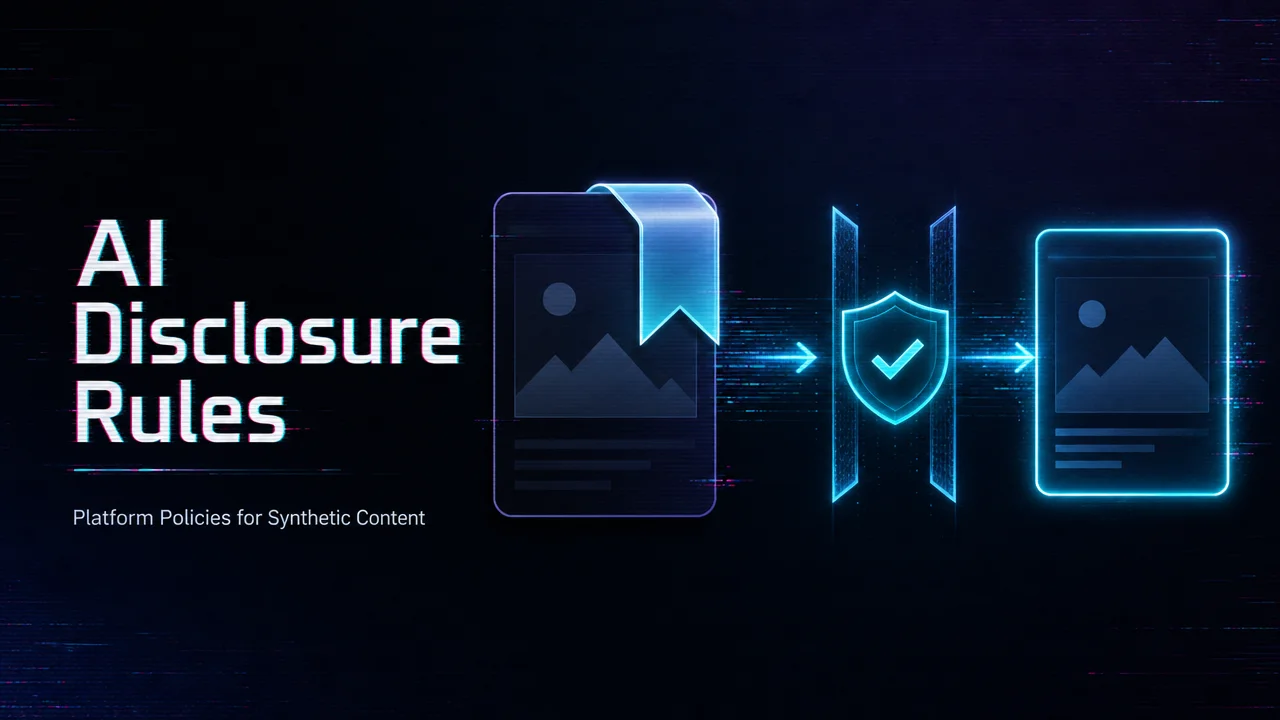
AI generated content disclosure requirements depend on the platform, content type, jurisdiction, and whether the content could mislead viewers. Teams should check the current rules for each channel before publishing synthetic images, videos, voices, ads, or political content.
- Review disclosure rules for YouTube, TikTok, Meta, Google Ads, app stores, and local regulators.
- Label content when required, especially if it shows realistic people, events, or voices.
- Keep internal records of which assets were AI-generated and where they were published.
Disclosure is not only a compliance detail. It protects trust. A harmless product visual may need less disclosure than a realistic political video or synthetic endorsement. The risk depends on whether viewers could mistake the content for real footage or real speech.
For WaveSpeedAI users, disclosure is part of responsible production. Teams using multimodal generation should build review steps before publishing, especially for client work or paid media. A practical workflow includes content classification, platform policy review, disclosure decision, approval record, and takedown plan if rules change. Track disclosure rules per distribution channel in one owned document, ad platforms, social networks, and app stores diverge and update quietly, and assign someone to re-check it each quarter.
/filters:quality(82)/media/images/c347367a-a007-4466-b8f7-d37f5fb52819.webp)
/filters:quality(82)/media/images/cd4db796-7728-45fb-8267-6813ed28e173.webp)
/filters:quality(82)/media/images/1791535252286714222_v4jvJT2a.webp)
/filters:quality(82)/media/images/1791451065663755033_qNqAKS1a.webp)
/filters:quality(82)/media/images/1791359984291066138_tW5eOX6f.webp)
/filters:quality(82)/media/images/1773962750383987480_n3hqzHRZ.webp)