
Best AI 3D Game Asset Generators for 2027
Best AI tools for 3D game assets in 2027: compare topology, UVs, PBR textures, rigging, engine export, API access, and cleanup cost.
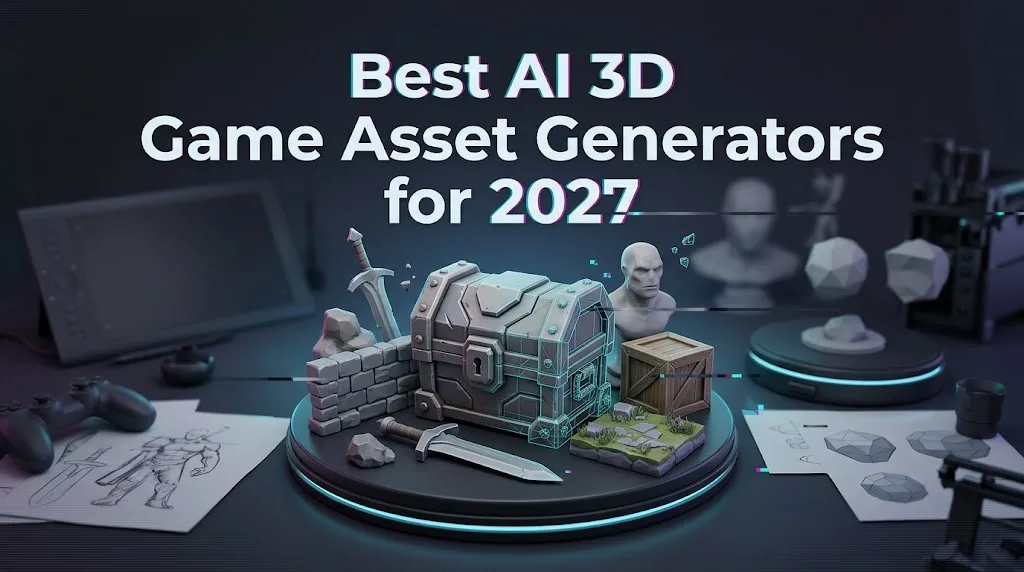
Dora here. I wrote one asset brief for this comparison: a one-meter stylized sci-fi supply chest, a separate hinged lid, a 15,000-triangle ceiling, non-overlapping UVs, 2K PBR maps, named material slots, and clean GLB and FBX delivery. The first row that broke the ranking was not visual quality. It was whether the lid arrived as geometry an animator could actually open.
That is the problem with searching for the best AI tools for 3D game assets. A polished turntable can hide fused parts, wasteful topology, broken normals, and a scale that changes on import. I audited the official product, API, export, and license material, then built the same Blender, Unity, and Unreal acceptance test for all six candidates. I did not run a paid six-tool batch, so the labels below describe documented workflow fit, not invented test victories. The 2027 date is an update horizon. It is not a feature guarantee from the future.
How We Evaluated AI 3D Game Asset Generators
Geometry, Topology, UVs, PBR Materials, and Rigging
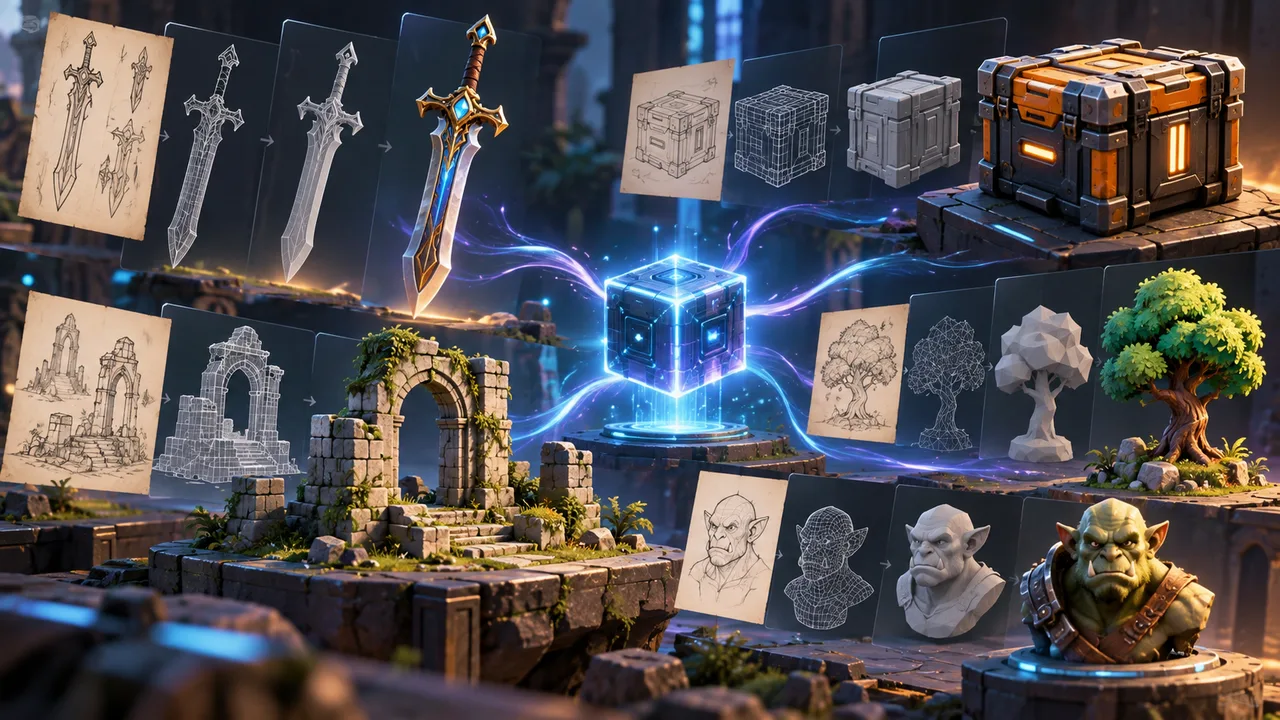
The matched brief starts with one owned reference and the same text description. Every output enters Blender before the beauty render. Inspection covers triangle count, disconnected fragments, non-manifold edges, normals, pivots, and separate lid geometry. A good silhouette does not cancel a bad mesh.
UV inspection checks overlap, stretching, padding, and whether the 2K map is proportionate. PBR review requires base color, normal, metallic, and roughness maps to connect correctly. The chest needs a usable lid pivot or simple rig. Character teams need a separate deformation test; prop topology cannot prove character rigging.
For this prop, acceptance means no blocking import errors, no accidental UV overlaps, a width within two percent of one meter, four connected PBR maps, and a lid that opens without mesh repair.
Engine Export, API Workflow, Licensing, and Cleanup Time
The asset then enters Unity and Unreal at one-meter scale. Log import warnings, material reconstruction, collider work, LOD creation, draw calls, and cleanup minutes. Unity’s model import documentation is a useful baseline because file compatibility does not prove correct scale, materials, or rigs.
For API routes, record task ID, model version, seed, retries, files, and retention. For self-hosting, add GPU time, setup, dependency licenses, and operator hours. Cost per usable asset is total generation and labor cost divided by accepted assets. A cheap 3D model API call followed by forty minutes of retopology is merely itemized badly.
The scorecard stores the untouched output beside the corrected Blender file. That separation shows what the generator delivered and what the technical artist supplied.
-
Meshy — Best for a Broad Text-to-3D Workflow
Best Game-Asset Use Case
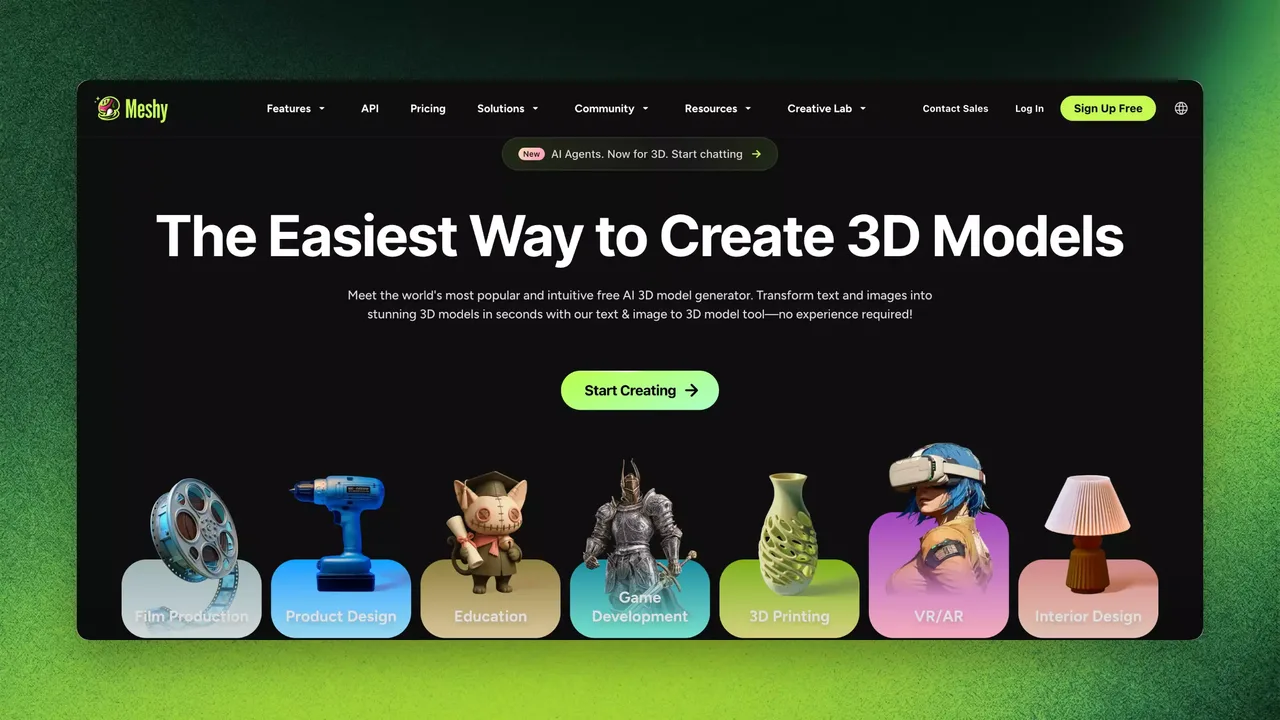
Meshy fits teams wanting one hosted path from text to 3D game assets through remeshing, UVs, PBR texturing, rigging, animation, and export. Its official documentation lists six export formats and API endpoints for generation, texturing, remeshing, and animation.
For the chest, generate the shape, remesh to budget, preserve or rebuild UVs, create PBR maps, then export GLB and FBX. Its documented auto-rigging focuses on humanoids and quadrupeds, not arbitrary mechanical joints.
Production Limits and Cleanup
Remeshing can improve polygon count without creating required edge flow, hierarchy, pivots, collision, or naming. Each repair belongs in the cleanup record.
Licensing varies by plan and publication choice. Source-image rights remain the customer’s responsibility.
-
Tripo — Best for Fast Image-to-3D Prototyping
Best Game-Asset Use Case
Tripo fits rapid image-led blockouts with a fixed silhouette. Its generation API exposes image, text, and multiview inputs, face limits, UV export, PBR, quad output, smart low-poly generation, automatic sizing, and editable parts.
For the chest, use the owned reference, enable real-world sizing, set a face limit, and compare standard with smart low-poly mode. Separate geometry and texture seeds help when only the material pass fails.
Production Limits and Cleanup
Tripo documents one important boundary: editable-part generation cannot be combined with texturing, PBR, or quad output in that request. The most editable result may need a second texture stage.
Smart low-poly mode can fail on complex inputs. Quads do not prove animation-ready loops, and automatic size still needs engine verification. Cleanup depends on segmentation, retopology, and material rework.
-
Hyper3D Rodin — Best for High-Detail Asset Drafts
Best Game-Asset Use Case
Rodin fits hero-prop drafts where image fidelity and detail precede optimization. Its API documentation covers text-to-3D and image-to-3D, asynchronous status, downloads, errors, and retention. Gen-2.5 adds mesh, material, texture, and add-on controls.
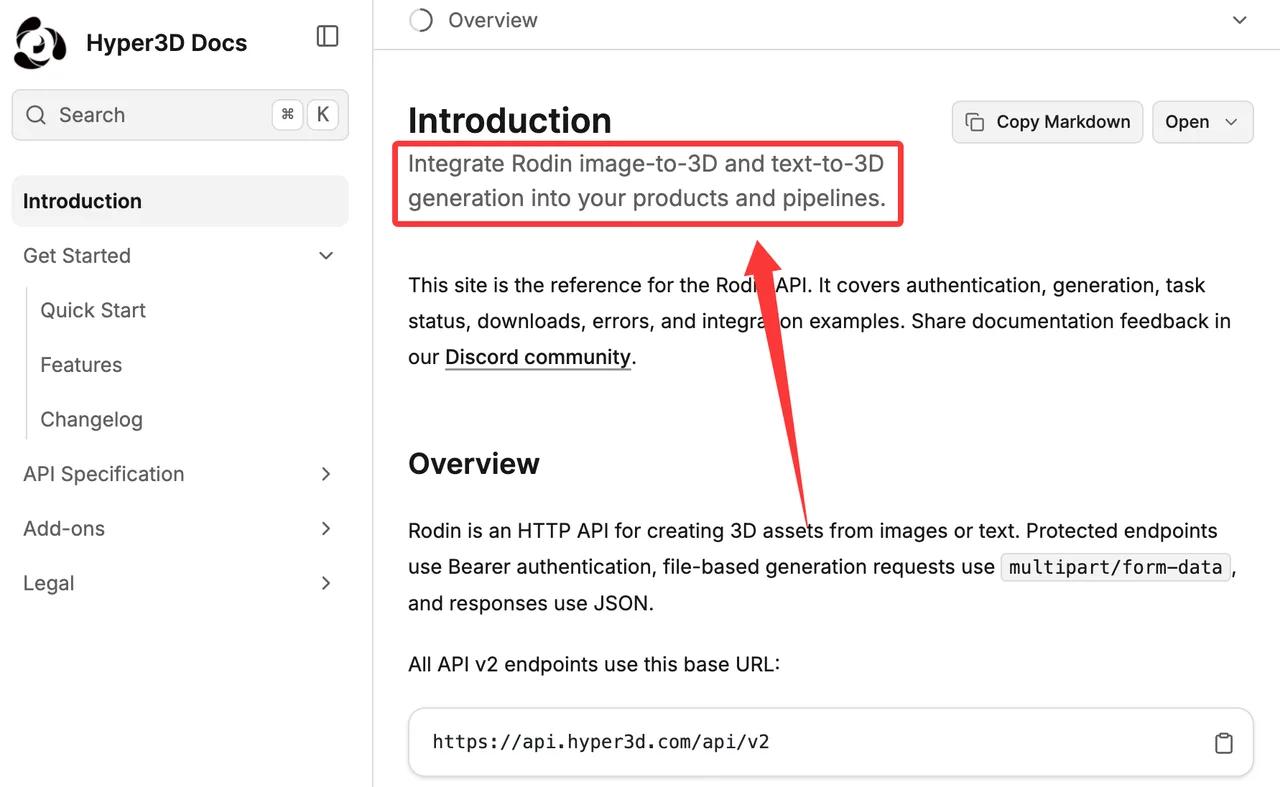
For the chest, Rodin can take several owned views and return a detailed PBR asset. Official add-ons cover major DCC tools and engines, reducing transfer steps during review.
Production Limits and Cleanup
High detail is not efficient topology. Acceptance still needs a triangle budget, separate parts, UV review, scale, LODs, and collision. The asynchronous API needs polling backoff, deadlines, failure logs, and durable task IDs.
Freeze the tier and parameters in the asset manifest. “Latest” is convenient until the exact crate from six weeks ago is needed.
-
Sloyd — Best for Controlled Prop Generation
Best Game-Asset Use Case
Sloyd fits repeatable props whose dimensions matter more than sculptural uniqueness. Its template documentation describes adjustable parameters, automatic UVs, LOD control, textures, and separate parts, with exports for common DCC tools and engines.
The chest is a favorable case. A template can expose lid proportions, trim, handles, and complexity, producing variants without asking a free-form AI mesh generator to reinterpret every run.
Production Limits and Cleanup
Template control narrows the design space. It fits structured props better than organic hero characters or unusual one-offs. Its text and image modes still need full mesh inspection.
UVs, LODs, parts, and engine exports do not promise project-specific collider names, texel density, pivots, or material vocabulary. Parametric JSON preserves template configuration; free-form assets may not preserve equivalent history.
-
Hunyuan3D — Best for Open Model Evaluation
Best Game-Asset Use Case
Hunyuan3D fits teams evaluating a local image-to-3D and PBR-texturing stack rather than buying another hosted workspace. Tencent’s current Hunyuan3D 2.1 repository provides model code, a local API server, GLB or OBJ output, background removal, face-count controls, and PBR texture generation.
For the chest, the value is control over inputs, seeds, files, and deployment. A technical art team can archive the exact code and weights, modify post-processing, and keep source references inside its own environment.
Production Limits and Cleanup
This route transfers responsibility to the team. Environment setup, GPU capacity, queueing, security, version pinning, retopology, engine import, and failure recovery are now internal work. The repository does not turn generated GLB files into validated collision meshes, rigs, or production LOD chains.
The Hunyuan3D 2.1 repository labels its release under Tencent’s Hunyuan non-commercial license. Commercial teams need legal review of that exact version and territory before shipping. “Open weights” and “unrestricted commercial use” are not synonyms.
-
TRELLIS — Best for Research and Custom Pipelines
Best Game-Asset Use Case
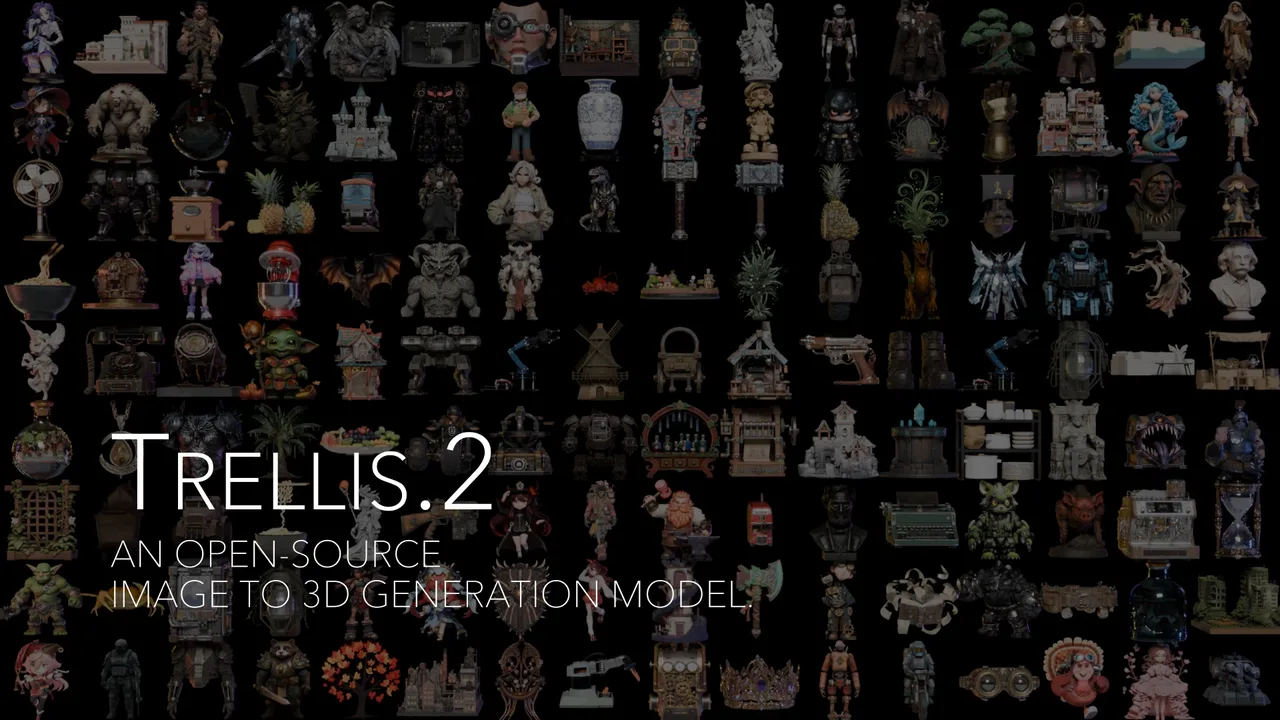
TRELLIS fits research and technical-art teams that want to own generation, training, mesh extraction, and post-processing. Microsoft’s current TRELLIS.2 repository focuses on image-to-3D, complex topology, PBR materials, GLB export, training code, and configurable remeshing, decimation, UV unwrapping, and texture size.
For the chest, a team can preserve the input, checkpoint, seed, inference configuration, extracted mesh, and post-processing settings. That is useful when an asset-generation system is itself part of the product.
Production Limits and Cleanup
TRELLIS is not a hosted one-click substitute. The official repository lists Linux, CUDA, an NVIDIA GPU with at least 24 GB of memory, compiled dependencies, and separate dependency licenses. That setup cost belongs in every comparison with hosted tools.
Its output still needs triangle targets, pivots, hierarchy, collision, LODs, and engine validation. The code and model use an MIT license, while named dependencies carry their own terms. A commercial review must cover the entire deployed stack, not only the repository’s top-level license.
Choose by Asset Type and Pipeline Ownership
Props, Characters, Environment Assets, or Custom Research
Meshy covers the widest managed workflow. Tripo is suited to fast reference-led prototypes. Rodin makes sense for detailed drafts. Sloyd gives structured props the most explicit controls. Hunyuan3D fits local model evaluation. TRELLIS fits teams building custom research infrastructure.
Those are conditional fits, not a universal ranking. Characters need deformation tests. Modular environments need snapping dimensions, pivots, trim sheets, and repeated texel density. Hero props tolerate more cleanup than background clutter. An AI 3D asset generator produces game-ready 3D models only when its frequent asset type passes the same gate repeatedly.
Validate in the Target Engine Before Scaling
The final gate runs in the shipping engine. Apply project units, verify materials, generate LODs and collision, test lightmaps, inspect draw calls, and compare with a known-good asset. Save cleanup time and the corrected source.
Scale only after a batch passes fixed thresholds for usable-asset rate and median cleanup time. This is where my data ends. Official documentation can prove that an export exists. It cannot prove that the export fits a specific game.
FAQ
Which generators export collision meshes?
I found no official promise that standard exports include a validated collision mesh. Direct engine import does not turn render geometry into an approved simple collider. Collision still needs generation or review.
Can generated assets preserve a consistent texel density?
Not automatically. Texture resolution and texel density are different controls. Teams need a target density, consistent scale, UV measurement, and rebaking when an output misses the rule.
Which tools support material-slot naming conventions?
The documentation confirms materials and sometimes separate groups, not deterministic custom slot names. I would handle naming during import or in Blender unless the exact export proves otherwise.
Do any services provide source files for audit and rework?
Hunyuan3D and TRELLIS expose code, configurations, and local artifacts. Sloyd preserves parametric template configurations. Hosted exports may omit procedural history. Archive inputs, task IDs, seeds, outputs, and corrected Blender files.
Do game asset generators expose mesh provenance metadata?
No reviewed provider guarantees standardized provenance that survives every GLB or FBX import. Meshy’s current terms allow machine-readable AI identifiers, but that is not a universal mesh schema. Record provider, model, task ID, inputs, edits, license, and approver.
Conclusion
The best AI tools for 3D game assets are the ones that reduce accepted-asset time for a defined category. Meshy is broad, Tripo is fast for image-led drafts, Rodin favors detail, Sloyd favors controlled props, Hunyuan3D favors local evaluation, and TRELLIS favors pipeline ownership.
I would keep the same chest brief and rerun it when a model, export path, or license changes. The preview is useful. The Blender file and engine import decide whether the asset ships. This conclusion has an expiration date.
Previous posts:
/filters:quality(82)/media/images/1790757954084144412_1AJT2bku.webp)
/filters:quality(82)/media/images/1790760268656782522_xT4frCNY.webp)
/filters:quality(82)/media/images/1790758509393182709_xXaltBLV.webp)
/filters:quality(82)/media/images/1790759953031965921_TxT8L5xV.webp)
/filters:quality(82)/media/images/1790758722893740431_0EQ2bkuD.webp)
/filters:quality(82)/media/images/1790673203845090867_ZwbkuCLU.webp)