
8 Best Free AI Video Generators in 2026
The best free AI video generators in 2026, compared by free tier limits, quality, speed, and features. From Kling and WAN 2.7 to Sora 2 and Veo 3.1.

AI video generation moved from novelty to production tool over the course of 2025. By Q1 2026, several platforms offer genuinely usable free tiers — enough to create short clips for social media, test concepts, or prototype creative ideas without paying a cent.
This guide compares the 8 best free AI video generators based on hands-on testing conducted between January and March 2026, covering free-tier limits, output quality, generation speed, and feature depth.
How we tested: Each tool was evaluated using three identical prompts — a cinematic landscape shot, a character dialogue scene, and a stylized motion effect — generated on free-tier accounts. We measured queue time, output resolution, motion coherence, and prompt adherence. Pricing and credit data were verified against each provider’s official pricing page as of March 2026.
1. WaveSpeedAI Video Generator
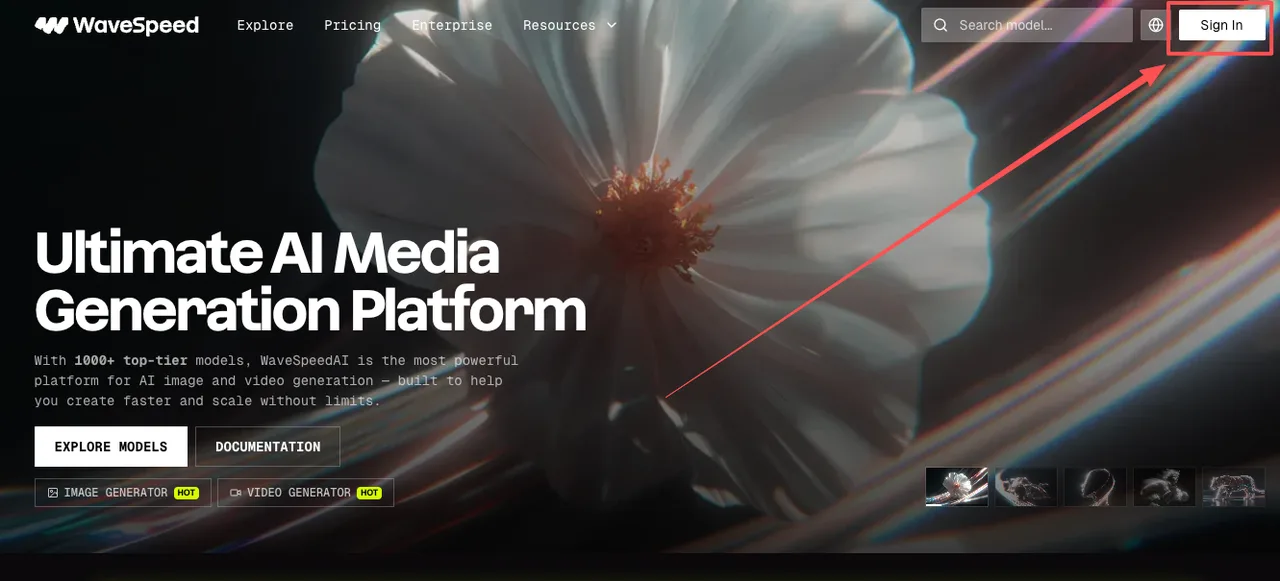
WaveSpeedAI is an aggregator platform that routes prompts to every major video model - WAN 2.7, Sora 2, Veo 3.1, Kling, Vidu, HaiLuo, and others - through a single interface, with starter credits available on signup. Text-to-video, image-to-video, and video-to-video workflows all run from the same dashboard.
- Free tier: Starter credits granted at signup (verified March 2026)
- Models supported: WAN 2.7, Sora 2, Veo 3.1 Fast, Kling, Vidu, HaiLuo, LTX, plus 30+ additional models
- Key feature: Side-by-side model comparison from one prompt — useful when you don’t yet know which model fits your use case
- Max duration: Up to 15s (depends on the underlying model)
- Best for: Teams that want model flexibility without managing multiple subscriptions
The trade-off is that you’re paying per generation rather than getting the unlimited daily allowances some single-model platforms offer. For occasional use or production pipelines that need the best model per shot, the aggregator approach saves the friction of running five separate accounts.
2. Kling AI
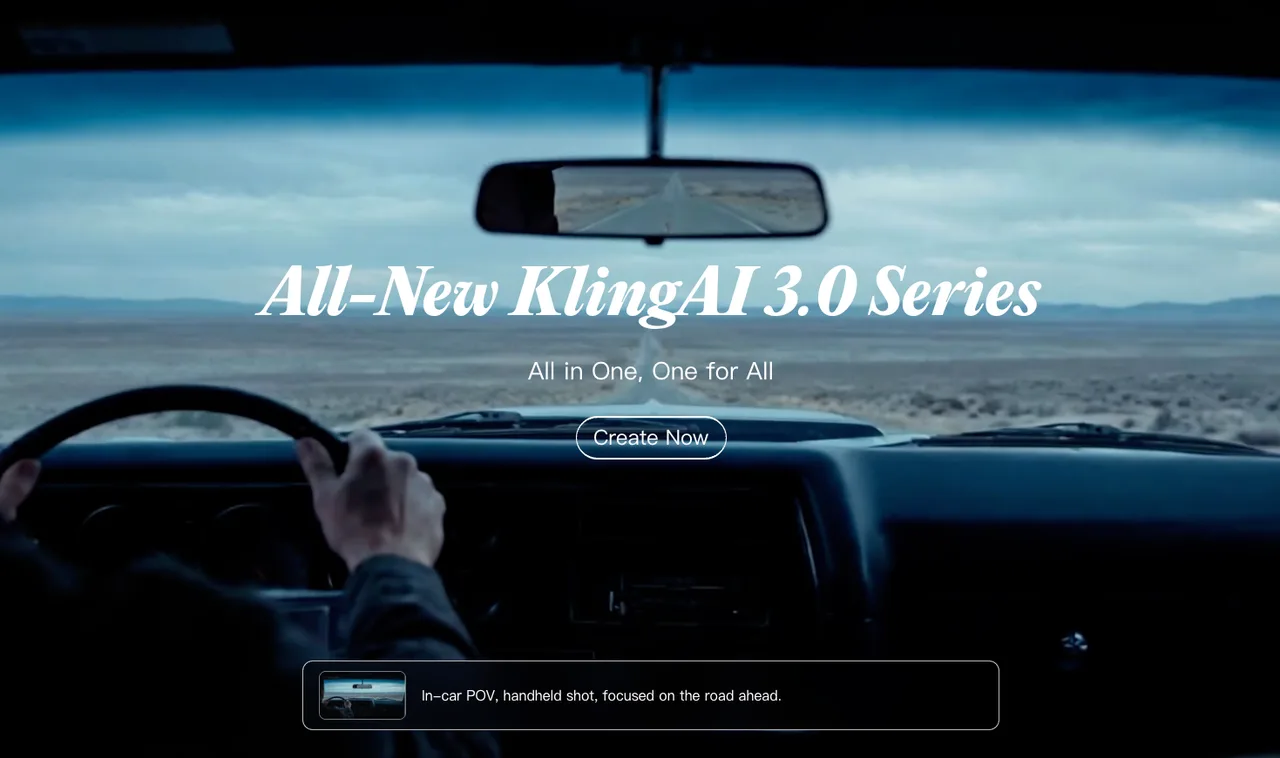 Kling has maintained one of the more generous recurring free tiers in our testing window. Motion quality stood out in our cinematic landscape prompt — camera moves stayed smooth and physically plausible across the full 10-second clip, with fewer of the warping artifacts that show up on shorter-context models.
- Free tier: Approximately 66 credits per day, refreshing daily (enough for 4–6 short generations)
- Key feature: Smooth motion interpolation, strong character consistency across frames
- Max duration: Up to 10 seconds on the free tier
- Resolution: 720p free; 1080p output is paywalled
- Limitations: Free-tier requests enter a slower queue (5–15 minute waits during peak hours in our testing)
- Paid plans: From $6/month at the time of writing
3. HaiLuo AI (MiniMax)
HaiLuo, developed by MiniMax, prioritizes speed over duration. In our tests, generations completed in roughly 60–90 seconds — fast enough to iterate on a prompt several times in the time competitors take for a single render. Human motion and facial micro-expressions were a particular strength on our character dialogue prompt.
If a generated portrait clip looks good overall but the face comes out slightly soft or loses fine detail, you can sharpen facial details in AI video frames before publishing.
For the latest cinematic MiniMax models with text-to-video, image-to-video, and reference-to-video workflows, see MiniMax H3.
- Free tier: Several free generations per day (exact count varies by region)
- Key feature: Fast generation pipeline; convincing human motion
- Max duration: Up to 6 seconds
- Resolution: 720p
- Limitations: Short maximum clip length; watermark applied to free-tier output
- Paid plans: From around $10/month
4. Pika
Pika has carved out a niche around stylized effects rather than photorealism. Its branded effect library — crush, melt, inflate, explode, and similar transformations — is the main reason to choose it. For realistic camera moves or dialogue scenes, other tools in this list do better.
- Free tier: Roughly 150 credits at signup, with daily credit replenishment
- Key feature: Pika Effects library for stylized and exaggerated motion
- Max duration: 3–4 seconds (shortest in this comparison)
- Resolution: Up to 1080p
- Limitations: Short clips constrain narrative use; daily free credits cap iteration
- Paid plans: From $10/month
5. Sora (ChatGPT)
OpenAI bundles Sora access into free ChatGPT accounts with a monthly generation cap. Output quality is among the highest in this list — physics simulation in particular handles fluids, cloth, and rigid-body collisions more convincingly than most competitors. The catch is the free allowance is very small.
- Free tier: A limited number of generations per month on free ChatGPT accounts
- Key feature: Industry-leading physics simulation; cinematic camera language
- Max duration: Up to 20 seconds (longest in this list)
- Resolution: Up to 1080p
- Limitations: Very few free generations; queue can stretch into hours during launches
- Paid plans: ChatGPT Plus at $20/month raises the cap
6. WAN (Open Source)
 Alibaba’s WAN family of models is released under open weights and can be self-hosted. If you have access to a GPU with 24GB+ VRAM (WAN 2.1 and 2.6 are the most commonly run versions locally), this becomes unlimited free generation with quality that holds its own against commercial offerings.
- Free tier: Unlimited when self-hosted
- Key feature: Open weights, no usage caps, active community ecosystem (LoRAs, ComfyUI workflows)
- Max duration: 5–15 seconds depending on version
- Resolution: Up to 720p locally
- Limitations: Hardware requirement is the gate; older locally-runnable versions lack the controllability features added in WAN 2.7
- Paid options: Free locally; WAN 2.7 is currently accessible through hosted aggregators rather than open weights
7. LTX Video (Open Source)
Lightricks’ LTX Video is open-source and optimized for speed rather than maximum quality. In our testing it produced 5-second clips noticeably faster than other open-weight options, which makes it a good fit for prototyping shot ideas before committing GPU time to a heavier model.
- Free tier: Unlimited when self-hosted
- Key feature: Lightweight architecture, fast generation
- Max duration: Approximately 5 seconds
- Resolution: 720p
- Limitations: Output quality sits below leading commercial models, especially on complex motion
- Paid options: Free locally; also available through several hosted platforms
8. Vidu
Vidu offers competitive output quality with a particular focus on character consistency across multiple shots — useful if you’re stitching clips into a longer narrative. The free tier is limited to signup credits, so it’s better suited to evaluating fit than ongoing free use.
- Free tier: Limited credits granted at signup
- Key feature: Character consistency tools across separate generations
- Max duration: Up to 8 seconds
- Resolution: Up to 1080p
- Limitations: Smaller community than Kling or Pika; documentation is thinner
- Paid plans: Credit-based pricing rather than subscription tiers
Quick Comparison
| Tool | Free Allowance | Max Duration | Best For |
|---|---|---|---|
| WaveSpeedAI | Signup credits | 15s (model dependent) | Multi-model access, API workflows |
| Kling | ~66 credits/day | 10s | Smooth motion, daily free use |
| HaiLuo | Several/day | 6s | Fast iteration, human motion |
| Pika | ~150 credits + daily refresh | 4s | Stylized creative effects |
| Sora | Limited monthly | 20s | Physics realism, cinematic shots |
| WAN | Unlimited (local) | 15s | Self-hosted, GPU-equipped users |
| LTX | Unlimited (local) | 5s | Fast local prototyping |
| Vidu | Signup credits | 8s | Character consistency |
Which Should You Use?
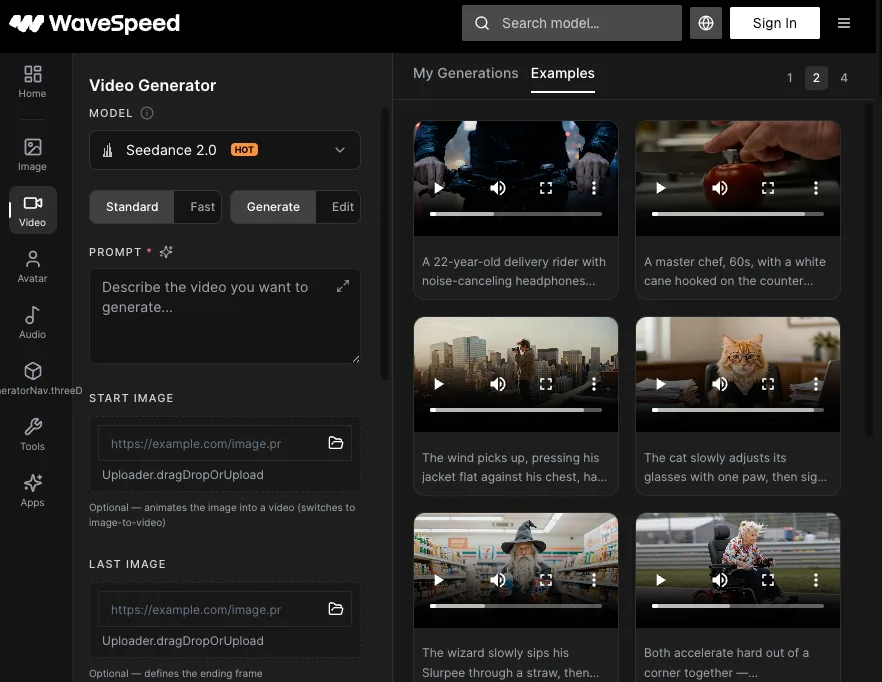
- Trying to figure out which model fits? A multi-model platform like WaveSpeedAI lets you compare outputs without committing to one ecosystem
- Need recurring free clips daily? Kling’s daily credit refresh is the most generous in this comparison
- Want stylized effects, not realism? Pika’s effect library is genuinely distinctive
- Care most about physics and realism? Sora through ChatGPT, accepting the tight free cap
- Have a 24GB+ GPU? WAN or LTX locally removes free-tier limits entirely
For production work where the right model varies by shot, an aggregator approach — running WAN 2.7 for controllable scenes, Sora 2 for physics-heavy shots, Veo 3.1 Fast for cinematic looks, and Kling for smooth motion — tends to produce better final output than committing to a single platform. For teams that want to test this workflow in production, GPT Image 2 API guide. Tools like WaveSpeedAI’s video generator consolidate that workflow into one API, though the same outcome is achievable with separate accounts if you prefer. For clips that are already close to final but contain distracting props, people, or background elements, you can also remove unwanted objects from video as a post-generation cleanup step.
Frequently Asked Questions
Q: Are free AI video generators actually usable for client or commercial work?
It depends on the platform’s terms of service. For teams that want to test this workflow on WaveSpeed, see free AI face swap. Most free tiers - including Kling, HaiLuo, and Pika - apply a watermark to free-tier output and restrict commercial use to paid plans. Open-source models like WAN and LTX, when self-hosted, typically allow commercial use under their respective licenses (check the model card before shipping work). For paid client deliverables, the safest path is a paid plan on whichever platform produces the look you need.
Q: Why do free generations take so long compared to paid tiers?
Most platforms run free-tier requests through a lower-priority queue. During peak hours (typically evenings in North America and Europe in our testing), free generations on Kling and Sora can wait 10–30 minutes, while paid users get near-immediate processing. If turnaround time matters, HaiLuo’s free tier was the fastest in our March 2026 testing, generally completing in under two minutes.
Q: Can I run any of these models on a laptop instead of a desktop GPU?
The open-source options (WAN, LTX) technically run on consumer hardware, but practically you need a discrete GPU with at least 12GB of VRAM for LTX and 24GB for WAN to get reasonable generation times. Most laptops, including high-end gaming models, fall short of this. If you don’t have desktop GPU access, the cloud-based free tiers (Kling, HaiLuo, Pika) will give you a better experience than trying to self-host on inadequate hardware.
Previous Posts:
Related Articles
/filters:quality(82)/media/images/1790879706333726948_TmjHVhrF.webp)
Introducing AI Cinema Studio on WaveSpeedAI: Direct Cinematic AI Video Shots
/filters:quality(82)/media/images/1790903936921698253_6vhqAJT2.webp)
Generate Fast, Deliver in 4K: Upscale AI Video with Ultimate Video Upscaler
/filters:quality(82)/media/images/1773962750383987480_n3hqzHRZ.webp)
Kling 4.0 vs Kling 3.0: What Is Expected to Change and How to Upgrade
Kling 4.0 vs Seedance 2.5: How to Choose for Commercial Video
Kling 4.0 vs Veo 3.1 vs Seedance 2.5: Choosing a Flagship Video Model