
Is Voice Cloning Legal without Consent?
Voice cloning without consent is legally risky and often unlawful when it imitates an identifiable person or implies endorsement. When synthetic voices are OK.
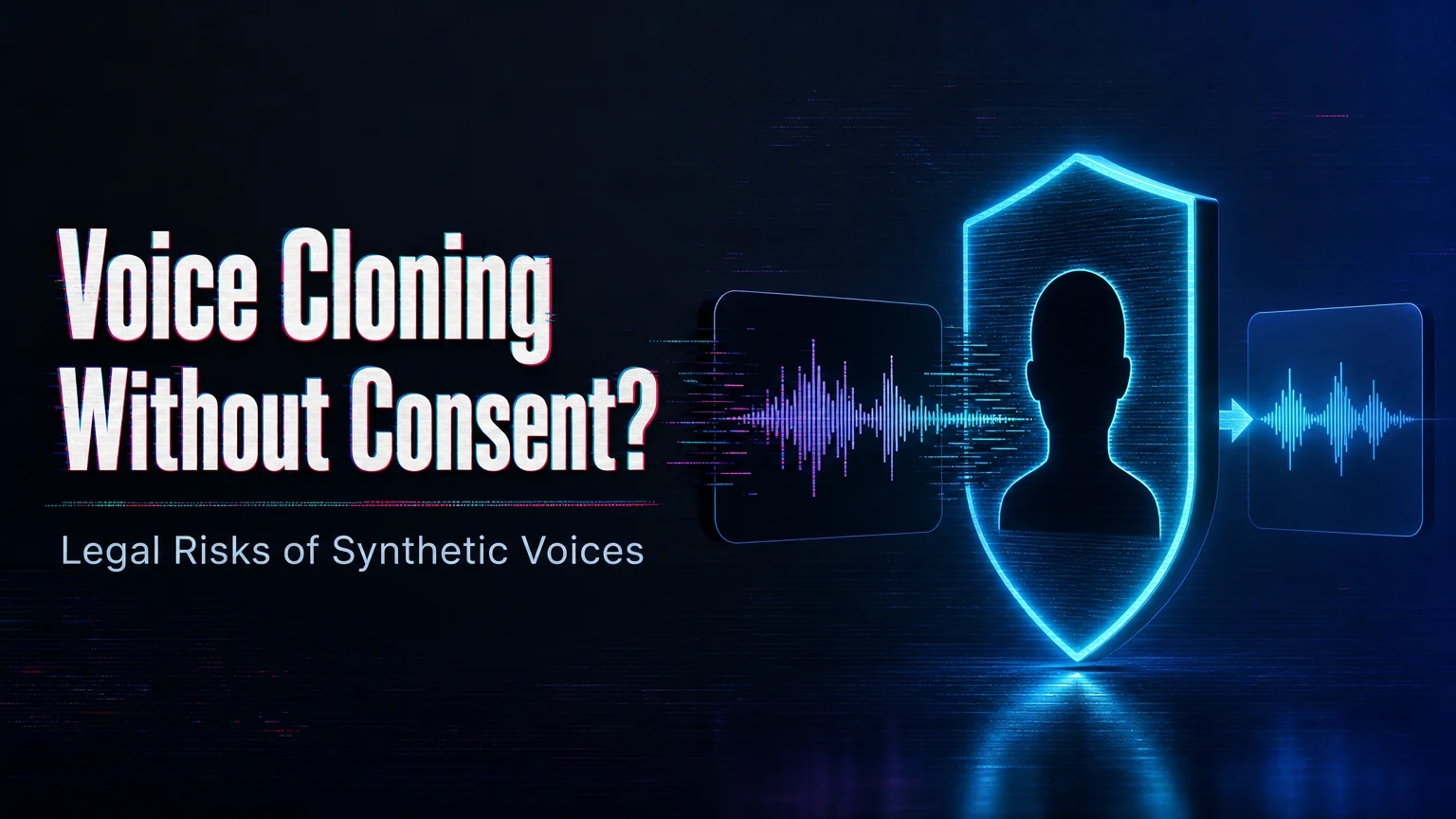
Overview
Voice cloning without consent is legally risky and may be unlawful when it imitates an identifiable person, creates confusion, suggests endorsement, or violates publicity, privacy, fraud, contract, or platform rules. Even if a tool can generate the voice, that does not mean the use is safe.
- Do not clone real people for ads, sales, entertainment, or public content without permission.
- Be especially careful with celebrities, employees, customers, minors, and political figures.
- Review local law and platform policy before publishing synthetic voice content.
Consent matters because a voice can function as part of a person’s identity. A synthetic recording may still mislead listeners or harm the person being imitated. Commercial use usually increases the risk because it connects the voice to money, promotion, or endorsement.
Non-consensual voice cloning is not an appropriate production use case. The safer production route is to use licensed TTS voices, consent-based custom voices, or clearly disclosed synthetic voices that do not imitate a real person. For companies, the practical checklist is consent, disclosure, approval, storage limits, and removal process. When in doubt, do not publish the cloned voice. The technical ability to clone is not the same as permission to use. Teams should make that distinction clear in product policy, onboarding, and review workflows.
/filters:quality(82)/media/images/5f15570a-6a68-432e-a6f1-1dcbf799ba81.webp)
/filters:quality(82)/media/images/b73c2438-6bdd-4b80-a229-8d71d8f819cf.webp)
/filters:quality(82)/media/images/427fd9f2-347d-4f86-a2d5-aee110cda01d.webp)
/filters:quality(82)/media/images/1773962750383987480_n3hqzHRZ.webp)
/filters:quality(82)/media/images/43fa0e7f-a0db-48d7-9bab-921d1225db30.webp)
/filters:quality(82)/media/images/5799ff56-3a73-40ca-a666-e4965d878496.webp)