
How Can You Get Consent for AI Voice Cloning?
A practical checklist for getting consent for AI voice cloning: scope, compensation, revocation, records, and contract terms before production use.
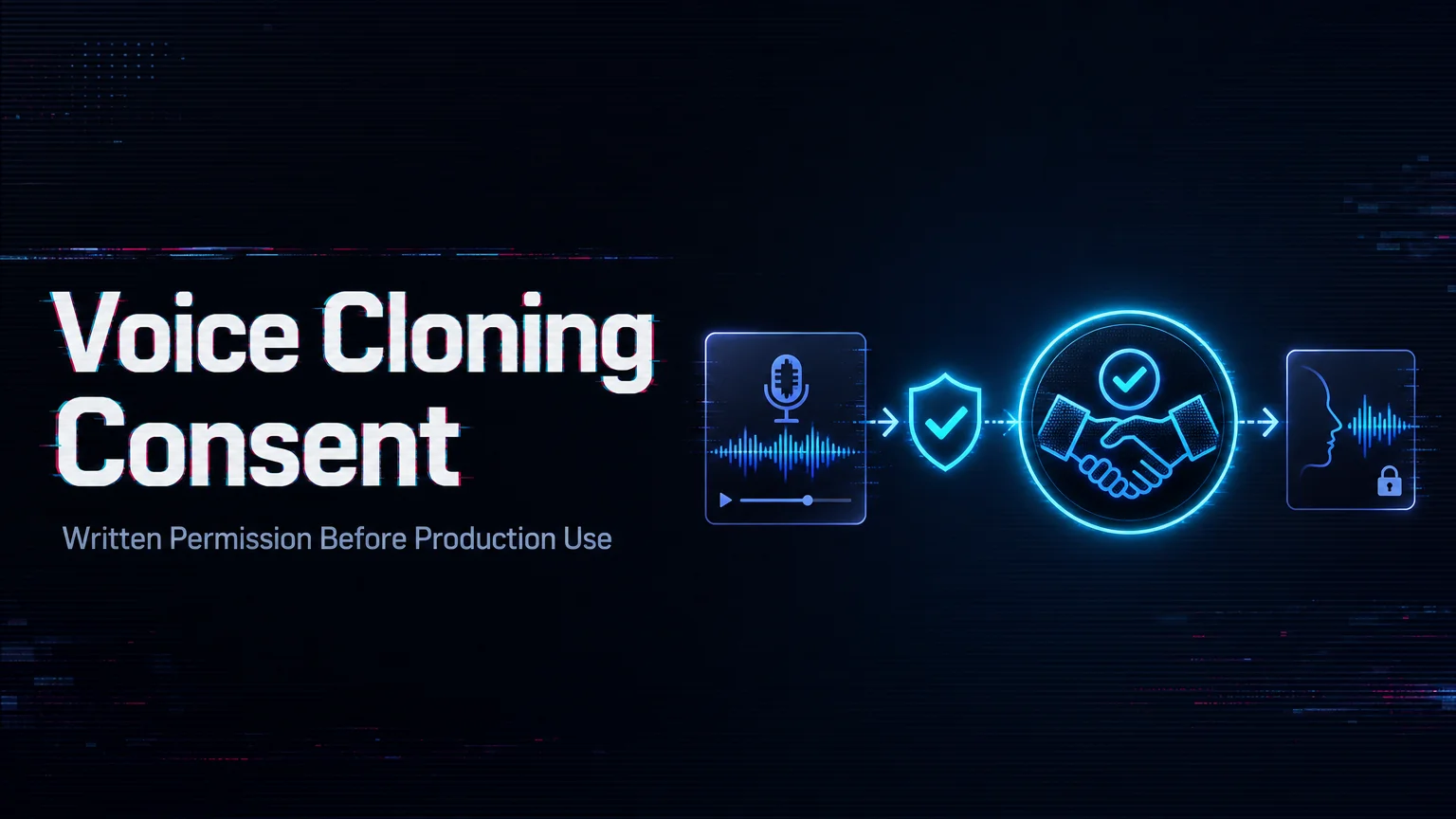
Overview
To get consent for AI voice cloning, obtain clear written permission that explains whose voice will be cloned, how the voice will be used, where it will appear, how long permission lasts, and how the person can revoke or limit use. A vague verbal approval is not enough for commercial production.
- Identify the speaker and verify they have authority to grant permission.
- Describe allowed use cases, channels, territories, languages, and duration.
- Explain storage, model training, deletion, compensation, review rights, and revocation.
Consent should be specific, not open-ended. A person may agree to internal demo use but not advertising. They may allow one campaign but not future reuse. They may allow English narration but not multilingual dubbing. These boundaries should be written before cloning starts.
WaveSpeedAI-related workflows should treat consent as part of production readiness. Teams using TTS or voice cloning should keep consent records, approved scripts, model route details, and publication logs. For high-risk uses, involve legal review before generation. The cleanest rule is: if the voice is identifiable, consent should be explicit, documented, and tied to the exact commercial use. That gives teams a defensible audit trail if questions arise later. It also helps operations teams manage renewals, removals, and campaign-specific restrictions.
/filters:quality(82)/media/images/5f15570a-6a68-432e-a6f1-1dcbf799ba81.webp)
/filters:quality(82)/media/images/b73c2438-6bdd-4b80-a229-8d71d8f819cf.webp)
/filters:quality(82)/media/images/427fd9f2-347d-4f86-a2d5-aee110cda01d.webp)
/filters:quality(82)/media/images/1773962750383987480_n3hqzHRZ.webp)
/filters:quality(82)/media/images/43fa0e7f-a0db-48d7-9bab-921d1225db30.webp)
/filters:quality(82)/media/images/5799ff56-3a73-40ca-a666-e4965d878496.webp)