Pruna P-Video-2-Pro Text-to-Video generates videos from text prompts at 480P / 768P output with generated audio, supporting prompt-driven video creation for creative clips, social content, ads, and production workflows. Ready-to-use REST inference API, best performance, no coldstarts, affordable pricing.
Idle
$0.02per run·~50 / $1
ExamplesView all
A rugged cowboy stands alone in the middle of a dusty frontier street at sunset. He flips a silver coin into the air while another gunslinger waits in the distance. The coin spins in slow motion and lands in his palm as both men lock eyes. Low-angle camera slowly pushes closer. Classic western cinema, windblown dust, dramatic backlight, tense restrained performance.
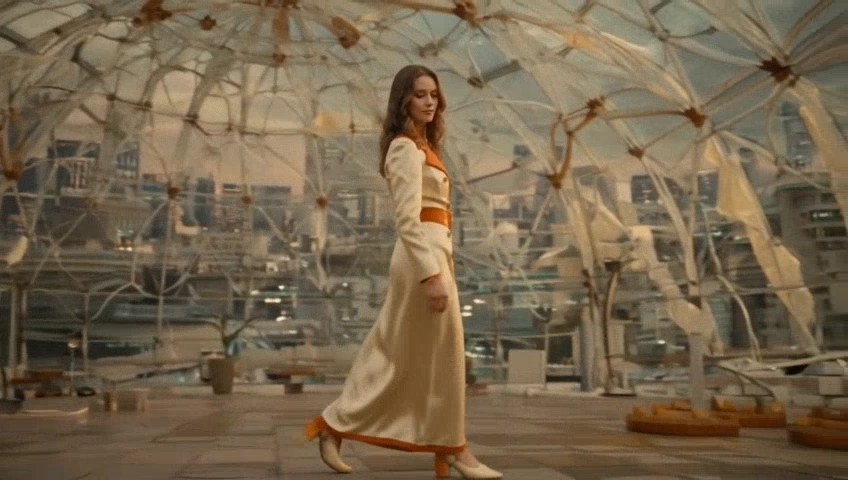
A sharply dressed hotel bellboy walks through a luxurious 1960s-style lunar hotel carrying two silver suitcases. He passes a huge window and suddenly stops when a spacecraft silently descends outside. The camera tracks beside him, then pans toward the window. Retro-futuristic cinema, cream and orange interiors, polished chrome, elegant space-age atmosphere.
Related Models





README
Pruna P-Video-2 Pro Text-to-Video
Pruna P-Video-2 Pro Text-to-Video generates videos directly from text prompts with generated audio. Describe the scene, subject, motion, camera movement, and visual style, then choose duration, aspect ratio, resolution, turbo mode, and prompt upsampling settings.
Why Choose This?
-
Text-to-video generation
Generate videos directly from natural-language prompts. -
Generated audio included
Output video includes generated audio without requiring separate audio input. -
480p and 768p output
Use480pfor lower-cost generation or768pfor higher-resolution output. -
Speed and quality modes
Choosemode=speedfor faster generation ormode=qualityfor higher-quality generation. Default:speed. -
Prompt upsampling control
Chooseoff,turbo, ormaxprompt expansion depending on how much prompt enhancement you need. -
Multiple aspect ratios
Supports landscape, vertical, square, classic, and portrait video formats.
Parameters
| Parameter | Required | Description |
|---|---|---|
| prompt | Yes | Text prompt describing the video to generate, including subject, action, camera movement, scene, mood, and visual style. |
| duration | No | Video duration in seconds. Range: 5–15. Default: 5. |
| aspect_ratio | No | Output aspect ratio: 16:9, 9:16, 4:3, 3:4, 3:2, 2:3, or 1:1. Default: 16:9. |
| resolution | No | Output video resolution: 480p or 768p. Default: 768p. |
| mode | No | Generation mode: speed for faster generation or quality for higher-quality generation. Default: speed. Independent of prompt_upsampler. |
| prompt_upsampler | No | Prompt expansion mode: off, turbo, or max. Default: turbo. Independent of mode; does not change the price. |
| seed | No | Optional random seed for reproducible generation. Omit for an upstream-selected random seed. |
How to Use
- Write a prompt — Describe the scene, subject, action, camera movement, lighting, mood, and visual style.
- Set duration — Choose a video length from
5to15seconds. - Choose aspect ratio — Select the layout that matches your target format.
- Choose resolution — Use
480pfor lower-cost generation or768pfor higher-resolution output. - Choose generation mode — Select
speedfor faster generation orqualityfor higher-quality generation. Pricing depends on the selected mode and resolution. - Set prompt upsampling — Use
off,turbo, ormaxdepending on how much prompt expansion you want. - Set seed optional — Use a fixed seed for reproducible results, or omit it for random generation.
- Submit — Generate the final video with audio.
Pricing
Pricing is based on the requested duration, selected resolution, and generation mode.
| Resolution | Speed / second | Quality / second |
|---|---|---|
| 480p | $0.02 | $0.04 |
| 768p | $0.035 | $0.075 |
Example Costs
| Duration | 480p Speed | 480p Quality | 768p Speed | 768p Quality |
|---|---|---|---|---|
| 5s | $0.10 | $0.20 | $0.175 | $0.375 |
| 10s | $0.20 | $0.40 | $0.35 | $0.75 |
| 15s | $0.30 | $0.60 | $0.525 | $1.125 |
The default settings are 768p, speed, and 5 seconds, costing $0.175 per request.
Billing uses the requested duration, not the measured duration of the generated output. Generated audio is included. Prompt upsampling, seed selection, and supported image-conditioning inputs do not add separate charges.
Best Use Cases
- Text-to-video generation — Create videos directly from written scene descriptions.
- Cinematic concepts — Generate short scenes with camera movement, lighting, and visual style.
- Social video content — Create vertical, square, landscape, or portrait-format clips.
- Marketing and product videos — Generate short-form promotional clips from text prompts.
- Creative prototyping — Test motion, pacing, style, and audio direction before final production.
- Prompt iteration — Compare
speedandqualitygeneration modes and independently adjust prompt upsampling.
Pro Tips
- Write prompts that describe visible motion, not just the visual style.
- Include subject, action, environment, camera movement, lighting, mood, and scene progression.
- Keep the prompt focused on one main scene or action for stronger motion coherence.
- Use
mode=speedfor faster, lower-cost iteration, ormode=qualitywhen prioritizing output quality. - Use
prompt_upsampler=offwhen you want the model to follow your original prompt more directly. - Use
prompt_upsampler=maxwhen the prompt is short and needs stronger expansion. - Use
480pfor lower-cost tests and768pfor higher-resolution output. - Set a fixed
seedwhen comparing prompt or parameter changes.
Notes
promptis required.durationsupports values from5to15seconds.- Generated audio is included in the output.
- Image conditioning and last-frame guidance are not exposed on this text-to-video product.
Related Models
- Pruna P-Video-2 Pro Text-to-Video — Generate Pro text-to-video outputs with generated audio.
- Pruna P-Video-2 Pro Image-to-Video — Generate Pro videos from an input image and motion prompt.
- Pruna P-Video-2 Text-to-Video — Generate videos directly from text prompts.
- Pruna P-Video-2 Image-to-Video — Generate videos from an input image and motion prompt.
P Video 2 Pro Text To Video API — Quick start
Grab a WaveSpeedAI API key, then call POST https://api.wavespeed.ai/api/v3/pruna-ai/p-video-2-pro/text-to-video with your input as JSON. The endpoint returns a prediction id. Start polling the result endpoint around every 2 seconds, increase the interval for long-running tasks, and stop on any terminal status. On completed, read output values from data.outputs. Examples for P Video 2 Pro Text To Video below.
HTTP example
set -euo pipefail

: "${WAVESPEED_API_KEY:?Set WAVESPEED_API_KEY}"

REQUEST_BODY=$(cat <<'JSON'
{
    "prompt": "A cinematic shot of a city at sunset, soft golden light",
    "duration": 5,
    "aspect_ratio": "16:9",
    "resolution": "768p",
    "mode": "speed",
    "prompt_upsampler": "turbo"
}
JSON
)

# 1. Submit the prediction.
SUBMIT_RESPONSE=$(curl --silent --show-error --fail-with-body \
  -X POST "https://api.wavespeed.ai/api/v3/pruna-ai/p-video-2-pro/text-to-video" \
  -H "Content-Type: application/json" \
  -H "Authorization: Bearer $WAVESPEED_API_KEY" \
  -d "$REQUEST_BODY")

TASK=$(printf '%s' "$SUBMIT_RESPONSE" | jq 'if has("data") then .data else . end')
PREDICTION_ID=$(printf '%s' "$TASK" | jq -r '.id')
if [ -z "$PREDICTION_ID" ] || [ "$PREDICTION_ID" = "null" ]; then
  printf 'Submission response did not contain a prediction id
' >&2
  exit 1
fi
RESULT_URL="https://api.wavespeed.ai/api/v3/predictions/$PREDICTION_ID/result"

# 2. Poll until the prediction finishes.
while true; do
  RESPONSE=$(curl --silent --show-error --fail-with-body "$RESULT_URL" \
    -H "Authorization: Bearer $WAVESPEED_API_KEY")
  RESULT=$(printf '%s' "$RESPONSE" | jq 'if has("data") then .data else . end')
  STATUS=$(printf '%s' "$RESULT" | jq -r '.status')
  case "$STATUS" in
    completed) printf '%s\n' "$RESULT" | jq '.outputs'; break ;;
    failed|cancelled|timeout|deleted) printf '%s\n' "$RESULT" | jq . >&2; exit 1 ;;
    *) sleep 2 ;;
  esac
done
Node.js example
const submitUrl = "https://api.wavespeed.ai/api/v3/pruna-ai/p-video-2-pro/text-to-video";
const apiKey = process.env.WAVESPEED_API_KEY;
if (!apiKey) throw new Error('Set WAVESPEED_API_KEY');

async function requestJson(url, options = {}) {
  const response = await fetch(url, options);
  if (!response.ok) throw new Error(await response.text());
  return response.json();
}

// 1. Submit the prediction.
const body = await requestJson(submitUrl, {
  method: "POST",
  headers: {
    "Authorization": `Bearer ${apiKey}`,
    "Content-Type": "application/json",
  },
  body: JSON.stringify({
        "prompt": "A cinematic shot of a city at sunset, soft golden light",
        "duration": 5,
        "aspect_ratio": "16:9",
        "resolution": "768p",
        "mode": "speed",
        "prompt_upsampler": "turbo"
}),
});
const task = body.data ?? body;
if (!task.id) throw new Error("Submission response did not contain a prediction id");
const resultUrl = `https://api.wavespeed.ai/api/v3/predictions/${task.id}/result`;

// 2. Poll until the prediction finishes.
while (true) {
  const resultBody = await requestJson(resultUrl, {
    headers: { "Authorization": `Bearer ${apiKey}` },
  });
  const result = resultBody.data ?? resultBody;
  if (result.status === "completed") {
    console.log(result.outputs);
    break;
  }
  if (["failed", "cancelled", "timeout", "deleted"].includes(result.status)) throw new Error(JSON.stringify(result));
  await new Promise(resolve => setTimeout(resolve, 2000));
}
Python example
import json
import os
import time
from urllib.request import Request, urlopen

api_key = os.environ["WAVESPEED_API_KEY"]
headers = {"Authorization": f"Bearer {api_key}", "Content-Type": "application/json"}
payload = {
    "prompt": "A cinematic shot of a city at sunset, soft golden light",
    "duration": 5,
    "aspect_ratio": "16:9",
    "resolution": "768p",
    "mode": "speed",
    "prompt_upsampler": "turbo"
}

def request_json(url, data=None):
    request = Request(url, data=data, headers=headers, method="POST" if data else "GET")
    with urlopen(request) as response:
        return json.load(response)

# 1. Submit the prediction.
body = request_json("https://api.wavespeed.ai/api/v3/pruna-ai/p-video-2-pro/text-to-video", json.dumps(payload).encode())
task = body.get("data", body)
if not task.get("id"):
    raise RuntimeError("Submission response did not contain a prediction id")
result_url = f"https://api.wavespeed.ai/api/v3/predictions/{task['id']}/result"

# 2. Poll until the prediction finishes.
while True:
    result_body = request_json(result_url)
    result = result_body.get("data", result_body)
    status = result.get("status")
    if status == "completed":
        print(result.get("outputs", []))
        break
    if status in {"failed", "cancelled", "timeout", "deleted"}:
        raise RuntimeError(result)
    time.sleep(2)
P Video 2 Pro Text To Video API — Frequently asked questions
What is the P Video 2 Pro Text To Video API?
P Video 2 Pro Text To Video is a Pruna Ai model for video generation, exposed as a REST API on WaveSpeedAI. Pruna P-Video-2-Pro Text-to-Video generates videos from text prompts at 480P / 768P output with generated audio, supporting prompt-driven video creation for creative clips, social content, ads, and production workflows. Ready-to-use REST inference API, best performance, no coldstarts, affordable pricing. You can call it programmatically or try it from the playground above.
How do I call the P Video 2 Pro Text To Video API?
POST your input parameters to the model's REST endpoint (shown in the API tab of this playground) with your WaveSpeedAI API key in the Authorization header. Submission returns a prediction ID. Poll the result endpoint starting around every 2 seconds, increase the interval for long-running tasks, and stop on any terminal status. The playground generates Python, JavaScript, and cURL examples for submitting requests and polling results. Full request/response shape is documented at https://wavespeed.ai/docs/docs-api/pruna-ai/pruna-ai-p-video-2-pro-text-to-video.
How much does P Video 2 Pro Text To Video cost per run?
P Video 2 Pro Text To Video starts at $0.02 per run. That figure is the base price — the final charge scales with the parameters you set in the form (output size, length, count, references, or whatever knobs this model exposes), so a higher-quality or larger output costs more than a minimal one. The exact cost for your current input is shown live next to the Generate button before you submit, and the actual per-call charge is recorded on the prediction afterwards.
What inputs does P Video 2 Pro Text To Video accept?
Key inputs: `prompt`, `aspect_ratio`, `resolution`, `duration`, `seed`, `mode`. The full JSON schema (types, defaults, allowed values) is rendered above the Generate button and mirrored in the API reference at https://wavespeed.ai/docs/docs-api/pruna-ai/pruna-ai-p-video-2-pro-text-to-video.
How do I get started with the P Video 2 Pro Text To Video API?
Sign up for a free WaveSpeedAI account to claim starter credits, copy your API key from /accesskey, then call the endpoint shown in the API tab of the playground. The playground also auto-generates a code sample in Python, JavaScript, or cURL for the parameters you've set.
Can I use P Video 2 Pro Text To Video outputs commercially?
Commercial usage rights depend on the model's license, set by its provider (Pruna Ai). Check the provider's applicable terms and WaveSpeedAI's Terms of Service before commercial use.