How Can You Access the Kling AI API Through a Third-Party Route?
Kling AI API can be accessed through third-party routes that expose the model via their own auth, pricing, and job workflow. What to verify before integrating.
Overview
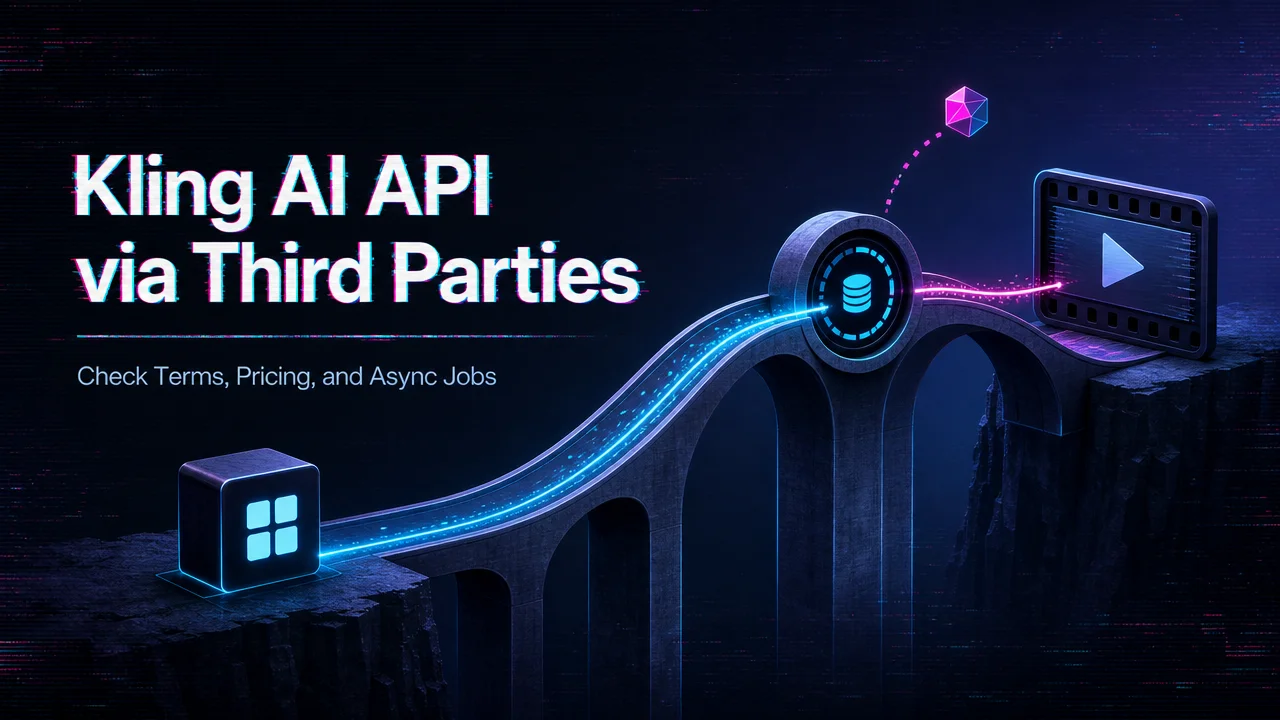
You can access Kling AI API through a third-party route when a platform exposes Kling models through its own API, authentication, pricing, and job workflow. This can be useful if the official route is limited, region-specific, or not convenient for your product stack.
- Confirm which Kling model version is available.
- Review pricing, output rights, provider terms, and any usage restrictions.
- Test async job handling, webhook or polling behavior, and failure cases before production.
A third-party route can reduce integration friction, but it does not remove model-level terms. Teams should still check whether the model is appropriate for commercial use, what content policies apply, and whether generated media can be used in client or customer-facing work.
WaveSpeedAI is relevant when teams want to access Kling-style video models alongside other video, image, audio, and LLM models through one production layer. The benefit is not only access; it is avoiding a separate integration every time the team tests another model. For serious use, start with a small benchmark: generate the same clips, compare quality and latency, then estimate cost per usable second. This keeps the decision grounded in product fit instead of model hype. It also helps teams avoid committing before they understand cost, reliability, and rights.
Related reading
Related Articles

Best AI Video Platforms for Production Teams in 2027

Best Sora 2 Alternatives for Video Teams in 2027

Lanta AI Review 2027: Best Uses, Pricing, and Limits
Sora 2 Review 2027: API Quality, Cost, and Limits

Build a GPT-6 Astra 3D Workflow With Blender Assets