
What Is GPT-5.5 for Builders in 2026?
Understand what GPT-5.5 officially launched, where it is available today, and what builders should verify before planning production adoption.
GPT-5.5 is live on WaveSpeedAI — production-ready endpoint with transparent per-token pricing, no subscription, full OpenAI SDK compatibility. GPT-5.5 API → · Open the Playground →
OpenAI released GPT-5.5 on April 23, 2026. By the time I’m writing this, it’s been out for less than a day.
If you run a coding agent, a product that wraps a model, or any workflow that depends on API access, the headline isn’t “new model smarter.” The headline is where you can actually use it, and where you can’t yet. Those are two different stories, and most of the press coverage is blurring them.
This piece is a short, dated log of what shipped, what’s still pending, and where I’d wait before rewriting anything.
What OpenAI Officially Released on April 23, 2026
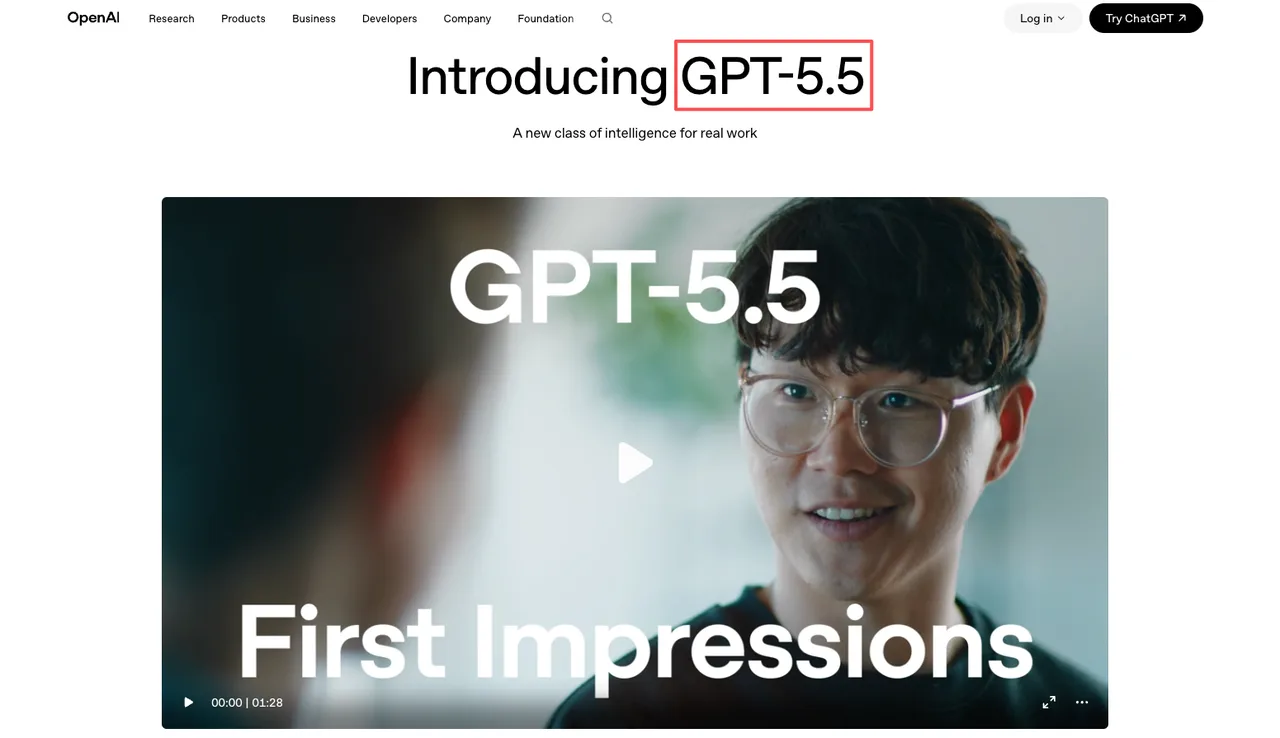
Per OpenAI’s own announcement post, GPT-5.5 is rolling out today to Plus, Pro**, Business, and Enterprise users in ChatGPT and Codex.** GPT-5.5 Pro goes to Pro, Business, and Enterprise users in ChatGPT. That’s the full scope of today’s release.
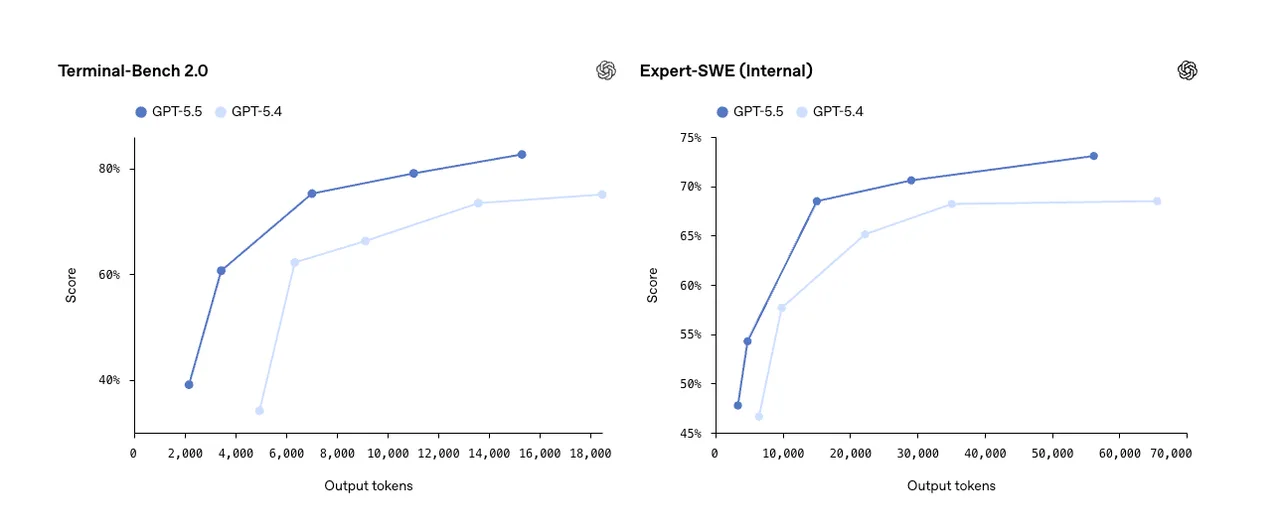
The pitch is “agentic coding, computer use, knowledge work, early scientific research.” Same-tier latency as GPT-5.4, fewer tokens per task. OpenAI says GPT-5.5 matches GPT-5.4 per-token latency in real-world serving.
GPT-5.5 in ChatGPT and Codex
Two variants are live today in ChatGPT: GPT-5.5 Thinking (Plus and up) and GPT-5.5 Pro (Pro / Business / Enterprise).
In Codex, GPT-5.5 is available across Plus, Pro, Business, Enterprise, Edu, and Go, with a 400K context window and a Fast mode that generates tokens roughly 1.5× faster at 2.5× the cost. The Codex integration is the part worth paying attention to. NVIDIA, in their own engineering post published the same day, wrote that over 10,000 of their staff had early access through Codex and used it across engineering, legal, finance, ops. Not just engineers. That’s a signal about where this model is being pushed — toward general computer work, not just code completion.
Noted. Still in day-zero territory though.
What OpenAI has not released yet
This is the part builders need to underline.
The API is not live. OpenAI said the model “will come to the API very soon,” and that API deployments “require different safeguards.” That’s a direct quote per CNBC’s briefing coverage. No date. No ETA window.
Stated API pricing is circulating: $5 per million input tokens, $30 per million output tokens — roughly double GPT-5.4. I’ve seen that number in multiple secondary writeups, but OpenAI hasn’t posted it on the official pricing page yet as of this writing. Treat it as needs-verification. If you’re budgeting, don’t plan against a number that isn’t on docs.
Rate limits, tier eligibility, Responses API vs Chat Completions availability, structured output behavior, tool-calling schemas — none of it is documented for GPT-5.5 yet. You’ll get those when the API ships.
Why GPT-5.5 Matters to Builders and Product Teams
The short version: if you’re a builder, today’s release doesn’t change your stack. It changes your planning calendar.
Coding, computer use, and workflow automation implications
The capability story is real — assuming the benchmarks hold up outside OpenAI’s own evals, which is always a separate question. What OpenAI is claiming is a sharper model at the same latency, with stronger behavior on multi-step, ambiguous tasks: hold context across a codebase, reason through a failure, check its own work, keep going.
If you run a coding agent and you’re already on Plus or Pro, you can test this in Codex right now. That’s the cheapest way to form a first impression before writing any code against it.
If you run a computer-use agent — browser automation, desktop RPA, anything that clicks through interfaces — this is where I’d watch closely. OpenAI’s framing around “messy, multi-part tasks” and reduced step-by-step prompting is specifically a computer-use claim. But computer-use agents are where benchmarks and production behavior diverge most. I wouldn’t form a judgment from OpenAI’s blog post alone. I’d wait for third-party traces.
Why API-led teams should care about rollout timing
If your product calls the API, today’s release is a forcing function for three questions:
One: when does your eval suite need to be ready? If the API drops next week, you want your evals already pointed at it, not written in a scramble. OpenAI’s recent cadence — GPT-5.2 shipped in December 2025, GPT-5.4 in March, GPT-5.5 in late April — is a sub-two-month rhythm now. You can’t treat each release as a one-off integration.
Two: what’s your fallback if the price really is 2×? Doubling your per-token cost moves the break-even on a lot of features. Worth modeling before the API lands, not after.
Three: how different are the “different safeguards”? That phrase is doing a lot of work. If the API version ships with stricter default refusals than ChatGPT, anything consumer-facing or dual-use could regress. Test before deploying.
I don’t have answers to any of these yet. Neither does anyone outside OpenAI. But these are the questions I’d have sitting on a whiteboard by Monday.
What Is Confirmed vs What Still Needs Verification
Because the first-day coverage is mixing confirmed facts with expectations, here’s the split as I’d draw it:
| Item | Status |
|---|---|
| Release date: April 23, 2026 | Confirmed — OpenAI official |
| Live in ChatGPT (Plus/Pro/Business/Enterprise) | Confirmed — OpenAI official |
| Live in Codex (Plus/Pro/Business/Enterprise/Edu/Go) | Confirmed — OpenAI official |
| 400K context in Codex | Confirmed — OpenAI official |
| GPT-5.5 Pro available in ChatGPT only (Pro/Business/Enterprise) | Confirmed — OpenAI official |
| Per-token latency matches GPT-5.4 | Claimed by OpenAI — not independently verified |
| Benchmark scores (SWE-Bench Pro, BrowseComp, etc.) | Reported by OpenAI — no third-party replication yet |
| API availability | Not yet — “very soon,” no date |
| API pricing ($5 / $30 per million tokens) | Widely reported, not confirmed on docs as of April 24 |
| Rate limits and tier eligibility for API | Unknown — needs verification |
| Refusal / safety behavior differences vs ChatGPT deployment | Unknown — needs verification |
If an article is quoting benchmark numbers without separating the first row from the later rows, you’re reading marketing. Keep the split.
Who Should Watch GPT-5.5 Closely and Who Should Wait
Not every team needs to drop what they’re doing today.
Watch closely now if: you run a coding agent or IDE integration, your users are already paying for Plus or Pro (you can test through the existing surface), or you build computer-use / browser automation tooling where the capability claims matter most.
Prepare, but don’t migrate: you ship an API-based product and your roadmap depends on this model. Get your evals ready. Model the pricing. Line up a test window for when the API flips on.
Wait: you’re a non-coding team without a specific workflow this unblocks. One week of benchmarks from people who aren’t OpenAI will tell you more than any of today’s coverage. The release cadence is fast enough that chasing every drop is a full-time job with low ROI.
That last point is worth sitting with. TechCrunch’s writeup framed this release as a step toward OpenAI’s “super app” ambition — the idea of collapsing ChatGPT, Codex, and browsing into one product. That’s a strategy note, not a product decision you need to make this week.
FAQ
Is GPT-5.5 available in the API?
No. Not as of April 24, 2026. OpenAI says API access is “coming very soon,” without a date. Don’t plan against a pricing or rate-limit number that isn’t on the official docs yet.
Is GPT-5.5 live in ChatGPT and Codex?
Yes. In ChatGPT for Plus, Pro, Business, Enterprise users. In Codex for Plus, Pro, Business, Enterprise, Edu, and Go plans. GPT-5.5 Pro is ChatGPT-only and Pro-tier-and-up.
What should teams verify before planning adoption?
Three things, once the API ships: actual pricing on the official pricing page, rate limits and tier eligibility for your plan, and refusal behavior on whatever dual-use or agentic workloads you run. OpenAI explicitly flagged “different safeguards” for API serving, which is worth testing rather than assuming.
Is GPT-5.5 relevant for non-coding teams?
Probably, but not urgently. The capability gains OpenAI is advertising are strongest in agentic coding and computer use. Knowledge work gains are real but incremental. If your team isn’t already bottlenecked by model quality on multi-step tasks, GPT-5.4 is fine for now.
Conclusion
GPT-5.5 shipped today. It’s in ChatGPT and Codex. It’s not in the API. That’s the entire story for builders in one sentence.
Everything else — the benchmarks, the pricing, the “super app” framing, the comparisons to competing labs — is either unverified or not yet actionable. The useful thing to do this week is get your evals ready and your fallback plans modeled, so that when the API flips on, you can form your own judgment in a few hours instead of chasing a week of threadstorms.
That’s where my data ends. Continuing next week once the API surface is live and someone outside OpenAI has run real workloads on it.
Previous Posts:
Related Articles
/filters:quality(82)/media/images/1773962750383987480_n3hqzHRZ.webp)
AI Lip Sync Dialogue Scenes with Seedance 2.5: Prompts and Settings
How to Make an AI Short Drama with Seedance 2.5, Wan 3.0 and Kling 4.0
How to Keep the Same Character Across AI Video Shots
Multi-Shot Action Scenes with Kling 4.0: Long Takes, Keyframes and Extends
Vertical 9:16 AI Video Settings for Shorts and Reels