
What Third-Party AI Model Provider Risks Should Enterprises Manage?
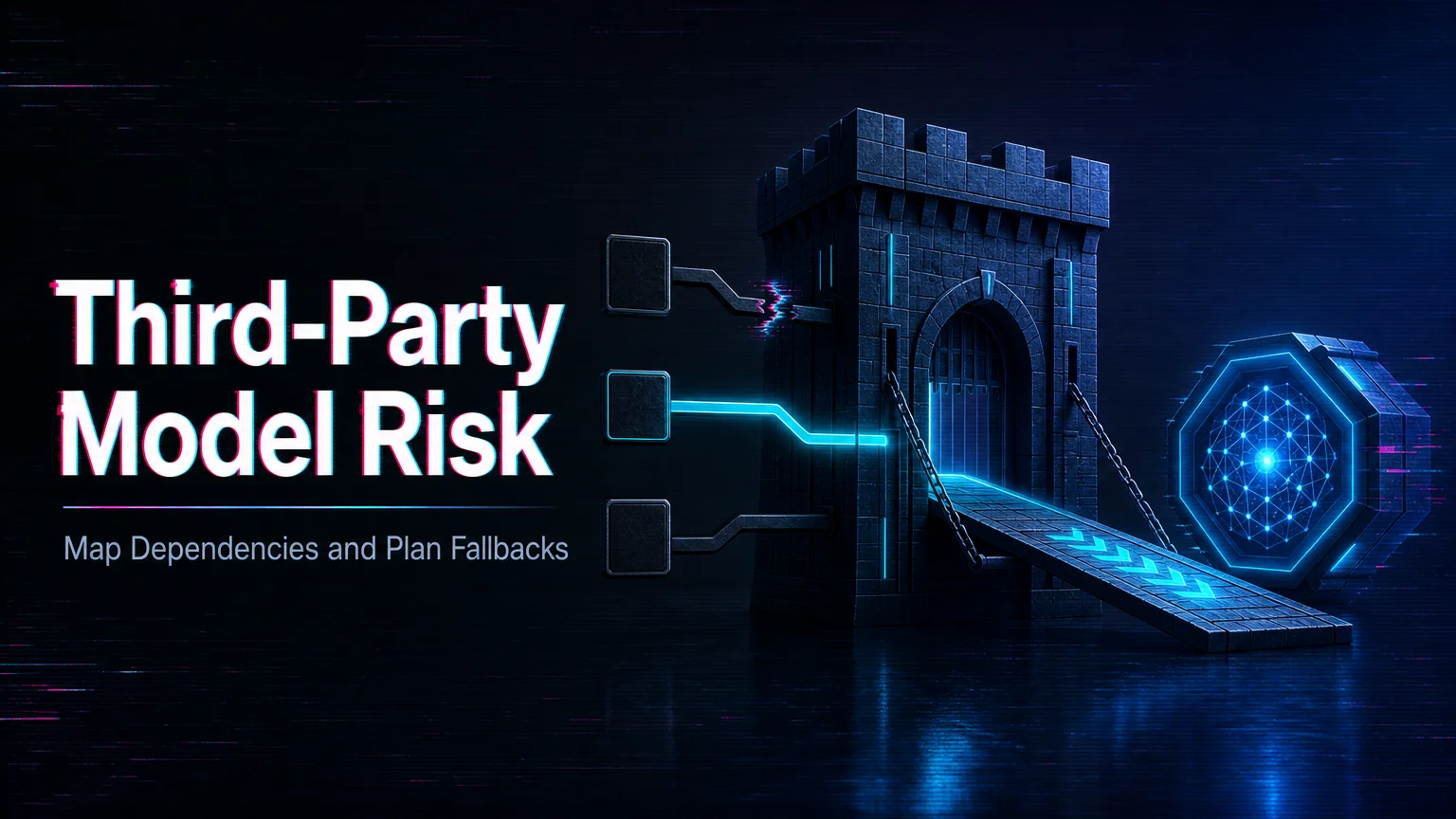
How enterprises should manage third-party AI model provider risk: mapping upstream dependencies and pre-deciding fallbacks for critical routes.
Overview
Third-party AI model provider risk for enterprise means the platform may rely on external model providers whose terms, availability, pricing, safety rules, or data handling can affect your production workflow. Enterprises should evaluate both the platform and the upstream model chain.
- Review third-party offering terms and provider-specific restrictions.
- Ask how provider changes, outages, pricing updates, and model removals are communicated.
- Check whether fallback routes, audit logs, and enterprise support exist.
This risk is not automatically bad. Many teams use third-party models because building every model internally is unrealistic. The question is whether the platform explains the dependency clearly and gives buyers enough control.
WaveSpeedAI’s value is model access and aggregation, so third-party provider risk needs direct review. One production layer can reduce integration burden, but it does not erase provider terms. Buyers should review model-level licenses, data handling, retention, support paths, and incident communication before approving high-risk workloads. Keep that review attached to the launch checklist. Manage upstream provider risk explicitly: list which providers sit behind each workload you run, and pre-decide the fallback for the two whose disappearance would hurt most.
/filters:quality(82)/media/images/c347367a-a007-4466-b8f7-d37f5fb52819.webp)
/filters:quality(82)/media/images/cd4db796-7728-45fb-8267-6813ed28e173.webp)
/filters:quality(82)/media/images/1791535252286714222_v4jvJT2a.webp)
/filters:quality(82)/media/images/1791451065663755033_qNqAKS1a.webp)
/filters:quality(82)/media/images/1791359984291066138_tW5eOX6f.webp)
/filters:quality(82)/media/images/1773962750383987480_n3hqzHRZ.webp)