
How Does a Multilingual AI Dubbing API Support Video Localization?
How multilingual AI dubbing APIs handle video localization: language coverage, voice consistency, timing, and the quality checks before publishing.
Overview
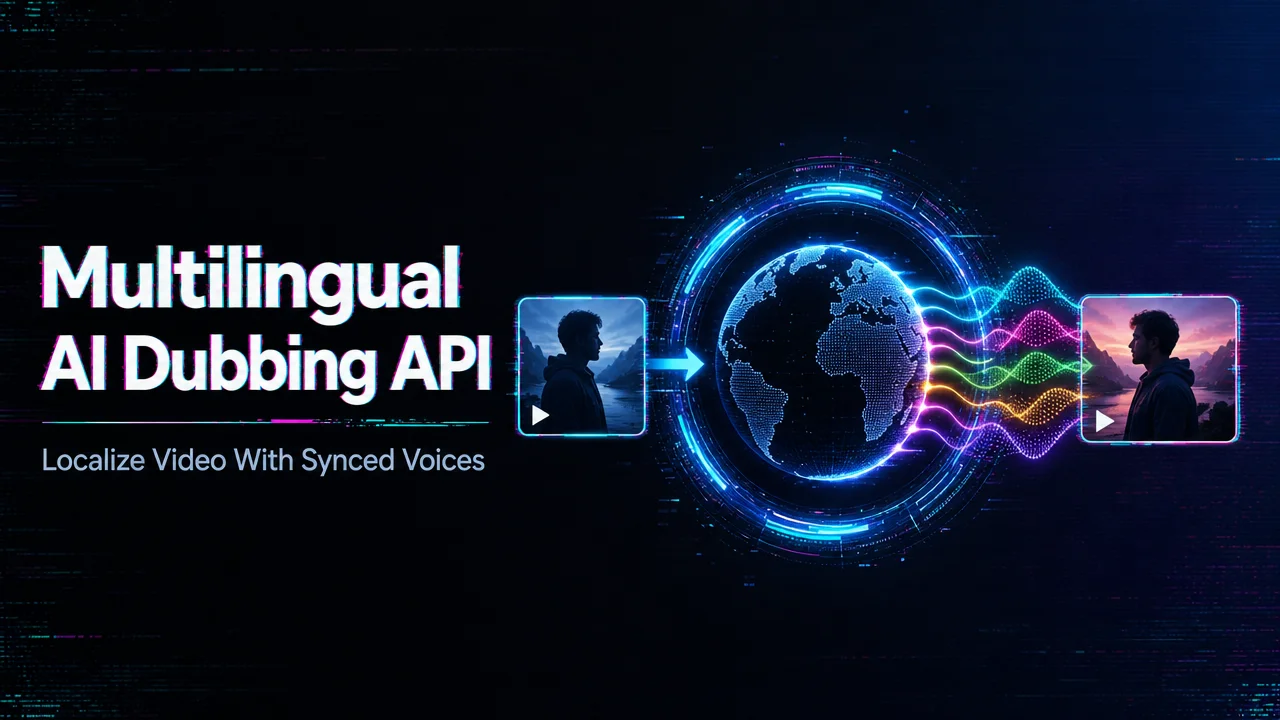
A multilingual AI dubbing API helps teams convert video narration or dialogue into other languages while preserving timing, tone, and viewer experience. The best API is not just accurate; it must support workflow, review, rights, and production scale.
- Check supported languages, voice options, subtitle handling, and timing controls.
- Review consent rules if the dub imitates a real speaker’s voice.
- Test pronunciation, brand terms, emotional tone, and sync quality before publishing.
Video localization is useful for education, marketing, social content, product demos, and international customer support. But a poor dub can damage trust if it sounds unnatural, mistranslates key claims, or implies that a real person spoke words they did not approve.
WaveSpeedAI fits this topic when dubbing is part of a larger media generation workflow. A team may need video generation, editing, TTS, voice cloning, and localization in one pipeline. A production dubbing setup needs both capability and guardrails: use licensed or consent-based voices, review translations, keep original scripts, and test output quality by market before scaling. Pilot dubbing on one real video in your two hardest target languages, and have native speakers review before scaling; localization quality problems are cheap to catch at one video and expensive at one hundred.
/filters:quality(82)/media/images/5f15570a-6a68-432e-a6f1-1dcbf799ba81.webp)
/filters:quality(82)/media/images/b73c2438-6bdd-4b80-a229-8d71d8f819cf.webp)
/filters:quality(82)/media/images/427fd9f2-347d-4f86-a2d5-aee110cda01d.webp)
/filters:quality(82)/media/images/1773962750383987480_n3hqzHRZ.webp)
/filters:quality(82)/media/images/43fa0e7f-a0db-48d7-9bab-921d1225db30.webp)
/filters:quality(82)/media/images/5799ff56-3a73-40ca-a666-e4965d878496.webp)