
Claude Managed Agents vs Claude Agent SDK
Claude Managed Agents vs Claude Agent SDK: when to let Anthropic run the infrastructure, and when you need to own the runtime yourself.
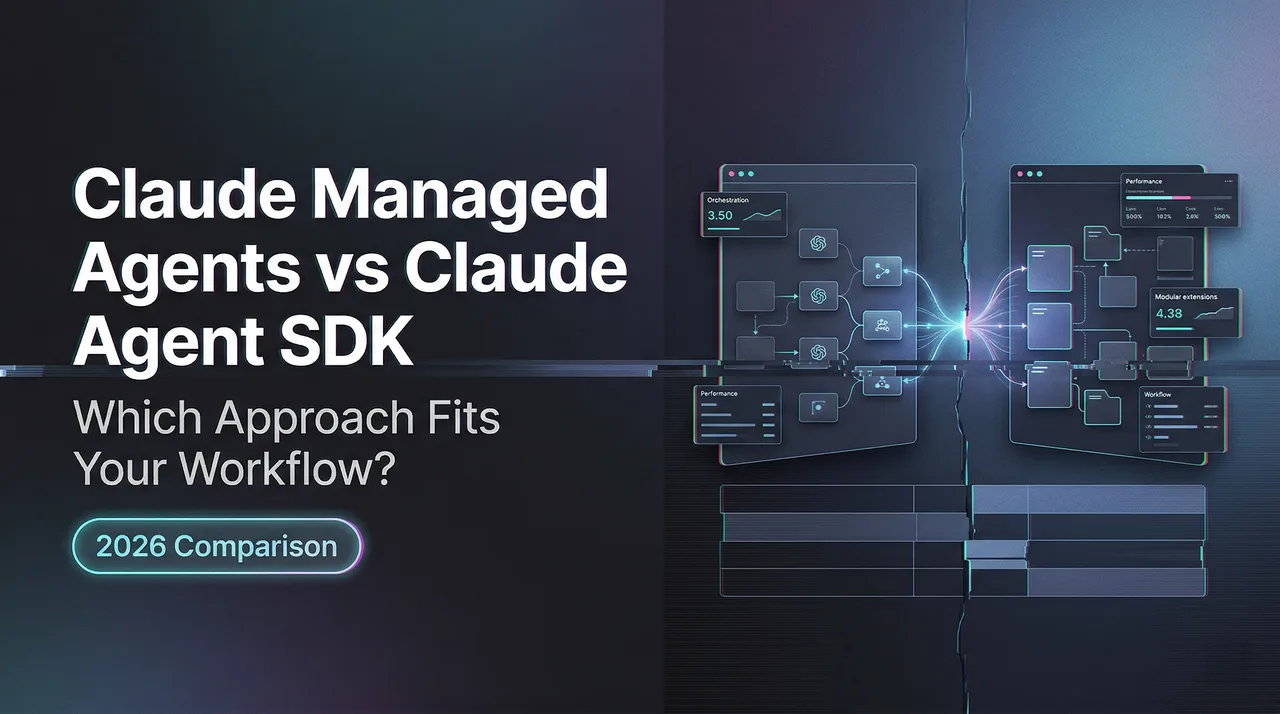
Last week I had three tabs open: the Managed Agents docs, the Agent SDK quickstart, and the Messages API reference. I was trying to figure out which path to use for an async document processing pipeline. Forty minutes in, I realized the confusion wasn’t about features. It was about who owns the runtime.
That’s the core of this decision. Not which is “better.” Which infrastructure boundary makes sense for what you’re building right now. This piece documents how the two paths compare — and why a third option exists that most comparison articles skip.
Two Paths to Claude-Powered Agents
Agent SDK: you own the loop, you manage the runtime
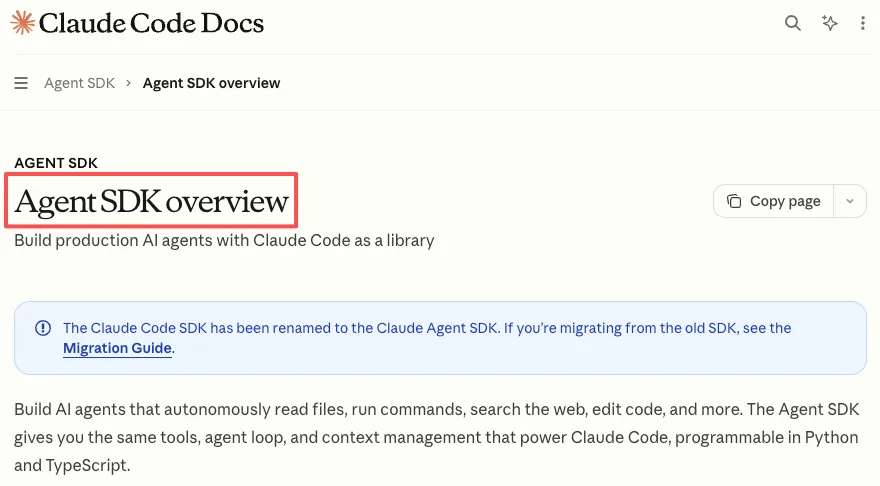
The Claude Agent SDK — renamed from the Claude Code SDK earlier this year — gives you the same tools, agent loop, and context management that power Claude Code, packaged as a Python or TypeScript library. You install it, run it on your infrastructure, and handle scaling, sandboxing, and orchestration yourself.
The SDK bundles the Claude Code CLI automatically. Your agent gets access to file operations, bash commands, web browsing, code execution — the full Claude Code toolset — out of the box. You define which tools are allowed, set permission modes, and implement custom tools as in-process MCP servers.
What you get: complete control over the execution environment. What you also get: the responsibility for keeping that environment running, secure, and observable.
Managed Agents: Anthropic owns the harness, you define the task
Claude Managed Agents, launched in public beta on April 8, 2026, flips the ownership model. You specify the agent — model, system prompt, tools, MCP servers, guardrails — and Anthropic runs it. The harness handles tool execution, sandboxing, session persistence, context compaction, prompt caching, and crash recovery.
Anthropic’s engineering team describes it as a “meta-harness” — designed to accommodate future harnesses as models improve rather than encoding fixed assumptions about what Claude can or can’t do. If a container crashes, the session survives. A new container picks up from the session log.
You configure, Anthropic operates.
Neither is universally better
The capability overlap is high. Both give Claude access to code execution, file manipulation, bash, web browsing, and MCP integrations. The difference is operational: who provisions the environment, who handles failures, who scales the containers. This is an infrastructure decision, not a features decision.
Core Comparison
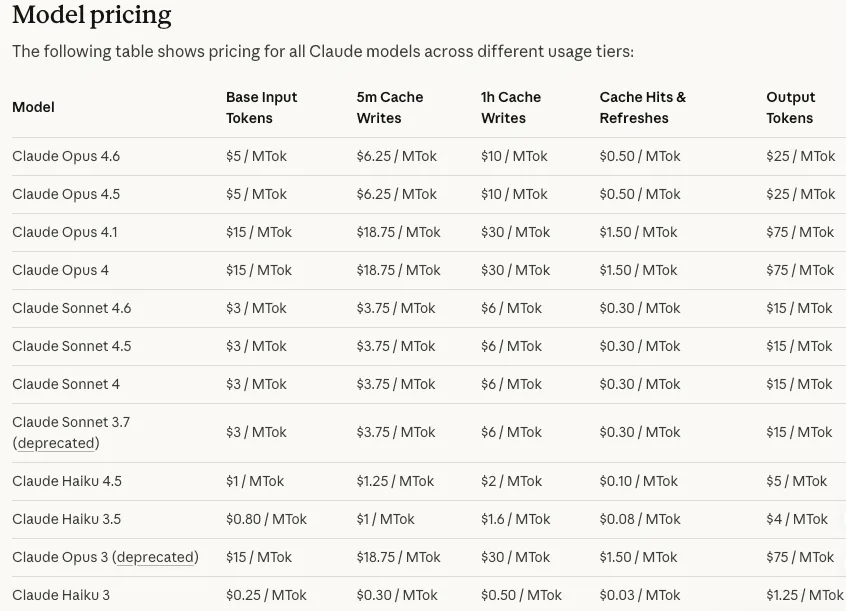
One thing worth noting on billing: the Agent SDK doesn’t introduce a session runtime fee. But calling it “cheaper” without qualification is misleading. Your self-hosted runtime has real costs — servers, container orchestration, monitoring, incident response, the engineer-hours to maintain all of it. The cost structures are different, not simply ordered.
When to Choose Managed Agents
Long-running or async tasks where session persistence matters
If your agent runs for 30 minutes to several hours — processing documents, doing research, executing multi-step workflows — you need session state that survives disconnections and container failures. Managed Agents stores the full event history server-side and makes it fetchable via API. Building equivalent durability yourself is doable. It’s also several weeks of engineering that isn’t your core product.
Teams without infra bandwidth to build secure sandboxes
Production-grade sandboxing — isolation, credential management, scoped permissions, execution tracing — is genuinely hard. Most teams underestimate it. If your team doesn’t have the DevOps capacity to build and maintain a secure agent execution environment, Managed Agents removes that entire surface area from your roadmap.
Fast prototype-to-production: days instead of months
Anthropic’s headline is “get to production 10x faster.” I haven’t verified that number across enough scenarios to endorse it. But the direction is accurate: the gap between “agent works in local testing” and “agent runs reliably in production” is large, and Managed Agents collapses it. Rakuten reportedly deployed specialist agents in under a week each.
When built-in compaction and caching matter more than custom control
Managed Agents handles prompt caching and context compaction automatically. If you’ve built your own context management for long-running agents, you know how much trial and error this involves. The built-in approach won’t be optimal for every workload. For most, it’s good enough — and it ships on day one.
When to Choose Agent SDK
Custom orchestration logic that Managed Agents doesn’t expose
The SDK gives you hooks, custom tools as in-process MCP servers, granular permission callbacks, and full control over the agent loop. If your agent needs custom retry strategies, conditional tool routing, or dynamic prompt modification mid-session — logic that Managed Agents’ configuration surface doesn’t expose — you need the SDK.
Specialized tool integrations or custom execution environments
If your agent needs to run inside a specific environment — access to a GPU, a particular database driver, a proprietary library — the SDK lets you control the execution environment completely. Managed Agents gives you a cloud container with pre-installed packages. That’s sufficient for most cases. Not all.
On-premise or private cloud requirements
Managed Agents runs exclusively on Anthropic’s infrastructure. There’s no on-prem option, no deployment to your own cloud. For organizations with strict data sovereignty requirements or regulatory constraints that prohibit sending data to third-party infrastructure, the SDK is the only path. This is a hard constraint, not a preference.
Cost structure at scale
The $0.08/session-hour is negligible for most workloads — a 24/7 agent costs roughly $58/month in runtime before tokens. But for large fleets of concurrent long-running agents, session fees compound. A 500-agent fleet running simultaneously generates $40/hour in session overhead alone.
The Agent SDK doesn’t have this per-session surcharge. Your costs are tokens plus whatever your infrastructure runs you. At high volume, owning the runtime can be cheaper in marginal terms — but only if you’ve already absorbed the fixed cost of building and maintaining it.
The Third Option: Messages API
When neither SDK nor Managed Agents is needed
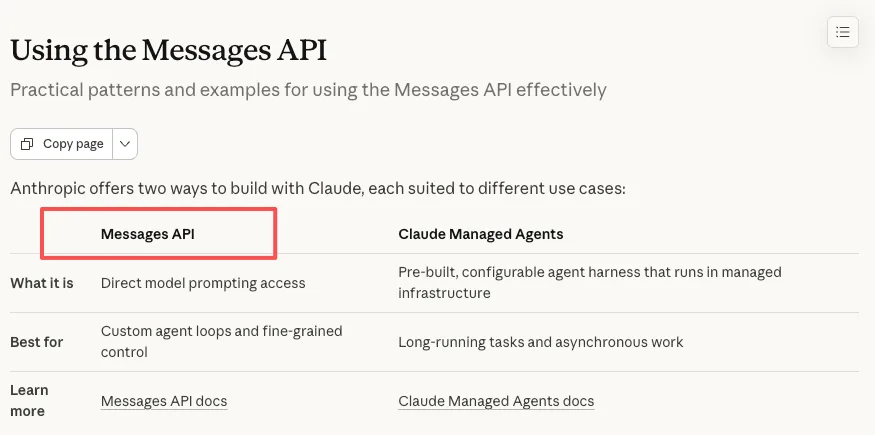
This is the option most comparison articles skip, and it’s the right answer more often than people think.
The Messages API gives you direct model access. You send a prompt, get a response. No harness, no agent loop, no managed runtime. You build everything yourself — including the tool execution loop, if you need one.
Simple tool-use patterns that don’t require a full agent framework
If your use case is: call Claude, optionally let it use one or two tools, return a result — you don’t need an agent framework at all. The Messages API with tool use handles this cleanly. Adding the Agent SDK or Managed Agents introduces complexity that doesn’t pay for itself in straightforward request-response patterns.
The Anthropic Python and TypeScript client SDKs support tool use natively. You implement the tool loop yourself — a while loop that checks stop_reason, executes tools, sends results back. For many production workloads, that’s all you need.
I’ve seen teams reach for agent frameworks when a 20-line tool loop would’ve done the job. Check whether your task actually requires autonomy or session persistence before choosing a heavier abstraction.
Migration Considerations
Starting on Managed Agents, moving to SDK: what changes
The agent logic — system prompt, tool definitions, task structure — transfers directly. What doesn’t: session persistence, sandboxing, context management, and crash recovery. You’ll need to build all of those.
Moving from Managed Agents to SDK means moving from “Anthropic operates” to “you operate.” The capability is equivalent. The operational burden shifts entirely to your team.
Starting on SDK, moving to Managed Agents: what changes
Easier in some ways, harder in others. Your agent’s core logic ports over. Custom tools implemented as in-process MCP servers may need to be re-exposed as remote MCP servers. Custom hooks and permission callbacks need to map to Managed Agents’ configuration model.
The gain: you stop maintaining the runtime. The cost: you lose fine-grained control over the execution environment. Whether that tradeoff works depends on how much of your custom infrastructure was actually necessary versus inherited from early prototyping decisions.
There’s no official migration guide between the two as of April 2026. Plan for integration testing, not just code porting.
FAQ
Can I use both in the same product?
Yes. The SDK and Managed Agents serve different operational needs. A common pattern: Agent SDK for user-facing, latency-sensitive interactions where you need full control; Managed Agents for background, async tasks where session persistence and hands-off operation matter more. They share the same underlying Claude models and pricing structure for token costs.
Does Managed Agents lock me into Anthropic’s infrastructure?
Yes. The runtime is purpose-built for Claude. It won’t run GPT, Gemini, or open-source models. Your agent logic — prompts, tool definitions, task structure — is portable. The runtime and session format are not. The SDK gives you more flexibility to abstract the model layer, though it’s also Claude-specific.
Which handles errors and retries better?
Managed Agents has built-in crash recovery — the session log persists, a new container picks up from where the previous one failed. With the SDK, you build your own error handling. If you’ve done this before and have good patterns, SDK error handling can be more precisely tuned to your needs. If you haven’t, Managed Agents’ defaults are a strong starting point.
Can I migrate an existing SDK agent to Managed Agents?
The core agent logic transfers. System prompt, tool definitions, and task structure are compatible. What requires rework: custom hooks, in-process MCP servers (may need remote equivalents), custom permission logic, and anything that depends on your specific execution environment. No official migration tooling exists yet.
Which is more cost-effective at high volume?
Depends on what you count. Managed Agents adds $0.08/session-hour on top of tokens. The SDK adds zero per-session surcharge — but your self-hosted runtime has its own cost line: servers, orchestration, monitoring, engineering maintenance. At low-to-moderate volume, Managed Agents is typically cheaper in total cost of ownership. At very high volume with many concurrent long-running sessions, the math can flip — but only if you’ve already invested in the infrastructure.
That’s the comparison. The decision tree: need infrastructure control or can’t send data off-premises → SDK. Want to skip the infrastructure → Managed Agents. Don’t need an agent loop at all → Messages API.
Run a pilot on both if you’re unsure. The switching cost is lower at the prototype stage than after you’ve committed to a deployment architecture.
Continuing next week — still testing multi-agent patterns on Managed Agents.
Previous posts:
Related Articles
/filters:quality(82)/media/images/1791535252286714222_v4jvJT2a.webp)
ModelsLab Review 2027: One API for Media Models?
/filters:quality(82)/media/images/1791451065663755033_qNqAKS1a.webp)
Best AI Video Background Removal Tools in 2027
/filters:quality(82)/media/images/1791359984291066138_tW5eOX6f.webp)
Best Comfy Cloud Alternatives in 2027
/filters:quality(82)/media/images/1773962750383987480_n3hqzHRZ.webp)
Qwen Image 2.1 vs Qwen Image 3.0: What Changes and When to Upgrade
What's Next for Wan Video Generation, and What It Means for Creators
/filters:quality(82)/media/images/1791271002496939282_TBLU3cmv.webp)