Meta Muse Image Text-to-Image generates high-quality images from text prompts for creative visuals, concept art, marketing assets, social content, and production workflows. Ready-to-use REST inference API, best performance, no coldstarts, affordable pricing.
Idle
$0.011per run·~90 / $1
ExamplesView all
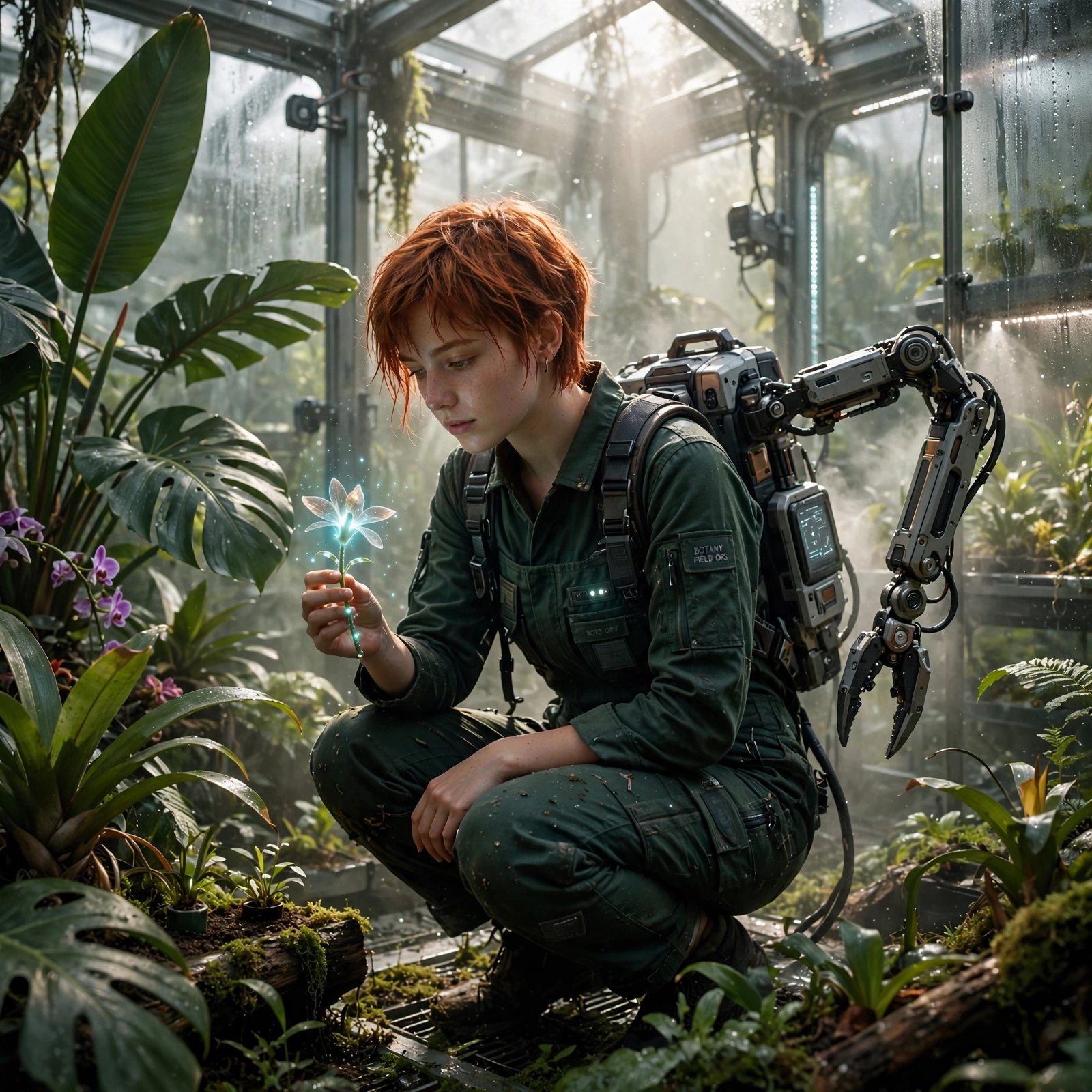
A cool young foreign woman crouching among enormous tropical plants inside a futuristic glass greenhouse, short copper-red hair, wearing dark green work overalls with subtle mechanical attachments, one mechanical gardening arm unfolding from a backpack while she carefully holds a glowing flower in her bare hand, condensation on glass walls, sunlight refracting through mist, botanical science-fiction aesthetic, cinematic naturalism, highly detailed, unusual but believable.
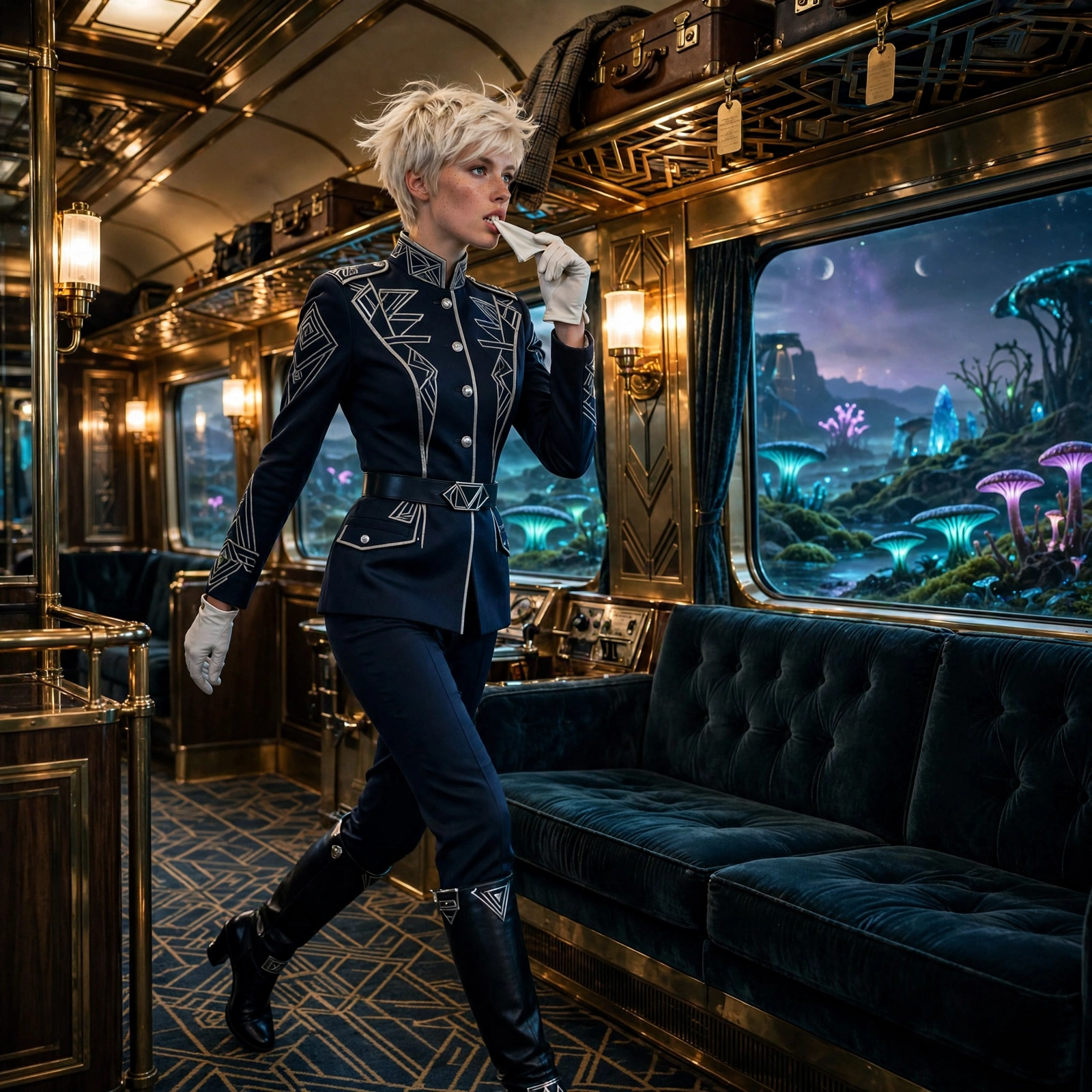
A striking young European woman walking through a luxurious retro-futuristic train carriage, captured mid-stride while fastening one white glove with her teeth, wearing a sharply tailored midnight-blue uniform with silver geometric details and knee-high boots, short platinum hair swept to one side, panoramic windows revealing a glowing alien landscape outside, polished brass and dark velvet interior, dramatic cinematic perspective, retro-futurism inspired by 1960s luxury travel, sophisticated editorial photography, rich textures, full body visible.
Related Models
/filters:quality(82)/media/images/1791312805430502065_dlG47iBV.webp)
/filters:quality(82)/media/images/1791312803887061677_SluDNW5I.webp)
/filters:quality(82)/media/images/1788941905586203566_DzViKczP.webp)
/filters:quality(82)/media/images/1788932339711919494_vrbhE9lL.webp)
/filters:quality(82)/media/images/1788941885532951956_ciRgxR5Q.webp)
/filters:quality(82)/media/images/1788932462559654416_SrQZ8hrB.webp)
README
Meta Muse Image Text-to-Image
Meta Muse Image Text-to-Image generates high-quality images from text prompts. Describe the subject, composition, lighting, style, and visual details, then choose an aspect ratio and output format to create the final image.
Why Choose This?
-
Text-to-image generation
Generate images directly from natural-language prompts. -
Simple creative workflow
Provide a prompt, select layout settings, and generate an image in one request. -
Flexible aspect ratio
Choose the output aspect ratio based on your target format. -
Multiple output formats
Select the image format that fits your workflow. -
Low-cost image generation
Generate images at a fixed price per image.
Parameters
| Parameter | Required | Description |
|---|---|---|
| prompt | Yes | Text prompt describing the image to generate. Include subject, scene, composition, lighting, mood, and style. |
| aspect_ratio | No | Aspect ratio of the generated image. Default: 1:1. |
| output_format | No | Output image format. For example: webp. |
How to Use
- Write your prompt — Describe the subject, environment, style, lighting, and composition.
- Choose aspect ratio — Select the layout that matches your target format.
- Choose output format — Select the image format for the generated output.
- Submit — Generate the final image and retrieve the output URL.
Pricing
Pricing is fixed at $0.011 per image.
| Output | Cost |
|---|---|
| One generated image | $0.011 |
Best Use Cases
- Creative image generation — Create original images from text prompts.
- Concept art — Explore characters, scenes, objects, and visual styles.
- Marketing visuals — Generate images for campaigns, ads, and social media.
- Product concepts — Create visual ideas for product presentation and creative testing.
- Fast prompt iteration — Test different visual directions at low cost.
Pro Tips
- Use clear prompts with subject, composition, lighting, style, and background details.
- Choose
1:1for square images and other aspect ratios for platform-specific layouts. - Keep the prompt focused on one main scene or subject for better results.
- Add camera, lighting, and mood details when you need a more polished visual style.
- Use
webpwhen you want compact web-friendly image output.
Related Models
- Meta Muse Image Text-to-Image — Generate images from natural-language prompts.
- Meta Muse Image Edit — Edit images with text instructions.
Muse Image Text To Image API — Quick start
Grab a WaveSpeedAI API key, then call POST https://api.wavespeed.ai/api/v3/meta/muse-image/text-to-image with your input as JSON. The endpoint returns a prediction id. Start polling the result endpoint around every 2 seconds, increase the interval for long-running tasks, and stop on any terminal status. On completed, read output values from data.outputs. Examples for Muse Image Text To Image below.
HTTP example
set -euo pipefail

: "${WAVESPEED_API_KEY:?Set WAVESPEED_API_KEY}"

REQUEST_BODY=$(cat <<'JSON'
{
    "prompt": "A cinematic shot of a city at sunset, soft golden light",
    "aspect_ratio": "1:1",
    "output_format": "webp"
}
JSON
)

# 1. Submit the prediction.
SUBMIT_RESPONSE=$(curl --silent --show-error --fail-with-body \
  -X POST "https://api.wavespeed.ai/api/v3/meta/muse-image/text-to-image" \
  -H "Content-Type: application/json" \
  -H "Authorization: Bearer $WAVESPEED_API_KEY" \
  -d "$REQUEST_BODY")

TASK=$(printf '%s' "$SUBMIT_RESPONSE" | jq 'if has("data") then .data else . end')
PREDICTION_ID=$(printf '%s' "$TASK" | jq -r '.id')
if [ -z "$PREDICTION_ID" ] || [ "$PREDICTION_ID" = "null" ]; then
  printf 'Submission response did not contain a prediction id
' >&2
  exit 1
fi
RESULT_URL="https://api.wavespeed.ai/api/v3/predictions/$PREDICTION_ID/result"

# 2. Poll until the prediction finishes.
while true; do
  RESPONSE=$(curl --silent --show-error --fail-with-body "$RESULT_URL" \
    -H "Authorization: Bearer $WAVESPEED_API_KEY")
  RESULT=$(printf '%s' "$RESPONSE" | jq 'if has("data") then .data else . end')
  STATUS=$(printf '%s' "$RESULT" | jq -r '.status')
  case "$STATUS" in
    completed) printf '%s\n' "$RESULT" | jq '.outputs'; break ;;
    failed|cancelled|timeout|deleted) printf '%s\n' "$RESULT" | jq . >&2; exit 1 ;;
    *) sleep 2 ;;
  esac
done
Node.js example
const submitUrl = "https://api.wavespeed.ai/api/v3/meta/muse-image/text-to-image";
const apiKey = process.env.WAVESPEED_API_KEY;
if (!apiKey) throw new Error('Set WAVESPEED_API_KEY');

async function requestJson(url, options = {}) {
  const response = await fetch(url, options);
  if (!response.ok) throw new Error(await response.text());
  return response.json();
}

// 1. Submit the prediction.
const body = await requestJson(submitUrl, {
  method: "POST",
  headers: {
    "Authorization": `Bearer ${apiKey}`,
    "Content-Type": "application/json",
  },
  body: JSON.stringify({
        "prompt": "A cinematic shot of a city at sunset, soft golden light",
        "aspect_ratio": "1:1",
        "output_format": "webp"
}),
});
const task = body.data ?? body;
if (!task.id) throw new Error("Submission response did not contain a prediction id");
const resultUrl = `https://api.wavespeed.ai/api/v3/predictions/${task.id}/result`;

// 2. Poll until the prediction finishes.
while (true) {
  const resultBody = await requestJson(resultUrl, {
    headers: { "Authorization": `Bearer ${apiKey}` },
  });
  const result = resultBody.data ?? resultBody;
  if (result.status === "completed") {
    console.log(result.outputs);
    break;
  }
  if (["failed", "cancelled", "timeout", "deleted"].includes(result.status)) throw new Error(JSON.stringify(result));
  await new Promise(resolve => setTimeout(resolve, 2000));
}
Python example
import json
import os
import time
from urllib.request import Request, urlopen

api_key = os.environ["WAVESPEED_API_KEY"]
headers = {"Authorization": f"Bearer {api_key}", "Content-Type": "application/json"}
payload = {
    "prompt": "A cinematic shot of a city at sunset, soft golden light",
    "aspect_ratio": "1:1",
    "output_format": "webp"
}

def request_json(url, data=None):
    request = Request(url, data=data, headers=headers, method="POST" if data else "GET")
    with urlopen(request) as response:
        return json.load(response)

# 1. Submit the prediction.
body = request_json("https://api.wavespeed.ai/api/v3/meta/muse-image/text-to-image", json.dumps(payload).encode())
task = body.get("data", body)
if not task.get("id"):
    raise RuntimeError("Submission response did not contain a prediction id")
result_url = f"https://api.wavespeed.ai/api/v3/predictions/{task['id']}/result"

# 2. Poll until the prediction finishes.
while True:
    result_body = request_json(result_url)
    result = result_body.get("data", result_body)
    status = result.get("status")
    if status == "completed":
        print(result.get("outputs", []))
        break
    if status in {"failed", "cancelled", "timeout", "deleted"}:
        raise RuntimeError(result)
    time.sleep(2)
Muse Image Text To Image API — Frequently asked questions
What is the Muse Image Text To Image API?
Muse Image Text To Image is a Meta model for image generation, exposed as a REST API on WaveSpeedAI. Meta Muse Image Text-to-Image generates high-quality images from text prompts for creative visuals, concept art, marketing assets, social content, and production workflows. Ready-to-use REST inference API, best performance, no coldstarts, affordable pricing. You can call it programmatically or try it from the playground above.
How do I call the Muse Image Text To Image API?
POST your input parameters to the model's REST endpoint (shown in the API tab of this playground) with your WaveSpeedAI API key in the Authorization header. Submission returns a prediction ID. Poll the result endpoint starting around every 2 seconds, increase the interval for long-running tasks, and stop on any terminal status. The playground generates Python, JavaScript, and cURL examples for submitting requests and polling results. Full request/response shape is documented at https://wavespeed.ai/docs/docs-api/meta/meta-muse-image-text-to-image.
How much does Muse Image Text To Image cost per run?
Muse Image Text To Image starts at $0.011 per run. That figure is the base price — the final charge scales with the parameters you set in the form (output size, length, count, references, or whatever knobs this model exposes), so a higher-quality or larger output costs more than a minimal one. The exact cost for your current input is shown live next to the Generate button before you submit, and the actual per-call charge is recorded on the prediction afterwards.
What inputs does Muse Image Text To Image accept?
Key inputs: `prompt`, `aspect_ratio`, `output_format`. The full JSON schema (types, defaults, allowed values) is rendered above the Generate button and mirrored in the API reference at https://wavespeed.ai/docs/docs-api/meta/meta-muse-image-text-to-image.
How do I get started with the Muse Image Text To Image API?
Sign up for a free WaveSpeedAI account to claim starter credits, copy your API key from /accesskey, then call the endpoint shown in the API tab of the playground. The playground also auto-generates a code sample in Python, JavaScript, or cURL for the parameters you've set.
Can I use Muse Image Text To Image outputs commercially?
Commercial usage rights depend on the model's license, set by its provider (Meta). Check the provider's applicable terms and WaveSpeedAI's Terms of Service before commercial use.
More from Meta
View allMore Text to Image models
View all- bytedance/seedream-v5.0-proText to Image
- openai/gpt-image-2/text-to-imageText to Image
- google/nano-banana-pro/text-to-imageText to Image
- google/nano-banana-2/text-to-imageText to Image
- wavespeed-ai/z-image/turboText to Image
- bytedance/seedream-v4.5Text to Image
- alibaba/wan-2.7/text-to-imageText to Image
- alibaba/qwen-image-3.0/text-to-imageText to Image