
GPT-5.6 vs Fable 5 vs GLM 5.2: Eval Framework
Build a production eval framework for GPT-5.6, Fable 5, and GLM 5.2 across verified facts, cost, context, tools, coding, latency, and fallback.
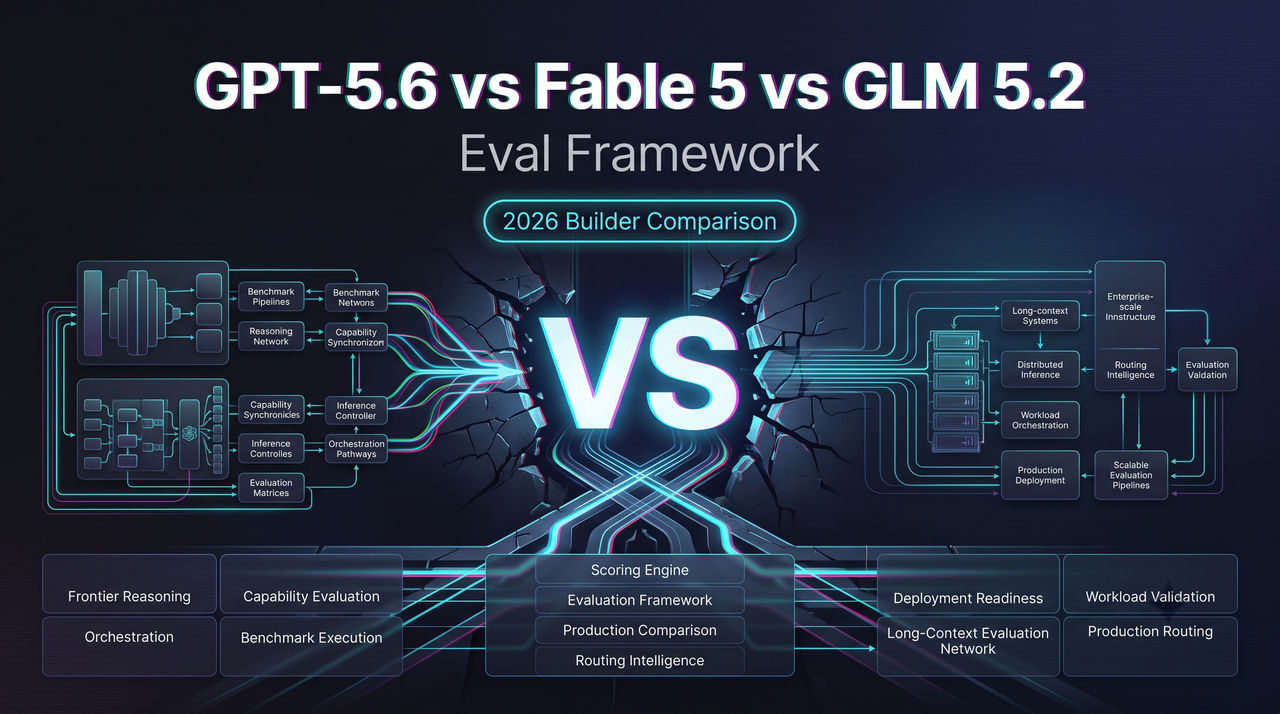
I paused here because the comparison table looked finished before the eval had even started. Model name. Price. Context. Coding. Tool use. A few benchmark rows. It looked useful. It was not ready.
For GPT-5.6 vs Fable 5, with GLM 5.2 as the alternative lane, the first production question is not “which model is stronger.” The first question is what is verified, what is platform-reported, and what still needs account-level validation before any production AI traffic touches it.
This note documents that boundary.
Verified vs Needs Validation Matrix
| Field | GPT-5.6 | Claude Fable 5 | GLM 5.2 | OpenRouter field | Production note |
|---|---|---|---|---|---|
| Model naming | Official OpenAI source names Sol, Terra, Luna | Official Anthropic docs name Claude Fable 5 | Official Z.AI docs name GLM-5.2 | Platform listing uses provider/model route | Do not publish unconfirmed IDs |
| Direct API access | Limited preview, not broad self-service | Direct Claude API availability documented | Direct Z.AI API docs available | Aggregator route | Route access is not direct-provider proof |
| Pricing source | OpenAI availability/pricing section | Anthropic model docs | Z.AI docs or billing docs | OpenRouter listing | Keep source beside price |
| Context / output | Needs account validation | Documented in Anthropic model docs | Documented by Z.AI | Platform-reported | Test real prompt shape |
| Tool use | Needs API validation | Needs workload validation | Function calling and structured output documented | May normalize behavior | Verify schema behavior |
| Rate limits / region | Account-level check | Account-level check | Account-level check | Platform-level check | Leave blank until confirmed |
GPT-5.6 facts confirmed by OpenAI
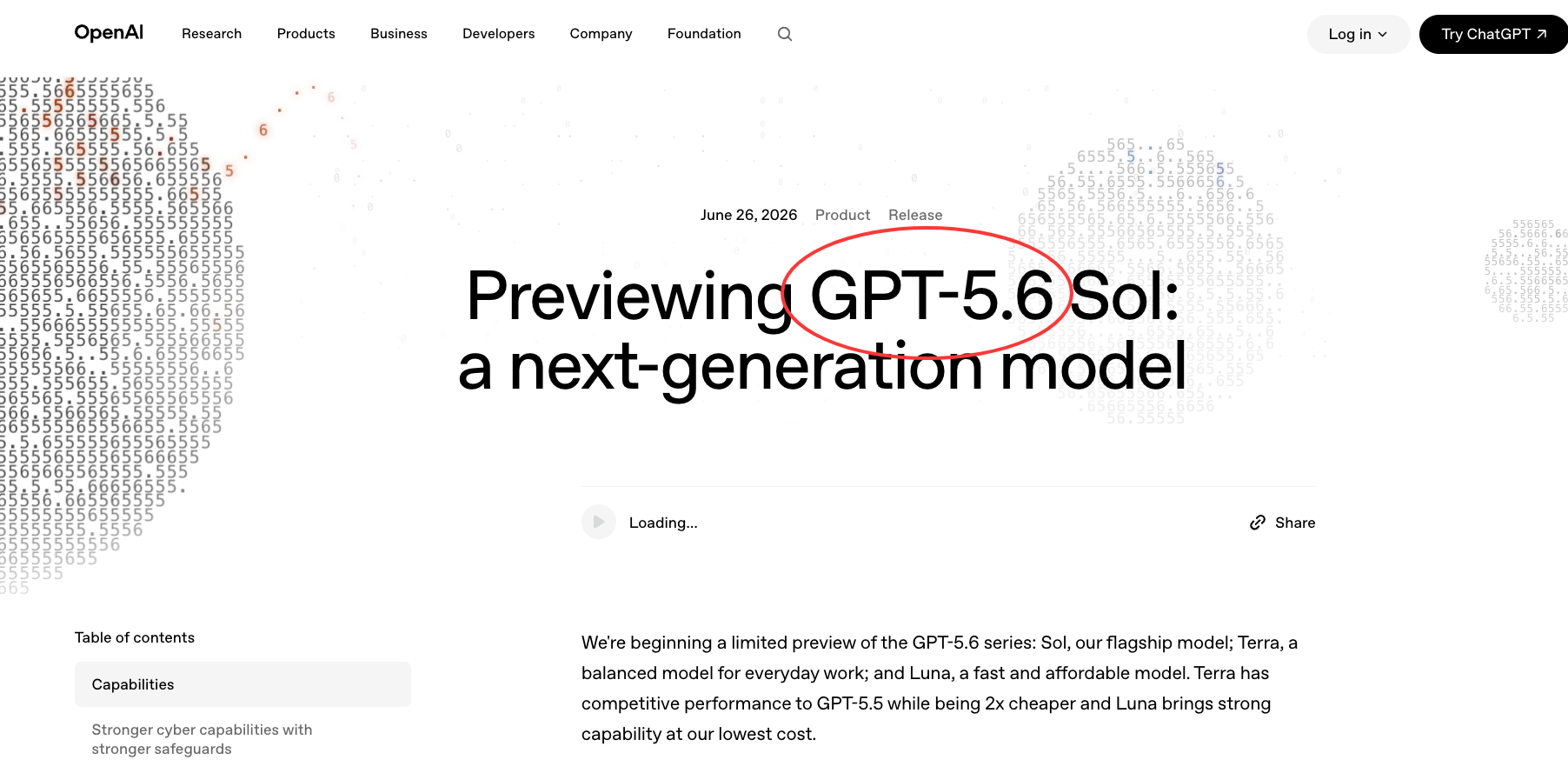
The safest way to describe GPT-5.6 is narrow. OpenAI’s GPT-5.6 availability and pricing section states that GPT-5.6 models are in limited preview, initially available through the API and Codex to a select group of trusted partners and organizations. The same source lists Sol, Terra, and Luna as capability tiers, with pricing shown per 1M tokens.
That is enough for an article note. It is not enough for production config.
The production table still needs blanks for model IDs, account eligibility, quota, region availability, tool behavior, and rollout timing. Those fields should come from the actual API account or product documentation, not from launch phrasing.
Fable 5, GLM 5.2, and OpenRouter fields to verify
Anthropic’s Claude Fable 5 documentation lists the claude-fable-5 API model ID, describes Claude Fable 5 as generally available on the Claude API, and gives model-level fields such as context, output, pricing, refusals, fallback handling, and supported features. That source is strong enough for direct-provider facts, but teams still need account-level checks before routing traffic.
Z.AI’s GLM-5.2 documentation describes GLM-5.2 as a flagship text model with 1M context, 128K maximum output tokens, streaming output, function calling, context caching, structured output, and MCP support. Those fields can enter the matrix as Z.AI-documented fields. They still need workload testing.
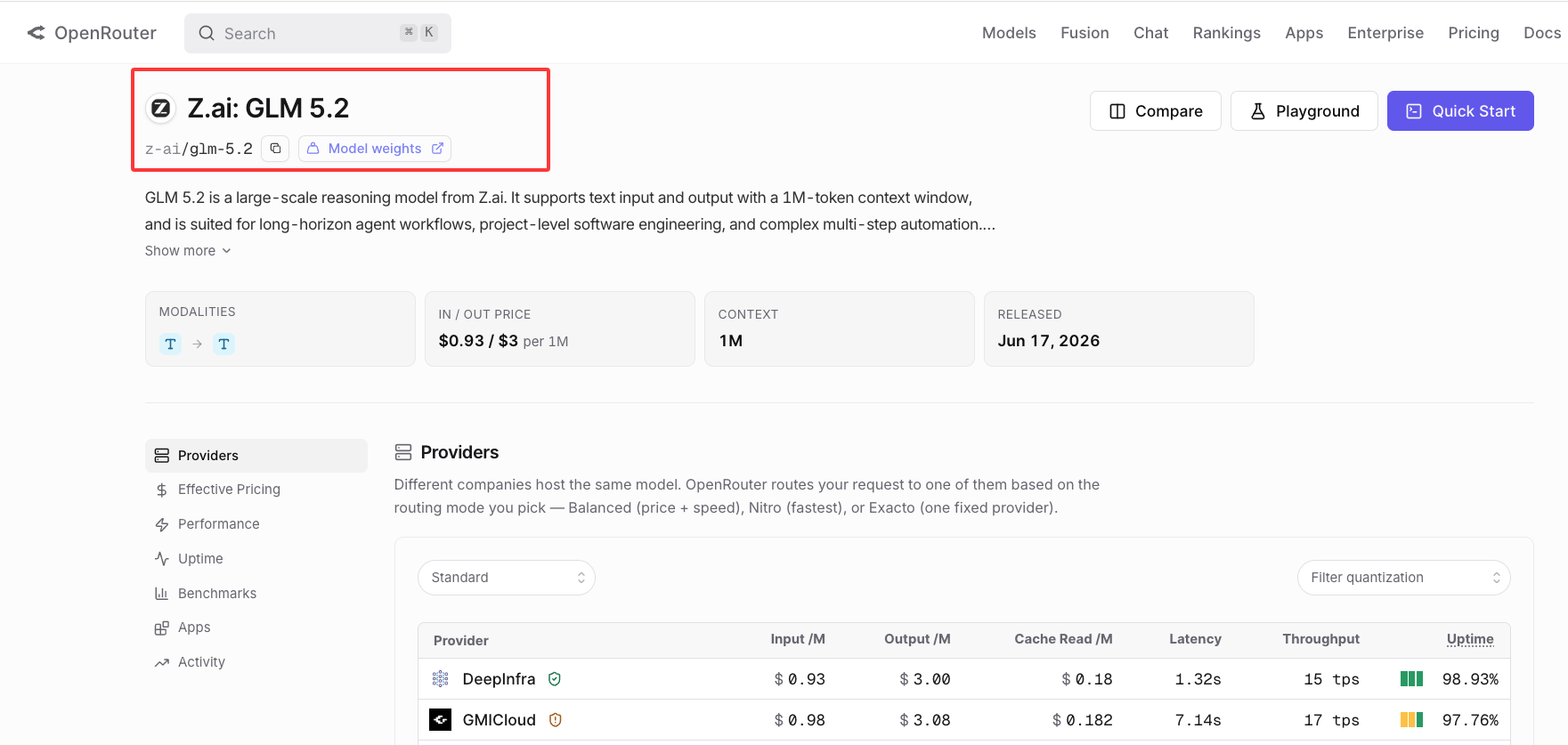
OpenRouter is a separate lane. Its GLM 5.2 route listing shows route-level information inside OpenRouter, including the model route, displayed pricing, context window, provider routing area, and performance/uptime sections. That is useful for aggregator testing. It should not be treated as proof of direct Z.AI account access, Z.AI region coverage, or Z.AI rate limits.
What Can Be Compared Safely
Access path, pricing source, context, tool use, coding, latency, safety checks
A safe model comparison starts with source labels. “OpenAI limited preview,” “Anthropic direct API,” “Z.AI direct API,” and “OpenRouter route” are four different access paths. Mixing them into one table creates false certainty.
Pricing only works when the billing route is named. Context only matters after real prompt tests. Tool use needs schema validation, retry behavior, streaming behavior, and structured-output checks. Coding needs repo tasks, not one-off puzzle prompts. Latency needs p50, p95, timeout rate, and first-token timing.
For production AI, I would compare these models on six fields only after the source is clear: access path, pricing source, context behavior, tool-call reliability, coding repair rate, and latency under load.
What must stay blank until official docs confirm it
Model ID, region availability, rate limits, batch support, enterprise terms, data retention, and exact tool-call parity should stay blank until official docs or the target account confirm them.
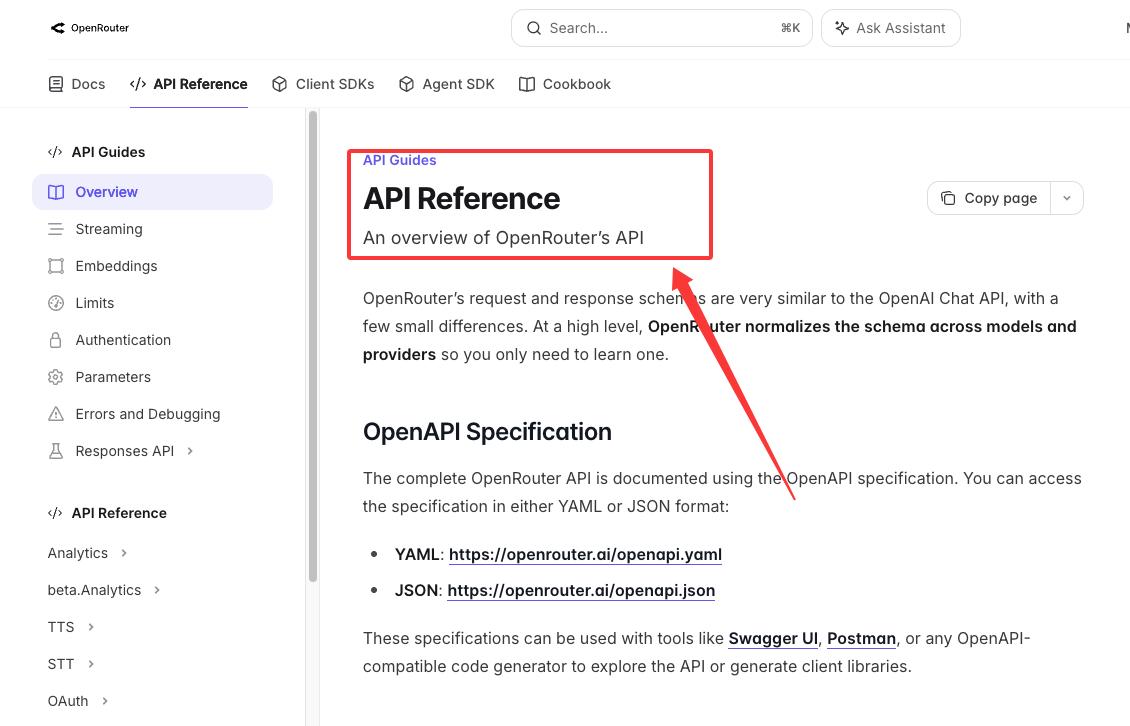
The OpenRouter API reference can help with OpenRouter-side API behavior, generation metadata, cost fields, and route-level response handling. It still does not answer every upstream-provider question. That distinction matters when a team is deciding whether to send fallback traffic through an aggregator or integrate directly with a provider.
Blank cells are not a problem. Filled cells with weak evidence are the problem.
Build a Fair Production Eval Set
Real prompts, coding tasks, tool calls, and failure cases
I would build the eval set from failed work, not clean demos. Use support tickets, extraction jobs, repo issues, SQL questions, long-context summaries, and agent traces where the current model missed the mark.
Freeze the input, expected output, allowed tools, scoring rubric, and failure labels before running the test. Otherwise the eval slowly becomes a vibe check. That happens faster than teams admit.
For coding, include a bug fix, a cross-file refactor, a test-writing task, and one “do not touch this boundary” task. For tool calls, include malformed output, missing fields, slow tool responses, ambiguous user intent, and forced retry. For long context, include irrelevant context mixed with the relevant section. Long context is not useful if the model politely reads the wrong part.
Measuring quality floor instead of benchmark headlines
The metric I care about is the quality floor: worst 10% outputs, schema breaks, false tool-success claims, refusal drift, hallucinated citations, and human repair time before shipping.
Vendor benchmarks can decide which model enters the first eval lane. They should not decide routing. The useful result is more boring: “Model A passed our schema, repair, latency, and refusal gates at this traffic tier.”
Boring is fine. Production likes boring.
Routing and Fallback Framework
Direct provider vs OpenRouter or aggregator access
Direct provider access is cleaner when official support, policy terms, and fewer routing layers matter. OpenRouter or another aggregator helps when a team wants faster cross-model testing, simpler fallback experiments, or one interface for several models.
The trade-off is that the aggregator becomes part of the system being evaluated. That means route behavior, billing metadata, retry logic, provider selection, and outage handling should be tested too.
For routing, I would start with four lanes: default, escalation, fallback, and pause. Default handles normal traffic. Escalation handles high-value or ambiguous work. Fallback handles operational failure. Pause handles cases where continuing is riskier than waiting.
When to fail over and when to pause traffic
Fail over when the failure is operational: timeout, 5xx, capacity error, rate limit, or a clear provider outage.
Pause traffic when the failure is semantic or safety-related: unexpected refusals on allowed tasks, tool-call hallucinations, schema drift, policy mismatch, unsafe completion patterns, or a sudden quality drop. Retrying a bad answer through another model is not a control. It is just moving the mess.
The failover rule should be written before traffic moves. Not during the incident. During the incident, everyone suddenly becomes optimistic.
Risks and Fact Boundaries
Unverified model names and platform listings
Unverified model names should stay out of production tables. Platform listings can show that a route exists on that platform. They cannot prove direct API support, account access, quota, region coverage, or enterprise terms from the original provider.
This is the main fact boundary in this article. A platform page is a useful signal. It is not a contract.
Vendor benchmarks vs workload-specific results
Vendor benchmarks tell me where to look first. They reflect the vendor’s chosen tasks, settings, and reporting frame. That does not make them useless. It makes them incomplete.
For production AI, the meaningful result is workload-specific. Did the model keep JSON valid? Did it call the right tool? Did it recover from partial failure? Did it refuse correctly? Did it stay inside latency budget? Did the fallback rule work when the first route failed?
That is the comparison. Not “who wins.”
FAQ
Which facts are verified before comparing these models?
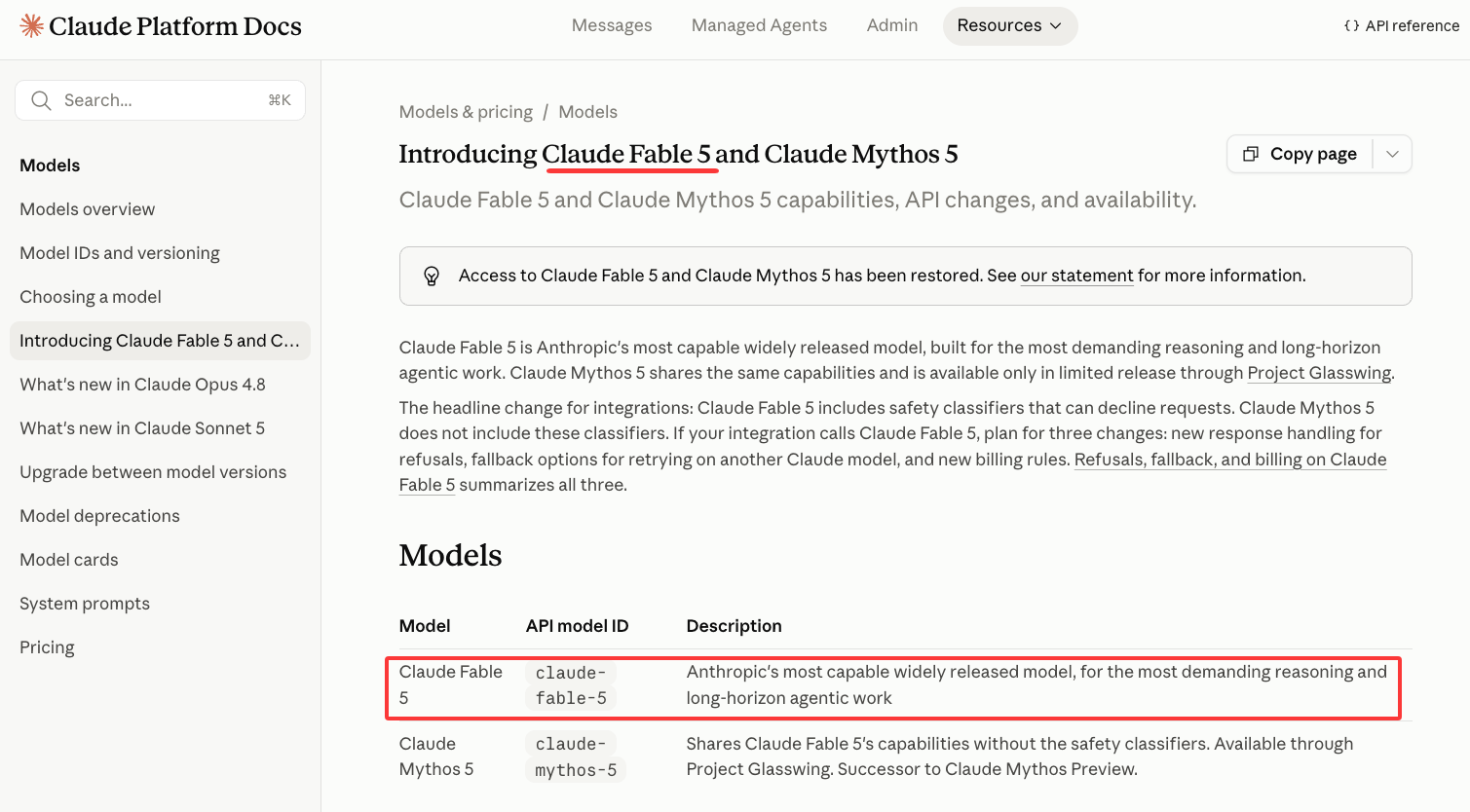
Verified facts include official model naming, official availability statements, official pricing, documented context limits, documented max output, and documented API features. For GPT-5.6, limited preview status matters before anything else. For Claude Fable 5 and GLM 5.2, direct-provider docs can support more fields. For OpenRouter, route-level availability should be labeled as route-level availability.
What should stay out of the article until official docs confirm it?
Keep production model IDs, region availability, rate limits, batch behavior, tool-call parity, enterprise terms, and SLA assumptions out of the article until official docs or the target account confirm them. If the source is a platform listing, say platform listing.
Can OpenRouter availability prove direct API support?
No. OpenRouter availability proves an OpenRouter route. It does not prove direct API support from the original provider. It can be part of the eval plan, especially for fallback tests, but it should not be used as direct-provider proof.
How should teams test fallback before routing production traffic?
Use controlled failure drills. Simulate timeout, 5xx, rate limit, malformed tool output, refusal drift, schema failure, and provider route failure. Then decide which failures retry, which escalate, and which pause traffic.
Conclusion
The clean version of GPT-5.6 vs Fable 5 is not a winner table. It is a validation table with blanks left intact until the source catches up.
GPT-5.6 has official OpenAI preview and pricing information, but production access still needs account validation. Claude Fable 5 has direct Anthropic API documentation. GLM 5.2 has direct Z.AI documentation and a separate OpenRouter route. Those routes should stay labeled separately.
That is enough to start an eval framework. It is not enough to route production by headline.
This conclusion has an expiration date. Models update fast. To be verified.
Previous posts: