What Is the Async Job Polling Pattern for AI Video APIs?
The async job polling pattern for AI video APIs: capped intervals, hard timeouts, idempotent status handling, and load-testing before launch.
Overview
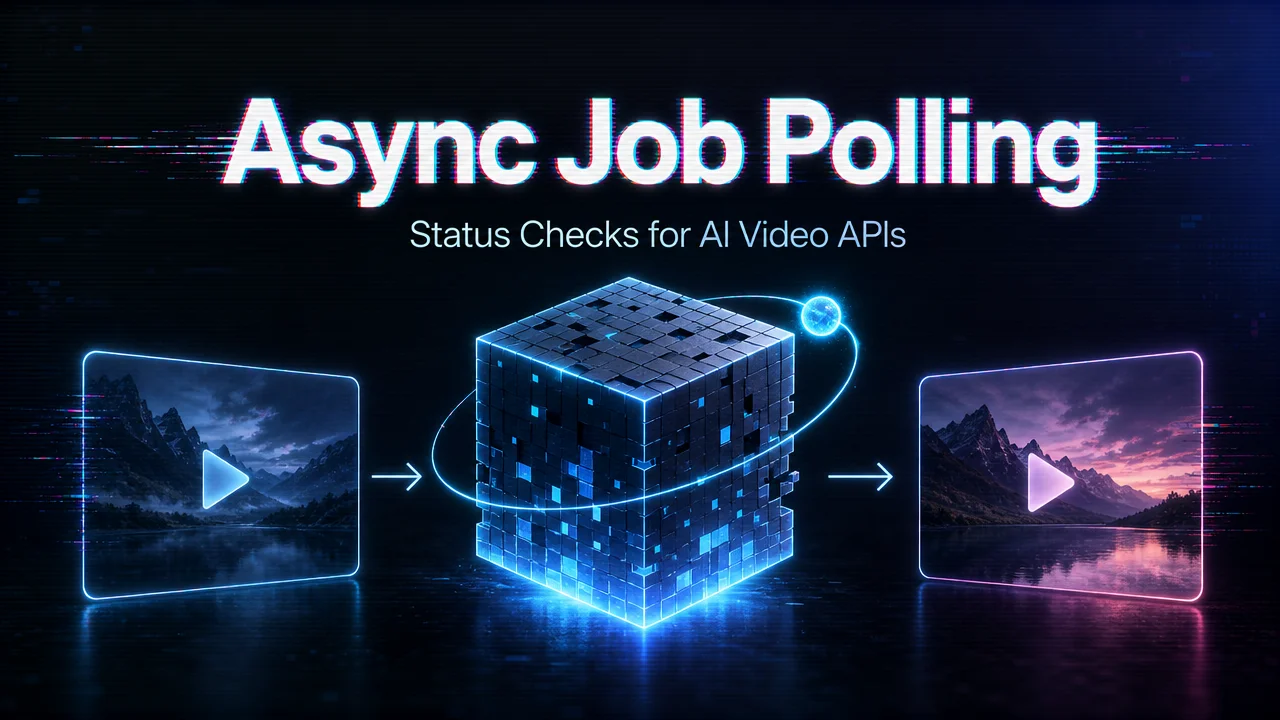
An async job polling pattern for AI video APIs means submitting a generation request, receiving a job ID, checking job status at intervals, and downloading the result when the job is complete. It is a common pattern because video generation often takes longer than a normal HTTP request.
- Submit the job and store the returned job ID.
- Poll status at safe intervals instead of constantly retrying.
- Stop polling after success, failure, timeout, or cancellation.
Polling should be designed carefully. Too many status checks can waste resources or trigger rate limits. Too few checks can make users wait longer than necessary. A good system uses backoff, clear user states, and logs for support.
For WaveSpeedAI users, polling is one production option alongside webhooks. For prototypes, polling is easy to understand. For high-volume workloads, webhooks or queue-based systems may be cleaner. The practical recommendation is to use polling only with controlled intervals, store every job state, and design the user interface around “queued,” “processing,” “completed,” and “failed” states. Implement polling with the boring safeguards, capped intervals, a hard timeout, and idempotent status handling, then load-test the pattern with deliberately slow jobs before any customer traffic depends on it.
Related reading
Related Articles

Best AI Video Platforms for Production Teams in 2027

Best Sora 2 Alternatives for Video Teams in 2027

Lanta AI Review 2027: Best Uses, Pricing, and Limits
Sora 2 Review 2027: API Quality, Cost, and Limits

Build a GPT-6 Astra 3D Workflow With Blender Assets