
Seed2.1 API: What Builders Should Verify
Seed2.1 is officially announced. Learn what builders should verify about API access, migration, routing and production readiness.
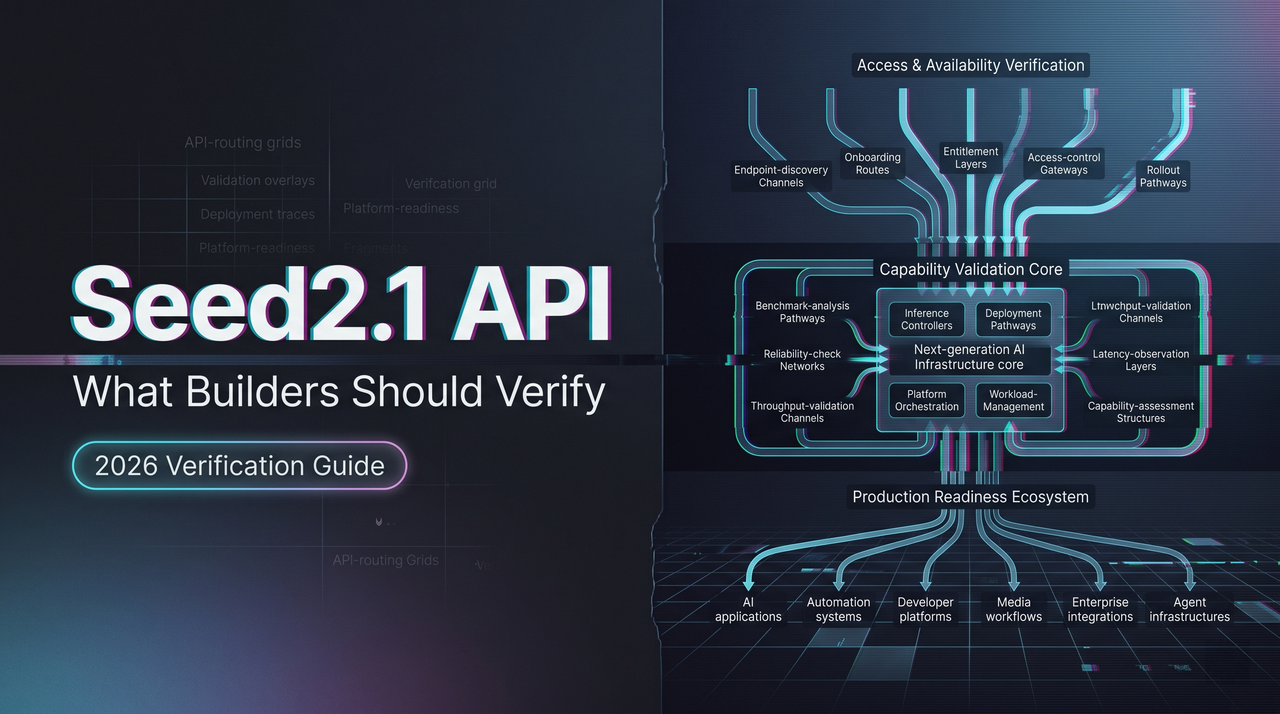
ByteDance announced the Seed2.1 family on June 23, 2026, at the Volcano Engine FORCE conference. The headline framing is “agent-capable models built for real-world productivity” — and that framing matters when you’re deciding whether the Seed2.1 API is worth integrating into a live pipeline, or whether it’s still too early to commit.
This isn’t a tutorial. The model is announced, the Pro variant is positioned as the flagship, and access via Doubao and Volcano Engine is open. What isn’t yet stable, at least in publicly accessible English documentation, is the part builders actually need: model IDs, endpoint behavior, context windows, tool-calling schemas, pricing, rate limits. Until that’s published end-to-end, the right posture is evaluation, not migration.
Below is what I’d verify before touching production, what the baseline looks like if you’re coming from Seed 2.0, and how I’d structure a regression test that doesn’t break what’s already working.
Seed2.1 Status and the Seed 2.0 Baseline
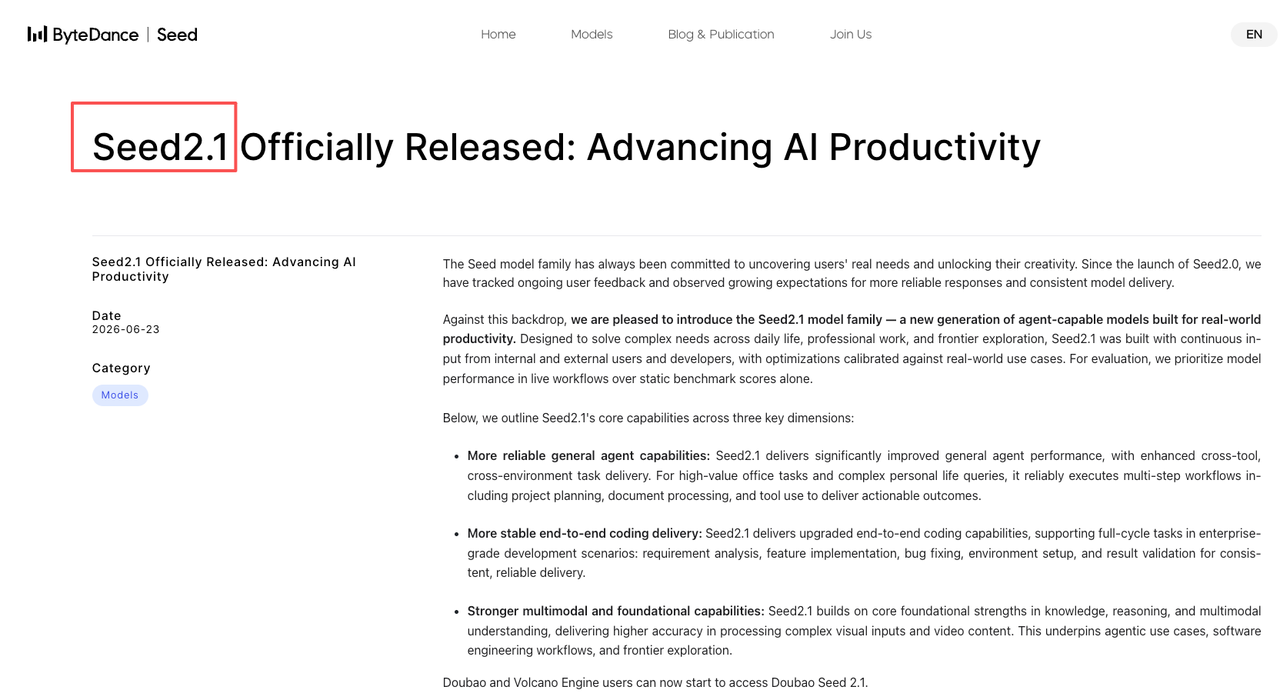
The launch is confirmed. The Seed2.1 official release announcement lists the model family as the successor to Seed 2.0, with the same productivity-and-agents framing. Seed2.1 Pro is the named flagship variant — positioned for complex coding, long-chain agent tasks, multimodal understanding, and high-value production scenarios. Benchmarks cited in the announcement include GDPVal, where Seed2.1 Pro is reported to achieve the highest score, alongside Workspace Bench, Agent Startup Bench, and the internal SeedClawBench.
Product availability and API access are not the same thing, and that distinction is important right now. The Doubao consumer app and Volcano Engine platform are listed as access points. Whether you can pull a stable model ID, point an OpenAI-compatible SDK at it, and get production-grade tool calling today — that’s a verification question, not a documentation lookup. Treat any third-party blog post claiming specific endpoints or prices as a starting point for verification, not a source of truth.
On Turbo naming: community coverage and some product-page listings have mentioned a Turbo variant alongside Pro. I’d hold off on planning around it until the official Volcano Engine documentation confirms naming, ID, and pricing. The Seed team’s own release post emphasizes the family and the Pro positioning. If you need a lower-latency tier, verify directly before architecting around an assumed variant name.
The migration baseline is Seed 2.0 — specifically Doubao-Seed-2.0-pro, the flagship variant released February 14, 2026. The Seed2.0 official launch post is the cleanest reference for what came before: multimodal flagship, available across the full series via Volcano Engine API, optimized for large-scale production. If you’re already calling Doubao-Seed-2.0-pro in production, that’s your control. Seed2.1 is the candidate. Don’t migrate until you can compare them head-to-head on your own workload.
What Builders Must Verify Before API Adoption
Before any ByteDance Seed API rollout — Seed2.1 or otherwise — there’s a short list of things you don’t take on trust. Run this against official documentation, not press coverage:
| Item | What to verify | Where to confirm |
|---|---|---|
| Model ID | Exact string for Pro variant (and Turbo if applicable) | Volcano Engine model card |
| Endpoint base URL | Region-specific base (e.g. ark.cn-beijing.volces.com/api/v3) | Volcano Engine console |
| Region availability | Whether your data residency requirements are met | Platform region docs |
| Context window | Input and output token limits | Model specification page |
| Tool calling | Schema format, parallel call support, JSON mode | API reference |
| Pricing | Input/output rates, cache discounts, billing currency | Pricing page |
| Quotas and rate limits | RPM, TPM, concurrent request caps | Console account page |
| Account access | International billing, KYC requirements | Account settings |
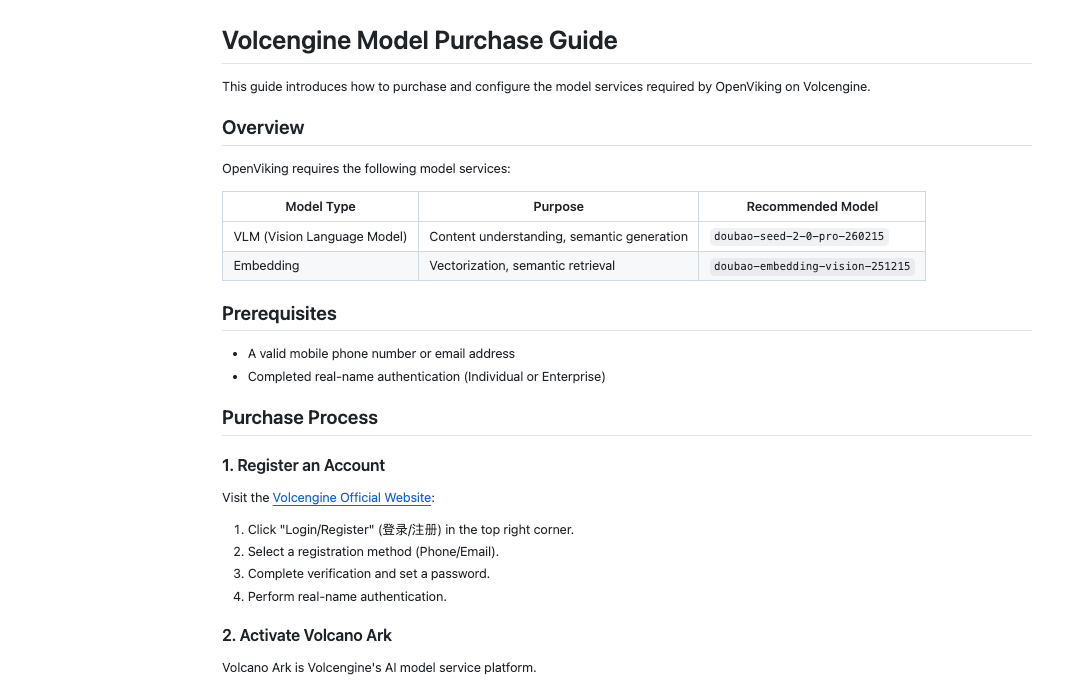
The Volcano Engine documentation is the canonical source for endpoint and model ID details on the platform, including the standard Ark API base path that existing Seed 2.0 integrations already use. If you’re coming from the Seed 2.0 series and your config currently uses doubao-seed-2-0-pro-260215 as the model ID, expect a similar pattern for Seed2.1 — but verify the actual string before deploying. Volcano Engine’s own OpenViking integration docs show the existing Seed 2.0 model ID convention and the API base URL pattern, which is useful as a reference shape for what to look up for Seed2.1.
One verification I’d add explicitly: confirm tool-calling behavior on your actual schemas, not on simple examples. Seed 2.0 supported native function calling. Whether Seed2.1 preserves the exact schema, parallel-call semantics, and error responses your existing code depends on — that’s testable, not assumable.
Test, Migrate, or Keep the Current Model?
The decision isn’t binary. It’s three positions: keep what works, test alongside, or migrate. For most teams running Seed 2.0 in production today, the right move is the middle one — run shadow traffic, compare outputs, then decide.
Prompt and Tool-Use Regression Tests
Before you migrate anything, lock down a regression suite that reflects your real workload. Three layers:
- Prompt regression set. Pick 50–100 prompts that represent your actual production distribution — not the easy cases, the messy ones. Include the prompts your users have complained about. Run them through both Seed 2.0 and Seed2.1 with identical parameters. Compare outputs on accuracy, format adherence, and instruction following.
- Tool-use regression. If you’re using this as an agent model API, your tool schemas are the integration surface that matters most. Test every tool definition you actually deploy. Verify argument types are populated correctly, optional parameters are respected, and parallel calls (if you use them) still resolve in the order your application expects.
- Edge cases. Long contexts, multilingual prompts, structured output (JSON schema, when applicable), and prompts that previously hit refusal patterns. Behavior shifts at the edges, not in the middle.
For benchmark context beyond your own suite, OpenAI’s GDPval benchmark — which the Seed2.1 announcement cites — is a useful reference for what “real-world economically valuable task” performance means in evaluation terms. But your own regression set is the only one that actually predicts production behavior.
Shadow Traffic, Fallback, and Rollback
Once the regression set passes, the migration pattern I’d use:
- Shadow traffic first. Route a small percentage of real production requests to Seed2.1 in parallel with Seed 2.0. Don’t return Seed2.1 output to users. Just log it, diff it, and review.
- Direct provider versus aggregation. Calling Volcano Engine directly gives you the ground-truth behavior of the model. Going through an aggregator (OpenAI-compatible gateway, third-party relay) adds a translation layer that may mask or alter behavior — function calling shape, streaming semantics, error codes. For evaluation, use the direct provider. For deployment, the decision is yours, but document which layer you’re testing against.
- Fallback and rollback. Keep Seed 2.0 callable for the entire migration period. If Seed2.1 produces a malformed tool call or a refusal where Seed 2.0 worked, route that request to the fallback automatically. Define explicit rollback criteria — error rate threshold, latency increase threshold, customer complaint signal — before you flip default traffic over.
Production adoption signal isn’t “we ran it in shadow for a week and nothing broke.” It’s “we ran it in shadow for two weeks, the diff with Seed 2.0 matched our quality bar on the regression suite and on shadow traffic, and we have a rollback path that takes under five minutes.”
If your current pipeline is delivering on Seed 2.0 and you don’t have a specific capability gap that Seed2.1 closes, the third position is also legitimate: keep what works, revisit in a month when documentation is more mature.
FAQ
Does Seed2.1 preserve prompt behavior from Seed 2.0?
The announcement positions Seed2.1 as an upgrade, not a behavioral compatibility commitment. Prompt-engineered systems should expect drift in formatting, refusal patterns, and instruction adherence. Run your regression suite before assuming compatibility.
Can existing tool schemas migrate without application changes?
Likely, but verify. Seed 2.0 supported native function calling. Whether Seed2.1 uses the same JSON schema structure, parallel-call semantics, and error response shape needs testing against your specific tool definitions. Don’t infer compatibility from version numbers.
Which data should teams avoid during early evaluations?
For early evaluations against an undocumented production environment, avoid sensitive personal data, regulated content (PII, PHI, financial), and any data subject to residency requirements until you’ve confirmed data handling, retention, and regional routing in writing from the provider. Use synthetic or already-public data for the first round.
How should teams document provider-reported capabilities internally?
Separate confirmed from announced. Anything in the official Seed announcement or Volcano Engine documentation: confirmed. Anything in press coverage or community testing: announced. Anything you’ve verified end-to-end against your own pipeline: validated. Don’t mix these tiers in internal docs — the next engineer who joins shouldn’t have to re-derive which claims you actually tested.
Conclusion
The Seed2.1 API is live in announcement and available through Doubao and Volcano Engine, but full developer-grade documentation in English is still settling. For builders with Seed 2.0 already in production, the migration question is real but not urgent. Build the regression suite, run shadow traffic, verify tool calling against your actual schemas. Decide based on what you see, not what’s claimed.
Worth re-checking the Volcano Engine documentation in two to four weeks. That’s usually when the noise dies down and the spec stabilizes. To be verified.
Previous posts: