Allow the microphone
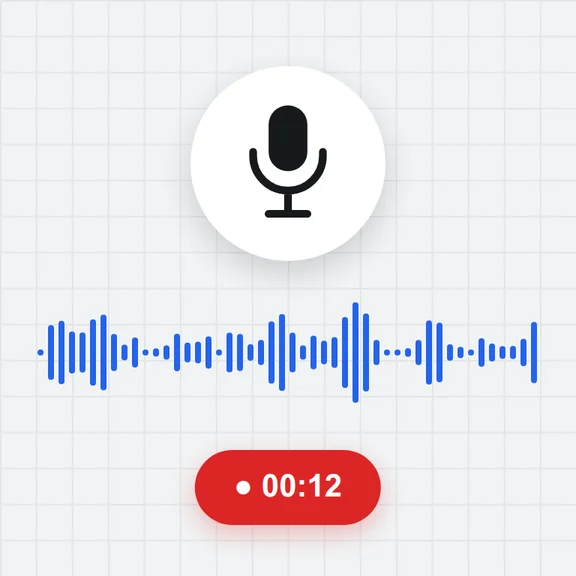
Press Start and allow the microphone when the browser asks. Pick another microphone from the list if you have more than one.
Check that your microphone works and sounds right: a live level meter in decibels, waveform and spectrum, a noise-floor measurement and a speaking-level guide.
Record a short clip to hear yourself, and try echo cancellation, noise suppression and automatic gain on and off.
See your microphone’s level in decibels, its waveform and spectrum, measure background noise, and record a short clip to hear how you sound.
Your browser asks to use the microphone the first time. Nothing is recorded unless you press Record.Press Start and allow the microphone when the browser asks. Pick another microphone from the list if you have more than one.
Talk at your normal distance. The level guide says whether you are too quiet, good or too loud, and the spectrum shows your voice.
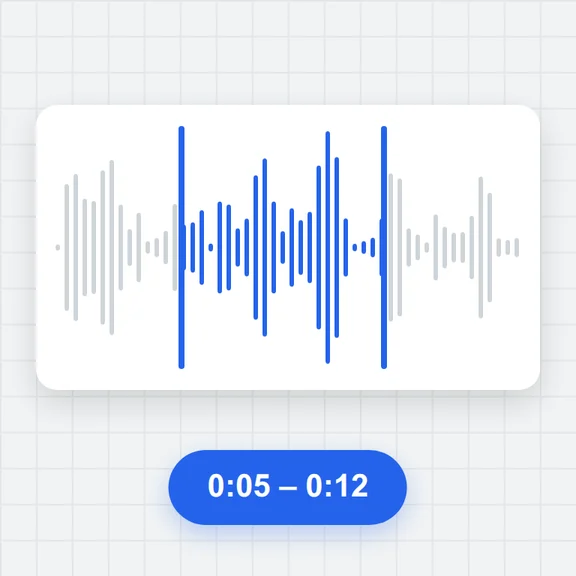
Record 10, 20 or 30 seconds and play it back to hear exactly what others hear. Save it as WAV if you want to keep it.
0 dBFS is the loudest a digital signal can be. Peak shows the loudest moments, RMS the average loudness. For speech, peaks around −18 to −6 dB are ideal; at 0 dB the sound clips and distorts.
The level of the room and the microphone when nobody speaks. Below about −60 dB is quiet; above −45 dB you will hear hiss, fans or traffic behind your voice. Move away from noise or lower the gain.
Shows how loud each pitch is, from deep (left) to high (right). Voices sit mostly between 100 Hz and 4 kHz. A constant spike at 50 or 60 Hz is electrical hum; a lack of highs makes the voice sound muffled.
Create pictures and clips for your podcast, stream or video with WaveSpeed AI.
Create pictures, thumbnails and graphics from a short description.
Turn an idea or a still image into a short video clip.
Turn a picture into a 3D model.
$1 in free credits for eligible new accounts. No card needed. Generators have separate account and credit requirements. The microphone test is free.
Press Start, allow the microphone and speak. If the level meter and waveform move, the browser is receiving sound. Use the level guide to set a good speaking level, and record a short clip to hear how you sound.
Check that the right microphone is selected in the list, that it isn’t muted by a switch or in your system sound settings, and that no other app has taken it. On a laptop, some keyboards have a microphone mute key. If the browser blocked it, allow it from the address bar.
They are decibels relative to full scale (dBFS): 0 dB is the maximum, everything else is negative. Each 6 dB is roughly double or half the signal. A normal speaking voice should peak between about −18 and −6 dB.
For calls, usually yes: they remove echo from speakers and steady background noise. For music or recording a good room, turn them off to keep the sound natural. The page restarts the microphone with your choice and shows what the browser actually applied.
Below −60 dBFS is very good, −60 to −45 dB is acceptable, and above −45 dB the background will be audible. Fans, air conditioning, laptop noise and high microphone gain raise the noise floor.
With speakers, the microphone picks up its own sound and it loops round, which can turn into a loud howl (feedback). Headphones prevent that.
No. The meter and displays work on the live sound in your browser. A recording is only made when you press Record, stays in the page, and is saved only if you download it. Nothing is sent anywhere.
Free, private, nothing to install.
/filters:quality(82)/media/images/1791123751656780930_IfFPY7R0.webp)
/filters:quality(82)/media/images/1791123737177812425_RjKT3cku.webp)
/filters:quality(82)/media/images/1791123748309870128_xlkNgK8N.webp)
/filters:quality(82)/media/images/1791123738630744263_oR09R0aj.webp)
/filters:quality(82)/media/images/1791177033162457776_uQ09OY7g.webp)
/filters:quality(82)/media/images/1791123734319125607_JdnwGPY7.webp)
/filters:quality(82)/media/images/1791123746355630206_udnxGPY7.webp)
/filters:quality(82)/media/images/1791123744771362580_yC0sPezZ.webp)
/filters:quality(82)/media/images/1791123738606970169_5KIR1ais.webp)
/filters:quality(82)/media/images/1791123748197655725_EUmuFNW6.webp)