
WAN 2.5 Pricing Explained: Cost for 10/50/100 Videos + How to Cut Waste
Tired of guessing WAN 2.5 costs? Here’s a predictable way to budget.
I’m Dora. A small thing nudged me into this: I kept abandoning half-finished text-to-video drafts because I couldn’t guess what another round would cost. WAN 2.5 had been on my list for weeks. I wasn’t chasing the newest thing: I just wanted a steady sense of price so I could plan without babysitting a meter.
So earlier this month (January 2026), I ran a simple set of tests across two common access points: a credits-based web app and a pay-as-you-go API host. I made short clips (3–6 seconds), tried basic prompts and a few control options, then noted what the meter did each time. Here’s what stood out, what I paid, and how I’d budget for 10, 50, or 100 videos without turning it into a spreadsheet hobby.
Pricing variables
Costs depend on the host. But the bill almost always moves with the same levers:
- Duration (seconds): More seconds, more compute. Obvious, but easy to forget when you’re nudging a clip from 4s to 8s.
- Resolution and fps: 720p at 24 fps was the cheapest baseline I saw. 1080p and 30 fps added 30–80% in my runs. Upscalers cost extra if they’re separate steps.
- Guidance and controls: Image/video reference, depth/motion guidance, camera control, each can add overhead. Sometimes it’s a small bump: sometimes it doubles runtime.
- Iterations and seeds: Rerolling is where budgets evaporate. Two or three small tweaks can cost more than the “final” pass.
- Queue vs priority: Some hosts charge for faster queues. It doesn’t change quality, just time-to-result.
- Failed/aborted runs: Partial charges are common, even on errors. It’s not fun, but it happens.
What I paid (rounded ranges, per successful clip):
- Lean baseline (3–4s, 720p, no fancy controls): $0.10–$0.40
- Standard (4–6s, 720–1080p mix, light guidance): $0.35–$1.20
- Heavier (6–8s, 1080p, reference + camera moves): $1.00–$3.50
Note: these ranges came from a week of light production testing, not bulk discounts. Your host and settings may land higher or lower. I tracked about 40 generations total, split across the two providers.
10 videos cost
I budget this in three tiers, because most projects drift between them.
-
Lean set (social teasers, concept checks)
-
Settings: 10 clips at ~4s, 720p, 24 fps, no upscaler, minimal rerolls
-
What I saw: $0.10–$0.40 each
-
Total: ~$1–$4
-
Real note: If you allow one reroll per clip, double the low end. It adds up quietly.
-
Standard set (client preview, internal demo)
-
Settings: 10 clips at 5–6s, mostly 720p with a few 1080p finals, 1–2 rerolls total
-
What I saw: $0.35–$1.20 each
-
Total: ~$4–$12
-
Real note: One upscale pass on 3–4 favorites may add another $2–$5.
-
Heavier set (polished snippets)
-
Settings: 10 clips at 6–8s, 1080p target, reference image/video on half, some camera motion
-
What I saw: $1.00–$3.50 each
-
Total: ~$10–$35
-
Real note: Priority queues can tack on 10–20% if you’re rushing.
This didn’t save me time at first, tracking felt fussy. But after two sessions, I noticed something quieter: I stopped over-generating. The ranges gave me a ceiling to respect.
50 videos cost
Fifty is where drift becomes a bill. I walked it three ways:
-
Lean batch (storyboards, ideation sprints)
-
Settings: 4s, 720p, strict no-reroll rule, pick best-of-1
-
Range: $0.10–$0.40 each
-
Total: ~$5–$20
-
Caveat: One “quick” second pass across all 50 doubles that total. Guard your rules.
-
Standard batch (multiple directions, light curation)
-
Settings: 5–6s, 720–1080p mix, best-of-2 on 10 key prompts
-
Range: $0.35–$1.20 each
-
Total: ~$18–$60
-
Caveat: If you upscale the top 10 to 1080p, add ~$8–$20 depending on the host.
-
Heavier batch (promo-ready selects)
-
Settings: 6–8s, 1080p, reference on a third, camera moves on a third
-
Range: $1.00–$3.50 each
-
Total: ~$50–$175
-
Caveat: Priority queue or repeated seeds can push this past $200 without much warning.
100 videos cost
At 100 clips, I treat anything not in the brief as a tax.
-
Lean run (research or dataset building)
-
Settings: 4s, 720p, one pass only, no guidance
-
Range: $0.10–$0.40 each
-
Total: ~$10–$40
-
Practicality: Works for breadth. Expect uneven quality, by design.
-
Standard run (campaign exploration, product variations)
-
Settings: 5–6s, 720–1080p split, best-of-2 on 20 prompts
-
Range: $0.35–$1.20 each
-
Total: ~$35–$120
-
Practicality: Enough room for exploration without losing the plot.
-
Heavier run (client-ready pool)
-
Settings: 6–8s, 1080p target, reference and camera control in play
-
Range: $1.00–$3.50 each
-
Total: ~$100–$350
-
Practicality: If you want 10–15 strong selects, this is a sane sandbox.
If you’re running teams or long projects, volume discounts on some hosts can shave 10–25%. Worth asking: not always advertised.
Waste patterns
 The places I burned money were boring and predictable. That’s useful.
- Overlong drafts: I let drafts run 8 seconds when 4 would’ve shown the idea. Halving seconds often halves cost.
- Reroll spirals: Chasing a vibe with seeds instead of editing the prompt. One clean rewrite beats three rerolls.
- Early 1080p: Upscaling too soon. Roughs look rough at any resolution.
- High-fps by habit: I flipped to 30 fps out of habit. Didn’t help most clips. It did help the invoice.
- Unscoped references: Dropping in reference video without testing a single still first.
- Priority queue by panic: Paying to wait less when I could’ve batched and walked away.
- Silent failures: Not watching error logs meant paying partials for preventable issues.
None of this is dramatic. It’s the quiet stuff that makes you wonder where the budget went.
Save cost 8 tips
These are small, boring switches. They worked.
- Prototype at 720p, 4s, 24 fps
- If the idea survives that, it probably deserves polish. If it doesn’t, you saved 40–70%.
- Limit rerolls with a simple rule
- I use “one reroll per prompt, then rewrite.” It forces thinking over spinning.
- Separate idea and quality passes
- Round 1 finds the concept. Round 2 fixes motion, light, and scale. Don’t pay for both at once.
- Use reference sparingly
- Start with a single image reference. If it helps, then try video reference or depth.
- Batch overnight
- Queues are cheaper when you’re not in a rush. I set a batch and go make coffee somewhere else.
- Lock specs per batch
- Changing fps or resolution mid-stream is how budgets drift. One batch, one spec.
- Track by scenario, not per-clip
- I keep three buckets in a note: lean, standard, heavy. If a clip leaves its bucket, I notice.
- Kill duds fast
- If the first second is wrong, cancel. Partial charges hurt less than full ones.
Team budgeting
When more people touch the tool, the drift multiplies. A few guardrails help.
-
Define tiers with examples
-
Lean: “Story beats at 4s, 720p, single pass.”
-
Standard: “6s tests, 720p, best-of-2 on five prompts.”
-
Heavy: “1080p finals, camera moves, reference allowed.”
-
Assign budgets per tier
-
Example monthly cap: $50 lean / $150 standard / $300 heavy. Adjust to your reality.
-
Timebox exploration
-
Exploration is real work. Give it a window. I like “45 minutes, max 12 clips.”
-
Require review before upscale
-
A human gate keeps roughs cheap.
-
Centralize prompts and settings
-
A shared doc with known-good prompts and default specs stops accidental premium runs.
-
Track outcomes, not just spend
-
Note which clips shipped. Paying for experiments is fine: paying without learning isn’t.
-
Prefer stable hosts for teams
-
Slightly higher unit cost can beat flaky pipelines that leak partial charges and time.
This is less about policing and more about turning fog into lanes.
By the way, with WaveSpeed, you can run multiple short clips, set your resolution, control passes, and keep your budget predictable—all without babysitting meters or juggling spreadsheets.
We’ve designed it for the exact frustrations we ran into ourselves: overspending on iterations, guessing costs, and juggling hosts. You can try it here.
FAQ
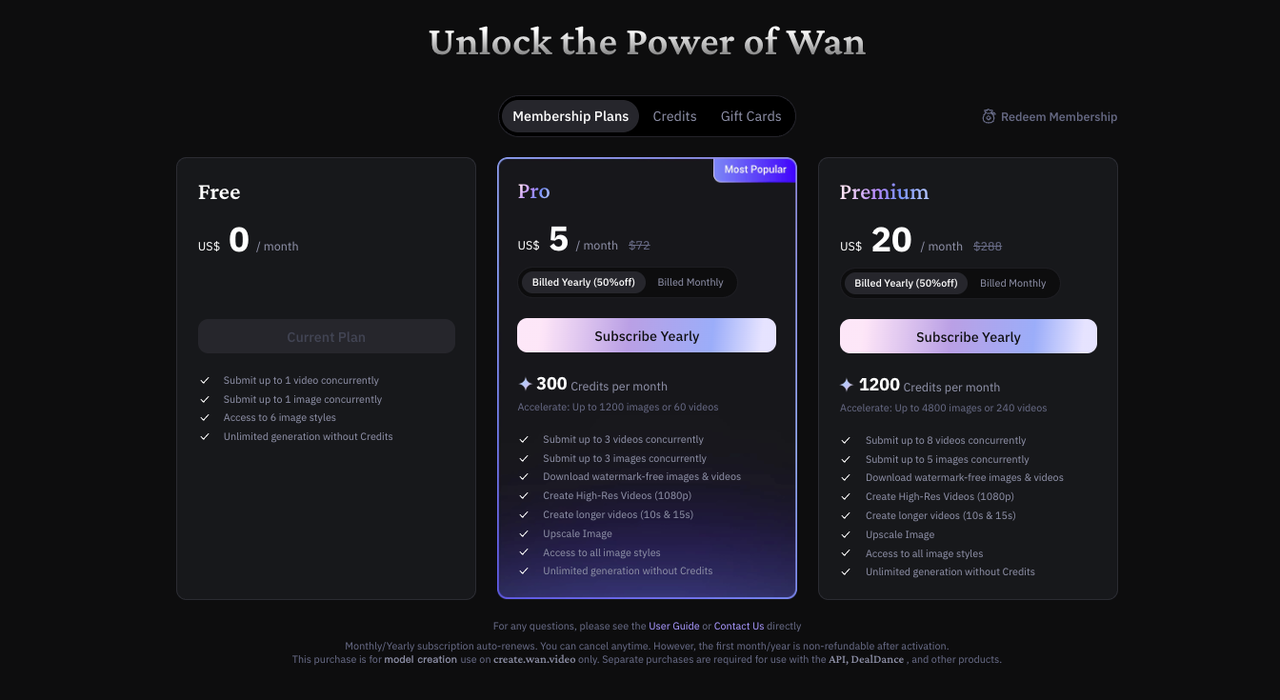
Is WAN 2.5 free? No. Access is usually through a hosted web app or an API provider that bills per generation. Prices vary by platform.
Why do different sites quote different numbers for WAN 2.5 pricing? You’re paying for compute time, queue priority, and add-ons (upscalers, controls). Hosts package those differently. The model’s the same: the wrappers aren’t.
What resolution should I start with? 720p at 24 fps for drafts. Go 1080p only for selects. It keeps costs predictable and avoids polishing the wrong idea.
Do failed generations cost money? Often, yes, partial usage gets billed. Good hosts credit clearly broken runs, but plan for some waste.
How do I estimate before I start? Pick a baseline spec (e.g., 4s, 720p). Generate three clips. Average the cost. Multiply by your target count. Add 20% slack for rerolls.
Related Articles

Claude Code Agent Harness Architecture: Key Insights from the Leak
Claude Code Undercover Mode: What the Leaked Source Actually Reveals
Claude Mythos API & Pricing: What Builders Need to Know Before Launch

GLM-5V-Turbo: What Developers Should Know in 2026

WAN 2.7 vs Seedance 2.0 vs Sora 2 vs Veo 3.1 Fast: Image-to-Video Comparison