
Seedance 2.5 API Watch: Access and Production Readiness
Track Seedance 2.5 API availability, verified capabilities and production signals without treating demos as API facts.
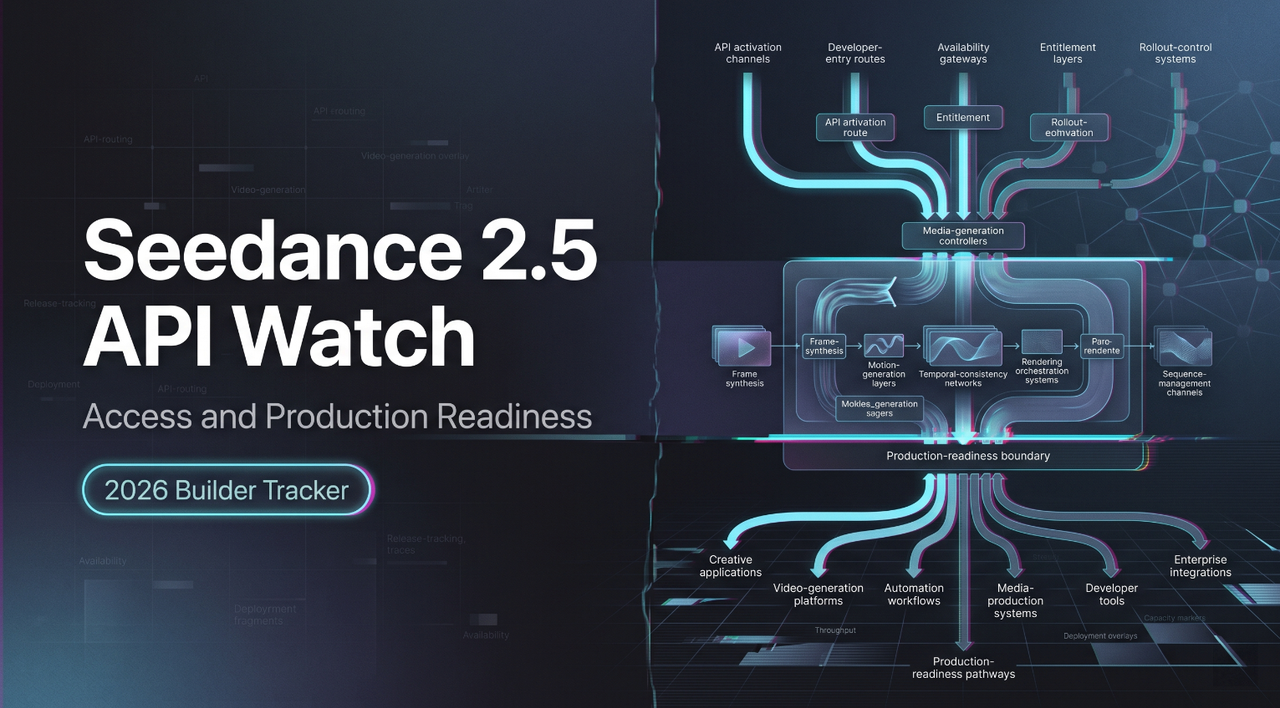
I had three tabs open last week, all pointed at the same question: when does the Seedance 2.5 API actually ship? One was a Pandaily summary of ByteDance’s FORCE keynote. One was my own Seedance AI job logs from May. The third was empty — the page where a Seedance 2.5 model card should have been.
That third tab is the whole reason I’m writing this. The model has been previewed but not shipped. Enterprise beta now, public launch targeted for early July 2026, no API endpoint, no model ID, no pricing. If you’re a developer trying to figure out whether to wire anything up ahead of time, this is the situation you’re working with.
This piece is a watch, not a review. I can’t tell you how the Seedance 2.5 API behaves because I haven’t called it. What I can do is lay out what’s been publicly disclosed, what’s still missing, and what a production-ready integration would need to clear before it’s worth touching.
Seedance 2.5 Status and Unknowns
Product showcase versus developer access
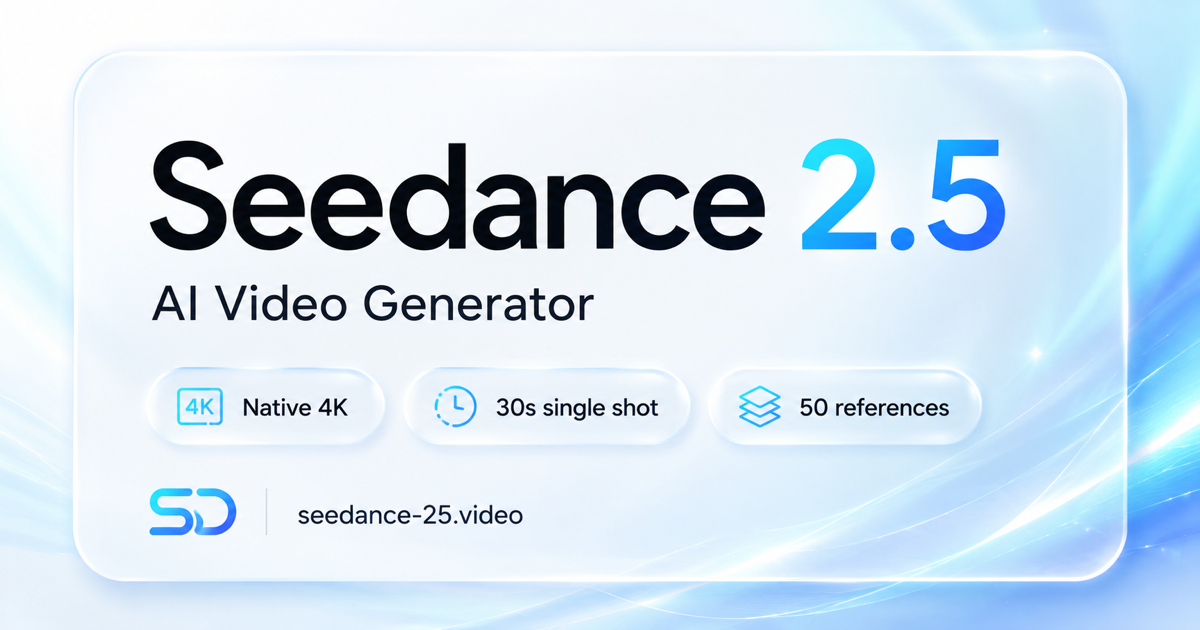
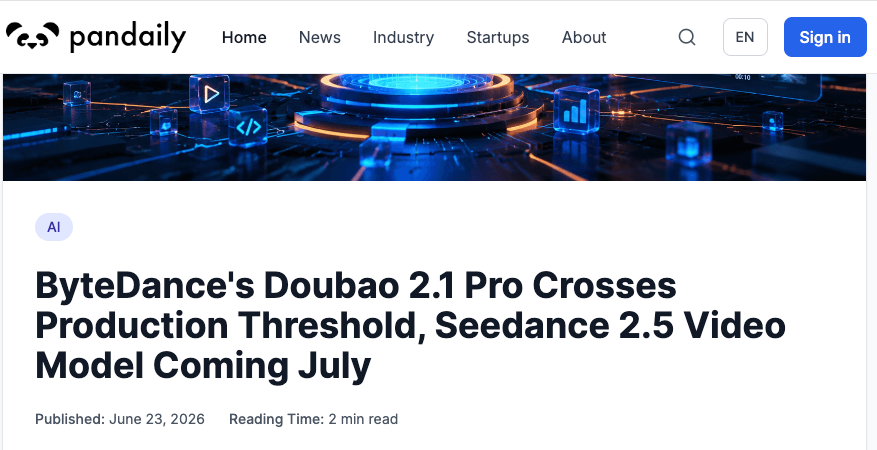
ByteDance announced Seedance 2.5 on June 23, 2026 at Volcano Engine’s FORCE conference. Headline claims: a native 30-second single clip, up to 50 multimodal reference inputs, and region-level editing that re-draws part of a frame without redoing the rest. None of this has been independently benchmarked. The launch event was a product showcase — the underlying video generation model wasn’t placed in developer hands the same day. According to Pandaily’s FORCE 2026 coverage, the company framed access as a global enterprise beta with broader availability targeted for early July.
The distinction matters. A keynote demo and a production-grade AI video API are two different artifacts. One is curated. The other is what your retry logic has to survive.
Model ID, regions and input modalities
For context, the Seedance 2.0 API is currently exposed on Volcano Engine Ark and BytePlus ModelArk under model IDs like doubao-seedance-2-0-260128 and a -fast variant. Input modalities cover text, image, first-and-last-frame, and multi-reference (up to ~12 files per request on 2.0). Region anchors are ark.cn-beijing for the China platform and the BytePlus international endpoint for non-China traffic.
For 2.5, none of this is published yet:
- No public model ID
- No confirmation of which region(s) it ships to first
- No confirmation that 50-reference input is exposed via API at GA, or only via the consumer apps initially
- No confirmation that audio-video joint generation (present in 2.0) carries over unchanged
I paused here. The 50-reference claim is the one I’d most want to verify on the API surface, because reference-heavy requests behave very differently from short prompts in async pipelines.
Output specifications, pricing and limits
Output resolution for 2.5 hasn’t been officially specified. The native 4K upgrade reported around the same keynote appears to attach mainly to Seedance 2.0, not 2.5. Pricing is not disclosed. Per-request limits, concurrent job caps, and rate limits — also unpublished.
This is where my data ends.
Production Readiness Checklist
Treat this section as the gate you’d want any new ByteDance Seed API to pass before it carries real traffic. The current Seedance 2.0 API clears most of these. Whether 2.5 inherits all of them is open.
Async jobs and callbacks
Seedance 2.0 follows a submit-poll-download pattern: POST a task, receive a task ID, poll status until succeeded, fetch the video URL within its expiry window. The BytePlus Video generation API reference documents the request shape; the list-tasks endpoint in ModelArk handles enumeration. Webhook-style callbacks were not part of the 2.0 surface I tested in May — polling was the default.
For 2.5 at 30-second native output, polling intervals will likely need to lengthen. If callbacks aren’t added, expect your worker pool to hold connections longer per job.
Queue and failure visibility
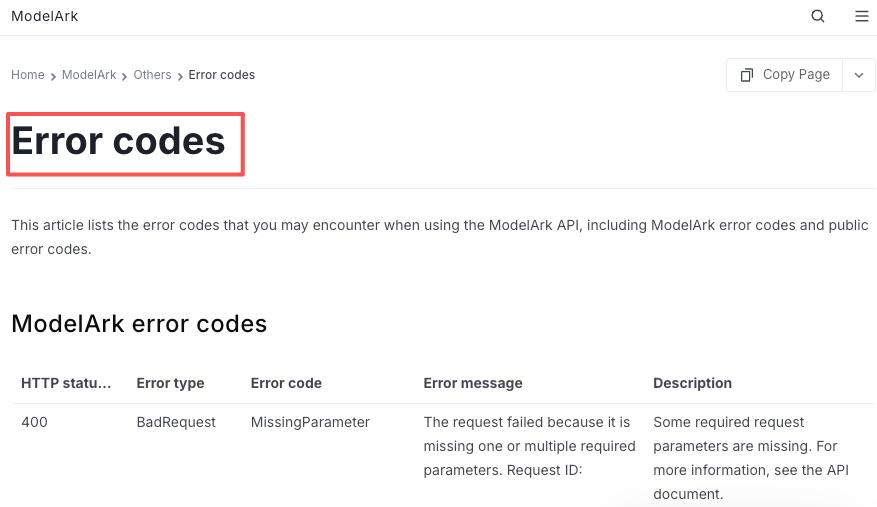
Two things you want from any production video stack: queue depth and a reason when something fails. ModelArk’s error code reference is reasonable for 2.0 — content moderation rejections, parameter validation errors, and quota errors are distinguishable. Whether 2.5 preserves the same code surface, or introduces new failure modes around 50-reference inputs, is the kind of thing you only learn by running it.
Moderation, licensing and data handling
ByteDance announced an AI copyright/commercialization platform alongside Seedance 2.5. Details are sparse. Until that’s documented, commercial use should be reconfirmed against the latest model README at GA, not assumed from 2.0 terms. Hypothesis confirmed only when you read it in writing.
Documentation and SDK maturity
Stable API access starts with ModelArk’s base URL and authentication setup and an SDK that doesn’t break on minor schema additions. For 2.0, the surface is mature. For 2.5, I’d expect a documentation update window of a few weeks after GA before the SDK examples catch up to the new input modalities.
How Teams Can Prepare and Monitor Launch
Configurable video job schemas
If you’re already running Seedance 2.0 in production, the cheapest 2.5 preparation is making your job schema configurable rather than hardcoded. Treat model_id, max duration, reference count limit, and output resolution as parameters, not constants. When the new model ID lands, you flip a config flag — not a deploy.
Current-model baselines and fallbacks
Keep 2.0 as a fallback path. The historical pattern with Seedance releases — 1.5 → 2.0, then 2.0 → 2.0 Fast/Mini variants — is that older versions remain accessible after a new one ships. A fallback to doubao-seedance-2-0-260128 covers you for the first 30 days of any quota turbulence on the new model.
Official documentation and stable-access triggers
The signals worth watching: a published 2.5 model card on the ByteDance Seed pages, an updated SeedVideoBench-2.0 entry covering the new model, and a model ID appearing in the Volcano Engine Ark console’s provisioning list. Until all three line up, treat any Seedance 2.5 API integration work as exploratory.
Cold starts are invisible to low-frequency users. Intolerable for high-frequency ones. The same goes for unverified specs.
FAQ
Can existing video job schemas support a future Seedance model?
Mostly, yes — if your schema already treats model ID, duration, reference inputs, and resolution as parameters. The 50-reference input claim for 2.5 will likely push past 2.0’s array sizes, so audit your validation logic for hardcoded length <= 12 checks.
What migration work remains if supported input types change?
Region-level editing is new in 2.5’s announcement. That’s not an input type 2.0 supports. If it ships via the API rather than only via consumer apps, you’d need to add a mask or region descriptor field to your request payload. That’s net-new code, not just config.
Should teams reserve capacity before official API access?
I wouldn’t. There’s no public capacity reservation path for an unreleased API, and ByteDance hasn’t announced one. Better use of the same hours: schema configurability and a fallback playbook.
Which commercial-use terms require confirmation before testing?
Output ownership, training-data carve-outs, and the relationship between the new AI copyright platform and existing Seedance licensing. All three should be reconfirmed against the model’s README at GA. Don’t assume 2.0 terms transfer.
Conclusion
The Seedance 2.0 API is a known quantity. The Seedance 2.5 API is, today, a set of claims with a launch window. What you can do now is keep your schemas flexible, your fallbacks warm, and your eyes on the official channels. If the model ID and pricing land in early July as targeted, you’ll be a week from a real test, not a quarter.
To be verified. More to come.
Previous posts: