
Wan 3.0 vs Seedance 2.0: AI Video Model Differences to Watch
Compare Wan 3.0 with Seedance 2.0, Wan 2.7, and HappyHorse 1.1 across motion control, reference images, stability, and workflow fit.
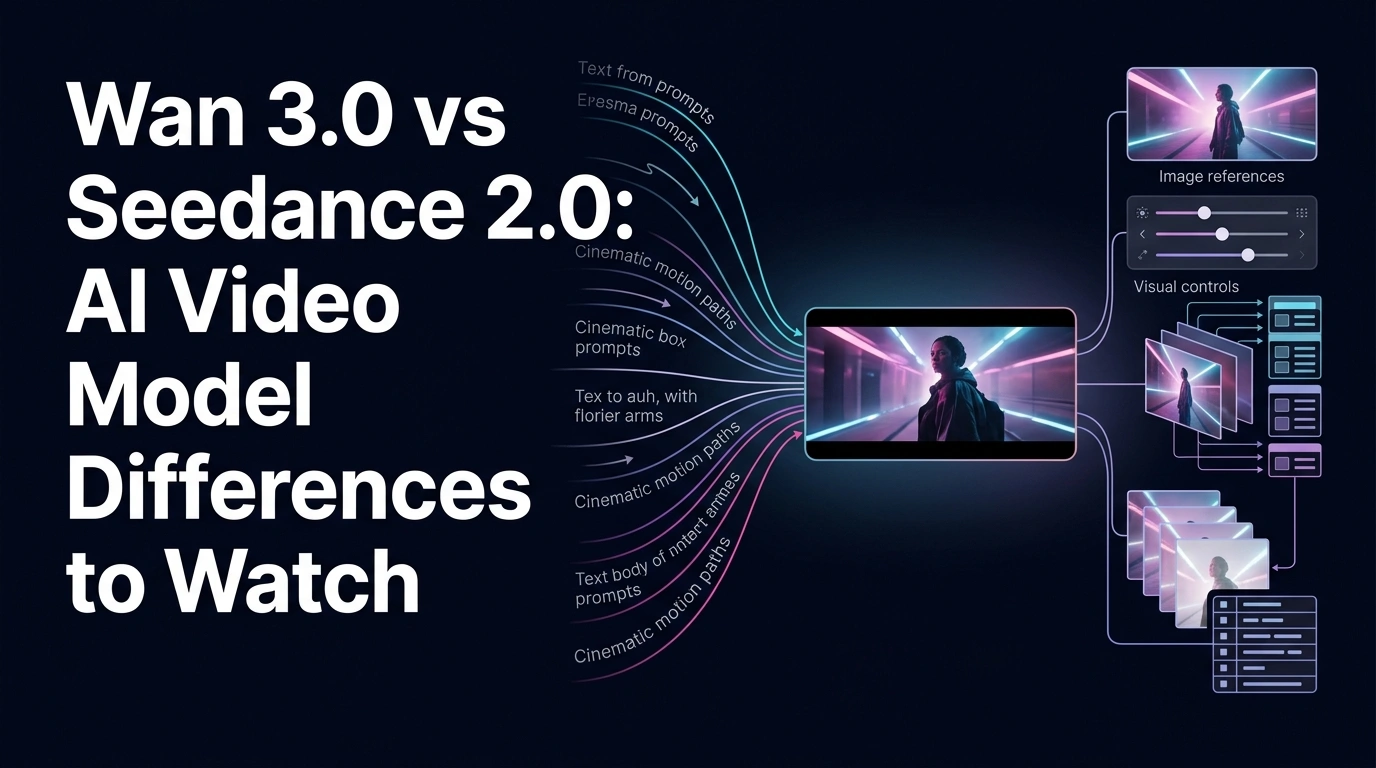
Wan 3.0 vs Seedance 2.0 is a comparison many AI video creators will make as they look for better control, cleaner motion, and more reliable production results. The answer will depend less on a single showcase clip and more on the kind of video a creator needs to make.
The current comparison set already includes several strong workflow directions: Seedance 2.0 Text-to-Video, Seedance 2.0 Image-to-Video, Wan 2.7 Text-to-Video, Wan 2.7 Image-to-Video, and HappyHorse 1.1 Image-to-Video.
Each workflow asks a slightly different question. Can the model turn a prompt into the intended action? Can it animate a reference image without losing its identity? Can it produce a usable series of clips instead of one lucky result? That is where a possible Wan 3.0 difference would become meaningful.
Wan 3.0 vs Wan 2.7: Start With the Family Baseline
Wan 2.7 is the most direct comparison for a new Wan generation. Use Wan 2.7 Text-to-Video for prompt-led scenes and Wan 2.7 Image-to-Video for reference-driven clips.
The comparison should begin with the friction creators already know. Does a prompt need repeated rewriting? Does the subject change between attempts? Does the reference image lose its important details? Does the output need too much cleanup before it can move into an edit or publishing workflow?
Those questions create a useful definition of an upgrade. If Wan 3.0 makes the same jobs easier to direct or repeat, the difference will show up in the work rather than only in a model announcement.
Wan 3.0 vs Seedance 2.0: Where Could the Difference Appear?
Seedance 2.0 is a useful contrast because it gives creators another current approach to text-to-video and image-to-video generation. Run the same prompts through Seedance 2.0 Text-to-Video, then use the same reference images with Seedance 2.0 Image-to-Video.
The first difference to watch is motion control. A strong video model should respond to the subject, camera, pace, and action described in the prompt. A model that produces beautiful motion but ignores the requested direction may be less useful for a structured production task.
The second difference is reference preservation. In image-to-video generation, the starting image often contains the product design, character details, or composition that the creator wants to keep. The more naturally a model adds motion without losing those anchors, the more useful it becomes for repeatable creative work.
The third difference is temporal stability. Review the whole clip for changes in identity, lighting, object shape, background structure, and camera direction. These details determine whether a clip can sit beside other shots in the same project.
HappyHorse 1.1 Adds a Useful Image-to-Video Reference
HappyHorse 1.1 Image-to-Video adds another reference point for image-driven workflows. Including it in the same test helps creators see whether a model is especially useful for a certain kind of image, motion instruction, or visual style.
Use the same images, motion descriptions, and review criteria across all models. Look at subject recognition, motion quality, composition, and the number of attempts needed to produce a clip that is ready for the next step.
This kind of comparison is more useful than a universal ranking. A model can be a strong choice for product animation and a different model can be a better fit for cinematic exploration or fast social content.
A Practical AI Video Model Comparison
The best AI video model depends on the workflow, so the evaluation should cover more than visual quality.
Text-to-Video Prompt Control
Use prompts that describe a subject, an action, a camera movement, and a setting. Keep the wording consistent between models. Then check whether each output follows the important parts of the request and whether the motion feels intentional.
Image-to-Video Reference Quality
Use the same starting image with a slow camera move, a subject action, and a more energetic scene. Compare how well each model preserves the visual anchors while adding movement.
Motion and Temporal Stability
Watch each full clip at normal speed and in slow motion. Look for flicker, identity changes, object deformation, background drift, and abrupt changes in lighting or camera direction.
Iteration and Usable Output Rate
Record how many attempts produce a clip that can move into editing or publishing. Also track prompt rewrites and manual cleanup. A small difference in visual quality can matter less than a large difference in iteration time.
Production Workflow Fit
The model is only one part of the pipeline. Request submission, queue status, retries, output URLs, storage, preview, and delivery all affect the experience. Developers should evaluate those steps alongside the generated video.
What Would Make Wan 3.0 Stand Out?
Wan 3.0 would have a clear place in the market if it offered a workflow advantage creators could feel repeatedly. That might come from more predictable text-to-video motion, more dependable image-to-video references, steadier multi-shot results, or a simpler path from generation to delivery.
The most useful advantage would be specific rather than universal. Teams may choose one model for text-to-video exploration, another for reference-driven product clips, and another for a particular visual style. A Wan 3.0 model would be easier to adopt when its strongest use cases are clear.
Choosing the Right Model for the Project
Start with the asset you need to create. If the project begins with a written scene, compare text-to-video prompt control. If it begins with a product image or character reference, compare image-to-video fidelity. If the project requires many related clips, pay closer attention to stability and iteration cost.
Keep the same prompts and inputs across the comparison, and record what changed between attempts. “This model worked better for our reference-image test” is a useful conclusion because it tells the next project where to start.
Bottom Line
The most useful question in a Wan 3.0 vs Seedance 2.0 comparison is not which model wins every category. It is which model gives the project the right balance of control, consistency, creative flexibility, and production efficiency.
Wan 2.7 provides the family baseline, Seedance 2.0 offers a strong comparison point, and HappyHorse 1.1 broadens the image-to-video test. Together, they give creators a practical way to understand where Wan 3.0 could fit among the leading AI video models.
Related Articles
Kling 4.0 Is Coming: What We Know, and How to Prepare on WaveSpeedAI
Wan 3.0 Prime vs Standard Wan 3.0
Wan 3.0: What Can We Expect Beyond Wan 2.7?
MiniMax H3 AI Video Model: What Can We Expect?
MiniMax H3 AI Video Model: What Could Make It Impressive?