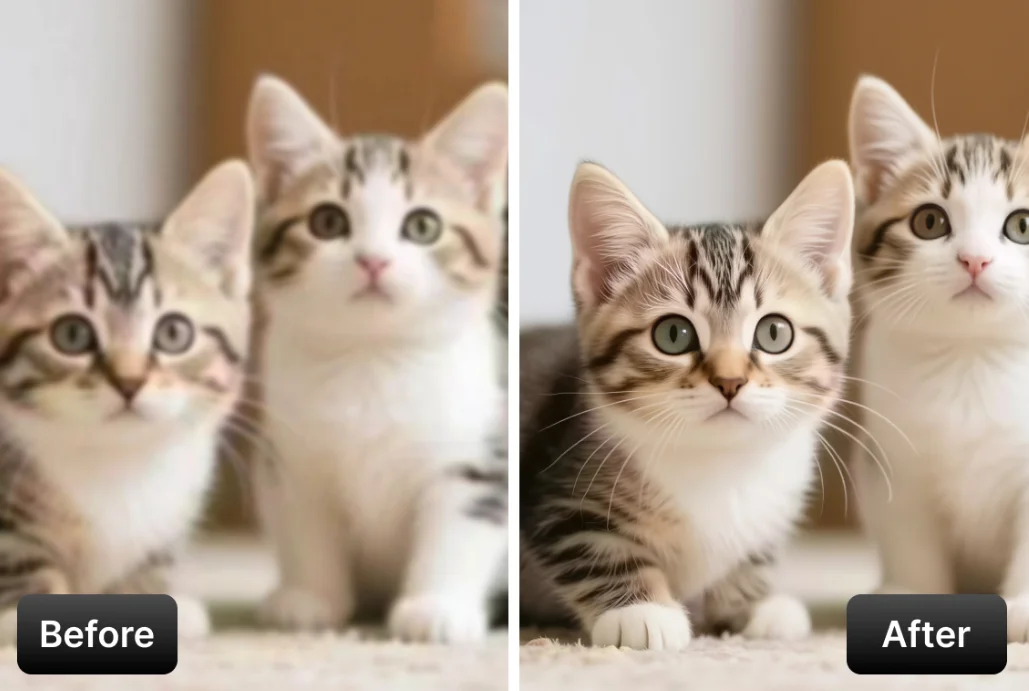
Bria Increase Resolution upscales images with a method that preserves original content without regeneration, producing sharper, higher-quality output. Ready-to-use REST API, best performance, no coldstarts, affordable pricing.
Idle
$0.04per run·~25 / $1
ExamplesView all
Related Models





README
Bria Increase Resolution
Bria Increase Resolution upscales images while preserving the original content structure. Upload an image, choose a 2× or 4× resolution increase, and optionally preserve transparent areas for images with an alpha channel.
Why Choose This?
-
Image upscaling
Increase image resolution without regenerating the full image from scratch. -
2× and 4× scale options
Choose2for moderate enlargement or4for a stronger resolution increase. -
Content-preserving enhancement
Improve image size while keeping the original subject, composition, and visual structure. -
Alpha preservation
Preserve fully and partially transparent regions when working with images that include an alpha channel. -
Simple production workflow
Upload an image, select the desired increase, and generate the upscaled result.
Parameters
| Parameter | Required | Description |
|---|---|---|
| image | Yes | Input image to upscale. Upload an image or provide a public image URL. |
| desired_increase | No | Resolution increase factor. Options: 2 or 4. |
| preserve_alpha | No | Preserve fully and partially transparent areas from the input image. When disabled, the output is fully opaque. Has no effect on images without an alpha channel. |
How to Use
- Upload an image — Provide the image you want to upscale.
- Choose desired increase — Select
2or4depending on the target output size. - Configure alpha preservation optional — Keep
preserve_alphaenabled when the input image contains transparency that should remain transparent. - Submit — Generate the upscaled image and retrieve the output.
Pricing
Pricing is fixed at $0.04 per run.
| Output | Cost |
|---|---|
| One upscaled image | $0.04 |
Best Use Cases
- Image resolution enhancement — Upscale images for higher-resolution use.
- Design assets — Increase the size of graphics, illustrations, and creative assets.
- Product visuals — Upscale product images for sharper presentation.
- Marketing materials — Prepare higher-resolution images for ads, banners, thumbnails, and social media.
- Transparent assets — Preserve alpha channels for logos, cutouts, stickers, and compositing workflows.
Pro Tips
- Use clean, reasonably sharp input images for better upscaling results.
- Choose
2×when you need a moderate size increase. - Choose
4×when the target layout needs significantly more pixels. - Enable
preserve_alphafor images with transparent or semi-transparent areas. - Disable
preserve_alphawhen you want the final output to be fully opaque. - Avoid using extremely blurry or heavily compressed images when detail preservation matters.
Notes
imageis required.desired_increasesupports2and4.preserve_alphaonly affects images with an alpha channel.- When
preserve_alphais disabled, the output is fully opaque. - This model is best suited for images that are already reasonably clean and need additional resolution.
Related Models
- Ultimate Image Upscaler — Upscale and enhance images with a more general-purpose image upscaling workflow.
Increase Resolution API — Quick start
Grab a WaveSpeedAI API key, then call POST https://api.wavespeed.ai/api/v3/bria/increase-resolution with your input as JSON. The endpoint returns a prediction id. Start polling the result endpoint around every 2 seconds, increase the interval for long-running tasks, and stop on any terminal status. On completed, read output values from data.outputs. Examples for Increase Resolution below.
HTTP example
set -euo pipefail

: "${WAVESPEED_API_KEY:?Set WAVESPEED_API_KEY}"

REQUEST_BODY=$(cat <<'JSON'
{
    "image": "https://interactive-examples.mdn.mozilla.net/media/cc0-images/painted-hand-298-332.jpg",
    "desired_increase": 2,
    "preserve_alpha": true
}
JSON
)

# 1. Submit the prediction.
SUBMIT_RESPONSE=$(curl --silent --show-error --fail-with-body \
  -X POST "https://api.wavespeed.ai/api/v3/bria/increase-resolution" \
  -H "Content-Type: application/json" \
  -H "Authorization: Bearer $WAVESPEED_API_KEY" \
  -d "$REQUEST_BODY")

TASK=$(printf '%s' "$SUBMIT_RESPONSE" | jq 'if has("data") then .data else . end')
PREDICTION_ID=$(printf '%s' "$TASK" | jq -r '.id')
if [ -z "$PREDICTION_ID" ] || [ "$PREDICTION_ID" = "null" ]; then
  printf 'Submission response did not contain a prediction id
' >&2
  exit 1
fi
RESULT_URL="https://api.wavespeed.ai/api/v3/predictions/$PREDICTION_ID/result"

# 2. Poll until the prediction finishes.
while true; do
  RESPONSE=$(curl --silent --show-error --fail-with-body "$RESULT_URL" \
    -H "Authorization: Bearer $WAVESPEED_API_KEY")
  RESULT=$(printf '%s' "$RESPONSE" | jq 'if has("data") then .data else . end')
  STATUS=$(printf '%s' "$RESULT" | jq -r '.status')
  case "$STATUS" in
    completed) printf '%s\n' "$RESULT" | jq '.outputs'; break ;;
    failed|cancelled|timeout|deleted) printf '%s\n' "$RESULT" | jq . >&2; exit 1 ;;
    *) sleep 2 ;;
  esac
done
Node.js example
const submitUrl = "https://api.wavespeed.ai/api/v3/bria/increase-resolution";
const apiKey = process.env.WAVESPEED_API_KEY;
if (!apiKey) throw new Error('Set WAVESPEED_API_KEY');

async function requestJson(url, options = {}) {
  const response = await fetch(url, options);
  if (!response.ok) throw new Error(await response.text());
  return response.json();
}

// 1. Submit the prediction.
const body = await requestJson(submitUrl, {
  method: "POST",
  headers: {
    "Authorization": `Bearer ${apiKey}`,
    "Content-Type": "application/json",
  },
  body: JSON.stringify({
        "image": "https://interactive-examples.mdn.mozilla.net/media/cc0-images/painted-hand-298-332.jpg",
        "desired_increase": 2,
        "preserve_alpha": true
}),
});
const task = body.data ?? body;
if (!task.id) throw new Error("Submission response did not contain a prediction id");
const resultUrl = `https://api.wavespeed.ai/api/v3/predictions/${task.id}/result`;

// 2. Poll until the prediction finishes.
while (true) {
  const resultBody = await requestJson(resultUrl, {
    headers: { "Authorization": `Bearer ${apiKey}` },
  });
  const result = resultBody.data ?? resultBody;
  if (result.status === "completed") {
    console.log(result.outputs);
    break;
  }
  if (["failed", "cancelled", "timeout", "deleted"].includes(result.status)) throw new Error(JSON.stringify(result));
  await new Promise(resolve => setTimeout(resolve, 2000));
}
Python example
import json
import os
import time
from urllib.request import Request, urlopen

api_key = os.environ["WAVESPEED_API_KEY"]
headers = {"Authorization": f"Bearer {api_key}", "Content-Type": "application/json"}
payload = {
    "image": "https://interactive-examples.mdn.mozilla.net/media/cc0-images/painted-hand-298-332.jpg",
    "desired_increase": 2,
    "preserve_alpha": True
}

def request_json(url, data=None):
    request = Request(url, data=data, headers=headers, method="POST" if data else "GET")
    with urlopen(request) as response:
        return json.load(response)

# 1. Submit the prediction.
body = request_json("https://api.wavespeed.ai/api/v3/bria/increase-resolution", json.dumps(payload).encode())
task = body.get("data", body)
if not task.get("id"):
    raise RuntimeError("Submission response did not contain a prediction id")
result_url = f"https://api.wavespeed.ai/api/v3/predictions/{task['id']}/result"

# 2. Poll until the prediction finishes.
while True:
    result_body = request_json(result_url)
    result = result_body.get("data", result_body)
    status = result.get("status")
    if status == "completed":
        print(result.get("outputs", []))
        break
    if status in {"failed", "cancelled", "timeout", "deleted"}:
        raise RuntimeError(result)
    time.sleep(2)
Increase Resolution API — Frequently asked questions
What is the Increase Resolution API?
Increase Resolution is a Bria model for upscaling, exposed as a REST API on WaveSpeedAI. Bria Increase Resolution upscales images with a method that preserves original content without regeneration, producing sharper, higher-quality output. Ready-to-use REST API, best performance, no coldstarts, affordable pricing. You can call it programmatically or try it from the playground above.
How do I call the Increase Resolution API?
POST your input parameters to the model's REST endpoint (shown in the API tab of this playground) with your WaveSpeedAI API key in the Authorization header. Submission returns a prediction ID. Poll the result endpoint starting around every 2 seconds, increase the interval for long-running tasks, and stop on any terminal status. The playground generates Python, JavaScript, and cURL examples for submitting requests and polling results. Full request/response shape is documented at https://wavespeed.ai/docs/docs-api/bria/bria-increase-resolution.
How much does Increase Resolution cost per run?
Increase Resolution starts at $0.04 per run. That figure is the base price — the final charge scales with the parameters you set in the form (output size, length, count, references, or whatever knobs this model exposes), so a higher-quality or larger output costs more than a minimal one. The exact cost for your current input is shown live next to the Generate button before you submit, and the actual per-call charge is recorded on the prediction afterwards.
What inputs does Increase Resolution accept?
Key inputs: `image`, `desired_increase`, `enable_base64_output`, `enable_sync_mode`, `preserve_alpha`. The full JSON schema (types, defaults, allowed values) is rendered above the Generate button and mirrored in the API reference at https://wavespeed.ai/docs/docs-api/bria/bria-increase-resolution.
How long does Increase Resolution take to generate?
Reported generation time on WaveSpeedAI is around 6 seconds per request. This is an estimate, not a latency guarantee; queue time and input settings can change the total wait. live status is visible in the prediction record.
Can I use Increase Resolution outputs commercially?
Commercial usage rights depend on the model's license, set by its provider (Bria). Check the provider's applicable terms and WaveSpeedAI's Terms of Service before commercial use.