LongCat-Image is a 6B parameter bilingual (Chinese-English) text-to-image model from Meituan, excelling at multilingual text rendering, photorealism, and deployment efficiency. Ready-to-use REST inference API with best performance and no cold starts.
待機中
$0.151回あたり·~66 / $10
サンプルすべて表示
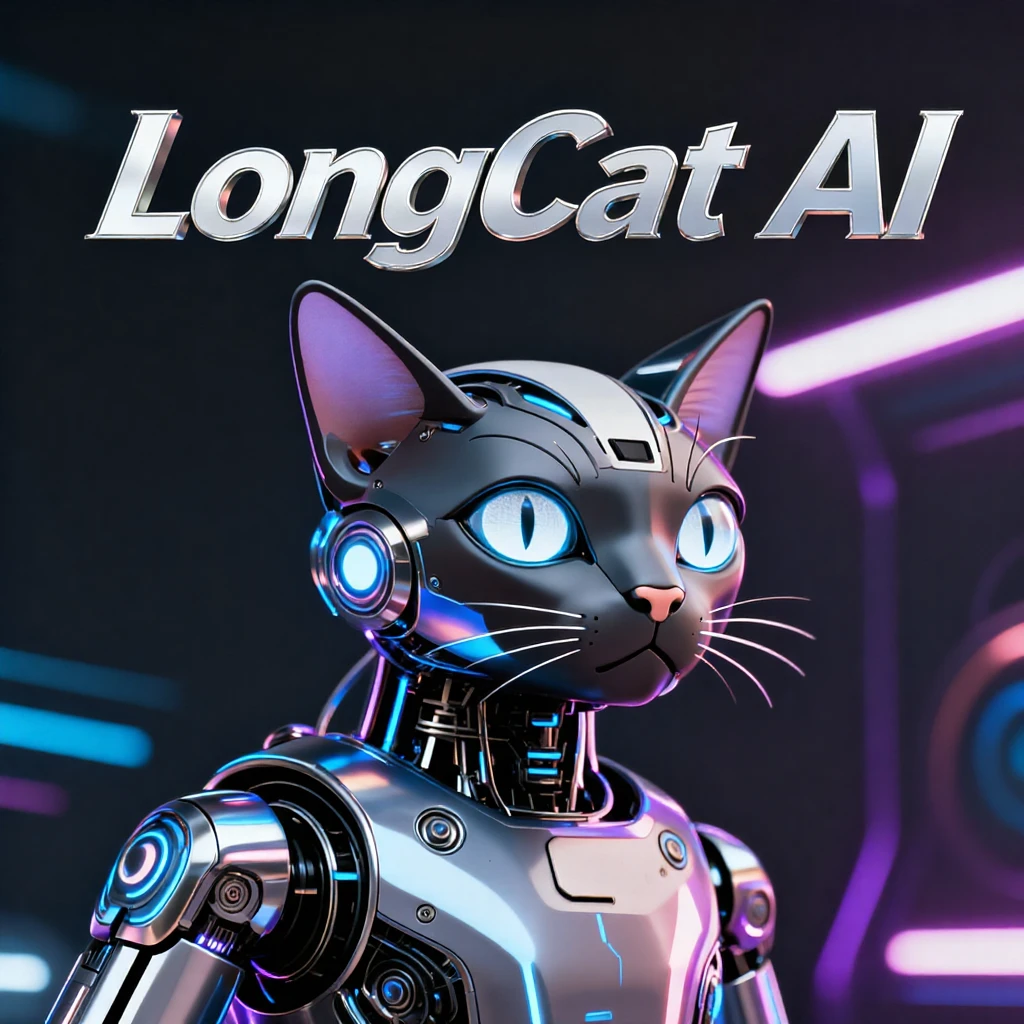
A creative movie poster design. In the center is a futuristic robot cat. The title text "LongCat AI" is written in large, bold, metallic letters at the top. High contrast, 8k resolution.

A rainy cyberpunk street at night, a bright neon sign hanging on the wall that says "Open 24 Hours" and "便利店". Cinematic lighting, realistic reflections on the wet ground.

Professional food photography of a delicious beef burger with melted cheese, fresh lettuce, and tomatoes. Steam rising, water droplets on the vegetables, shallow depth of field, studio lighting

A hyper-realistic close-up portrait of an old fisherman with a white beard, wearing a yellow raincoat. detailed skin texture, weather-beaten face, dramatic lighting, sharp focus on eyes.

A panoramic view of a ruined modern metropolis reclaimed by nature. Skyscrapers are collapsing and covered in massive green vines and waterfalls. A rusted aircraft carrier sits in the middle of a flooded street. Sunset lighting, melancholic atmosphere, highly detailed textures, movie concept art.
関連モデル





README
LongCat-Image — Text-to-Image
LongCat-Image is an open-source, bilingual (Chinese-English) foundation model for image generation developed by Meituan. With only 6B parameters, it addresses key challenges in multilingual text rendering, photorealism, deployment efficiency, and developer accessibility.
Where LongCat-Image fits best
- Chinese and English text rendering in images
- Photorealistic image generation
- High-volume generation with efficient resource usage
- Marketing and product visuals with text overlays
Key Features
• Exceptional Efficiency and Performance
With only 6B parameters, LongCat-Image outperforms larger open-source models across multiple benchmarks, demonstrating efficient model design.
• Powerful Chinese Text Rendering
Superior accuracy in rendering Chinese characters with industry-leading Chinese dictionary coverage. More stable than existing SOTA open-source models.
• Remarkable Photorealism
Innovative data strategy and training framework delivers high-quality, photorealistic image generation.
• Bilingual Support
Natively supports both Chinese and English prompts with excellent text rendering in both languages.
• Resource-conscious
The efficient 6B parameter architecture keeps GPU usage moderate, ideal for batch jobs and cost-sensitive pipelines.
Related Models on WaveSpeedAI
- LongCat-Image Edit – Image editing with the same bilingual text rendering capabilities.
More Image Tools on WaveSpeedAI
- Nano Banana Pro – Google's Gemini-based text-to-image model for sharp, coherent, prompt-faithful visuals.
- Seedream V4 – style-consistent, multi-image generator ideal for posters and campaigns.
- Qwen Edit Plus – An enhanced Qwen-based image editor for precise inpainting and local style changes.
Longcat Image Text To Image API — Quick start
Grab a WaveSpeedAI API key, then call POST https://api.wavespeed.ai/api/v3/wavespeed-ai/longcat-image/text-to-image with your input as JSON. The endpoint returns a prediction id. Start polling the result endpoint around every 2 seconds, increase the interval for long-running tasks, and stop on any terminal status. On completed, read output values from data.outputs. Examples for Longcat Image Text To Image below.
HTTP example
set -euo pipefail

: "${WAVESPEED_API_KEY:?Set WAVESPEED_API_KEY}"

REQUEST_BODY=$(cat <<'JSON'
{
    "prompt": "A cinematic shot of a city at sunset, soft golden light",
    "size": "1024*1024",
    "output_format": "jpeg",
    "seed": -1
}
JSON
)

# 1. Submit the prediction.
SUBMIT_RESPONSE=$(curl --silent --show-error --fail-with-body \
  -X POST "https://api.wavespeed.ai/api/v3/wavespeed-ai/longcat-image/text-to-image" \
  -H "Content-Type: application/json" \
  -H "Authorization: Bearer $WAVESPEED_API_KEY" \
  -d "$REQUEST_BODY")

TASK=$(printf '%s' "$SUBMIT_RESPONSE" | jq 'if has("data") then .data else . end')
PREDICTION_ID=$(printf '%s' "$TASK" | jq -r '.id')
if [ -z "$PREDICTION_ID" ] || [ "$PREDICTION_ID" = "null" ]; then
  printf 'Submission response did not contain a prediction id
' >&2
  exit 1
fi
RESULT_URL=$(printf '%s' "$TASK" | jq -r '.urls.get // empty')
if [ -z "$RESULT_URL" ]; then
  RESULT_URL="https://api.wavespeed.ai/api/v3/predictions/$PREDICTION_ID/result"
fi

# 2. Poll until the prediction finishes.
while true; do
  RESPONSE=$(curl --silent --show-error --fail-with-body "$RESULT_URL" \
    -H "Authorization: Bearer $WAVESPEED_API_KEY")
  RESULT=$(printf '%s' "$RESPONSE" | jq 'if has("data") then .data else . end')
  STATUS=$(printf '%s' "$RESULT" | jq -r '.status')
  case "$STATUS" in
    completed) printf '%s\n' "$RESULT" | jq '.outputs'; break ;;
    failed|cancelled|timeout) printf '%s\n' "$RESULT" | jq . >&2; exit 1 ;;
    created|processing) sleep 2 ;;
    *) printf 'Unexpected status: %s
' "$STATUS" >&2; exit 1 ;;
  esac
done
Node.js example
const submitUrl = "https://api.wavespeed.ai/api/v3/wavespeed-ai/longcat-image/text-to-image";
const apiKey = process.env.WAVESPEED_API_KEY;
if (!apiKey) throw new Error('Set WAVESPEED_API_KEY');

async function requestJson(url, options = {}) {
  const response = await fetch(url, options);
  if (!response.ok) throw new Error(await response.text());
  return response.json();
}

// 1. Submit the prediction.
const body = await requestJson(submitUrl, {
  method: "POST",
  headers: {
    "Authorization": `Bearer ${apiKey}`,
    "Content-Type": "application/json",
  },
  body: JSON.stringify({
        "prompt": "A cinematic shot of a city at sunset, soft golden light",
        "size": "1024*1024",
        "output_format": "jpeg",
        "seed": -1
}),
});
const task = body.data ?? body;
if (!task.id) throw new Error("Submission response did not contain a prediction id");
const resultUrl = task.urls?.get ||
  `https://api.wavespeed.ai/api/v3/predictions/${task.id}/result`;

// 2. Poll until the prediction finishes.
while (true) {
  const resultBody = await requestJson(resultUrl, {
    headers: { "Authorization": `Bearer ${apiKey}` },
  });
  const result = resultBody.data ?? resultBody;
  if (result.status === "completed") {
    console.log(result.outputs);
    break;
  }
  if (["failed", "cancelled", "timeout"].includes(result.status)) throw new Error(JSON.stringify(result));
  if (!["created", "processing"].includes(result.status)) throw new Error("Unexpected status: " + result.status);
  await new Promise(resolve => setTimeout(resolve, 2000));
}
Python example
import json
import os
import time
from urllib.request import Request, urlopen

api_key = os.environ["WAVESPEED_API_KEY"]
headers = {"Authorization": f"Bearer {api_key}", "Content-Type": "application/json"}
payload = {
    "prompt": "A cinematic shot of a city at sunset, soft golden light",
    "size": "1024*1024",
    "output_format": "jpeg",
    "seed": -1
}

def request_json(url, data=None):
    request = Request(url, data=data, headers=headers, method="POST" if data else "GET")
    with urlopen(request) as response:
        return json.load(response)

# 1. Submit the prediction.
body = request_json("https://api.wavespeed.ai/api/v3/wavespeed-ai/longcat-image/text-to-image", json.dumps(payload).encode())
task = body.get("data", body)
if not task.get("id"):
    raise RuntimeError("Submission response did not contain a prediction id")
result_url = task.get("urls", {}).get("get") or f"https://api.wavespeed.ai/api/v3/predictions/{task['id']}/result"

# 2. Poll until the prediction finishes.
while True:
    result_body = request_json(result_url)
    result = result_body.get("data", result_body)
    status = result.get("status")
    if status == "completed":
        print(result.get("outputs", []))
        break
    if status in {"failed", "cancelled", "timeout"}:
        raise RuntimeError(result)
    if status not in {"created", "processing"}:
        raise RuntimeError(f"Unexpected status: {status}")
    time.sleep(2)
Longcat Image Text To Image API — Frequently asked questions
What is the Longcat Image Text To Image API?
Longcat Image Text To Image is a WaveSpeedAI model for image generation, exposed as a REST API on WaveSpeedAI. LongCat-Image is a 6B parameter bilingual (Chinese-English) text-to-image model from Meituan, excelling at multilingual text rendering, photorealism, and deployment efficiency. Ready-to-use REST inference API with best performance and no cold starts. You can call it programmatically or try it from the playground above.
How do I call the Longcat Image Text To Image API?
POST your input parameters to the model's REST endpoint (shown in the API tab of this playground) with your WaveSpeedAI API key in the Authorization header. Submission returns a prediction ID. Poll the result endpoint starting around every 2 seconds, increase the interval for long-running tasks, and stop on any terminal status. The playground generates production-oriented Python, JavaScript, and cURL examples with timeouts, transient-error handling, and safe GET retries. Full request/response shape is documented at https://wavespeed.ai/docs/docs-api/wavespeed-ai/longcat-image-text-to-image.
How much does Longcat Image Text To Image cost per run?
Longcat Image Text To Image starts at $0.15 per run. That figure is the base price — the final charge scales with the parameters you set in the form (output size, length, count, references, or whatever knobs this model exposes), so a higher-quality or larger output costs more than a minimal one. The exact cost for your current input is shown live next to the Generate button before you submit, and the actual per-call charge is recorded on the prediction afterwards.
What inputs does Longcat Image Text To Image accept?
Key inputs: `prompt`, `size`, `seed`, `enable_base64_output`, `enable_sync_mode`, `output_format`. The full JSON schema (types, defaults, allowed values) is rendered above the Generate button and mirrored in the API reference at https://wavespeed.ai/docs/docs-api/wavespeed-ai/longcat-image-text-to-image.
How long does Longcat Image Text To Image take to generate?
Median end-to-end generation time on WaveSpeedAI is around 187 seconds per request, based on recent successful runs. Queue time varies with global demand; live status is visible in the prediction record.
Can I use Longcat Image Text To Image outputs commercially?
Commercial usage rights depend on the model's license, set by its provider (WaveSpeedAI). The license summary appears on the model card above; see WaveSpeedAI's Terms of Service for platform-level conditions.