LTX-2 19B ControlNet generates synchronized audio-video (up to 20s) from video input with pose, depth, or canny edge guidance. Supports audio preservation, generation, or removal for flexible video transformation. Ready-to-use REST inference API, best performance, no cold starts, affordable pricing.
Inattivo
$0.2per esecuzione·~50 / $10
EsempiVedi tutto
Modelli correlati




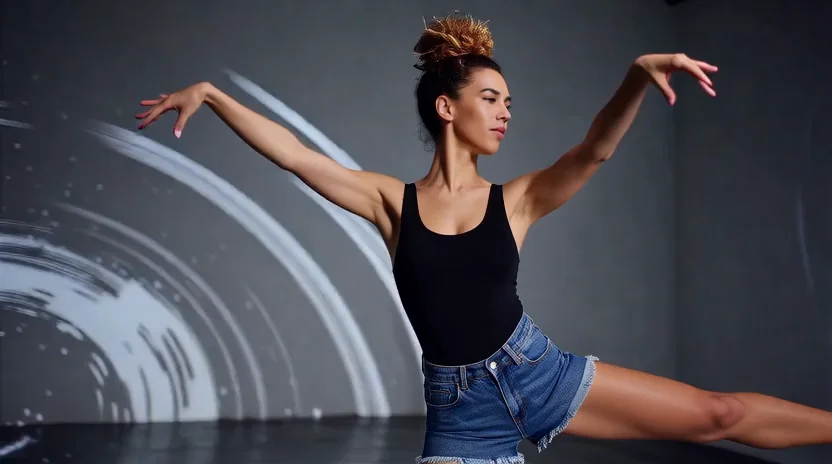

README
LTX-2 19B ControlNet
LTX-2 ControlNet is a video-to-video transformation model that applies pose, depth, or edge guidance to generate new video content while preserving motion structure from the input. Built on the 19B DiT architecture, it supports synchronized audio handling with options to preserve original audio, generate new audio, or output silent video.
Why Choose This?
-
ControlNet guidance modes Choose from pose, depth, or canny edge detection to guide video generation while preserving motion structure.
-
Flexible audio handling Preserve original audio, generate new synchronized audio, or create silent output.
-
High-fidelity output Leverages the 19B-parameter DiT architecture for detailed, temporally consistent video.
-
Character-driven transformation Use a reference image to drive the appearance while the input video controls motion.
-
Prompt Enhancer Built-in tool to automatically improve your prompts for better results.
Parameters
| Parameter | Required | Description |
|---|---|---|
| video | Yes | Input video providing motion and structure |
| image | No | Reference image for appearance guidance |
| prompt | No | Text description of desired output |
| mode | No | Control mode: pose (default), depth, or canny |
| audio_mode | No | Audio handling: preserve (default), generate, or none |
| resolution | No | Output resolution: 480p, 720p (default), or 1080p |
| seed | No | Random seed for reproducibility (-1 for random) |
Control Modes
| Mode | Description |
|---|---|
| pose | Skeleton/pose guidance for human motion (default) |
| depth | Depth map guidance for scene structure |
| canny | Edge detection guidance for shape preservation |
Audio Modes
| Mode | Description |
|---|---|
| preserve | Keep original audio from input video (default) |
| generate | Create new synchronized audio |
| none | Output video without audio |
How to Use
- Upload your video — the input video providing motion structure.
- Upload your image (optional) — reference image that defines appearance.
- Write your prompt — describe the desired transformation.
- Select control mode — pose, depth, or canny based on your needs.
- Select audio mode — preserve, generate, or none.
- Set resolution — 480p for speed, 720p for balance, 1080p for quality.
- Run — submit and download the transformed video.
Pricing
| Resolution | 5s | 10s | 15s | 20s (max) |
|---|---|---|---|---|
| 480p | $0.15 | $0.30 | $0.45 | $0.60 |
| 720p | $0.20 | $0.40 | $0.60 | $0.80 |
| 1080p | $0.30 | $0.60 | $0.90 | $1.20 |
Billing Rules
- Base price: $0.20 (720p, 5 seconds)
- Resolution multiplier: 480p = 0.75×, 720p = 1×, 1080p = 1.5×
- Minimum charge: 5 seconds
- Maximum billed duration: 20 seconds
- Total cost = (duration / 5) × $0.20 × resolution_multiplier
Best Use Cases
- Character Animation — Animate a character image with motion from reference video.
- Style Transfer — Apply a reference style to existing video content.
- Motion Preservation — Maintain motion structure while changing appearance.
- Video Editing — Transform video subjects while keeping movement.
- Dance Transfer — Apply dance moves to different characters.
Pro Tips
- Match the subject pose in your image to the starting pose in the video.
- Use pose mode for human/character motion, depth for scene structure, canny for edge-based guidance.
- Preserve audio for lip-sync scenarios, generate for new content.
- Iterate at 480p, then render final at 720p or 1080p.
Notes
- Maximum video duration is 20 seconds per job.
- Videos shorter than 5 seconds are billed as 5 seconds.
- For best results, ensure the reference image matches the subject type in the video.
Related Models
- LTX-2 19B Image-to-Video — Generate video with audio from a reference image.
- LTX-2 19B Text-to-Video — Generate video with audio from text prompts.
- Wan 2.2 Animate — Character animation and replacement model.
Ltx 2 19b Control API — Quick start
Grab a WaveSpeedAI API key, then call POST https://api.wavespeed.ai/api/v3/wavespeed-ai/ltx-2-19b/control with your input as JSON. The endpoint returns a prediction id; poll the prediction endpoint until status flips to completed, then read the output URL from data.outputs[0]. Examples for Ltx 2 19b Control below.
HTTP example
# Submit the prediction
curl -X POST "https://api.wavespeed.ai/api/v3/wavespeed-ai/ltx-2-19b/control" \
  -H "Content-Type: application/json" \
  -H "Authorization: Bearer $WAVESPEED_API_KEY" \
  -d '{
    "video": "https://example.com/your-input.mp4",
    "image": "https://example.com/your-input.jpg",
    "prompt": "A cinematic shot of a city at sunset, soft golden light",
    "mode": "pose",
    "audio_mode": "preserve",
    "resolution": "720p",
    "seed": -1
}'

# Response includes a prediction id. Poll for the result:
curl -X GET "https://api.wavespeed.ai/api/v3/predictions/{request_id}/result" \
  -H "Authorization: Bearer $WAVESPEED_API_KEY"

# When status is "completed", read the output from data.outputs[0].
Node.js example
// npm install wavespeed
const WaveSpeed = require('wavespeed');

const client = new WaveSpeed(); // reads WAVESPEED_API_KEY from env

const result = await client.run("wavespeed-ai/ltx-2-19b/control", {
        "video": "https://example.com/your-input.mp4",
        "image": "https://example.com/your-input.jpg",
        "prompt": "A cinematic shot of a city at sunset, soft golden light",
        "mode": "pose",
        "audio_mode": "preserve",
        "resolution": "720p",
        "seed": -1
});

console.log(result.outputs[0]); // → URL of the generated output
Python example
# pip install wavespeed
import wavespeed

output = wavespeed.run(
    "wavespeed-ai/ltx-2-19b/control",
    {
    "video": "https://example.com/your-input.mp4",
    "image": "https://example.com/your-input.jpg",
    "prompt": "A cinematic shot of a city at sunset, soft golden light",
    "mode": "pose",
    "audio_mode": "preserve",
    "resolution": "720p",
    "seed": -1
}
)

print(output["outputs"][0])  # → URL of the generated output
Ltx 2 19b Control API — Frequently asked questions
What is the Ltx 2 19b Control API?
Ltx 2 19b Control is a WaveSpeedAI model for pose / motion driven video, exposed as a REST API on WaveSpeedAI. LTX-2 19B ControlNet generates synchronized audio-video (up to 20s) from video input with pose, depth, or canny edge guidance. Supports audio preservation, generation, or removal for flexible video transformation. Ready-to-use REST inference API, best performance, no cold starts, affordable pricing. You can call it programmatically or try it from the playground above.
How do I call the Ltx 2 19b Control API?
POST your input parameters to the model's REST endpoint (shown in the API tab of this playground) with your WaveSpeedAI API key in the Authorization header. Submission returns a prediction ID; poll the prediction endpoint until status flips to "completed", then read the output URL from the result. The playground generates a ready-to-paste code sample in Python, JavaScript, or cURL for whatever inputs you've set. Full request/response shape is documented at https://wavespeed.ai/docs/docs-api/wavespeed-ai/ltx-2-19b-control.
How much does Ltx 2 19b Control cost per run?
Ltx 2 19b Control starts at $0.20 per run. That figure is the base price — the final charge scales with the parameters you set in the form (output size, length, count, references, or whatever knobs this model exposes), so a higher-quality or larger output costs more than a minimal one. The exact cost for your current input is shown live next to the Generate button before you submit, and the actual per-call charge is recorded on the prediction afterwards.
What inputs does Ltx 2 19b Control accept?
Key inputs: `prompt`, `image`, `video`, `resolution`, `seed`, `audio_mode`. The full JSON schema (types, defaults, allowed values) is rendered above the Generate button and mirrored in the API reference at https://wavespeed.ai/docs/docs-api/wavespeed-ai/ltx-2-19b-control.
How long does Ltx 2 19b Control take to generate?
Average end-to-end generation time on WaveSpeedAI is around 236 seconds per request — measured across recent runs. Queue time scales with global demand; live status is visible in the prediction record.
Can I use Ltx 2 19b Control outputs commercially?
Commercial usage rights depend on the model's license, set by its provider (WaveSpeedAI). The license summary appears on the model card above; see WaveSpeedAI's Terms of Service for platform-level conditions.