FLUX.2 [flex] from Black Forest Labs delivers fast, flexible text-to-image generation with enhanced realism, sharper text rendering, and built-in editing for rapid iteration: a ready-to-use REST inference API, best performance, no cold starts, and affordable pricing.
Idle

$0.06per run·~16 / $1
ExamplesView all
A vintage 1860s sepia-toned daguerreotype photograph. It depicts a serious Abraham Lincoln sitting in a formal chair, wearing his traditional suit and top hat, but he is wearing large, colorful, modern DJ headphones around his neck and holding a shiny silver microphone. The photo has scratches, dust particles, and heavy vignette typical of the 19th century, but the modern equipment looks physically present in the scene, not just pasted on.
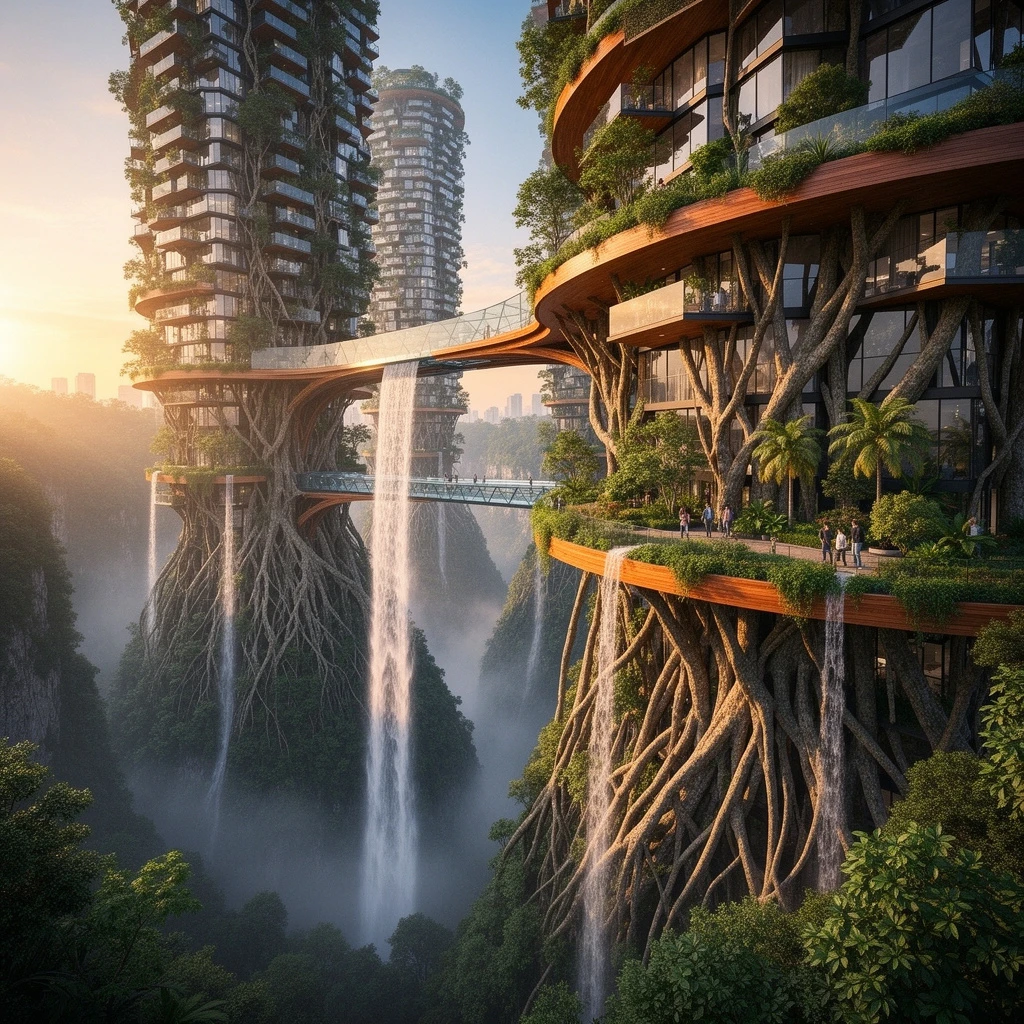
A breathtaking photograph of "The Vertical Forest City." Enormous, futuristic residential skyscrapers built completely out of intertwining massive tree roots, glass, and polished wood, rising from a misty jungle canyon. Waterfalls cascade from the upper balconies of the buildings. Suspended glass bridges connect the towers. People are visible gardening on their plant-covered terraces. The architecture looks organic yet structurally impossible, bathed in warm sunset light.

A hyper-realistic close-up photograph of a master watchmaker's hands working on a complex mechanical watch movement. The watchmaker is using fine tweezers to carefully place a tiny ruby jewel bearing into the gears. We can see every wrinkle on the fingers, the tension in the skin, fingerprint ridges, and oil stains. The watch gears, springs, and tiny screws are rendered with immense mechanical precision under a magnifying lamp. The focus must be absolutely critical on the point where the tweezers touch the ruby.

A hyper-realistic studio shot of a transparent glass skull filled with colorful jelly beans. The skull is placed inside a cube made of clear ice. We can see the distorted refraction of the jelly beans through both the ice and the glass skull. Lighting is coming from behind, creating a glowing effect through the sweets. Water droplets are melting off the ice cube onto a black reflective surface.
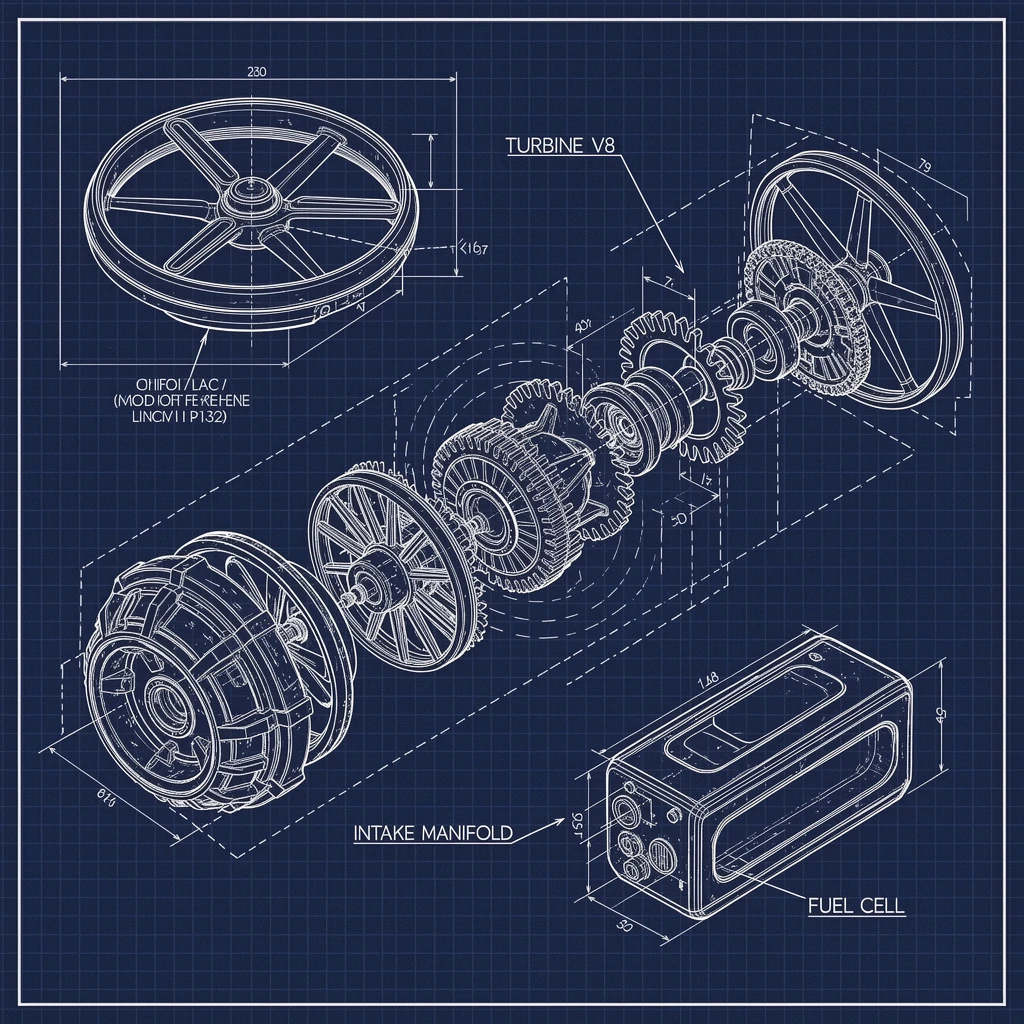
A detailed, deconstructed technical blueprint of a futuristic sci-fi drone engine, drawn in white lines on a dark blue grid background. The schematic includes exploded views of gears and rotors. Specific components are labeled with text: "TURBINE V8", "INTAKE MANIFOLD", and "FUEL CELL". The drawing style is precise, engineering CAD style, with measurements and dashed lines indicating assembly.
Related Models




README
FLUX.2 [flex] — Text-to-Image
FLUX.2 [flex] is the creative workhorse of the FLUX.2 family: a configurable, style-forward text-to-image model that delivers professional visuals while leaving plenty of room for experimentation. It is designed for teams who want more control over aesthetics and behaviour than a strictly “locked” production model.
Where FLUX.2 [flex] fits best
- Style-driven exploration and concept art
- High-volume generation where visual diversity is important
- Brand and product imagery that needs frequent refinements
- Fine-tuning experiments for domain- or brand-specific looks
Creative-first generation with control knobs
Rather than fixing all sampling behaviour, FLUX.2 [flex] keeps the lean FLUX.2 core but exposes more room to steer style, strength, and interpretation. You get production-usable images at good speed, while being able to push colour, mood, and composition further than with purely “set-and-forget” pipelines.
What you can get from this?
• Wide stylistic latitude
Produces a broad range of looks and moods—from clean product shots to heavily stylised illustration—so a single prompt can be explored in multiple creative directions.
• Tunable quality–speed trade-off
Supports configuration of inference settings, letting you run quick drafts cheaply and then dial up quality for shortlisted ideas or final renders.
• Open, extensible foundation
Built on open FLUX.2 tooling and community contributions, making it straightforward to inspect, adapt, and embed flex deeply into custom stacks.
• Friendly to LoRA and custom training
Works well as a base for LoRA adapters or other lightweight fine-tuning, so you can lock in house styles, specific subjects, or niche domains without retraining a heavyweight model.
• Resource-conscious for large runs
The streamlined architecture keeps GPU usage moderate, which is ideal for batch jobs, internal tools, and cost-sensitive creative pipelines.
• Consistent, repeatable results
Seed control and stable behaviour make it easy to recreate favourite generations or generate controlled variations for A/B tests and iterative design work.
Pricing
Simple per-image billing:
- $0.06 per generated image
FLUX.2 family on WaveSpeedAI
Combine FLUX.2 [flex] with the rest of the FLUX.2 lineup for a complete creation and editing workflow:
- FLUX.2 [dev] Text-to-Image – lightweight base model optimised for speed and LoRA training.
- FLUX.2 [dev] Edit – fast, style-consistent edits on existing images with the same lean architecture.
- FLUX.2 [flex] Edit – powerful image editing with a broader stylistic range and precise prompt control.
- FLUX.2 [pro] Text-to-Image – higher-capacity model for maximum-quality hero shots and demanding production use.
- FLUX.2 [pro] Edit – premium editing for detailed, high-fidelity transformations on critical assets.
More Image Tools on WaveSpeedAI
- Nano Banana Pro – Google’s Gemini-based text-to-image model for sharp, coherent, prompt-faithful visuals that work great for ads, keyframes, and product shots.
- Seedream V4 – ’s style-consistent, multi-image generator ideal for posters, campaigns, and large batches of on-brand illustrations.
- Qwen Edit Plus – an enhanced Qwen-based image editor for precise inpainting, cleanup, and local style changes while preserving overall composition.
Flux 2 Flex Text To Image API — Quick start
Grab a WaveSpeedAI API key, then call POST https://api.wavespeed.ai/api/v3/wavespeed-ai/flux-2-flex/text-to-image with your input as JSON. The endpoint returns a prediction id; poll the prediction endpoint until status flips to completed, then read the output URL from data.outputs[0]. Examples for Flux 2 Flex Text To Image below.
HTTP example
# Submit the prediction
curl -X POST "https://api.wavespeed.ai/api/v3/wavespeed-ai/flux-2-flex/text-to-image" \
  -H "Content-Type: application/json" \
  -H "Authorization: Bearer $WAVESPEED_API_KEY" \
  -d '{
    "prompt": "A cinematic shot of a city at sunset, soft golden light",
    "size": "1024*1024",
    "seed": -1,
    "enable_sync_mode": false,
    "enable_base64_output": false
}'

# Response includes a prediction id. Poll for the result:
curl -X GET "https://api.wavespeed.ai/api/v3/predictions/{request_id}/result" \
  -H "Authorization: Bearer $WAVESPEED_API_KEY"

# When status is "completed", read the output from data.outputs[0].
Node.js example
// npm install wavespeed
const WaveSpeed = require('wavespeed');

const client = new WaveSpeed(); // reads WAVESPEED_API_KEY from env

const result = await client.run("wavespeed-ai/flux-2-flex/text-to-image", {
        "prompt": "A cinematic shot of a city at sunset, soft golden light",
        "size": "1024*1024",
        "seed": -1,
        "enable_sync_mode": false,
        "enable_base64_output": false
});

console.log(result.outputs[0]); // → URL of the generated output
Python example
# pip install wavespeed
import wavespeed

output = wavespeed.run(
    "wavespeed-ai/flux-2-flex/text-to-image",
    {
    "prompt": "A cinematic shot of a city at sunset, soft golden light",
    "size": "1024*1024",
    "seed": -1,
    "enable_sync_mode": false,
    "enable_base64_output": false
}
)

print(output["outputs"][0])  # → URL of the generated output
Flux 2 Flex Text To Image API — Frequently asked questions
What is the Flux 2 Flex Text To Image API?
Flux 2 Flex Text To Image is a WaveSpeedAI model for image generation, exposed as a REST API on WaveSpeedAI. FLUX.2 [flex] from Black Forest Labs delivers fast, flexible text-to-image generation with enhanced realism, sharper text rendering, and built-in editing for rapid iteration: a ready-to-use REST inference API, best performance, no cold starts, and affordable pricing. You can call it programmatically or try it from the playground above.
How do I call the Flux 2 Flex Text To Image API?
POST your input parameters to the model's REST endpoint (shown in the API tab of this playground) with your WaveSpeedAI API key in the Authorization header. Submission returns a prediction ID; poll the prediction endpoint until status flips to "completed", then read the output URL from the result. The playground generates a ready-to-paste code sample in Python, JavaScript, or cURL for whatever inputs you've set. Full request/response shape is documented at https://wavespeed.ai/docs/docs-api/wavespeed-ai/flux-2-flex-text-to-image.
How much does Flux 2 Flex Text To Image cost per run?
Flux 2 Flex Text To Image starts at $0.060 per run. That figure is the base price — the final charge scales with the parameters you set in the form (output size, length, count, references, or whatever knobs this model exposes), so a higher-quality or larger output costs more than a minimal one. The exact cost for your current input is shown live next to the Generate button before you submit, and the actual per-call charge is recorded on the prediction afterwards.
What inputs does Flux 2 Flex Text To Image accept?
Key inputs: `prompt`, `size`, `seed`, `enable_base64_output`, `enable_sync_mode`. The full JSON schema (types, defaults, allowed values) is rendered above the Generate button and mirrored in the API reference at https://wavespeed.ai/docs/docs-api/wavespeed-ai/flux-2-flex-text-to-image.
How long does Flux 2 Flex Text To Image take to generate?
Average end-to-end generation time on WaveSpeedAI is around 21 seconds per request — measured across recent runs. Queue time scales with global demand; live status is visible in the prediction record.
Can I use Flux 2 Flex Text To Image outputs commercially?
Commercial usage rights depend on the model's license, set by its provider (WaveSpeedAI). The license summary appears on the model card above; see WaveSpeedAI's Terms of Service for platform-level conditions.